Columbia, United States: Self-Guided Walking Tour
Things to Do in Columbia, South Carolina: A Self-Guided Tour of Its Historic Center
The best things to do in Columbia include exploring historic Main Street, visiting the South Carolina State House, and following the city’s architectural and Civil War stories through its older neighborhoods. South Carolina’s capital brings together civic landmarks, early skyscrapers, Art Deco storefronts, historic churches, and a canal with a working hydroelectric power plant. Neywo offers a free audio guide for Columbia with 72 narrated places, so you can discover the city while walking at your own pace.
What to See in Columbia
Town Theatre
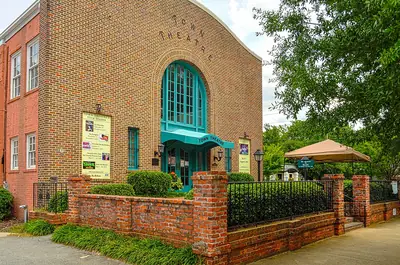
Town Theatre has been part of Columbia’s theatrical story since 1924 and houses one of the first community theatres in the United States. The rectangular brick building is easy to recognize from its two-story glazed central arch and Art Deco details. A brick annex was added to the rear in the 1950s, and the building was placed on the National Register of Historic Places in 1974.
Hampton-Preston House
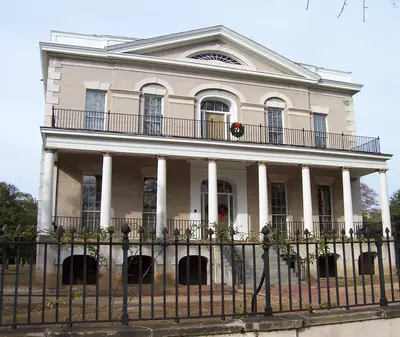
The Hampton-Preston House offers a glimpse into the lives of the planter elite in antebellum South Carolina. Built in 1818 for Columbia merchant Ainsley Hall, the mansion was later purchased by Wade Hampton the First, a former War of 1812 general and wealthy cotton planter. His son and grandson, both also named Wade Hampton, lived there at different times.
The restored house is now a museum operated by the Historic Columbia Foundation. Its exterior features a broad front veranda, Doric columns, and a fanlight above the entrance. Inside, a circular staircase with mahogany rails, a crystal chandelier, and a white marble mantel by sculptor Hiram Powers reveal the house’s grand style. During the later part of the Civil War, the building served as headquarters for Union Major General John A. Logan during the occupation of Columbia.
Columbia’s historic commercial buildings
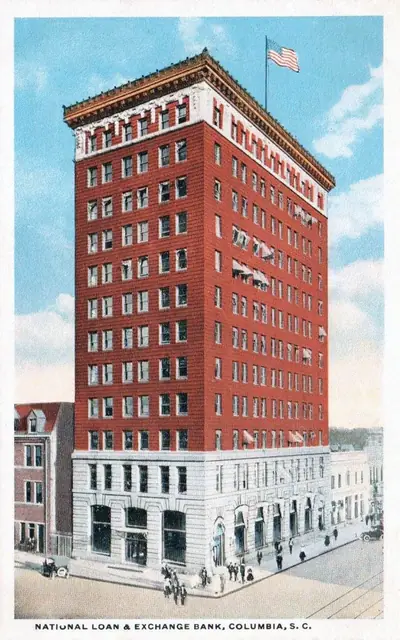
Main Street is one of the best areas for seeing Columbia’s commercial history in a concentrated walk. The National Loan and Exchange Bank Building, also known as the Barringer Building, was built in 1903 and is considered the city’s first skyscraper. It rises 184 feet and has twelve stories, with a steel frame faced in brick and stone.
The Palmetto Building followed in 1912 and 1913. At 215 feet and fifteen floors, it became the tallest building in South Carolina when completed. Since the mid-2000s, it has housed the Sheraton Columbia Downtown Hotel. Both buildings were added to the National Register of Historic Places.
Other Main Street landmarks reward a closer look:
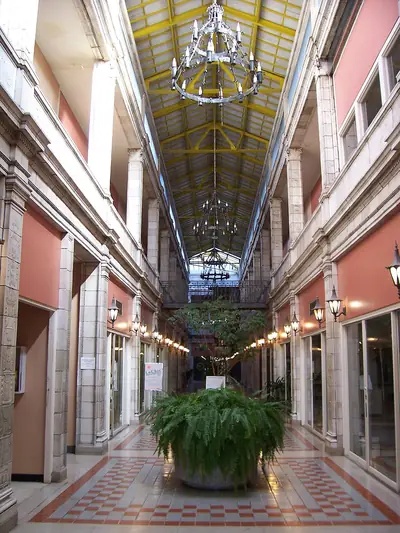
- The Arcade Building is a historic enclosed arcade whose covered interior gives it a distinctive character. It was listed on the National Register of Historic Places in 1982.
- The Consolidated Building, built in 1912, stands out for its elaborate colored and glazed terra cotta façade and its central round-headed window.
- Efird’s Department Store, also known as Lourie’s Department Store, dates to about 1870. Its 1919 renovation added a third story, a new brick façade, and new entrances.
- The Canal Dime Savings Bank, later known as Eckerd’s Drug Store, has a Romanesque Revival design with brick walls, a granite façade, and a red barrel tile roof.
- The Kress Building, built in 1934, has a white terra cotta Art Deco façade, colored ornamentation, rounded storefront windows, and a stepped parapet bearing the word “Kress.”
- The Lever Building, built in 1903, combines brown brick and terra cotta across its three-story façade.
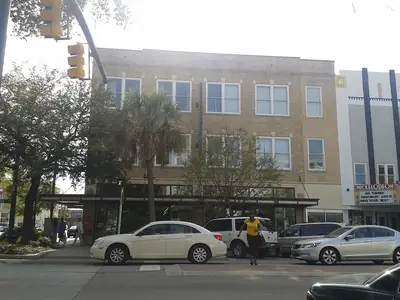
- The Bouchier Building, at 1722–1724 Main Street, was constructed in 1913 and 1914. Its three stories are faced with terra cotta, while large areas of glass cover the upper floors.
- Tapp’s Building, at 1644 Main Street, was built in 1940 and enlarged in 1950. The former department store has a Depression Modern façade, dark tremolite stone, and a prominent clock above the entrance.
These buildings make Main Street particularly rewarding for travellers interested in architecture, retail history, and Columbia’s early twentieth-century growth.
South Carolina State House
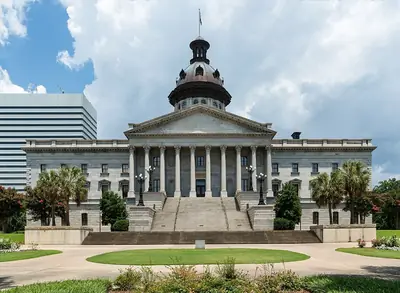
The South Carolina State House is the center of state government and houses the South Carolina General Assembly, as well as the offices of the governor and lieutenant governor. Its formal revival-style architecture reflects the importance of the institutions inside.
Construction began in 1851 under architect P. H. Hammarskold, but the project was disrupted by fraud, defective materials, poor workmanship, and other problems. Parts of the unfinished building had to be dismantled, and John Niernsee took over in 1855. The Civil War then brought construction to a complete stop in 1865, when General Sherman’s Union Army entered Columbia on February 17.
The building’s scale is part of its impact: it rises about 180 feet, stretches 300 feet in length, and measures 100 feet across. Inside, it contains more than 130,000 square feet of space.
South Carolina Supreme Court
The South Carolina Supreme Court is the highest court in the state. Also known as the Supreme Court of South Carolina, it forms part of the concentration of civic and legal landmarks around the State House.
South Carolina State Armory
Near the State House, the South Carolina State Armory at 1219 Assembly Street connects Columbia’s civic landscape with the state’s military heritage. Built in 1905, the building’s original role was connected with the state’s arsenal and the National Guard.
McMaster School
McMaster School stands at 1106 Pickens Street, at the corner of Senate Street. Built in 1911, it was designed by Columbia architect William Augustus Edwards with Frank C. Walter. Its Renaissance Revival design follows an H-shaped plan based on a standardized approach established for South Carolina schools in 1905.
The school was named for Fitz William McMaster, whose work organizing Columbia’s public schools was recognized in its dedication. The building also reflects the complicated history of the period: McMaster’s leadership as a Confederate colonel and his role in white supremacist resistance to Reconstruction were part of that history. For many years, the school served as a public primary school for white children.
Columbia Canal Power Plant
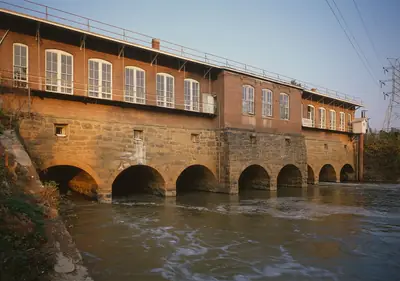
The Columbia Canal Power Plant is part of the Columbia Canal along the Congaree and Broad rivers. The canal is the surviving section of a series of waterways built by South Carolina in 1824 to create direct routes between settlements in the upstate and towns along the Fall Line.
Today, the canal still has a practical function: it generates hydroelectric power. The site therefore brings together historic engineering and a working power facility, and the Columbia Canal is listed on the National Register of Historic Places.
Greyhound Bus Depot
The former Greyhound Bus Depot at 1220 Blanding Street recalls Columbia’s history as a destination on the intercity bus network. The building once served Greyhound Lines and was added to the National Register of Historic Places in 1989.
A Columbia self-guided walking tour with Neywo
Neywo’s free Columbia audio guide includes four walking tours and one bus route, with narration available in 11 languages. The four walks cover the city’s early skyscrapers and Art Deco storefronts, its Civil War history, the university campus, and the route from Arsenal Hill to the canal:
- Main Street Skyline: 2.32 km, 99 minutes, 12 narrated stops
- Secession, Sherman and Spires: 2.77 km, 102 minutes, 11 narrated stops
- Around the Horseshoe: 1.69 km, 57 minutes, 7 narrated stops
- Arsenal Hill to the Canal: 3.47 km, 92 minutes, 8 narrated stops
There is also The Orbit, a 7 km sightseeing bus route lasting 30 minutes with 9 narrated stops. Together, the tours cover historic buildings, churches, the State House, the university area, the State Armory, the South Carolina State Museum, and the canal.
Download Neywo and explore Columbia with a free audio guide. The app tells the story of each place as you reach it, at your own pace, with no group and no schedule. Columbia is an excellent starting point for discovering South Carolina, and you can continue exploring other cities in the state, including Charleston, Greenville, Myrtle Beach, Beaufort, South Carolina, and Port Royal.
Places with an audio guide in Columbia
8 places in Columbia with a Neywo audio guide. Each one starts telling its story as you reach it.
Self-guided tours in Columbia
5 tours in Columbia, free in the Neywo app. Each stop tells its story as you reach it.
- Bus ride
The Orbit: Downtown Columbia's Sightseeing Loop
COMET's Soda Cap Connector Orbit loops through downtown Columbia and the University of South Carolina campus for a flat one-dollar fare. Ride it from the campus theatre past Town Theatre and the Supreme Court, the Sumter Street churches, the State Armory and the old synagogue that became the Big Apple club.
Longstreet Theatre · Town Theatre · South Carolina Supreme Court · Bethel A.M.E. Church · Ladson Presbyterian Church · Ebenezer Lutheran Chapel …
Open this tour: The Orbit: Downtown Columbia's Sightseeing Loop - Walk
Main Street Skyline: Columbia's Early Skyscrapers and Art Deco Storefronts
Stroll the spine of downtown Columbia and read a century of commerce in its facades: the city's first skyscraper, a terra cotta arcade, a five-and-dime that funded an art museum, an old department store and a clock-faced Depression Modern landmark. Finish at two Black congregations' churches and a free Black family's cottage that predates most of what you passed.
Arcade Building · Palmetto Building · Canal Dime Savings Bank · Columbia Museum of Art · Efird's Department Store · Lever Building …
Open this tour: Main Street Skyline: Columbia's Early Skyscrapers and Art Deco Storefronts - Walk
Secession, Sherman and Spires: Columbia's Civil War Trail
Follow the steps of 1860s Columbia: the church where South Carolina voted to leave the Union, the State House that survived Sherman's fire and the mansion that served as a Union headquarters. Gothic spires, antebellum wealth and the Reconstruction story all sit within a few blocks.
Town Theatre · Trinity Episcopal Cathedral · South Carolina State House · South Carolina Supreme Court · First Presbyterian Church (Columbia) · Washington Street United Methodist Church …
Open this tour: Secession, Sherman and Spires: Columbia's Civil War Trail - Walk
Around the Horseshoe: Campus Greens and a House Sawed in Half
A short, shady loop through the University of South Carolina's historic core. See the Federal-style Horseshoe, a Greek Revival hall that has been hospital, gym and theatre, and a house that was literally cut in two to widen its hall.
McMaster School (Columbia) · Horry-Guignard House · Davis College · McKissick Museum · Jonathan Maxcy Monument · World War Memorial Building …
Open this tour: Around the Horseshoe: Campus Greens and a House Sawed in Half - Walk
Arsenal Hill to the Canal: Spires, Armory and the Mill
Begin at the Governor's Mansion, which grew from the Arsenal Academy's faculty quarters, then visit the Basilica of St. Peter, the tiny House of Peace synagogue and the State Armory. Walk on through West Gervais Street's warehouse district to the State Museum in a pioneering electric textile mill and the Columbia Canal.
South Carolina Governor's Mansion · St. Peter's Catholic Church · House of Peace Synagogue · South Carolina State Armory · Columbia Central Fire Station · West Gervais Street Historic District …
Open this tour: Arsenal Hill to the Canal: Spires, Armory and the Mill
Walk Columbia with Neywo
Neywo turns Columbia into a self-guided audio tour. Stories arrive as you reach the place they belong to, and the route reshapes when you wander off it.

