Things to Do in Pittsburgh, United States: Walking Guide
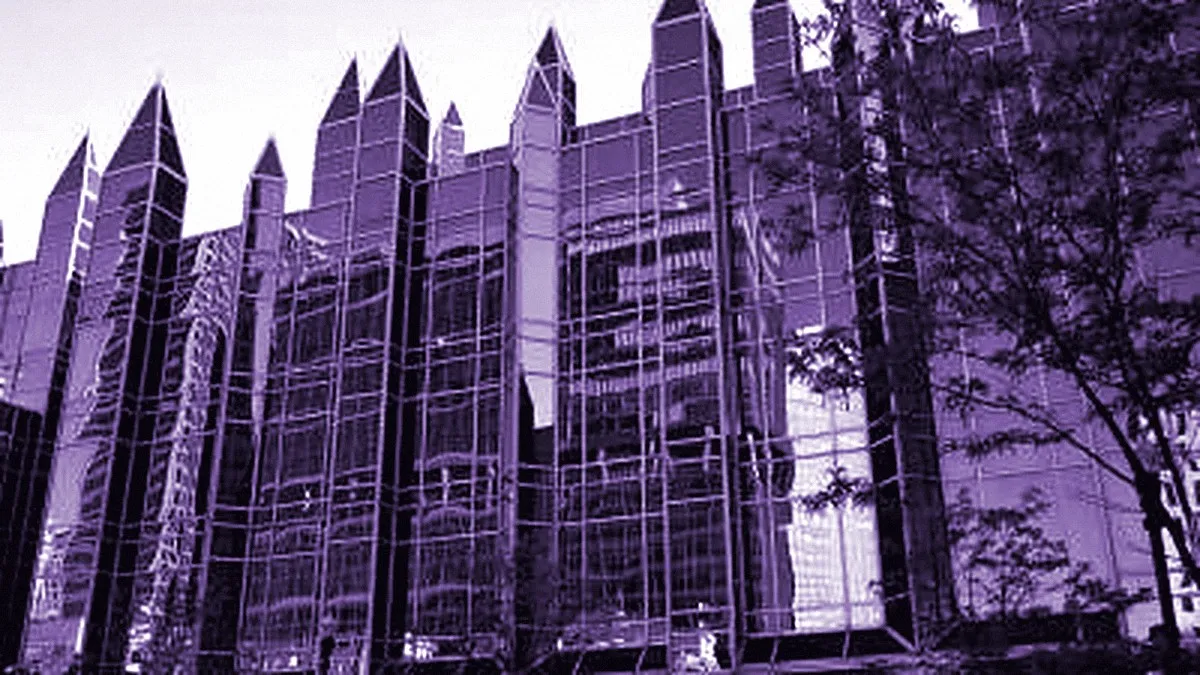
Things to Do in Pittsburgh: Museums, Rivers, and Historic Neighborhoods
Pittsburgh is a city of rivers, bridges, hillside neighborhoods, and remarkable museums. The Allegheny and Monongahela rivers meet here to form the Ohio River, while landmarks across Downtown, Oakland, the North Side, South Side, and Lawrenceville reveal the city’s cultural and architectural history. Neywo offers a free audio guide for Pittsburgh with 145 narrated places.
What to See in Pittsburgh
Downtown landmarks and Pittsburgh’s historic core
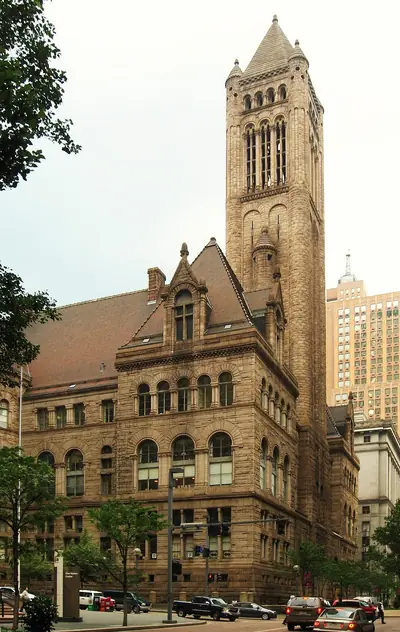
The Allegheny County Courthouse is one of Downtown Pittsburgh’s most distinctive buildings. Completed in 1888, it forms a historic complex with the old Allegheny County Jail. Designed by H. H. Richardson, the buildings are considered outstanding examples of Romanesque Revival architecture, and the complex became a National Historic Landmark in 1976.
The city’s industrial-era story also appears in its towers and public spaces. The U.S. Steel Tower, the Frick Building, the Grant Building, Mellon Square, and the Omni William Penn Hotel are among the landmarks featured on a walk through Grant Street’s skyscrapers. The area also includes Trinity Cathedral, First Presbyterian Church, the Warner Theatre, and the Frank & Seder Building.
Pittsburgh’s cultural life comes into view around the Cultural District. Heinz Hall, the O’Reilly Theater, the Byham Theater, and the Benedum Center sit among galleries and cultural institutions, including Wood Street Galleries, ToonSeum, and the August Wilson African American Cultural Center.
Fort Pitt and the meeting of the rivers
Fort Pitt and the Fort Pitt Blockhouse introduce Pittsburgh’s frontier history. The blockhouse is included in Neywo’s walk from Fort Pitt to the Cultural District, alongside the Fort Pitt Museum and landmarks in the Firstside Historic District.
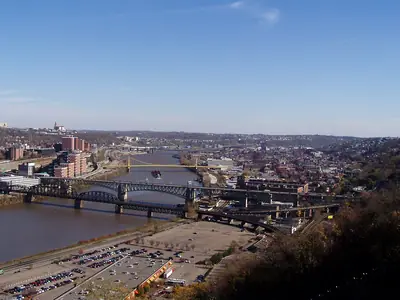
The city’s geography is just as important as its history. The Allegheny River meets the Monongahela River in Pittsburgh, and together they form the Ohio River. The Allegheny is navigable upstream from Pittsburgh to East Brady, while locks and dams support movement along the river.
Bridges provide another way to understand the city’s landscape. Completed in 1928, Liberty Bridge links Downtown with the Liberty Tunnels and the South Hills neighborhoods. Farther upstream, Washington Crossing Bridge—also known as the Fortieth Street Bridge—connects Lawrenceville with Millvale across the Allegheny River. Its decoration includes seals representing the original thirteen states of the United States and the seal of Allegheny County.
Oakland’s museums and the Cathedral of Learning
Oakland is one of the best areas to explore if you want museums, university architecture, and green spaces in one part of Pittsburgh. The Cathedral of Learning rises above the University of Pittsburgh campus as a 535-foot, 42-story Late Gothic Revival skyscraper. Known to Pitt students as “Cathy,” it contains the Nationality Rooms, classrooms, offices, and a four-story vaulted Gothic study and event hall.
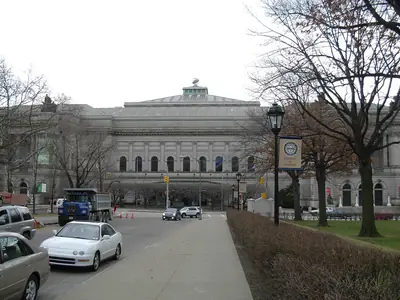
The Carnegie Museum of Natural History, founded by Andrew Carnegie in 1896, explores fossils, minerals, insects, and cultural artifacts. Its collections contain approximately 22 million specimens, with about 10,000 on display at any one time. The museum is particularly known for its dinosaur collections, including fossils of Diplodocus carnegii and the exhibition Dinosaurs in Their Time.
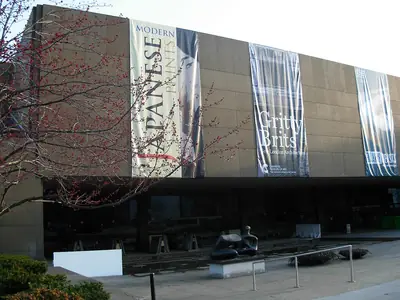
Next door, the Carnegie Museum of Art focuses strongly on contemporary art, including film and video. Founded in 1895, it holds around 35,000 works covering painting, sculpture, installations, prints, photography, architecture, film, video, and decorative arts. The collection also includes notable groups of aluminum objects and chairs.
Other Oakland landmarks add to the neighborhood’s character. The Frick Fine Arts Building and Phipps Conservatory and Botanical Gardens appear on Neywo’s Oakland walk, which also includes the Nationality Rooms, Heinz Memorial Chapel, the Frick Art Museum, and the Mary Schenley Memorial Fountain.
The Frick Pittsburgh in Point Breeze
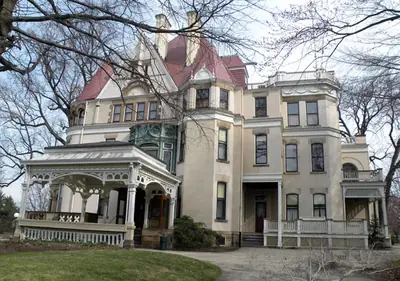
Frick Pittsburgh brings together museums, historic buildings, lawns, and gardens in the Point Breeze neighborhood. The five-and-a-half-acre complex centers on Clayton, the restored nineteenth-century home of the Frick family and industrialist and art collector Henry Clay Frick.
The site also includes the Frick Art Museum, the Car and Carriage Museum, a greenhouse, a children’s playhouse, and The Café. Helen Clay Frick, Henry Clay Frick’s daughter, played a major role in preserving the estate and making it possible for the property to open to the public after her death.
Andy Warhol on the North Shore
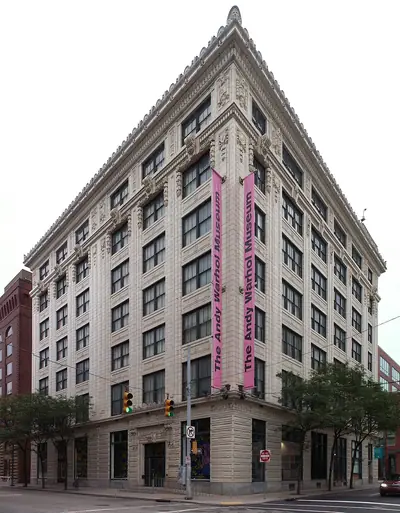
The Andy Warhol Museum is dedicated to the Pittsburgh-born pop artist and is the largest museum in North America devoted to a single artist. Its seven floors and 17 galleries present Warhol’s art and creative work across paintings, drawings, prints, sculptures, photographs, films, and videotaped works.
The permanent collection includes 900 paintings, nearly 2,000 works on paper, more than 1,000 published prints, 77 sculptures, 4,000 photographs, and more than 4,350 films and videotaped works. The museum is one of the central stops on Neywo’s North Shore walk, which also includes PNC Park, Acrisure Stadium, the USS Requin, and other landmarks.
North Side museums and creative spaces
The Children’s Museum of Pittsburgh occupies the former Allegheny Post Office and the neighboring Buhl Planetarium building. A contemporary glass addition connects the two historic structures. Its hands-on programs include dance, rocket building, quilting, and robotics, alongside workshops in pottery, Japanese paper cutting, animation, and painting.
Bicycle Heaven offers a very different museum experience. Founded by Craig Morrow in 2011, it grew from his personal collection and now displays more than 3,500 bicycles in a 650-square-meter showroom. Another 27,000 bicycles are kept in storage, supported by more than 100,000 parts. The museum also operates as a bike shop and supplies bicycles as props for film, television, and theatrical productions.
The North Side also includes the Mattress Factory, the National Aviary, Randyland, the New Hazlett Theater, and the Carnegie Free Library of Allegheny. Together, these places give the area a mix of contemporary art, unusual collections, performance spaces, and community landmarks.
South Side churches and neighborhood history
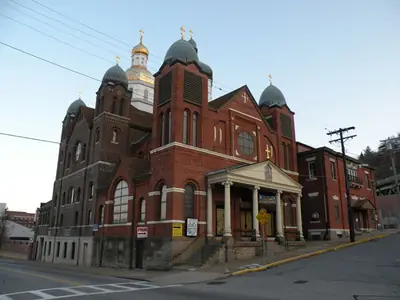
St. John the Baptist Ukrainian Catholic Church stands in the South Side Flats. The parish has served Pittsburgh’s Ukrainian Catholic community since 1891. Its first services took place in the former Grace Lutheran Church, and the congregation built its own church on the site in 1895. A major addition was completed in 1919, and the parish remains under the authority of the Eparchy of St. Josaphat in Parma, Ohio.
The church is one of the stops on Neywo’s South Side Slopes and Steeples walk, which also includes City Theatre, Saint Michael’s Roman Catholic Church & Rectory, South Side Presbyterian Church, and the Brew House Association.
Allegheny Cemetery and Lawrenceville
Allegheny Cemetery is a wooded hillside burial ground above the Allegheny River in Lawrenceville. Opened in 1845, it covers about 300 acres and is described as the sixth oldest rural cemetery in America. Its paths, trees, and north-facing hillside give it the character of both a historic cemetery and a spacious park.
The Butler Street Gatehouse was listed on the National Register of Historic Places in 1973, followed by the entire cemetery in 1980. Nearby, Washington Crossing Bridge connects Lawrenceville with Millvale and offers a view of the Allegheny River corridor.
A different view of nature
The Center for PostNatural History in Garfield examines organisms deliberately and heritably altered by humans. Its focus includes changes produced through selective breeding and genetic engineering, inviting visitors to consider the boundary between natural history and human influence.
Explore Pittsburgh with Neywo
Neywo turns Pittsburgh into a self-guided audio experience. The app offers seven walking tours, one bus route, and one bike route, with narration available in 11 languages.
The walks range from the 1.95-kilometre, 80-minute route through Grant Street’s skyscrapers to the 3.27-kilometre, 86-minute North Side walk. Other options include:
- Oakland: Carnegie’s Museums and the Cathedral of Learning — 2.67 km, 102 minutes, 12 stops
- From Fort Pitt to the Cultural District — 2.87 km, 97 minutes, 12 stops
- North Shore: Warhol, Baseball and a Submarine — 3.08 km, 87 minutes, 8 stops
- South Side Slopes and Steeples — 2.54 km, 63 minutes, 5 stops
- Houses of Worship: Oakland to Squirrel Hill — 2.8 km, 75 minutes, 7 stops
- Bus 61D: Downtown to Oakland and the Museums — 8 km, 34 minutes, 10 stops
- Three Rivers Ride: Fort Pitt to the Strip — 2.4 km, 12 minutes, 4 stops
Each story plays as you reach the place, at your own pace, with no group and no schedule. Download Neywo and explore Pittsburgh’s museums, bridges, churches, rivers, and neighborhoods while the city’s stories unfold around you.
Pittsburgh is part of Pennsylvania in the United States.
Places with an audio guide in Pittsburgh
8 places in Pittsburgh with a Neywo audio guide. Each one starts telling its story as you reach it.
Self-guided tours in Pittsburgh
9 tours in Pittsburgh, free in the Neywo app. Each stop tells its story as you reach it.
- Bike ride
Three Rivers Ride: Fort Pitt to the Strip
Follow the riverside cycle lanes from Fort Pitt at the Point past the Convention Center and along the Strip District to the David McCullough Bridge over the Allegheny.
Fort Pitt Museum · Byham Theater · David L. Lawrence Convention Center · David McCullough Bridge
Open this tour: Three Rivers Ride: Fort Pitt to the Strip - Bus ride
Bus 61D: Downtown to Oakland and the Museums
Bus 61D is a regular Pittsburgh Regional Transit line along Forbes Avenue. It links Heinz Hall, the Frick Building and the Old Jail downtown with Pitt's campus, the Stephen Foster Memorial and the Carnegie Museum of Natural History, then runs on past Walking to the Sky to the American Jewish Museum in Squirrel Hill.
Heinz Hall · Warner Theatre · Frick Building · Old Allegheny County Jail · St. Peter's Episcopal Church · William Pitt Union …
Open this tour: Bus 61D: Downtown to Oakland and the Museums - Walk
Oakland: Carnegie's Museums and the Cathedral of Learning
Andrew Carnegie's Oakland packs a dinosaur, two world-class museums, a 42-storey Gothic university tower with themed classrooms and a Neo-Gothic chapel into a few blocks. Walk it from the war memorial to Dippy at the museum door.
Soldiers and Sailors Memorial Hall and Museum · William Pitt Union · Nationality Rooms · Stephen Foster Memorial · Heinz Memorial Chapel · Mary Schenley Memorial Fountain …
Open this tour: Oakland: Carnegie's Museums and the Cathedral of Learning - Walk
Steel Money: Grant Street's Skyscrapers
Follow Grant Street, the boulevard of Pittsburgh's industrial fortunes: H. H. Richardson's courthouse, Frick's tower built to outshine Carnegie, the rust-coloured U.S. Steel Tower and Mellon Square. End among the Gothic spires of two historic churches.
Allegheny County Courthouse · Old Allegheny County Jail · Grant Building · Frick Building · U.S. Steel Tower · Regional Enterprise Tower …
Open this tour: Steel Money: Grant Street's Skyscrapers - Walk
From Fort Pitt to the Cultural District
Begin at the Point, where the British built Fort Pitt, then cross downtown to the theatres of the Cultural District. These former movie palaces and Michael Graves's O'Reilly Theater give Pittsburgh its stage.
Fort Pitt Blockhouse · Fort Pitt Museum · Firstside Historic District · Investment Building · One PPG Place · Heinz Hall …
Open this tour: From Fort Pitt to the Cultural District - Walk
North Shore: Warhol, Baseball and a Submarine
Cross the river to the North Shore for the Andy Warhol Museum, PNC Park with its skyline view, Acrisure Stadium, the Science Center and the WWII submarine USS Requin moored at the river's edge.
Andy Warhol Museum · PNC Park · Stage AE · Acrisure Stadium · Highmark SportsWorks · USS Requin …
Open this tour: North Shore: Warhol, Baseball and a Submarine - Walk
North Side: Murals, Birds and Mattresses
Cross the river to Pittsburgh's quirky North Side. Visit Randyland's riot of colour, the Mattress Factory's installations, the Children's Museum, the National Aviary and the historic churches and Carnegie library of Allegheny Center.
Randyland · Mattress Factory · Children's Museum of Pittsburgh · National Aviary · New Hazlett Theater · St. Peter's Roman Catholic Church …
Open this tour: North Side: Murals, Birds and Mattresses - Walk
South Side Slopes and Steeples
Climb the South Side's hillside streets past the domed Ukrainian church, the City Theatre, a 19th-century Catholic church and a Presbyterian sanctuary, ending at the Brew House arts collective.
St. John the Baptist Ukrainian Catholic Church · City Theatre · Saint Michael's Roman Catholic Church & Rectory · South Side Presbyterian Church · Brew House Association
Open this tour: South Side Slopes and Steeples - Walk
Houses of Worship: Oakland to Squirrel Hill
A tour of the faiths that built the East End, from a Greek Orthodox cathedral and Pittsburgh's Catholic cathedral to the Egyptian-flavoured Rodef Shalom Temple, Shadyside's Presbyterian church and the CMU sculpture Walking to the Sky.
Cathedral of Saint Paul · Saint Nicholas Greek Orthodox Cathedral · Church of the Ascension · First Church of Christ, Scientist · Rodef Shalom Temple · Shadyside Presbyterian Church …
Open this tour: Houses of Worship: Oakland to Squirrel Hill
Walk Pittsburgh with Neywo
Neywo turns Pittsburgh into a self-guided audio tour. Stories arrive as you reach the place they belong to, and the route reshapes when you wander off it.