Park City, United States: Self-Guided Walking Tour
Things to do in Park City, Utah
The best things to do in Park City include exploring its mining-era buildings, historic churches, museums, public art, and distinctive homes along Park Avenue and Main Street. The city’s preserved architecture reveals the community that grew around silver mining, while landmarks such as the Egyptian Theatre and Franz the Bear add a more contemporary character. Neywo offers a free audio guide for Park City with 13 narrated places, available in 11 languages.
Park City is part of Utah, a destination with a rich mix of historic towns, mountain landscapes, and distinctive cultural sites.
What to see in Park City
The following places trace a route through Park City’s historic center and older residential streets, with a focus on the buildings, artworks, and institutions that give the city its character.
Peter Farthelos House
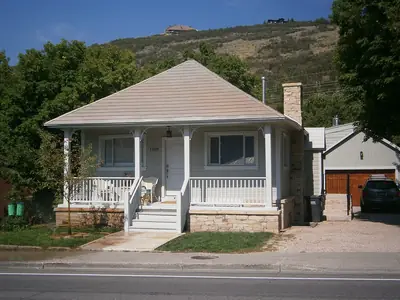
At 1150 Park Avenue, the Peter Farthelos House is one of Park City’s surviving historic bungalows. Built around 1921, it is one of 18 bungalows that remain in the city and one of eight included in the National Register nomination.
The house was probably built for Peter Farthelos, a partner in the Polychronis Grocery Store. It was moved in 1947 from the corner of Woodside Avenue and Seventh Street, but remains within Park City’s older residential area.
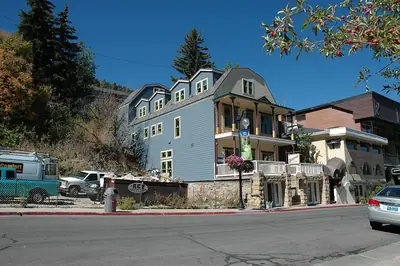
Ellsworth J. Beggs House
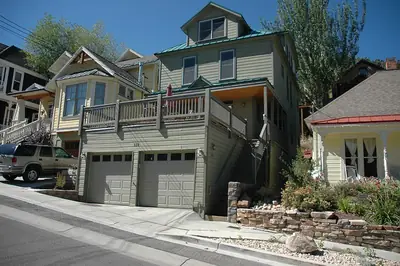
The Ellsworth J. Beggs House stands at 703 Park Avenue. Built, or possibly moved to this site, around 1907, it combines Queen Anne and eclectic styles and has also been known as High West Distillery.
Its two-story box form, nearly square shape, pyramid or truncated hip roof, and full-width porch make it unusual among Park City’s historic homes. The house is one of about four surviving examples of this type in the city.
Franz the Bear at Art Elevated
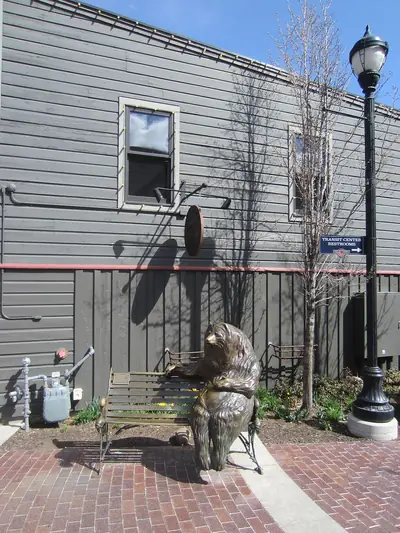
Art Elevated is a sculpture stop featuring Franz the Bear, a statue of a seated bear on a bench. Created by Michele vandenHeuvel, the sculpture was installed as a photo opportunity. Visitors can sit beside Franz for a picture, making this one of Park City’s most playful public artworks.
Loosey the Moose
Loosey the Moose is another recognizable piece of public art in Park City. The sculpture has become a familiar landmark for pedestrians and a popular place for a memorable photograph.
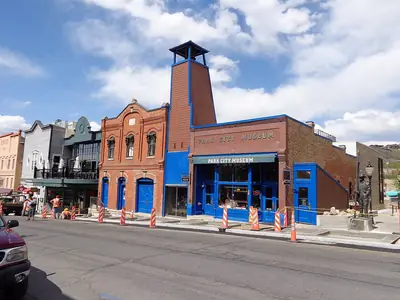
Park City Museum
The Park City Museum preserves and presents stories connected with the city. Its collections provide a way to explore the material history of Park City and understand the people and events that shaped the community.
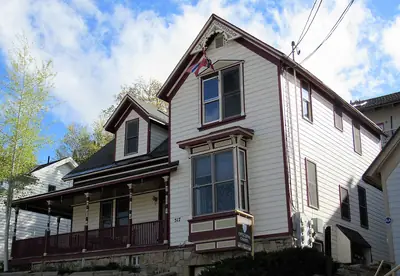
Dr. William Bardsley House
The Dr. William Bardsley House, at 517 Park Avenue, offers a glimpse of residential architecture from Park City’s mining boom era. Built around 1888, the house overlooks Main Street from the uphill side of Park Avenue.
Its cross-wing design is especially distinctive. A two-story section projects a gable end toward the street, with an Italianate-style box bay window and paired double-hung windows above it. Decorative bargeboard embellishes the gable end.
LDS Park City Meetinghouse
The LDS Park City Meetinghouse is a historic building that forms part of Park City’s built heritage. Its architecture connects the present-day city with the community’s earlier history.
Park City Community Church
Park City Community Church is another historic building along the route. Its character contributes to the older architectural identity of Park City and offers another perspective on the city’s built past.
John Doyle House
The John Doyle House, at 339 Park, was built around 1900. It is a surviving example of Park City’s mining-era residential architecture and a reminder that the historic district extends beyond the best-known commercial buildings.
Egyptian Theatre
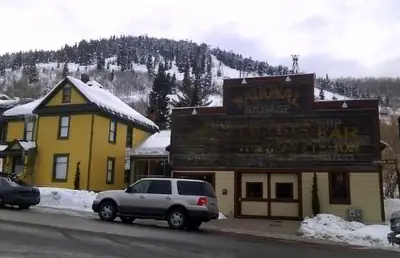
The Egyptian Theatre, at 328 Main Street, is a historic movie and vaudeville theater and one of the distinctive buildings in this part of Park City. Its Egyptian-inspired style reflects the popularity of that architectural language in the 1920s after the discovery of Tutankhamun’s tomb.
The building is also known as the Mary J. Steiner Egyptian Theatre, or simply the Egyptian Theatre.
Bogan Boarding House
At 221 Main Street, the Bogan Boarding House is one of the few surviving boarding houses from Park City’s mining era. Only four boarding houses from that period still survive in the city.
The building belongs to a later group of boarding houses constructed after an 1901 legislative bill ended mine owners’ right to require miners to live in company-owned housing near the mines, except for married miners living in town with their families.
St. Mary of the Assumption Church and School
St. Mary of the Assumption Church and School is one of Park City’s historic Catholic landmarks. The church belongs to the Roman Catholic Diocese of Salt Lake City and remains a parish of the Roman Catholic Church.
The present church was built in 1884 after an earlier church was destroyed by fire during July Fourth celebrations. It is recognized as the oldest extant Catholic church in Utah and is listed on the National Register of Historic Places.
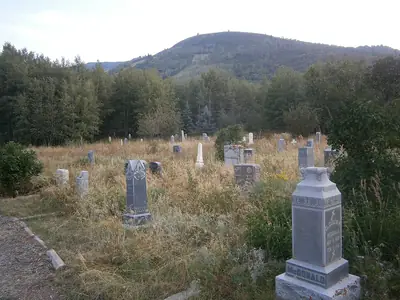
Glenwood Cemetery
Glenwood Cemetery is a five-acre historic cemetery established in 1885 by silver miners. More than 950 people are buried there, connecting Park City’s early pioneer history with the community that followed.
The cemetery remains in use today and is listed on the National Register of Historic Places. Its quiet setting offers a different way to encounter Park City’s mining past.
Explore Park City with a self-guided audio tour
Neywo’s “Silver, Bungalows and Bears: Historic Park Avenue” is a self-guided walking tour of Park City. The walk covers 1.92 km, takes approximately 87 minutes, and includes 12 narrated stops.
The route includes the Peter Farthelos House, Ellsworth J. Beggs House, Art Elevated and Franz the Bear, Loosey the Moose, Park City Museum, the Dr. William Bardsley House, LDS Park City Meetinghouse, Park City Community Church, John Doyle House, the Egyptian Theatre, Bogan Boarding House, and St. Mary of the Assumption Church and School.
Download Neywo to explore Park City at your own pace. The app tells the story of each place as you reach it, with no group and no schedule. There is one walking tour in Park City, and its narration is available in 11 languages.
Park City is also a useful base for discovering other destinations in Utah, including Salt Lake City, Provo, and Heber City. The wider United States destination guide offers more places to explore beyond the state.
Places with an audio guide in Park City
8 places in Park City with a Neywo audio guide. Each one starts telling its story as you reach it.
Self-guided tours in Park City
1 tour in Park City, free in the Neywo app. Each stop tells its story as you reach it.
- Walk
Silver, Bungalows and Bears: Historic Park Avenue
Park City grew from a silver-mining camp, and its older streets still show it. Walk down Park Avenue past miners' bungalows, a boxy Queen Anne house and an Italianate home, meet Franz the Bear and Loosey the Moose, glance up at the Egyptian Theatre on Main Street, and end at the oldest Catholic church in Utah.
Peter Farthelos House · Ellsworth J. Beggs House · Art Elevated · Loosey the Moose · Park City Museum · Dr. William Bardsley House …
Open this tour: Silver, Bungalows and Bears: Historic Park Avenue
Walk Park City with Neywo
Neywo turns Park City into a self-guided audio tour. Stories arrive as you reach the place they belong to, and the route reshapes when you wander off it.

