Visiting Madison, Wisconsin, United States: Top Sights on Foot

Things to Do in Madison, Wisconsin
The best things to do in Madison, Wisconsin, range from exploring the Wisconsin State Capitol and university landmarks to discovering museums, memorials, and historic sites. Set in Dane County between lakes and shaped by the University of Wisconsin–Madison, the city brings together civic history, campus life, culture, and outdoor spaces. Neywo offers a free audio guide for Madison, Wisconsin, with 35 narrated places.
What to See in Madison, Wisconsin
Wisconsin State Capitol and Capitol Square
Capitol Square is the civic heart of Madison. The Wisconsin State Capitol grounds are also home to Forward, a bronze statue representing Wisconsin’s motto. The statue was created by Jean Pond Miner Coburn in 1893; the version on the grounds today is a 1996 replica. Nearby, the statue of Hans Christian Heg honors the abolitionist and Union officer. Created by Paul Fjelde, it was cast in 1925 and installed in 1926.
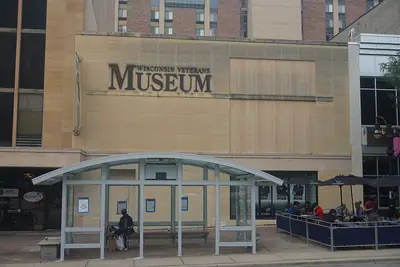
The square is also a useful starting point for exploring Madison’s museums and historic buildings. The Wisconsin Veterans Museum tells the stories of Wisconsin citizens who served in the United States military. Its two galleries trace their experiences from the American Civil War to the present day. The museum began in 1901 as the Grand Army of the Republic Memorial Hall in the Wisconsin State Capitol, but its museum and collections were destroyed by the Capitol fire of 1904. It moved to its current location in 1993.
Saint Raphael’s Cathedral site
Today, Cathedral Square occupies the former site of Saint Raphael’s Cathedral. The park includes a Way of the Cross and offers a place to reflect on the building’s history. Saint Raphael’s became the cathedral of the Diocese of Madison after the diocese was created on January 9, 1946.
The cathedral was heavily damaged by fire in March 2005 and was later demolished. In late 2012, the diocese created Cathedral Square, also called Cathedral Place, on the former cathedral site.
Madison’s downtown arts scene
The Overture Center for the Arts combines theaters and visual art under one roof. It opened on September 19, 2004, replacing the former Civic Center, and now serves as both a performing arts center and an art gallery.
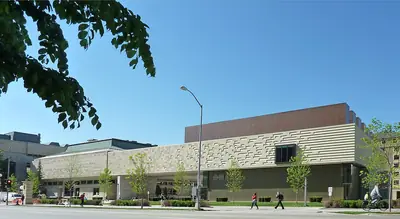
Next to it, the Madison Museum of Contemporary Art, or MMoCA, presents modern and contemporary art through exhibitions, films, and educational programs. The independent nonprofit museum opened in its current home on April 23, 2006. Both buildings were designed by César Pelli, and the Overture Center houses MMoCA alongside its theaters.
Madison Children’s Museum
The Madison Children’s Museum offers exhibits focused on the arts, sciences, history, culture, health, and civic engagement. It is a place where children can explore several subjects through hands-on museum experiences.
University of Wisconsin–Madison
The University of Wisconsin–Madison is a public research university founded in 1848, when Wisconsin achieved statehood. Its main campus extends along the shores of Lake Mendota and covers 933 acres, or about 378 hectares. The university also operates a 1,200-acre arboretum about four miles south of the main campus.
The campus provides one of the most distinctive ways to experience Madison. Its landmarks and museums connect university life with the city’s history, science, art, and architecture.
Chazen Museum of Art
The Chazen Museum of Art, formerly known as the Elvehjem Museum of Art, is one of the university’s major art institutions. Its collection contains more than 25,000 objects.
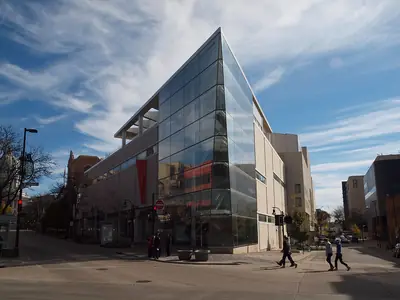
The museum began in 1970 as the Elvehjem Art Center. Its first building was designed in the Brutalist style by Illinois architect Harry Weese and housed the university’s collection of 1,600 artworks. In 2005, the museum took the name Chazen Museum of Art after a gift from university alumni Jerome A. Chazen and Simona Chazen helped fund an additional building. Designed by Machado and Silvetti, the new building opened in 2011.
UW–Madison Geology Museum
The UW–Madison Geology Museum, housed in Weeks Hall on the southwest part of campus, focuses on geology and paleontology. Its exhibits, public outreach, and research connect visitors with the natural world and with ongoing scientific work. Admission is free.
L. R. Ingersoll Physics Museum
The L. R. Ingersoll Physics Museum is a hands-on science museum at the University of Wisconsin–Madison. Its exhibits introduce physics through public outreach and practical exploration. The museum operates on donations and charges no admission.
Camp Randall
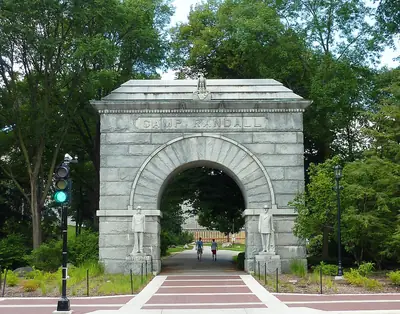
Camp Randall connects Madison’s university landscape with an important Wisconsin Civil War site. During the American Civil War, it was the largest staging point for Wisconsin troops entering the conflict. Volunteers received training there before leaving to join the Union Army.
The camp also included a hospital and, for a short time, a prisoner-of-war camp for captured Confederate soldiers. Its history is remembered today through Camp Randall Memorial Park and historic and memorial displays across the grounds.
Thorstrand
Near the western end of Lake Mendota, Thorstrand offers a glimpse into the story of a prominent Norwegian immigrant in Madison. The historic estate was added to the National Register of Historic Places in 1980 and the Wisconsin State Register of Historic Places in 1989.
Annie C. Stewart Memorial Fountain
In Vilas Park, the Annie C. Stewart Memorial Fountain commemorates Annie, also known as Anna, C. Stewart, who was involved in charitable activities in Madison. The fountain was constructed between 1917 and 1925 and erected in 1925.
It stands beside an eagle effigy mound built by Native Americans, overlooking Lake Wingra. Its setting gives this Madison memorial a connection to both the city’s charitable history and its older landscape.
Plan Your Madison, Wisconsin Self-Guided Walking Tour with Neywo
Neywo’s free audio guide lets you explore Madison, Wisconsin, at your own pace. The app has 3 walking tours, 1 bus route, and 1 bike route, with 35 narrated places in total. Each story plays as you reach the place, so there is no group and no schedule. Narration is available in 11 languages.
The tours include:
- Three walking tours: 1.36 km and 59 minutes with 8 stops; 3.68 km and 88 minutes with 7 stops; and 3.45 km and 87 minutes with 7 stops.
- One bus route: 17.3 km and 74 minutes with 8 stops.
- One bike route: 5.4 km and 27 minutes with 7 stops.
The walks cover Capitol Square, downtown arts venues, the university campus, Camp Randall, Madison Children’s Museum, and other city landmarks. Download Neywo and explore Madison’s stories as you reach them—on your own, at your own pace.
Madison is part of Wisconsin in the United States. To continue exploring the state, consider Milwaukee, Oshkosh, or Green Bay.
Places with an audio guide in Madison, Wisconsin
8 places in Madison, Wisconsin with a Neywo audio guide. Each one starts telling its story as you reach it.


Self-guided tours in Madison, Wisconsin
5 tours in Madison, Wisconsin, free in the Neywo app. Each stop tells its story as you reach it.
- Bike ride
Isthmus Ride: From the Lake to the Chazen
Ride the bike lanes and path along Madison's isthmus between lakes Mendota and Monona. Start at the 1929 Barrymore, pass The Sylvee and St. Patrick's, then the children's museum and the Veterans Museum, glide by MMoCA, and finish at the university's Chazen Museum of Art.
Barrymore Theatre · The Sylvee · St. Patrick's Roman Catholic Church · Madison Children's Museum · Wisconsin Veterans Museum · Madison Museum of Contemporary Art …
Open this tour: Isthmus Ride: From the Lake to the Chazen - Bus ride
Metro Route 38: Capitol to Campus
Madison Metro's weekday Route 38 links the Capitol Square arts district with the University of Wisconsin campus. Ride it from the Veterans Museum and Overture Center west to Luther Memorial Church and the Historical Society, then back around the Capitol to Forward, the Heg statue, the Saint Raphael site and the Chazen Museum.
Wisconsin Veterans Museum · Overture Center for the Arts · Luther Memorial Church · Wisconsin Historical Society · Forward · Hans Christian Heg …
Open this tour: Metro Route 38: Capitol to Campus - Walk
Capitol Square: Wisconsin's Civic Heart
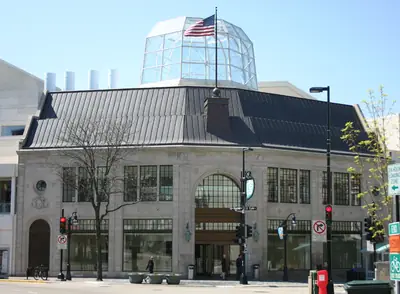
Circle the square around Wisconsin's State Capitol, from the museum of the state's veterans and a bronze Forward, to a Gothic Revival church that dates from 1855. Finish on the arts side of town at Overture Center and the Orpheum, a surviving 1920s movie palace, and a domed Classical church on Wisconsin Avenue.
Wisconsin Veterans Museum · Forward · Grace Episcopal Church · Saint Raphael's Cathedral · Overture Center for the Arts · Madison Museum of Contemporary Art …
Open this tour: Capitol Square: Wisconsin's Civic Heart - Walk
Between the Lakes: Heg, Vaudeville and the Old Synagogue
A short stroll east of the Capitol through Madison's early history: a statue of an abolitionist colonel, the oldest theatre in town, a Catholic landmark from 1888 and a synagogue from 1863 that was rescued from demolition and moved to the lakeshore. Then head east along the isthmus to The Sylvee, a modern concert hall in Capitol East, and finish at the experimental Broom Street Theater.
Hans Christian Heg · Majestic Theatre · St. Patrick's Roman Catholic Church · Madison Children's Museum · Gates of Heaven Synagogue · The Sylvee …
Open this tour: Between the Lakes: Heg, Vaudeville and the Old Synagogue - Walk
On Wisconsin: Campus Landmarks from State Street to Camp Randall
Walk the University of Wisconsin-Madison campus: a Brutalist art museum, a Gothic Revival church from the Great Depression, the oldest publicly funded historical society in the country and a cathedral-like Lutheran church. End at Camp Randall, where Wisconsin's Civil War soldiers trained. Detour south to the memorial fountain in Vilas Park.
University Presbyterian Church and Student Center · Elvehjem Museum of Art · Wisconsin Historical Society · Wisconsin Union Theater · Luther Memorial Church · Camp Randall …
Open this tour: On Wisconsin: Campus Landmarks from State Street to Camp Randall
Walk Madison, Wisconsin with Neywo
Neywo turns Madison, Wisconsin into a self-guided audio tour. Stories arrive as you reach the place they belong to, and the route reshapes when you wander off it.

