Things to Do in Louisville, United States: Walking Guide
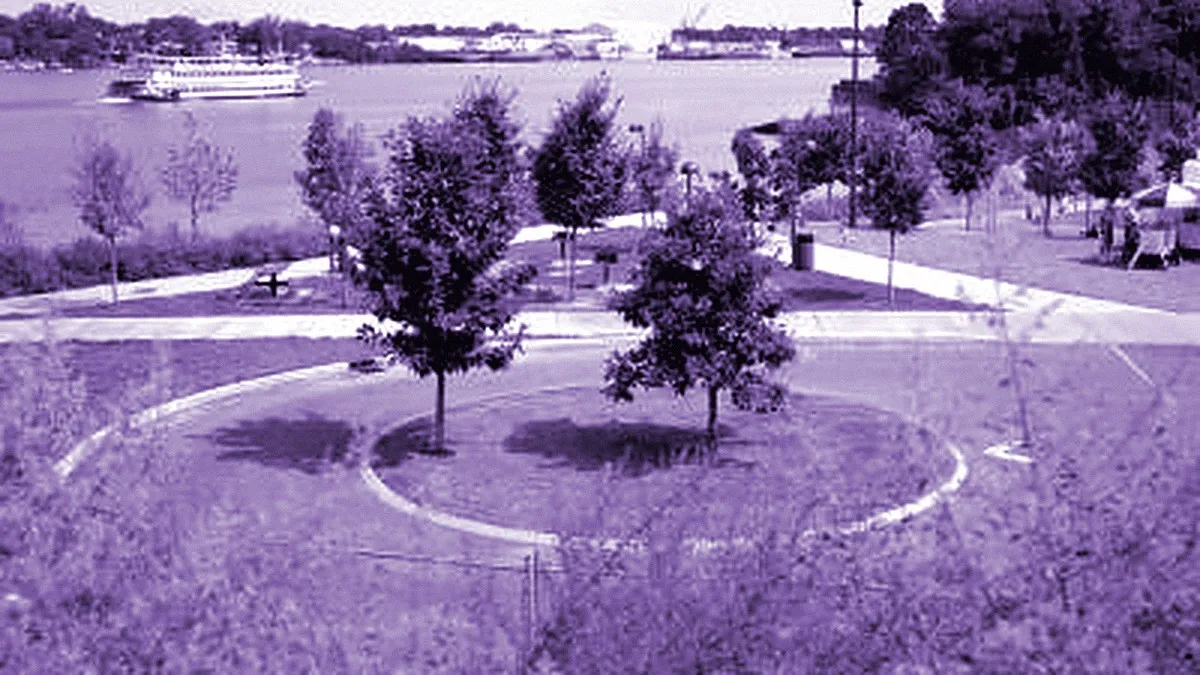
Things to do in Louisville: museums, riverfront landmarks and historic neighborhoods
Louisville, Kentucky, is a city shaped by the Ohio River, Kentucky history and a strong local culture of bourbon, baseball, horse racing and boxing. The best things to do in Louisville range from exploring Museum Row and Old Louisville to visiting the Kentucky Derby Museum and discovering unusual landmarks such as a floating lifesaving station. Neywo has a free audio guide for Louisville with 84 narrated places, so you can explore the city while its stories play as you arrive.
What to see in Louisville
Museum Row and West Main District
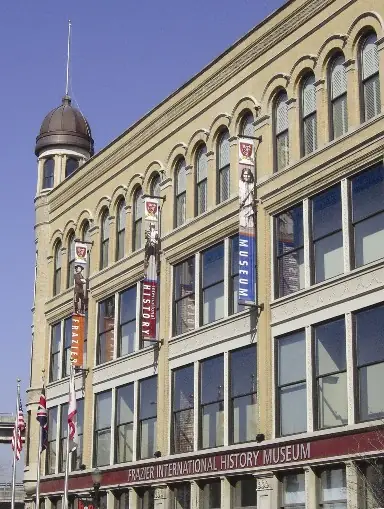
Louisville’s West Main District brings several major museums together in a compact downtown area. The Frazier History Museum explores Kentucky history, popular culture, bourbon whiskey and the Lewis and Clark Expedition. It is also a Smithsonian Institution affiliate, with exhibitions, educational programs, guided tours, bourbon tastings and interactive presentations.
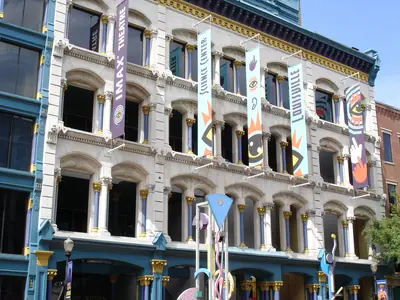
Nearby, the Kentucky Science Center presents interactive exhibits devoted to science, technology, engineering and mathematics. Its three floors are organized around themes including human biology, Earth and the natural sciences, and invention and innovation. The museum occupies a former dry goods warehouse built in 1878, with a later extension into the adjacent Alexander Building.
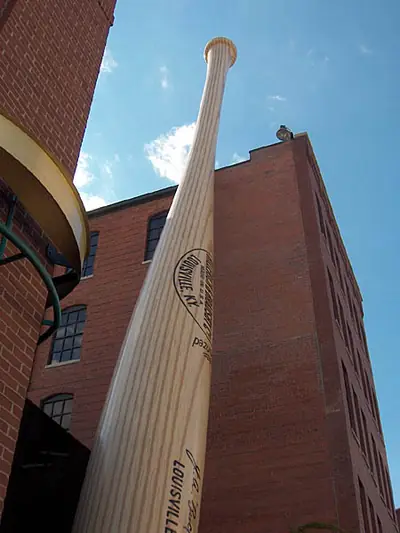
The Louisville Slugger Museum & Factory is easy to recognize: a 120-foot bat leans against the building. Inside, exhibitions trace the story of the Louisville Slugger bat from the 1880s to the present, while the factory tour follows production from raw timber to finished bat. Visitors can handle game-used bats, test themselves against a simulated 90-mile-per-hour fastball and see replica bats associated with baseball legends such as Babe Ruth.
Muhammad Ali Center
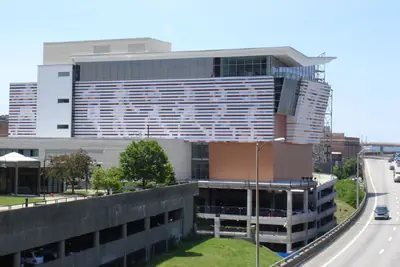
The Muhammad Ali Center explores the life and ideas of Louisville-born boxing champion Muhammad Ali. Founded by Ali and his wife, Lonnie Ali, the nonprofit museum opened in 2005 and occupies six stories in the West Main District.
Its exhibits cover Ali’s childhood, his introduction to boxing, his career and his opposition to the Vietnam War. Films, interactive installations, a recreated Deer Lake Training Camp and Generation Ali story booths connect his sporting achievements with his humanitarian work and public commitment to social change.
The Ohio River and Waterfront Park
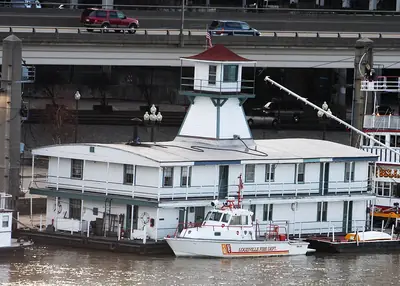
The riverfront offers some of Louisville’s most distinctive sights. The Mayor Andrew Broaddus, also known as Life Saving Station Number 10, is a floating lifesaving station near Fourth Street on River Road. Built by the United States Life-Saving Service, the predecessor of the United States Coast Guard, it protected travelers from the dangerous rapids at the Falls of the Ohio.
Louisville was the first place where one of these lifesaving stations was established in western waters. A local station opened in 1881, and the present vessel dates from 1929. It is the only surviving floating lifesaving station of its kind from the United States Life-Saving Service. The station also played a role in controlling alcohol traffic during Prohibition.
At Louisville Waterfront Park, the riverfront setting becomes an open urban space for experiencing the city beside the Ohio River. The Mayor Andrew Broaddus and the park are included in Neywo’s Ohio Riverfront Ride, a short route linking the riverfront with Museum Row.
Cathedral of the Assumption and civic Louisville
The Cathedral of the Assumption is the mother church of the Archdiocese of Louisville and has been listed on the National Register of Historic Places since 1977. It is one of the central landmarks in the downtown area.
The cathedral also appears alongside civic and theatrical landmarks on a route through central Louisville. The city’s theatre district includes the Kentucky Center, Louisville Metro Hall, Louisville City Hall, the Gene Snyder United States Courthouse, the Louisville Palace, the Kentucky Theater, the W. L. Lyons Brown Theatre and the Louisville Free Public Library’s Main Branch.
Speed Art Museum
The Speed Art Museum, next to the University of Louisville’s main campus on South Third Street, is the oldest and largest art museum in Kentucky. Founded in 1927, it holds Western art ranging from antiquity to the present, including paintings from the Netherlands, France and Italy, American decorative art and contemporary works.
Its program also includes Community Days, Family Days, the Art Sparks Interactive Family Gallery and After Hours at the Speed. The museum is a key stop for exploring the city’s Victorian Old Louisville area.
Old Louisville and Conrad-Caldwell House
Old Louisville is known for its preserved Victorian architecture, historic churches and Central Park. Among its most striking buildings is the Conrad-Caldwell House Museum on Saint James Court, also known as Conrad’s Castle.
Built in 1895 for businessman Theophilus Conrad, the mansion was designed by Louisville architect Arthur Loomis. Its Bedford limestone exterior features Richardsonian Romanesque details, including gargoyles, grand archways and elaborate stonework. Inside, seven types of hardwood, parquet floors and stained glass create a richly detailed Victorian setting. The restored rooms also preserve original objects connected with the Conrad and Caldwell families.
Louisville WaterWorks Museum
The Louisville WaterWorks Museum occupies the restored west wing of Pumping Station Number One beside the Ohio River. The pumping station was built between 1858 and 1860 as part of Louisville’s original water system and became a National Historic Landmark in 1971.
The museum presents the engineering and architecture behind the city’s water infrastructure. Highlights include the building’s restored pre-Civil War character and a cast-iron spiral staircase from the 1900s. The site also includes the Louisville Water Tower in Louisville Water Tower Park.
Kentucky Derby Museum
The Kentucky Derby Museum stands on the grounds of Churchill Downs and follows the history of Thoroughbred racing’s Kentucky Derby. Its exhibitions explore the people, horses and traditions behind the race, from breeding and training a young foal to reaching the winner’s circle.
The museum’s 360-degree theater shows The Greatest Race, while the Warner L. Jones Time Machine allows visitors to explore every Kentucky Derby victory from 1918 to the present day.
Mega Cavern
Mega Cavern is a former limestone mine beneath Louisville, extending beneath parts of the Watterson Expressway and the Louisville Zoo. It is used for tourism, storage, business and recycling, and its support structures mean it is classified as the largest building in Kentucky.
Inside, visitors can explore by tram, take zipline tours and try a ropes course. The cavern also hosts an annual holiday lights display.
Portland Museum and the American Printing House for the Blind
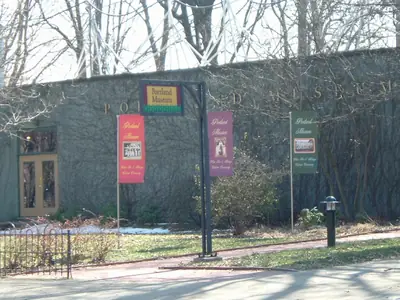
The Portland Museum tells the story of Portland, from its time as an independent town in the early 1800s through its incorporation into Louisville. Its buildings include Beech Grove, a nineteenth-century Italianate mansion, the former Portland Bridge Baptist Mission Building and the AHOY House, a renovated Victorian property. The museum is also working to restore the 1812 Squire Earick House.
The Museum of the American Printing House for the Blind presents the work of an organization that has supported people who are blind or visually impaired for more than 150 years. Its products and services are connected with independent living and daily life without sight.
Other Louisville stories
Louisville’s wider history is closely connected with Jefferson County. The county was created in 1780, and Louisville became its county seat. In 2003, the city and county governments merged, creating Louisville Metro government across the same territory.
The city is also closely associated with KFC and Colonel Harland Sanders. The chain’s name stands for Kentucky Fried Chicken, and its story began with Sanders selling fried chicken from a roadside restaurant in Corbin, Kentucky. The cardboard chicken bucket, introduced by franchisee Pete Harman in 1957, became one of the brand’s most recognizable traditions.
Explore Louisville with Neywo
Neywo offers a Louisville self-guided walking tour experience through four walking tours, one bus route and one bike route. Across the city, the app provides 84 narrated places, with narration available in 11 languages.
The walks include:
- Bats, Bourbon and Ali: Louisville’s Museum Row — 3.53 km, 113 minutes and 12 stops.
- Curtain Up: Civic Louisville and the Theatre District — 2.84 km, 82 minutes and 9 stops.
- Victorian Old Louisville: Mansions, Churches and Central Park — 4.03 km, 98 minutes and 9 stops.
- Butchertown and Germantown: Edison’s shotgun house and the German churches — 5.3 km, 113 minutes and 8 stops.
The bus route is TARC Route 4: North along Fourth Street from Old Louisville, covering 2.7 km in 12 minutes with 5 narrated stops. The bike route is Ohio Riverfront Ride: Museum Row to Waterfront Park, covering 1.8 km in 9 minutes with 3 stops.
Download Neywo and explore Louisville at your own pace: the app tells the story of each place as you reach it, with no group and no schedule. If you are continuing through the region, you can also discover Lexington, another Kentucky destination, or browse more cities across the United States.
Places with an audio guide in Louisville
8 places in Louisville with a Neywo audio guide. Each one starts telling its story as you reach it.
Self-guided tours in Louisville
6 tours in Louisville, free in the Neywo app. Each stop tells its story as you reach it.
- Bike ride
Ohio Riverfront Ride: Museum Row to Waterfront Park
A short ride on signed cycle infrastructure along the Ohio riverfront, from the Muhammad Ali Center past the floating lifesaving station Mayor Andrew Broaddus to Waterfront Park and the Big Four Bridge approach.
Muhammad Ali Center · Mayor Andrew Broaddus · Louisville Waterfront Park
Open this tour: Ohio Riverfront Ride: Museum Row to Waterfront Park - Bus ride
TARC Route 4: North along Fourth Street from Old Louisville
A city bus that runs north along Fourth Street from Old Louisville: Werne's Row and its five Châteauesque mansions, Landward House, the Gothic Revival Fourth Avenue church and the Beaux Arts First Christian Church. A cheap way to cover the length of Victorian Old Louisville.
Werne's Row · Landward House · Fourth Avenue Methodist Church · First Christian Church · Chestnut Street Presbyterian Church
Open this tour: TARC Route 4: North along Fourth Street from Old Louisville - Walk
Bats, Bourbon and Ali: Louisville's Museum Row
Start under a 120-foot baseball bat and stroll West Main Street, Louisville's cast-iron museum district. Visit the Frazier, the Science Center and a golden giant David, then pay respects at the Muhammad Ali Center. The walk ends at the Greek Revival Old Bank and the cast-iron facades of Whiskey Row.
Louisville Glassworks · Frazier History Museum · Louisville Slugger Museum & Factory · Kentucky Science Center · KMAC Museum · David (inspired by Michelangelo's work) …
Open this tour: Bats, Bourbon and Ali: Louisville's Museum Row - Walk
Curtain Up: Civic Louisville and the Theatre District
Walk through downtown's civic heart, from the Kentucky Center's modern sculpture to the Italianate clock tower of City Hall and the Greek Revival Metro Hall. Continue past the cathedral to the Louisville Palace and its painted night sky, and finish at the Carnegie library.
The Kentucky Center · Louisville Metro Hall · Louisville City Hall · Cathedral of the Assumption · Gene Snyder United States Courthouse · The Louisville Palace …
Open this tour: Curtain Up: Civic Louisville and the Theatre District - Walk
Victorian Old Louisville: Mansions, Churches and Central Park
Wander America's largest Victorian neighbourhood. See five Chateau-style mansions standing one foot apart, an Olmsted-designed garden and Central Park, where Edison's light bulb dazzled the Southern Exposition, then follow Fourth Street's grand Gothic and Beaux Arts churches.
Speed Art Museum · Werne's Row · Landward House · Central Park, Louisville · The Filson Club Historical Society Historical Marker · Board of Extension of the Methodist Episcopal Church, South …
Open this tour: Victorian Old Louisville: Mansions, Churches and Central Park - Walk
Butchertown and Germantown: Edison's shotgun house and the German churches
East of downtown, Louisville's German immigrants built parishes, churches and stockyards. Walk from the Presbyterian and German Evangelical churches past Louisville's oldest German Catholic parish, the baseball park built in a train shed and Thomas Edison's shotgun duplex, to the antebellum church of St. Martin of Tours.
College Street Presbyterian Church · St. Paul's German Evangelical Church · St. Boniface's Catholic Church · Louisville Slugger Field · Louisville Extreme Park · Saint Johns Evangelical Church Historical Marker …
Open this tour: Butchertown and Germantown: Edison's shotgun house and the German churches
Walk Louisville with Neywo
Neywo turns Louisville into a self-guided audio tour. Stories arrive as you reach the place they belong to, and the route reshapes when you wander off it.

