Things to Do in Honolulu, United States: Walking Guide
Things to Do in Honolulu: Historic Landmarks, Museums, and Royal Hawaii
Honolulu is the capital of Hawaii and a city shaped by royal history, missionary heritage, military memory, art, and Pacific culture. The best things to do in Honolulu include exploring downtown’s historic landmarks, visiting museums, and following the waterfront from the city’s political heart to Honolulu Harbor. Neywo offers a free audio guide for Honolulu with 46 narrated places, helping you discover the city as you walk.
What to See in Honolulu
Honolulu’s most important sights are concentrated across several connected areas, from the Capitol District and downtown to Waikiki, Diamond Head, and the city’s museums.
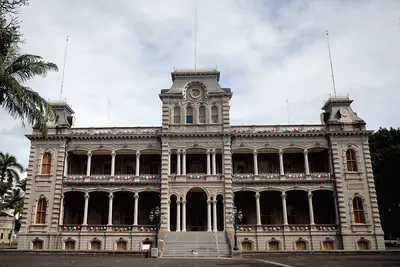
ʻIolani Palace
ʻIolani Palace is the only royal palace on U.S. soil. It served as the residence of the rulers of the Kingdom of Hawaiʻi, beginning with Kamehameha III in 1845 and ending with Queen Liliʻuokalani in 1893. After the monarchy was overthrown, the building became the capitol for successive governments until 1969.
Today, the palace is a museum. Inside, the Grand Hall features a koa-wood staircase and elegant decoration, while the second floor contains the royal family’s private apartments. The palace also preserves the bedroom where Queen Liliʻuokalani was confined for nearly eight months after the failed counter-revolution of 1895.
Kawaiahaʻo Church and the Mission Houses Museum
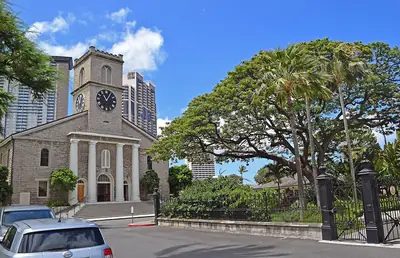
Kawaiahaʻo Church was once the central church of the Kingdom of Hawaiʻi and the chapel of the Hawaiian royal family. Its name refers to the water of Haʻo, recalling a spring and freshwater pool associated with a high chiefess. The present coral church is one of the oldest standing Christian places of worship in Hawaiʻi.
Together with the Mission Houses Museum, the church forms the Hawaiian Mission Houses Historic Site, designated a U.S. National Historic Landmark in 1962. The museum preserves documents, objects, and records from approximately 1820 to 1863, as well as historic houses that show how New England missionaries adapted their buildings to the Hawaiian environment.
Washington Place
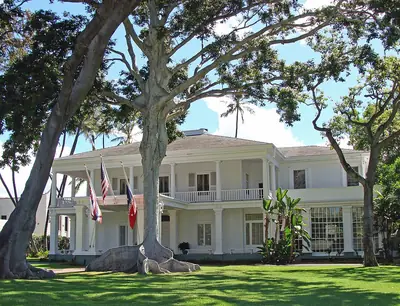
Washington Place is a historic home closely connected with Queen Liliʻuokalani. Built in the 1840s, it became her home after her marriage to John Owen Dominis and was the site of her arrest during the overthrow of the Kingdom of Hawaii. She died there in 1917.
The house later served as the governor’s mansion from 1921 to 2001, where thirteen governors lived. Its history makes it an important place for understanding the transition from the Hawaiian monarchy to later forms of government.
The Hawaii State Capitol and the statue of Father Damien
The statue of Father Damien stands at the entrance to the Hawaiʻi State Capitol and the Hawaiʻi State Legislature. The bronze memorial portrays the Belgian Catholic priest in his later years, after he had been diagnosed with the disease of the people he cared for on Molokaʻi. Father Damien was canonized by Pope Benedict XVI on October 11, 2009.
The memorial provides a direct connection between Honolulu’s civic landscape and the history of Catholic service in Hawaii.
Cathedral Basilica of Our Lady of Peace
The Cathedral Basilica of Our Lady of Peace was completed in August 1843 and dedicated on August 15 of that year. Its origins belong to Hawaii’s early missionary era, when Roman Catholic missionaries faced opposition from influential Congregational and Presbyterian ministers.
The building’s appearance changed over time. A Gothic redesign introduced a more elaborate porch and a concrete bell tower, but a later bishop chose to return the cathedral to another style, which has continued to the present day.
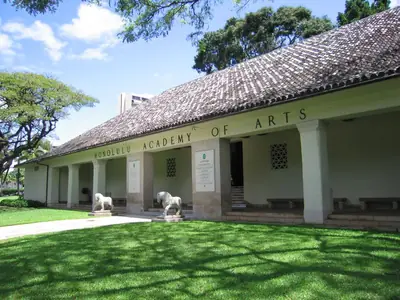
Honolulu Museum of Art
The Honolulu Museum of Art was founded by Anna Rice Cooke in 1922 and officially opened in 1927. Its collection has grown to more than 55,000 works, with particular strength in Asian and Pan-Pacific art.
Japanese and Chinese art are especially well represented, alongside Italian Renaissance paintings from the Samuel H. Kress collection. The museum also holds American and European paintings, decorative arts, textiles, contemporary art, and works from Africa, Oceania, and the Americas. Highlights include the James A. Michener collection of ukiyo-e prints and a collection tracing the artistic history of Hawaiʻi.
Bernice Pauahi Bishop Museum
The Bernice Pauahi Bishop Museum is home to the world’s largest collection of Polynesian cultural artifacts, together with natural history specimens. Founded in 1889 in honor of Bernice Pauahi Paki, the museum grew from objects connected with the princess and later expanded into spaces formerly occupied by the Kamehameha School.
Its exhibits focus on Hawaiian cultural material and the natural world. The site also includes a native Hawaiian garden and opportunities to explore the ocean floor, making it one of Honolulu’s major places for understanding both the islands’ heritage and environment.
Aloha Tower
Aloha Tower is a retired lighthouse at Pier 9 of Honolulu Harbor. It opened on September 11, 1926, and welcomed vessels arriving in the city. For roughly four decades, it was Hawaii’s tallest structure, rising 184 feet with a 40-foot flag mast.
Built in the Hawaiian Gothic architectural style, the tower became a landmark of Honolulu’s waterfront. During World War II, it was painted in camouflage after the attack on Pearl Harbor so that it would be difficult to see at night. The nearby dock of the Falls of Clyde adds another maritime point of interest.
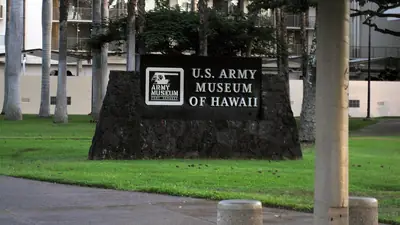
U.S. Army Museum of Hawaii
Inside Battery Randolph at the Fort DeRussy Military Reservation, the U.S. Army Museum of Hawaii connects Honolulu’s military history with the historic structure itself. The battery became a museum in 1976.
The collection includes a US M24 Chaffee tank, a Japanese Type 95 Ha-Go light tank, an AH-1 Cobra helicopter, and small arms. A gallery honors recipients of the Medal of Honor and the Distinguished Service Cross, as well as their naval and air-force equivalents.
Diamond Head Light and Shangri La Museum
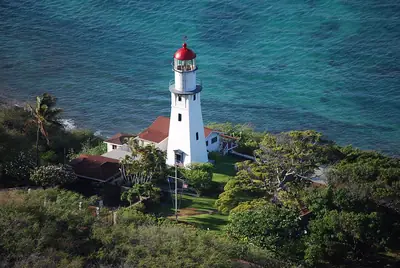
Diamond Head Light, also known as Diamond Head Lighthouse, is a United States Coast Guard facility listed on the National Register of Historic Places. The present lighthouse was built in 1918 after earlier ships ran aground near Waikiki. It retains the original ironwork and Fresnel lens from the first lighthouse.
Nearby, Shangri La Museum occupies a home built by Doris Duke between 1936 and 1938. Inspired by her travels through the Islamic world, Duke worked with artisans to incorporate Moroccan ceilings, Persian tilework, and Mughal-style gardens. The museum’s collection contains thousands of works connected with Islamic art, culture, and design.
Other Honolulu museums and landmarks
Several other places add depth to a visit:
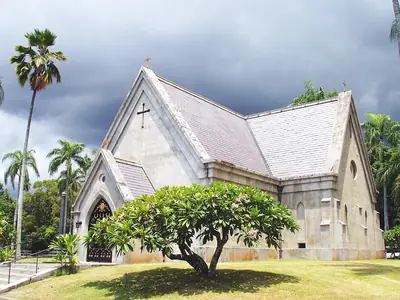
- Royal Mausoleum of Hawaii: Known in Hawaiian as Mauna ʻAla, it is the final resting place of members of the Kamehameha and Kalākaua dynasties.
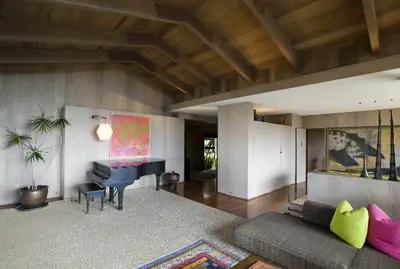
- Liljestrand House: Designed by Vladimir Ossipoff and completed in 1952, this historic home was listed on the National Register of Historic Places in 2008.
- Hawaii Children’s Discovery Center: A children’s museum in the Kaka’ako Waterfront Park area, with six permanent exhibits designed to encourage curiosity and ambition.
- Cathedral Church of Saint Andrew, Honolulu: One of the stops included on Neywo’s Capitol District walk.
- Aliiolani Hale, the Kamehameha Statue, Hawaii State Art Museum, Hawaii State Library, and Honolulu Hale: Central landmarks included in routes through Honolulu’s historic core.
Explore Honolulu with a self-guided audio tour
Neywo’s Honolulu audio guide includes three walking tours, one bus route, and one bike route, with narration available in 11 languages. Each story plays as you reach the place, at your own pace: no group, no schedule.
The available routes are:
- The Capitol District: ʻIolani Palace and Kawaiahaʻo: a 1.86 km walk lasting 114 minutes, with 12 narrated stops.
- Downtown and Chinatown to the Aloha Tower: a 1.54 km walk lasting 58 minutes, with 8 stops.
- The Ultimate Honolulu: the art museum to Washington Place: a 2.22 km walk lasting 100 minutes, with 6 stops.
- TheBus Route 3: through downtown Honolulu’s historic core: a 5.9 km bus route lasting 25 minutes, with 7 stops.
- Downtown Honolulu by bike: from Bishop Street to Iolani Palace and the Mission Houses: a 2.6 km bike route lasting 13 minutes, with 5 stops.
Download Neywo and explore Honolulu with the city’s history unfolding at the places where it happened. You can begin with the Capitol District, connect museums and landmarks downtown, or follow the route toward Aloha Tower—always independently and at your own pace. Discover more destinations across the United States with the same audio-guide format.
Places with an audio guide in Honolulu
8 places in Honolulu with a Neywo audio guide. Each one starts telling its story as you reach it.
Self-guided tours in Honolulu
5 tours in Honolulu, free in the Neywo app. Each stop tells its story as you reach it.
- Bike ride
Downtown Honolulu by bike: from Bishop Street to Iolani Palace and the Mission Houses
Ride the cycle lanes through downtown Honolulu, from the First Hawaiian Center to America's only royal palace, Honolulu Hale and Kawaiahaʻo, the coral church of the missionaries, ending at the oldest frame house in Hawaii.
First Hawaiian Center · ʻIolani Palace · Honolulu Hale · Kawaiahaʻo Church · Mission Houses Museum
Open this tour: Downtown Honolulu by bike: from Bishop Street to Iolani Palace and the Mission Houses - Bus ride
TheBus Route 3: through downtown Honolulu's historic core
Route 3 is an ordinary city bus, cheap and frequent, that runs through the heart of old Honolulu. Ride it from the Hawaii Theatre past the Kamehameha statue and the Mission Houses to the Father Damien statue, the State Art Museum, Our Lady of Peace Cathedral and the State Library.
Hawaii Theatre · Kamehameha Statue · Mission Houses Museum · Statue of Father Damien · Hawaii State Art Museum · Cathedral Basilica of Our Lady of Peace …
Open this tour: TheBus Route 3: through downtown Honolulu's historic core - Walk
The Capitol District: ʻIolani Palace and Kawaiahaʻo
The only royal palace on American soil, where Queen Liliʻuokalani was tried and imprisoned after the 1893 overthrow, with the coral-block church of the Hawaiian monarchy, the missionary houses and the governor's residence around it.
Kawaiahaʻo Church · Aliiolani Hale · Kamehameha Statue · ʻIolani Palace · Hawaii State Capitol · Hawaii State Art Museum …
Open this tour: The Capitol District: ʻIolani Palace and Kawaiahaʻo - Walk
Downtown and Chinatown to the Aloha Tower
A kilometre and a half of the working city: the Hawaii Theatre, King Kamehameha V's post office, two early skyscrapers, the cathedral basilica where Father Damien was ordained, and the 1926 Aloha Tower on the harbour.
Cathedral Basilica of Our Lady of Peace · Hawaii Theatre · Kumu Kahua Theatre · Kamehameha V Post Office · Melchers Building · Stangenwald Building …
Open this tour: Downtown and Chinatown to the Aloha Tower - Walk
The Ultimate Honolulu: the art museum to Washington Place
Two kilometres and the six things in Honolulu that are genuinely worth an hour each — the Museum of Art's Asian collection, the mission houses, Kawaiahaʻo Church, ʻIolani Palace and Washington Place.
Honolulu Museum of Art · Mission Houses Museum · Kawaiahaʻo Church · ʻIolani Palace · Statue of Father Damien · Washington Place
Open this tour: The Ultimate Honolulu: the art museum to Washington Place
Walk Honolulu with Neywo
Neywo turns Honolulu into a self-guided audio tour. Stories arrive as you reach the place they belong to, and the route reshapes when you wander off it.

