Things to Do in Lexington, United States: Walking Guide
Things to Do in Lexington: Historic Churches, Arts and Aviation
The best things to do in Lexington, Kentucky, include exploring historic churches, discovering local museums, visiting performance venues and learning about the city’s university and aviation heritage. Set within Fayette County, Lexington brings together a long religious and civic history with cultural institutions and places connected to education, flight and African-American heritage. Neywo offers a free audio guide for Lexington with 45 narrated places.
What to See in Lexington
Aviation Museum of Kentucky
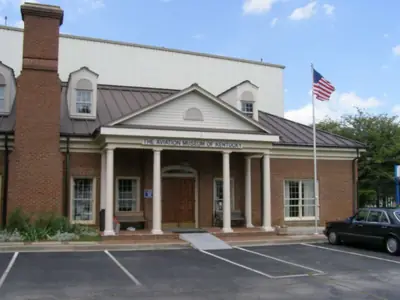
At Blue Grass Airport, the Aviation Museum of Kentucky tells the story of both military and civilian aviation. Its collection includes historic aircraft, photographs, documents, training equipment, jet fighters, sailplanes, aircraft engines, satellites, scale models and other aviation artifacts.
The museum occupies more than 20,000 square feet of exhibit space. Its origins reach back to the Kentucky Aviation History Roundtable, founded in 1978 by local aviation enthusiasts. The museum itself was incorporated in 1989 and opened to the public in April 1995.
Cathedral of Christ the King
The Cathedral of Christ the King is a Roman Catholic cathedral in Lexington and an important place of worship in the city. Its presence adds to the variety of religious buildings found throughout Lexington.
Fayette County
Lexington and Fayette County have shared territory, population and government since 1974. This close relationship means that the city and county are best understood together as one place, linking Lexington’s urban life with the wider central Kentucky setting.
University of Kentucky
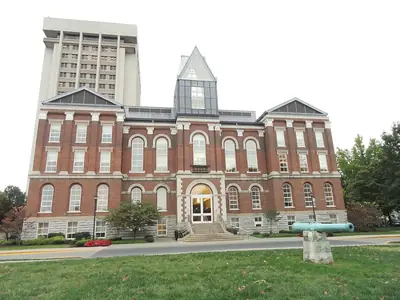
Founded in 1865 as the Agricultural and Mechanical College of Kentucky by John Bryan Bowman, the University of Kentucky has grown into a land grant research university with 16 colleges and programs at undergraduate, graduate and professional levels.
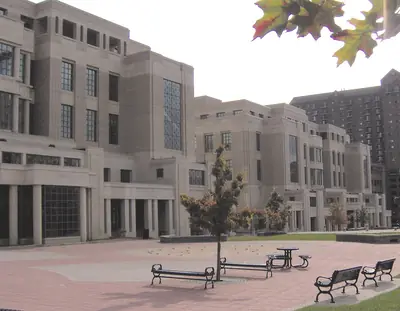
The campus includes seven libraries. The largest, William T. Young Library, is a federal depository with collections in the social sciences, humanities and life sciences. The university also houses the Linguistic Atlas Project, an archive documenting surveys of American English dialects. Research has played an increasingly important role in the university’s mission since 1997, and two alumni have won Nobel Prizes.
Headley-Whitney Museum
The Headley-Whitney Museum offers an introduction to the work and interests of George William Headley III. His creativity extended from jewelry to collecting and intricate decorative objects, giving the museum a distinctive focus within Lexington’s cultural scene.
Lexington Children’s Museum
The Lexington Children’s Museum, formerly known as the Explorium of Lexington, is built around hands-on learning and play. Its ten themed galleries invite children and adults to build, experiment, explore and imagine.
The Engineering Gallery includes paper-airplane design and structure building. Around Kentucky explores caves and connections to the Kentucky River, while Kiddie City lets children try activities such as banking and milking a cow. The Physics and Space exhibit includes an F-16 to climb into and a chance to walk across the Moon. Giant light-up tiles and the Bubble Zone add more opportunities for playful discovery.
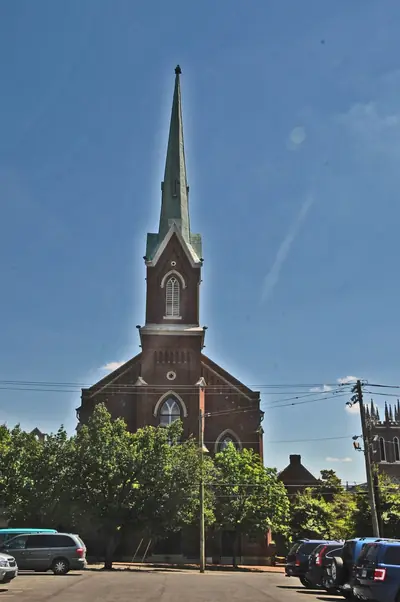
Nearby, Saint Paul Catholic Church stands out with its red-brick façade, lofty steeple and pointed windows. Its history began with the laying of the cornerstone in 1865, connecting the building with earlier Catholic chapels on the site.
Lexington History Center
The Lexington History Center presents the city’s past through a gallery on the third floor of The Square on Main Street and smaller displays known as pocket museums around downtown. Its gallery changes with each LexArts Gallery Hop event, so the presentation is not fixed.
Special photography technology allows the museum to display the equivalent of 10,000 square feet of photographs in a space of 1,000 square feet. Objects in the collection include nineteenth-century lamp posts from the Harrison Street viaduct, an ax from the 1770s, a copper weather vane from 1899, IBM typewriters made in Lexington and memorabilia from the Golden Horseshoe restaurant from the 1940s and 1950s.
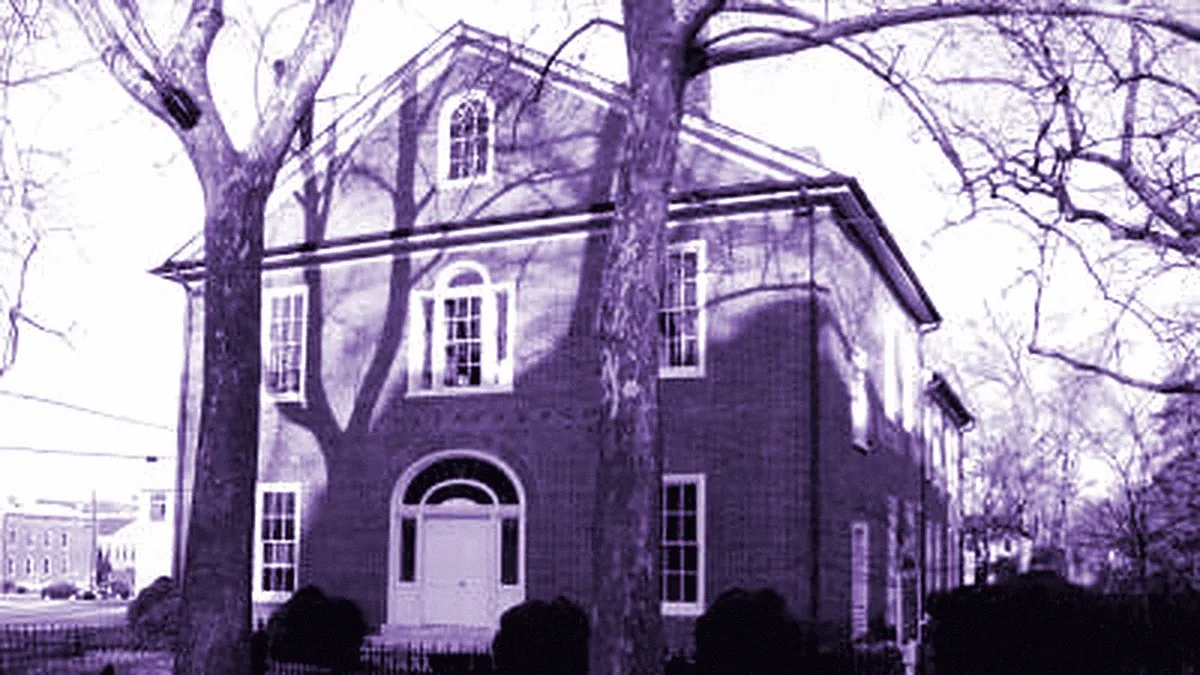
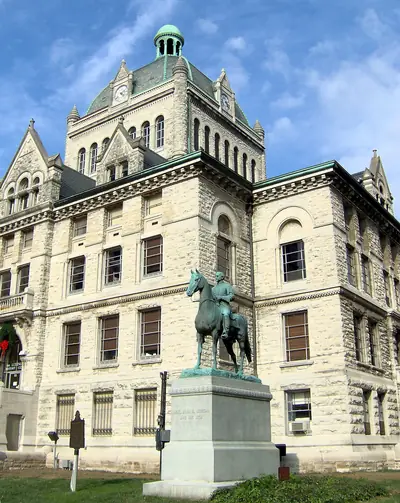
The Lexington History Center also brought several independent history museums together downtown in the former Fayette County Courthouse. The courthouse closed for renovation in 2012.
Boones Creek Baptist Church
Boones Creek Baptist Church is another religious landmark in the Lexington area. Its church building forms part of the city’s broader collection of places of worship and historic community spaces.
Central Christian Church
Central Christian Church remains an active congregation in the heart of downtown. Founded by Barton Stone in 1816, it was the place where the Stone and Campbell movements united in 1832 as part of the Restoration Movement.
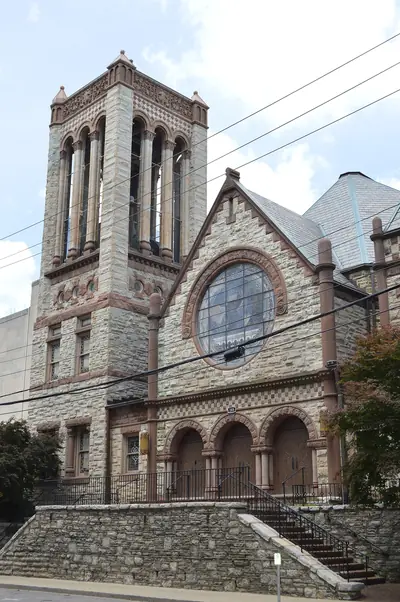
The present building was constructed between 1893 and 1894. Designed by the Smith Brothers firm and built by John H. Walker, it is Lexington’s foremost remaining example of Richardsonian Romanesque architecture. Rough local stone contrasts with Longmeadow puddingstone from Massachusetts, while twin steep gables, a ninety-five-foot bell tower, broad arched windows, terracotta and stonework shape the exterior.
Christ Church Cathedral and Christ Church Episcopal
At the edge of Gratz Park, Christ Church Cathedral is the oldest Episcopal church in Kentucky and the seat of the Episcopal Diocese of Lexington. Founded in 1796, it combines nearly two centuries of worship and community life with Gothic Revival architecture.
The building’s pointed arches, lancet windows, steep slate roof, buttresses and prominent tower reflect the style associated with local architect John McMurtry. The building was completed in 1848, and transepts and space for the organ were added in the 1860s. Inside, wooden box pews, stained glass and a significant Holtkamp organ contribute to the atmosphere.
The nearby Old Episcopal Burying Ground was created by the church and became the resting place of many people who died during Lexington’s cholera epidemics of 1833 and 1848. The site is also connected with London Ferrill, whom Christ Church honored through a monument and a joint service with First African Baptist Church.
Lexington Opera House
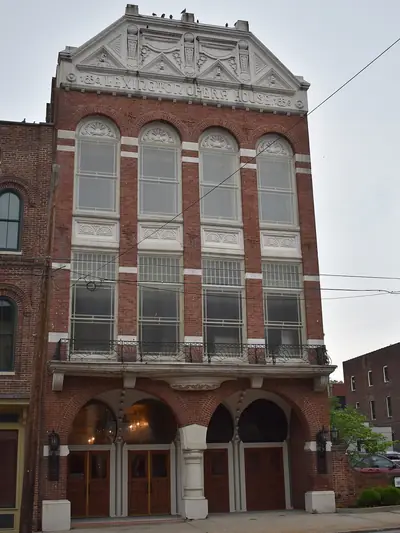
Built in 1886 after an earlier theater was destroyed by fire, the Lexington Opera House remains an active live-performance venue in downtown Lexington. Architect Oscar Cobb designed the building, which is one of only 14 theaters in the country built before 1900 with fewer than 1,000 seats that still operate as live performance venues.
Its program includes ballet, opera, children’s productions, family shows, comedy, music and professional national Broadway tours. The building is therefore both a historic landmark and a continuing part of Lexington’s cultural life.
Lyric Theatre and Cultural Arts Center
The Lyric Theatre and Cultural Arts Center brings together performance, art, history and education while honoring Lexington’s African-American cultural heritage. It opened in 1948 as a cultural hub for the city’s segregated African-American community, closed in 1963 and remained in disrepair for almost fifty years.
After renovation plans began in the 1990s, the theater reopened with a new mission. Its facilities now include a 540-seat proscenium theater, an African-American culture museum, a rotating gallery, a courtyard and a multipurpose room with space for 325 people.
Second Presbyterian Church
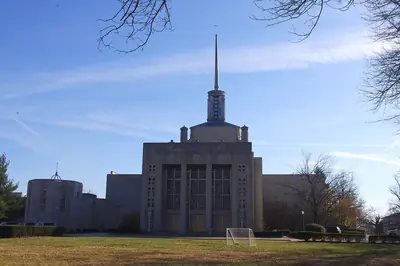
Second Presbyterian Church is a Gothic Revival landmark at 460 East Main Street. Construction began in 1922, and the building was dedicated in 1924. It was added to the National Register of Historic Places in 1980.
The entrance is framed by multiple gabled buttresses, with a balcony below a large arched window. A buttressed tower rises into a steep spire on the west side. The design is associated with Cram and Ferguson, with Frankel and Curtis also connected to the building.
Singletary Center for the Arts
On the University of Kentucky campus, the Singletary Center for the Arts provides venues for music, dance, comedy, lectures and other artistic and educational events. It opened on November 1, 1979, as the Center for the Arts and was dedicated to Dr. Otis A. Singletary in 1987.
As part of the College of Fine Arts and the UK School of Music, the center serves university audiences, local residents and visitors. Since 1979, it has welcomed more than 3.7 million patrons and hosted guests including Herbie Hancock, the Moscow Ballet, Bill Burr and David Sedaris.
Explore Lexington with a Self-Guided Audio Tour
Neywo’s Lexington audio guide includes two walking tours and one bike route, covering 45 narrated places in total. The walks are designed for exploring at your own pace:
- Gratz Park and the Athens of the West: 2.09 km, 74 minutes and 10 stops.
- Civil Rights, Gothic Spires and a Latrobe Villa: 5.2 km, 110 minutes and 8 stops.
- Campus to Courthouse: Lexington by Bike Lane: 2.9 km, 14 minutes and 4 stops.
The tours include places such as Rupp Arena, Mary Todd Lincoln House, Lexington Opera House, Hunt-Morgan House, Christ Church Cathedral, Lyric Theatre, Second Presbyterian Church, Pope Villa, the University of Kentucky and William T. Young Library.
Download Neywo and explore Lexington without a group or a schedule. The app tells the story of each place as you reach it, at your own pace, and its narration is available in 11 languages. Lexington is part of the wider United States destination collection, alongside cities such as Louisville.
Places with an audio guide in Lexington
8 places in Lexington with a Neywo audio guide. Each one starts telling its story as you reach it.
Self-guided tours in Lexington
3 tours in Lexington, free in the Neywo app. Each stop tells its story as you reach it.
- Bike ride
Campus to Courthouse: Lexington by Bike Lane
A short ride on Lexington's bike lanes from the University of Kentucky's library and art museum, north through downtown past the Woolworth corner to Mary Todd Lincoln's childhood home.
William T. Young Library · University of Kentucky Art Museum · F. W. Woolworth Building · Mary Todd Lincoln House
Open this tour: Campus to Courthouse: Lexington by Bike Lane - Walk
Gratz Park and the Athens of the West
Walk through the heart of old Lexington: Rupp Arena, Mary Todd's childhood home, an 1886 opera house still staging shows, the Federal houses of Gratz Park and Kentucky's oldest Episcopal church. Then follow Main Street's cast-iron and Italianate fronts to a Romanesque church of rough stone and puddingstone.
Rupp Arena · Mary Todd Lincoln House · Lexington Opera House · Hunt-Morgan House · Christ Church Cathedral · Lexington History Museum …
Open this tour: Gratz Park and the Athens of the West - Walk
Civil Rights, Gothic Spires and a Latrobe Villa
Lexington beyond the horse farms: the Woolworth corner where 1960s protesters challenged segregation, the Lyric Theatre that served the city's African-American community, a Gothic Revival church and Benjamin Latrobe's rare Pope Villa. Then on to the University of Kentucky's arts centre, art museum and landmark library.
F. W. Woolworth Building · Lyric Theatre · Second Presbyterian Church · Pope Villa · Memorial Hall Historical Marker · Singletary Center for the Arts …
Open this tour: Civil Rights, Gothic Spires and a Latrobe Villa
Walk Lexington with Neywo
Neywo turns Lexington into a self-guided audio tour. Stories arrive as you reach the place they belong to, and the route reshapes when you wander off it.

