Things to Do in Klampenborg, Denmark: Walking Guide
Things to do in Klampenborg
Klampenborg is a coastal suburb in the Capital Region of Denmark, just north of Copenhagen, where forest, shoreline, royal heritage and the world’s oldest amusement park meet. Visitors can wander among thousands of deer in Jægersborg Dyrehave, explore historic palaces and forts, and enjoy the lively rides of Bakken. Neywo offers a free audio guide for Klampenborg with 27 narrated places to enhance your self‑guided exploration.
Key sights from Klampenborg’s heritage
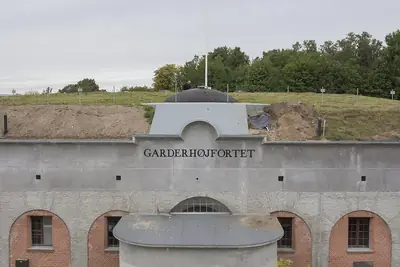
Garderhøj Fort
Built between 1886 and 1892 with private donations, Garderhøj Fort was funded by the association Fædrelandets Forsvar, which gathered about 1.5 million kroner (roughly 80 million in today’s value). After its military use ended, the fort served as an ammunition depot and later as a training ground for the armed forces and police.
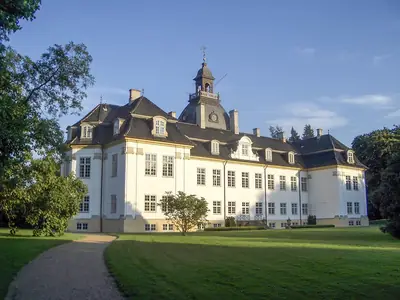
Charlottenlund Palace
Originally erected 1731‑1733 for Princess Charlotte Amalie under architect Johan Cornelius Krieger in Baroque style, the palace was remodelled in the 1880s by Ferdinand Meldahl for Crown Prince Frederick VIII, giving it a French Renaissance appearance. It remained a royal summer residence until 1935, then housed Denmark’s biological station and later DTU Aqua, and today functions as an office hotel and venue for culture, conferences and events.
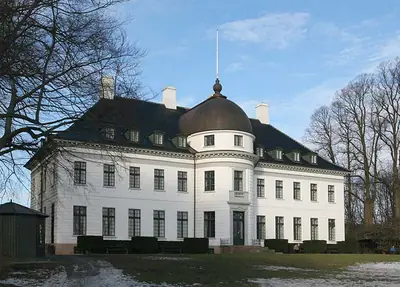
Bernstorff Palace
Constructed 1759‑1765 for Foreign Minister Count Johann Hartwig Ernst von Bernstorff by French‑born architect Nicolas Henri Jardin, Bernstorff Palace is an early example of Danish neoclassicism. It stayed with the Bernstorff family until 1812, was bought by Christian VIII in 1842 and became a royal summer retreat, later used by the government and as an academy for non‑commissioned officers before opening as a hotel in May 2009.
Museum Ordrupgaard
This state‑owned art museum, created 1916‑1918 by Wilhelm Hansen (director of the Hafnia insurance company) and his wife Henny Hansen, is renowned for its collection of Danish and French art.
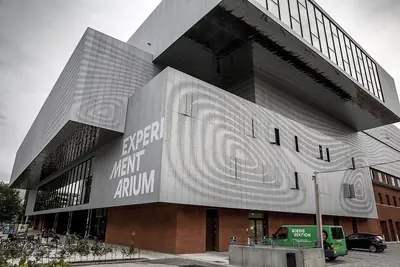
Experimentarium
Located in Hellerup, Experimentarium opened on 9 January 1991 as a publicly supported science centre where visitors can try physics experiments and watch demonstration shows. In 2021 it attracted more than 220 000 visitors, ranking among Denmark’s most visited tourist attractions.
Øregård Museum
Set in the former country estate of Øregård, the building dates from 1806 and was designed for merchant Johannes Søbøtker by French architect Joseph‑Jacques Ramée. Gentofte Municipality acquired the estate in 1917 and the museum has been housed there since 1921, surrounded by the landscaped Øregårdsparken.
Charlottenlund Fort
Built 1883‑1886 as part of Copenhagen’s coastal defence line, the fort was decommissioned in 1932. A modernisation between 1910 and 1912 added twelve 29‑centimetre howitzers arranged in three batteries of four guns, which remain in place today. The site is now a camping ground and recreational area, popular for summer evenings.
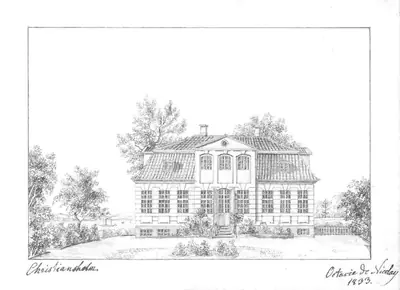
Christiansholm
This historic country house in Klampenborg, about ten kilometres north of central Copenhagen, was erected between 1746 and 1763 by merchant Just Fabritius.
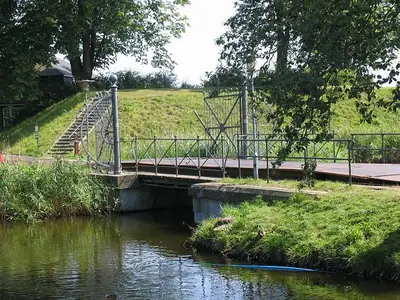
Vangede Battery
Erected 1887‑1888, Vangede Battery formed part of Copenhagen’s northern defences. Roughly 300 metres long and shaped like an open crescent, it featured a dry ditch, two gun lines (six concrete platforms to the south, three to the north), a casemate for ammunition and accommodation, and two disappearing armoured turrets on its roof. Decommissioned in 1920, only the northern section remains visible in the present‑day park.
Heslehøj
Once a country estate at Baunegårdsvej 75A and Ole Olsens Allé 17 in Hellerup, Heslehøj’s main building now contains privately owned apartments while the former park has been divided into villa plots. The estate was separated from Heslegård, owned by Finance Minister W. C. E. Sponneck from 1866 to 1883, and its name derives from the Hesselspjældene field recorded in 1766. Architect Schrøder designed a symmetrical house with a raised central section facing the garden, two‑storey side projections, a tall tower with a spire, and a slate roof decorated with cast‑iron French‑style railings, blending late classicism with richly ornamented stucco. After a fire, Schrøder returned in 1893, added a greenhouse in 1890 and a garden pavilion in 1894. In 1914 the estate was acquired by Ole Olsen of Nordisk Film, and architect Cosmus Bræstrup simplified the design.
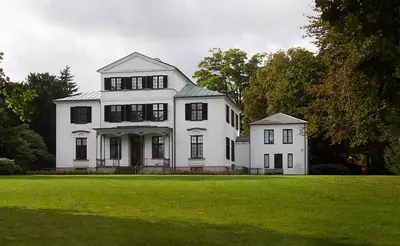
Søholm
This elegant neoclassical country house beside Lake Emdrup in Hellerup was built for Jewish merchant Joseph Nathan David following designs by Christian Frederik Hansen, one of Hansen’s earliest works after his move from Schleswig‑Holstein to Copenhagen. The main house is accompanied by a three‑winged thatched stable; two single‑storey side wings were added in 1858. The building was restored between 1912 and 1915 by Gotfred Tvede, later used as a care home, and acquired and restored by the Architects’ Pension Fund in 1982. Søholm has been protected on Denmark’s registry of listed buildings since 1918.
Emiliekilde
At the corner of Strandvejen and Emiliekildevej stands Emiliekilde, a memorial to Emilie Caroline, the first wife of Count Ernst Heinrich von Schimmelmann. Designed by Nicolai Abildgaard in 1780 and erected two years later, the monument is about 5.7 metres high, made of red granite with a marble‑covered column, and bears an inscription by Christen Henriksen Pram. It was protected in 1918 and restored by Gentofte Municipality in 2016.
Bellevue Teatret
Opened in 1936, Bellevue Teatret is closely linked to architect Arne Jacobsen and exemplifies Danish functionalism and Bauhaus style. The auditorium walls are covered with blue‑white striped canvas, the stage and balconies are lined with bamboo, and the roof can slide open to join the theatre with the outdoors. After an initial run as a summer theatre, it served as a cinema until 1980, when it reopened as a theatre and film house; theatre programming returned in 1981 and the cinemas were closed in 1989. Listed for protection in 1988, the building underwent a major restoration between 2001 and 2002 and today hosts modern productions with music, musicals and contemporary Danish drama and satire.
Dyssegårdskirken
Dyssegård Church, designed by Georg Palludan and built between 1957 and 1961, sits at the highest point of the parish with a north‑south orientation (entrance north, altar south). Its functionalist interior features the fresco Christ Standing Above the Risen by Holmer Trier. Between 1991 and 1996 the parish rooms were modernised, a new chapel was added, and a parish centre to the east now provides meeting rooms and offices.
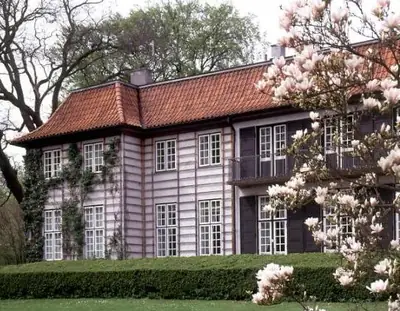
Finn Juhl’s House
This personal museum in Ordrup, north of Copenhagen, was the home of furniture designer and architect Finn Juhl. Designed and furnished between 1941 and 1942 on a 1 700‑square‑metre site beside the Ordrupgaard park, the house consists of two single‑storey sections set at right angles, linked by an entrance area that also leads to the garden. One section holds the living room and study; the larger section contains the kitchen, bathroom, two bedrooms and dining room. The brick walls were rendered in a white‑grey finish, and the garden was laid out by landscape architect Troels Erstad. Finn Juhl received the C.F. Hansen Medal for this house in 1944, lived there until his death in 1989, and his partner Hanne Wilhelm Hansen remained until 2003.
Enjoy nature and amusement
Beyond the historic sites, Klampenborg’s natural attractions are equally compelling. Jægersborg Dyrehave stretches over roughly 11 square kilometres, home to more than 2 000 deer that roam among ancient oaks; the area forms part of the UNESCO‑listed Par force hunting landscape of North Zealand. At the heart of the park stands the Eremitage Hunting Lodge, a royal retreat marked by red entrance gates and the sight of traditional horse‑drawn carriages. For a change of pace, Bakken—the world’s oldest operating amusement park—offers rides, games and a lively atmosphere just a short walk from the forest and shore.
Explore Klampenborg with Neywo
Ready to see Klampenborg at your own pace? Download the free Neywo app and choose from three walking tours and one bike route. The walks are:
- “Arne Jacobsen’s Coast: From Klampenborg to Ordrup” (5.36 km, 115 min, 7 stops)
- “Royal Summers and Hellerup’s Gardens” (5.42 km, 110 min, 6 stops)
- “Estates and Churches of Gentofte” (5.33 km, 109 min, 6 stops)
The bike route is “Strandvejen by Bike: Coast, Palace and Hellerup” (8.2 km, 41 min, 6 stops).
As you reach each stop, the app tells the story of that place, automatically playing the narration so you can explore without a group or a fixed schedule. Narration is available in 11 languages, making it easy to enjoy Klampenborg’s heritage, nature and amusement wherever you are.
Places with an audio guide in Klampenborg
8 places in Klampenborg with a Neywo audio guide. Each one starts telling its story as you reach it.
Self-guided tours in Klampenborg
4 tours in Klampenborg, free in the Neywo app. Each stop tells its story as you reach it.
- Bike ride
Strandvejen by Bike: Coast, Palace and Hellerup
Ride south along the Øresund coast from Arne Jacobsen's Bellevue Teatret past the Emiliekilde memorial and Skovshoved Church to Charlottenlund Palace, then on to Messiaskirken and the Experimentarium in Hellerup.
Bellevue Teatret · Emiliekilde · Skovshoved Church · Charlottenlund Palace · Messiaskirken · Experimentarium
Open this tour: Strandvejen by Bike: Coast, Palace and Hellerup - Walk
Arne Jacobsen's Coast: From Klampenborg to Ordrup
Start at Arne Jacobsen's functionalist summer theatre by the sea, then follow the old Strandvejen coast road past a Neoclassical memorial to the red-brick church of Skovshoved. Turn inland to the twin-towered church of Ordrup and the colourful Catholic church of St. Andrew, then finish with the French Impressionists at Ordrupgaard and the home Finn Juhl designed for himself.
Bellevue Teatret · Emiliekilde · Skovshoved Church · Ordrup Church · St. Andrew's Church · Museum Ordrupgaard …
Open this tour: Arne Jacobsen's Coast: From Klampenborg to Ordrup - Walk
Royal Summers and Hellerup's Gardens
Walk the southern end of the coast from the royal summer palace of Charlottenlund, where two future kings were born, to the coastal fort with its twelve howitzers. Continue past the Baroque-inspired Messiaskirken and the Øregård country house to Hellerup's neo-Romanesque church and the Experimentarium science centre.
Charlottenlund Palace · Charlottenlund Fort · Messiaskirken · Øregård Museum · Hellerup Church · Experimentarium
Open this tour: Royal Summers and Hellerup's Gardens - Walk
Estates and Churches of Gentofte
A quiet inland walk through the villa suburbs of Gentofte. Start at the neo-Gothic Jægersborg Church, see the neoclassical Bernstorff Palace and its park, then the twelfth-century Gentofte Church in its churchyard, the former country estate of Heslehøj and the brick tower of Helleruplund Church, and end at St. Theresa's with its walnut-wood statue.
Jægersborg Church · Bernstorff Palace · Gentofte Church · Heslehøj · Helleruplund Church · St. Theresa's Church
Open this tour: Estates and Churches of Gentofte
Walk Klampenborg with Neywo
Neywo turns Klampenborg into a self-guided audio tour. Stories arrive as you reach the place they belong to, and the route reshapes when you wander off it.

