Beauvais, France: Self-Guided Walking Tour
Things to do in Beauvais: a journey through Gothic and Romanesque heritage
The best things to do in Beauvais centre on its extraordinary religious architecture, from the unfinished Gothic ambition of Saint Peter’s Cathedral to the much older Basse Œuvre and the Romanesque churches scattered through the city. Museums, historic monuments and public sculptures add further layers to a visit. Neywo offers a free audio guide for Beauvais with 17 narrated places.
Located in Hauts-de-France, Beauvais is especially rewarding for travellers interested in medieval architecture and the stories preserved in historic buildings. The city’s landmarks reveal not only grand successes, but also ambitious projects interrupted by structural problems, changing fortunes and the passage of time.
What to see in Beauvais
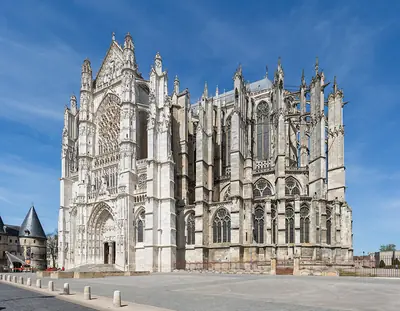
Saint Peter’s Cathedral: the highest Gothic vault in the world
Beauvais Cathedral, officially the Cathedral of Saint Peter, was one of the most ambitious building projects of the Middle Ages. Its choir vault rises to 48.5 metres, making it the highest Gothic vault in the world.
The cathedral was designed to surpass the great churches of Amiens and Notre-Dame de Paris. Construction began in the thirteenth century, but the project suffered repeated disasters: the choir vault collapsed and was rebuilt, while the great tower fell in the sixteenth century. The nave was never completed, so today the building consists of the choir and transept.
Inside the thirteenth-century choir, an ambulatory leads around an apse surrounded by seven polygonal chapels. The result is a remarkable space whose scale reflects the boldness of the original plan, even in its incomplete form.
Basse Œuvre: the cathedral that came before
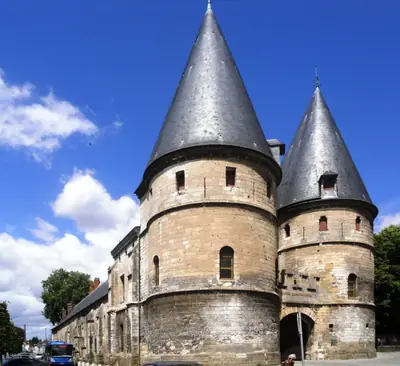
Beside the Gothic cathedral stands the Basse Œuvre, one of the oldest surviving churches in France. This was Beauvais’s cathedral in the late tenth century, built as a Roman basilica during the Carolingian era.
Its name, meaning “Lower Work”, was adopted in the thirteenth century to distinguish it from the new Gothic cathedral, known as the Haute Œuvre or “Higher Work”. The church’s small cubic stones include material reused from Roman buildings destroyed when Beauvais was sacked in the third century. Its façade was rebuilt in the mid-eleventh century after two fires, introducing rounded arches and heavier proportions associated with the emerging Romanesque style.
The Basse Œuvre makes the cathedral quarter especially fascinating: two very different periods of architecture stand directly beside one another.
Musée départemental de l’Oise, or MUDO
At the foot of Beauvais Cathedral, the Musée départemental de l’Oise occupies the former episcopal palace, which is classified as a historical monument. Known locally as MUDO, the museum houses art collections spanning from the Middle Ages to the present day.
A visit here adds cultural context to the cathedral quarter. The former palace also shows how closely Beauvais’s artistic and religious history were connected.
Abbaye Saint-Quentin
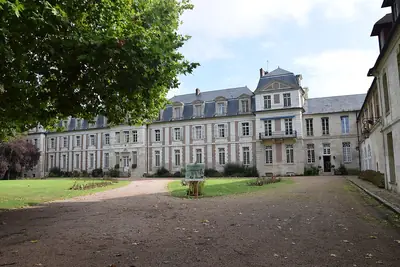
The Abbaye Saint-Quentin began in the eleventh century as an abbey for regular canons, a community of clergy living according to a shared rule. Like many religious houses in France, it was suppressed during the French Revolution.
The building now has an administrative role: it houses the prefecture of the Oise department. Its transformation from religious foundation to centre of public administration reflects the many changes historic buildings have undergone over the centuries.
Église Saint-Étienne de Beauvais
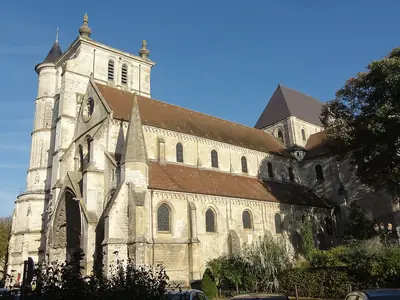
Église Saint-Étienne stands on rue de l’Étamine and has been at the centre of Beauvais life for more than seventeen centuries. The current church was built in the twelfth century, on the site of a much older foundation associated with Saint Firmin of Amiens.
The nave is a major example of Romanesque architecture, with three levels rising to a triforium. Its side-aisle rib vaults were among the first in France, begun around 1120. The church is particularly important for understanding how experimental architectural techniques were incorporated into a parish church.
Église Notre-Dame in Marissel
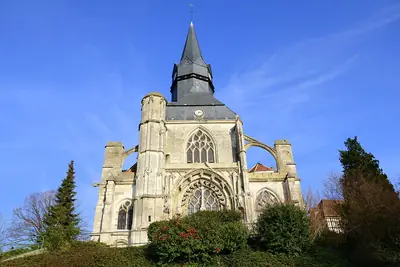
The church of Notre-Dame in Marissel brings together several centuries of construction. Its west façade is an imposing example of Flamboyant Gothic, while the nave is spacious, tall and filled with light.
Further east, the character changes noticeably. The nave leads into a Romanesque bell tower and older bays dating from the mid-twelfth to the mid-thirteenth century. Parts of the earlier church were absorbed into later construction, including the former Romanesque apse in the north collateral. The building’s unfinished connections and contrasting periods make it a particularly revealing place to see how medieval churches evolved over time.
Maladrerie Saint-Lazare de Voisinlieu
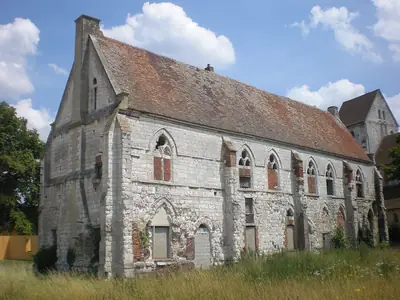
The Maladrerie Saint-Lazare was founded in the twelfth century as a leprosarium, located at the edge of the medieval city to care for people suffering from leprosy. Its surviving buildings have endured wars, revolutions and centuries of change.
Today, the site functions as a cultural centre, hosting exhibitions and events. It offers a quieter perspective on Beauvais’s history, focused on charity, isolation and the people who lived beyond the medieval city’s centre.
Jeanne Hachette and the Marshals of France
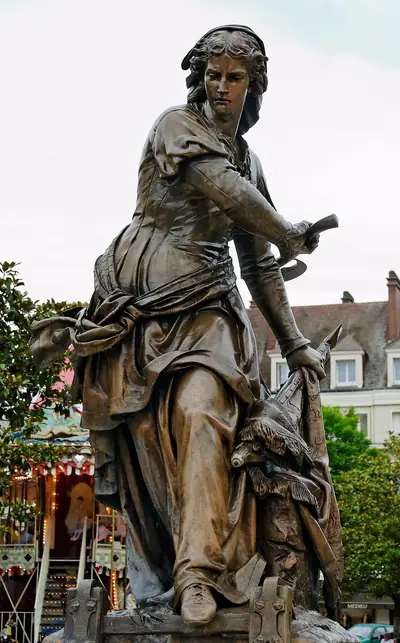
Place Jeanne-Hachette is home to a bronze monument to one of Beauvais’s most celebrated heroines. Sculpted by Vital Gabriel Dubray, the statue was unveiled in 1851.
At the Esplanade de Verdun, the Hommage aux Maréchaux presents four bronze figures representing Marshals of France associated with the country’s history during the Second World War: Philippe Leclerc de Hauteclocque, Alphonse Juin, Jean de Lattre de Tassigny and Marie-Pierre Kœnig. Created by Charles Correia in the 1980s, the statues form a square around an inscription carrying words by Charles de Gaulle about France, the war and the Resistance.
Beauvais’s neighbourhood churches and chapels
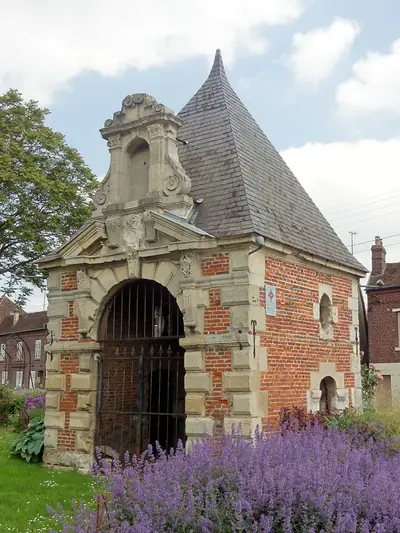
Several smaller religious buildings extend the city’s architectural story beyond the main cathedral quarter. The chapel at the Notre-Dame-du-Thil cemetery is a quiet place connected with generations of the city’s past. Église Notre-Dame du Thil remains a local place of worship in the Thil quarter, while Église Saint-Jacques serves the community of Voisinlieu.
Other neighbourhood churches include Église Saint-Jean-Baptiste in the plateau Saint-Jean area and église Saint-Jean-Marie Vianney in the Argentine neighbourhood. Chapelle du Carmel adds another religious landmark to Beauvais’s collection of chapels and churches.
Explore Beauvais with a free audio guide
A Beauvais self-guided walking tour is an easy way to connect the city’s monuments while learning their stories on location. Neywo has one walking tour and one bus route in Beauvais:
- The Highest Gothic Vault and the Lower Work: Beauvais Cathedral Quarter: a 2.8 km walk lasting 93 minutes, with 7 narrated stops.
- Line 5 to Marissel: Unfinished Churches and Marshals: a 6.1 km bus route lasting 26 minutes, with 4 narrated stops.
The app tells the story of each place as you reach it, at your own pace, with no group and no schedule. Narration is available in 11 languages. Download Neywo and explore Beauvais independently, from the cathedral quarter to Marissel and the city’s historic neighbourhoods.
Places with an audio guide in Beauvais
8 places in Beauvais with a Neywo audio guide. Each one starts telling its story as you reach it.
Self-guided tours in Beauvais
2 tours in Beauvais, free in the Neywo app. Each stop tells its story as you reach it.
- Bus ride
Line 5 to Marissel: Unfinished Churches and Marshals
Corolis line 5 runs from the Marissel district across the centre of Beauvais to the Abbaye Saint-Quentin side of town. Ride it from the half-finished Notre-Dame church in Marissel past the Marshals' memorial to the Romanesque Saint-Étienne, and get off at the former abbey.
Église Notre-Dame · Statue des Maréchaux (Beauvais) · Église Saint-Étienne de Beauvais · Abbaye Saint-Quentin
Open this tour: Line 5 to Marissel: Unfinished Churches and Marshals - Walk
The Highest Gothic Vault and the Lower Work: Beauvais Cathedral Quarter
Beauvais tried to build the tallest cathedral in the world, and the tower collapsed. Walk around what is left: the record-breaking Gothic choir, the Carolingian Basse Œuvre built from Roman stones and the bishop's palace turned museum. Then follow the heroine Jeanne Hachette and finish at a Romanesque church that pioneered rib vaults.
Abbaye Saint-Quentin · Musée départemental de l'Oise · Basse Oeuvre · Beauvais Cathedral · Statue des Maréchaux (Beauvais) · Statue of Jeanne Hachette …
Open this tour: The Highest Gothic Vault and the Lower Work: Beauvais Cathedral Quarter
Walk Beauvais with Neywo
Neywo turns Beauvais into a self-guided audio tour. Stories arrive as you reach the place they belong to, and the route reshapes when you wander off it.

