Lille, France: Self-Guided Walking Tour
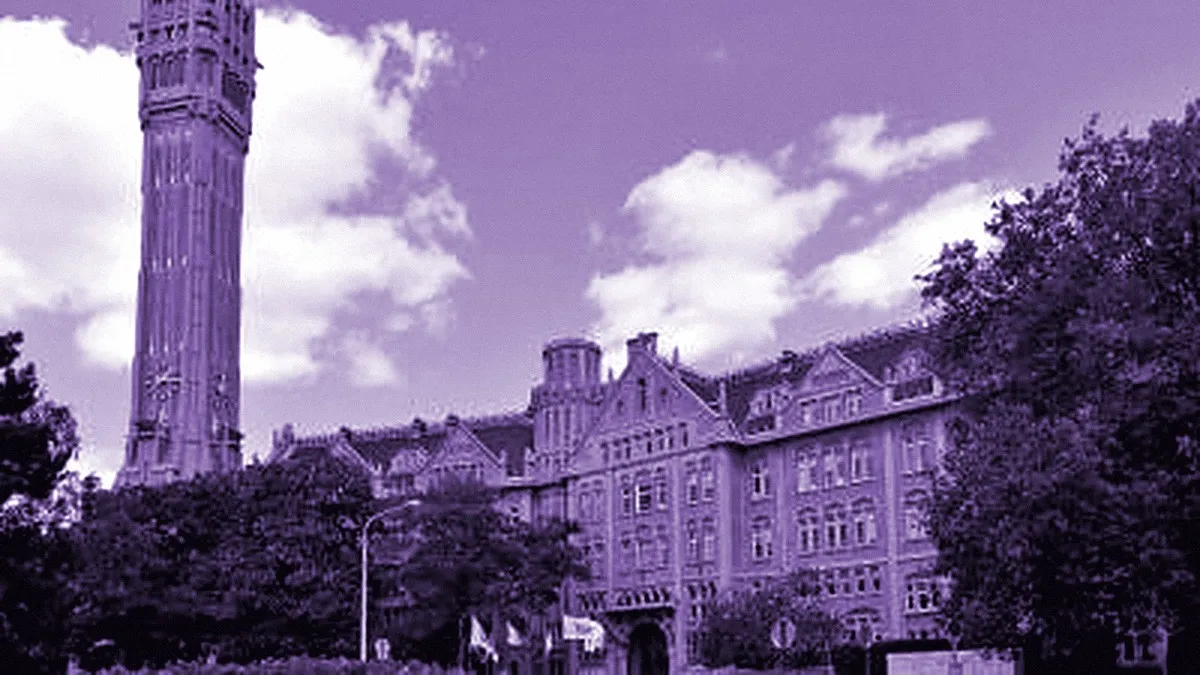
Things to Do in Lille: What to See in the Historic City Centre
The best things to do in Lille include exploring Vieux-Lille, discovering major art and religious landmarks, and following the city’s surviving fortifications. Lille brings together Flemish-influenced architecture, French history, grand public buildings and quieter reminders of the communities that shaped the city. Neywo offers a free audio guide for Lille with 184 narrated places, so you can explore while the story of each site plays as you reach it.
Lille is the capital of the Hauts-de-France region in northern France. Its historic centre is compact enough to explore on foot, but its landmarks reveal a remarkably varied past: medieval charitable institutions, Spanish defensive gates, eighteenth-century mansions, nineteenth-century museums and a seventeenth-century citadel.
What to see in Lille
Vieux-Lille and the Hospice Comtesse
Vieux-Lille is the natural place to begin. Its streets bring together historic buildings and several of the city’s most important sights, including the Hospice Comtesse on Rue de la Monnaie.
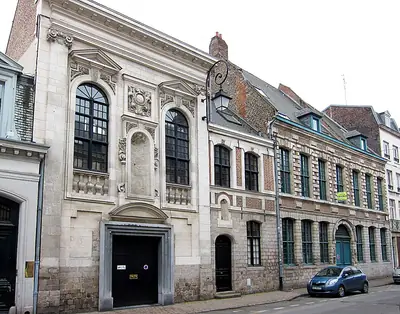
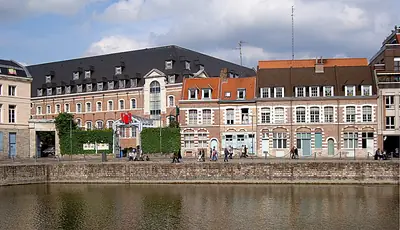
The former hospital was founded in 1237 by Jeanne, Countess of Flanders, on the grounds of her own palace. It cared for the sick and poor and sheltered pilgrims. The surviving complex includes buildings from the fifteenth, seventeenth and eighteenth centuries, arranged around two courtyards and a garden traditionally planted with medicinal herbs. Today, the Hospice Comtesse is a museum devoted to art and daily life in Lille.
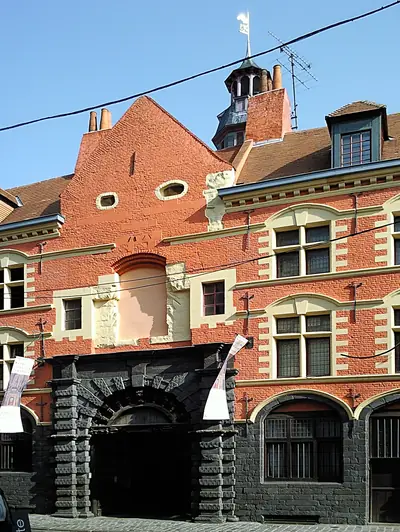
Nearby, the former Couvent des Madelonnettes at 39–41 Rue de la Barre recalls another chapter of the city’s religious and social history. Founded in 1481 by the Daughters of Mary Magdalene, the convent welcomed repentant prostitutes. The site has been listed as a historic monument since 1974.
Lille Cathedral
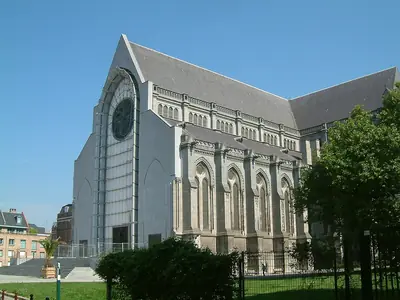
Lille Cathedral, or Notre-Dame de la Treille, is one of the city’s most distinctive buildings. Its neo-Gothic design is paired with an unexpectedly modern western façade, creating a sharp contrast between the older architectural ambition of the project and its later completion.
The cathedral was planned in honour of the Virgin Mary and takes its name from a revered statue of Our Lady of the Treille. Construction began in 1856, following a competition for a church inspired by thirteenth-century Gothic architecture. The long building process helps explain the difference between the cathedral’s historic body and its modern-looking entrance.
The Church of Saint Mary Magdalene
The Église Sainte-Marie-Madeleine is known locally as “the big Madeleine”, a reference to its broad Baroque dome and sturdy form. The present church was built between 1675 and 1707 after an earlier parish building was demolished when Lille’s fortifications expanded.
Its architecture combines Flemish Renaissance influences, classical Greek elements and Baroque style. The church was damaged during the Austrian siege of Lille in 1708, and its façade was restored again in 2008. Today, the historic building also serves as an exhibition venue.
The Grand’Place and Théâtre du Nord
Lille’s Grand’Place, officially Place du Général-de-Gaulle, gathers some of the city centre’s most recognisable architecture. The square is home to the Old Stock Exchange, the Chamber of Commerce and the Lille Opera, creating an ensemble that reflects Lille’s connections with both French and Flemish traditions.
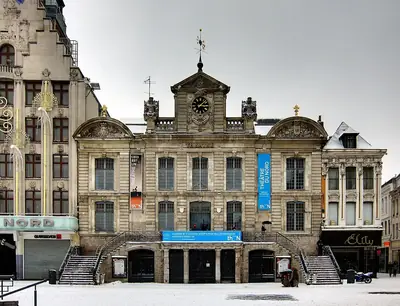
The Théâtre du Nord occupies the former Grande Garde, an eighteenth-century guardhouse. The building is also known as the Salle Roger Salengro and has been listed in the inventory of historic monuments since 1925.
The nearby Opéra de Lille is a neo-classical theatre built between 1907 and 1913. It replaced an opera house destroyed by fire in 1903. Louis Marie Cordonnier designed the new building, whose façade includes a pediment relief by Hippolyte Lefèbvre and bas-relief panels by Alphonse-Amédée Cordonnier and Hector Lemaire. The opera house forms a harmonious architectural group with the Chamber of Commerce and the Old Stock Exchange.
Palais des Beaux-Arts de Lille
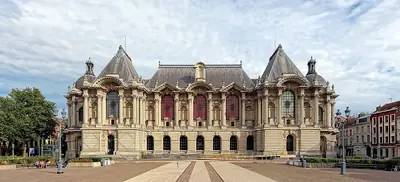
The Palais des Beaux-Arts is one of the largest art museums in France, second only to the Louvre in the scale of its collections. Its late nineteenth-century building combines classical grandeur, Baroque energy and Italian Renaissance influences, with monumental columns, pediments and domed pavilions.
The collection began during the French Revolution, when Louis Joseph Watteau made an inventory of paintings confiscated from émigrés and religious institutions. Works by Rubens, Van Dyck and Jordaens formed part of this early group. Lille was later one of fifteen cities selected under the Chaptal decree of 1801 to receive art seized during the Revolution and from occupied European territories. The museum opened to the public in 1809.
The Citadel of Lille
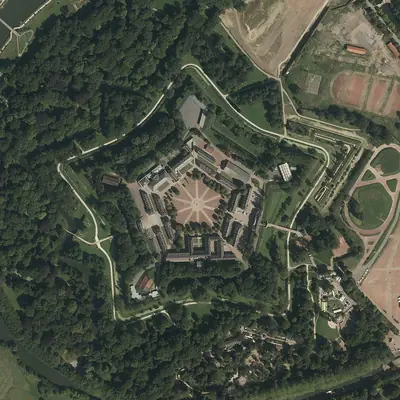
The Citadel of Lille is a five-sided fortress built between 1667 and 1670 after French troops captured the city. Sébastien Le Prestre de Vauban designed it as part of the defensive line along France’s northern border, known as the pré carré. Vauban called it the “Queen of the Citadels”.
The fortress is notable for its scale, refined military design and state of preservation. Its defensive layout allowed soldiers behind one wall to fire on an enemy approaching another. The citadel also stood in a naturally damp area where two rivers met. Locks and water gates could flood the surrounding ground within forty-eight hours, turning the landscape into an additional defence.
The citadel sits beside the green edge of Lille and is one of the city’s essential places to visit for anyone interested in military history and urban landscapes.
The city gates
Lille retains several gates from its former fortifications. The Porte de Gand, also called the Porte de la Madeleine, was built between 1617 and 1621 as part of the Spanish enclosure around the expanding city.
The Porte de Roubaix, formerly known as the Porte Saint-Maurice, was built during the same period and opened for traffic in 1625. Its two side arches were added in 1875 to allow a new tramway to pass through.
These gates help make Lille’s history visible at street level, alongside later landmarks such as the Hôtel de l’Intendance on Rue Royale. Built at the beginning of the eighteenth century as the private Hôtel de Wambrechies, the building later served as the Intendance, military command headquarters and prefecture. It is now the seat of the Archbishopric of Lille.
The birthplace of Charles de Gaulle
In Vieux-Lille, the Maison natale de Charles de Gaulle preserves the home of Charles de Gaulle’s maternal grandparents, where he was born in 1890. The museum presents the former family residence with period furnishings, personal belongings, family mementos and documents.
It opened to the public in 1983 and belongs to the Charles-de-Gaulle Foundation. The house has been classified as a historic monument since 1989 and received the Maisons des Illustres label in 2011.
More historic places to discover
The former Couvent des Minimes de Lille at Quai du Wault was founded in 1618 by the Order of Minims and has been listed as a historic monument since 1977. In the Wazemmes area, the Palais Rameau adds another architectural highlight. Designed by Auguste Mourcou and Henri Contamine, it has been classified as a historical monument since 2002.
Lille’s religious heritage also extends to the Église Notre-Dame de Fives, a Roman Catholic church on Place du Prieuré. Together, these sites show how widely the city’s history extends beyond the central squares and main museums.
Lille self-guided walking tour with Neywo
Neywo’s Lille audio guide includes 7 walking tours, 1 bus route and 1 bike route, with narration available in 11 languages. Every story plays as you reach the place, at your own pace: there is no group and no schedule.
The walks cover different sides of the city:
- Vieux-Lille: Where Flanders Meets France — 2.65 km, 119 minutes and 9 narrated stops.
- Grand’Place Lille: Dukes, Merchants and Waffles — 2.05 km, 119 minutes and 11 stops.
- Gates, Belfry and the Sun King’s Arch — 2.72 km, 117 minutes and 11 stops.
- Vauban’s Citadel and the Green Edge of Lille — 3.15 km, 97 minutes and 8 stops.
- Convents and Mansions of Rue Royale and the Esplanade — 1.97 km, 116 minutes and 10 stops.
- Wazemmes: Palais Rameau, Market Square and Cultural Factories — 2.53 km, 73 minutes and 6 stops.
- South Lille: Art Nouveau, Science and Faith — 1.93 km, 64 minutes and 6 stops.
For a different way to explore, the Navette Vieux-Lille bus route covers 5.3 km in 23 minutes with 12 narrated stops. The Citadelle Park Ride bike route covers 1.4 km in 7 minutes and includes 4 stops.
Download Neywo and explore Lille with an audio guide that tells the story of each place as you reach it. Choose a walk, bus route or bike route, move at your own pace, and discover the city without a group or a schedule.
Places with an audio guide in Lille
8 places in Lille with a Neywo audio guide. Each one starts telling its story as you reach it.
Self-guided tours in Lille
9 tours in Lille, free in the Neywo app. Each stop tells its story as you reach it.
- Bike ride
Citadelle Park Ride
Cycle the paths of the Parc de la Citadelle along the Deule. See the rebuilt Pont Napoleon, Vauban's citadel walls, the zoo at the foot of the ramparts and the old Porte de Dunkerque.
Pont Napoléon · Citadel of Lille · Zoologic park de Lille · Porte de Dunkerque
Open this tour: Citadelle Park Ride - Bus ride
Navette Vieux-Lille: Loop Through the Old Town
The Keolis Vieux-Lille shuttle loops from Rihour through the old town: past the Hospice Comtesse and the big Madeleine, along Rue Royale's mansions and back by the Madelonnettes convent to Palais Rihour. Hop off at any of its stops.
Nouveau Siècle de Lille · Immeuble, siège du Cercle Philosophique et Culturel · Musée de l'Hospice Comtesse · Hôtel Van Zeller · Église Sainte-Marie-Madeleine de Lille · Usine élévatoire de Saint-André …
Open this tour: Navette Vieux-Lille: Loop Through the Old Town - Walk
Vieux-Lille: Where Flanders Meets France
Wander the cobbled lanes of Lille's old Flemish quarter, from Rue Royale's Baroque church and mansions to the birthplace of Charles de Gaulle. Pass the Baroque dome of the 'big Madeleine' and an old city gate, step into a medieval hospice and finish at a neo-Gothic cathedral finished in 1999.
Église Saint-André de Lille · Birthplace of Charles de Gaulle · Hospice général de Lille · Église Sainte-Marie-Madeleine de Lille · Porte de Gand (Lille) · Musée des Canonniers (Lille) …
Open this tour: Vieux-Lille: Where Flanders Meets France - Walk
Grand'Place Lille: Dukes, Merchants and Waffles
Start with one of France's greatest art museums and walk to the square where Burgundian dukes built their palace. Pass a Jesuit church and the old military hospital, the elegant Rang de Beauregard, the merchants' courtyard of the Vieille Bourse, taste history at a 1761 patisserie and end beneath a bold modern concert hall.
Palais des Beaux-Arts de Lille · Hôtel des Cariatides · Equestrian statue of Louis Faidherbe · Saint-Étienne, Lille · Hôpital Militaire de Lille · Palais Rihour …
Open this tour: Grand'Place Lille: Dukes, Merchants and Waffles - Walk
Gates, Belfry and the Sun King's Arch
Follow Lille's fortified past from the Spanish-era Porte de Roubaix to Louis XIV's triumphal Paris Gate and the Noble Tour, the last piece of the medieval walls. On the way, see the Gothic church of Saint-Maurice, the Flandres station and the 104-metre belfry that crowns the modern town hall.
Porte de Roubaix · Maison des Vieux Hommes · Lille-Flandres station · Saint-Maurice church · Maison du renard · Hôtel de Marchiennes …
Open this tour: Gates, Belfry and the Sun King's Arch - Walk
Vauban's Citadel and the Green Edge of Lille
Walk the banks of the Deule to the five-sided citadel that Vauban called the queen of citadels. A rebuilt Napoleonic bridge, a city gate, a garden with a goat chalet and a war memorial make this a quiet walk through military history.
Pont Napoléon · Citadel of Lille · Zoologic park de Lille · Porte de Dunkerque · Jardin Vauban · Hôtel Castiaux …
Open this tour: Vauban's Citadel and the Green Edge of Lille - Walk
Convents and Mansions of Rue Royale and the Esplanade
Lille's merchants and clergy built along Rue Royale and the Esplanade. Walk from two old convents by the Quai du Wault past a Gothic church and the Masonic temple to private mansions, a bishop's palace and townhouses facing the Esplanade.
Couvent des Minimes de Lille · Couvent des Madelonnettes de Lille · Église Sainte-Catherine de Lille · Immeuble, siège du Cercle Philosophique et Culturel · Hôtel de Tenremonde · Hôtel Van Zeller …
Open this tour: Convents and Mansions of Rue Royale and the Esplanade - Walk
Wazemmes: Palais Rameau, Market Square and Cultural Factories
Lille's working-class Wazemmes district, from the Palais Rameau and the big Sacred Heart church to the market square church, the cultural venues of Maison Folie and the creative hub of La Malterie.
Palais Rameau · Église du Sacré-Cœur de Lille · Église Saint-Pierre Saint-Paul de Lille · Place de la Nouvelle Aventure · Maison Folie de Wazemmes · La Malterie
Open this tour: Wazemmes: Palais Rameau, Market Square and Cultural Factories - Walk
South Lille: Art Nouveau, Science and Faith
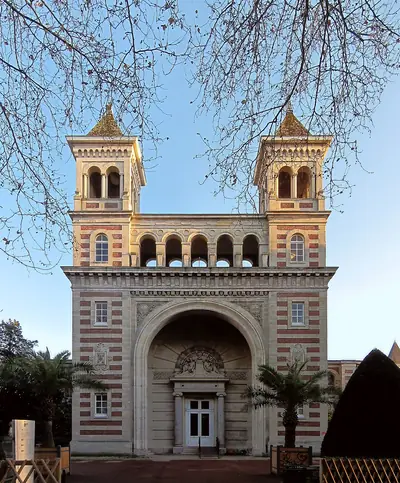
A southern loop from Maison Coilliot, one of Lille's best Art Nouveau houses, to the natural history museum, the first synagogue of the Nord and an Anglican church, ending at the Pasteur museum.
Maison Coilliot · Église Saint-Michel de Lille · Musée d'Histoire Naturelle de Lille · Synagogue de Lille · Christ Church Lille · Musée de l'Institut Pasteur de Lille
Open this tour: South Lille: Art Nouveau, Science and Faith
Walk Lille with Neywo
Neywo turns Lille into a self-guided audio tour. Stories arrive as you reach the place they belong to, and the route reshapes when you wander off it.

