Visiting Chantilly, France: Top Sights on Foot
Things to do in Chantilly
Chantilly is a town just north of Paris that blends aristocratic heritage, elegant gardens, and a peaceful countryside setting. Visitors come for the magnificent Château de Chantilly, its world‑class art collections, and the living equestrian traditions that shape the town’s character. Neywo offers a free audio guide for Chantilly with 10 narrated places and one walking tour.
Exploring Chantilly’s highlights
Château de Chantilly
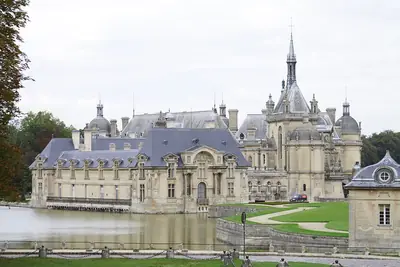
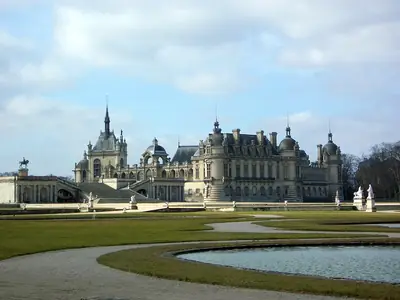
The Château de Chantilly stands in the valley of the Nonette and brings together grand architecture, remarkable art, horses, and gardens. The estate’s grounds include the Musée Condé, the Grandes Écuries, and gardens linked to André Le Nôtre. The visible building combines two histories: the Petit Château, dating from the sixteenth century and designed by Jean Bullant, and the Grand Château, which replaced a medieval fortress destroyed during the French Revolution and was rebuilt in the nineteenth century. Inside, the Musée Condé holds one of France’s finest painting collections, notable for French works and illuminated books from the fifteenth and sixteenth centuries. Highlights include the Très Riches Heures of the Duke of Berry and the Book of Hours of Étienne Chevalier. Because the collection may not be lent and the display rooms may not be altered, the museum’s presentation has remained largely unchanged since its opening, preserving an old‑fashioned character.
Condé Museum
Housed within the château itself, the Condé Museum presents one of France’s notable collections of ancient paintings. It was formed from the bequest of Henri d’Orléans, Duke of Aumale, son of King Louis‑Philippe I, who gave the château and its collections to the Institut de France in 1897; the museum opened to the public in 1898. The spaces combine exhibition rooms with the former grand and private apartments, arranged during the eighteenth and nineteenth centuries by the Princes of Condé and the Duke of Aumale. Due to the non‑lending rule, the layout has changed little since the museum’s inception. The museum is especially strong in Italian and French paintings, featuring three works by Fra Angelico, three by Raphael, seven by Nicolas Poussin, four by Antoine Watteau, and five by Ingres. It also holds around 2,500 drawings and a library of 1,500 manuscripts.
Église Notre‑Dame de l’Assomption de Chantilly
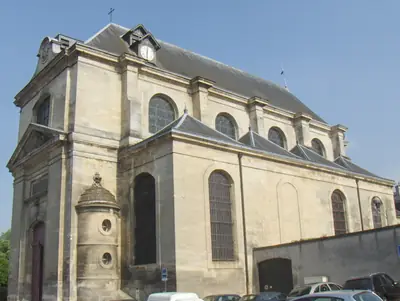
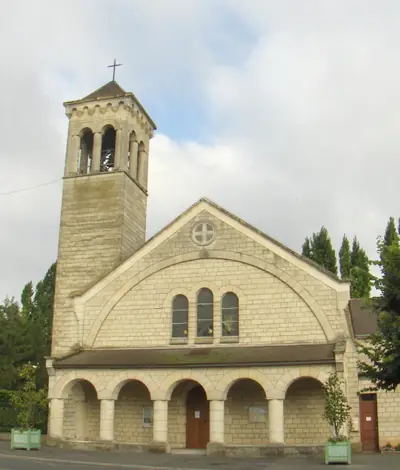
This parish church is Chantilly’s first religious building, situated at the heart of the local community. Its construction began in 1687, following a wish expressed in the will of the Grand Condé, Prince Henri‑Jules de Bourbon‑Condé, with funds drawn from his fortune. The plans were drafted by Jules Hardouin‑Mansart and the building was completed at the start of 1692. The church displays a restrained classical style that is unusual in the Oise department, where no other parish church shows such a clearly defined classical appearance. Its architectural quality led to its classification as a historic monument in 1965. An enlargement carried out between 1724 and 1734 gave the church its present form, after which it saw few further changes.
The Living Museum of the Horse
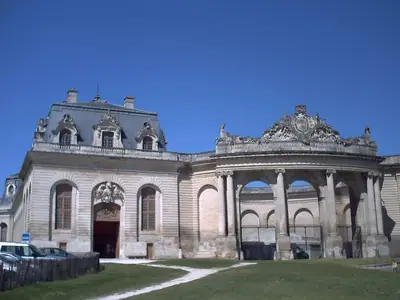
Located in the Great Stables of the château, the Living Museum of the Horse (Musée Vivant du Cheval) goes beyond a static collection to host live equestrian presentations and shows. Visitors can explore fifteen rooms in the Remises courtyard, where more than two hundred objects and works of art trace the relationship between humans and horses from the dawn of civilization. The museum opened to the public in 1982 and underwent a complete renovation in 2013. Regular equestrian demonstrations, sometimes set in historical surroundings, keep the museum’s living dimension alive.
Pavillon de Manse
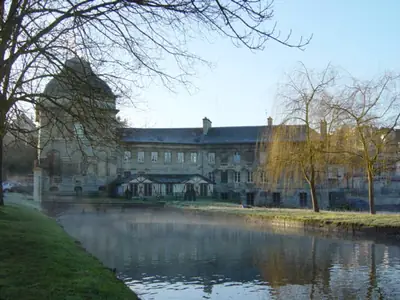
Also known as the Moulin des Princes, the Pavillon de Manse stands beside the Nonette, about a ten‑minute walk from the château. Built in 1678 by the Prince of Condé, a cousin of King Louis XIV, it housed a powerful lifting machine designed to raise water from a spring. The water filled a reservoir and then supplied the basins, fountains, cascades, and jets that adorn the gardens west of the château, which were laid out by Le Nôtre. During the Revolution the Chantilly estate became national property, making the lifting machine municipal; the surrounding buildings were later used for a porcelain factory (run by the Englishman Christophe Potter from 1792 to 1806), a cotton spinning mill, and a painted‑cloth factory operated by Monsieur Richard‑Lenoir from 1808 to 1822. In the nineteenth century the Duke of Aumale renewed the hydraulic machinery, and in 1885 he added further improvements to the system.
Château d’Enghien
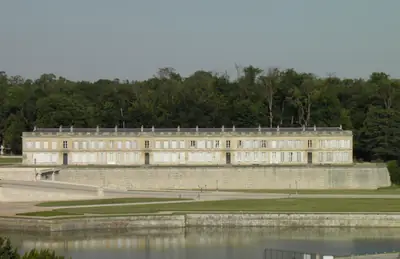
A short walk through the park leads to the Château d’Enghien, an elegant neoclassical building created to host distinguished guests at Chantilly. Designed by Jean‑François Leroy in 1769, it consists of four attached pavilions, each with its own entrance topped by a triangular pediment and a balustrade. This repeated layout gives the structure a balanced, orderly appearance. The château was later named for Louis Antoine, Duke of Enghien, who was born in 1772 and lived there with his nurses. Today it serves as the official residence of the conservator of the Musée Condé and of three academicians.
Domaine de Chantilly
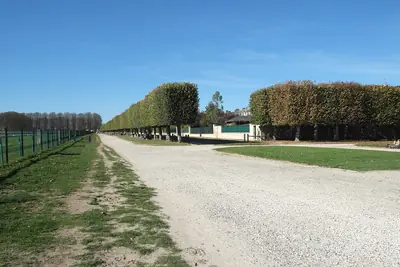
The Domaine de Chantilly extends far beyond the château itself. It encompasses the Château de Chantilly, the Musée Condé and its art collections, a park, the Forest of Chantilly, historic buildings, agricultural land, and golf courses. The estate took shape in the Middle Ages and expanded under successive owners. Today it covers 7,830 hectares across fifteen communes in the Oise and Val‑d’Oise departments. Since 1897 the whole domaine has belonged to the Institut de France, and it has been protected as a classified site since 1960.
Église Saint‑François
This local church in the Oise area offers a simple setting to pause and notice one of the community’s places of worship.
Église Sainte‑Thérèse du Bois Saint‑Denis
Also known simply as Sainte‑Thérèse Church, this building is located in Oise, France.
Saint Peter’s Church in Chantilly
Situated in Oise, France, Saint Peter’s Church (also called Saint‑Peter’s Church) provides another quiet spot for reflection amid the town’s surroundings.
Explore Chantilly with Neywo
Neywo’s free audio guide brings the stories of Chantilly to life as you walk. The app offers one walking tour: “From Princes’ Waterworks to the Château of the Grand Condé.” This route spans 2.68 kilometres, takes about 86 minutes, and includes seven narrated stops: Pavillon de Manse, Église Notre‑Dame de l’Assomption de Chantilly, The Living Museum of the Horse, Château de Chantilly, Condé Museum, Château d’Enghien, and Domaine de Chantilly. Each story plays automatically when you reach the site, allowing you to explore at your own pace with no group and no schedule. Narration is available in eleven languages. Download Neywo, put on your headphones, and let the town reveal its secrets step by step.
Places with an audio guide in Chantilly
8 places in Chantilly with a Neywo audio guide. Each one starts telling its story as you reach it.
Self-guided tours in Chantilly
1 tour in Chantilly, free in the Neywo app. Each stop tells its story as you reach it.
- Walk
From Princes' Waterworks to the Château of the Grand Condé
Follow the water that fed Chantilly's gardens, from the Prince of Condé's 17th-century pumping pavilion on the Nonette to the town's classical church and the monumental stables of the Living Museum of the Horse. Then cross the moat to the château and its paintings, and stroll on to the elegant Château d'Enghien and the vast estate beyond.
Pavillon de Manse · Église Notre-Dame de l'Assomption de Chantilly · The Living Museum of the Horse · Château de Chantilly · Condé Museum · Château d'Enghien …
Open this tour: From Princes' Waterworks to the Château of the Grand Condé
Walk Chantilly with Neywo
Neywo turns Chantilly into a self-guided audio tour. Stories arrive as you reach the place they belong to, and the route reshapes when you wander off it.

