Things to Do in Nagoya, Japan: Walking Guide
Things to do in Nagoya: history, culture and local character
Nagoya is a major city in central Japan where samurai history, Christian heritage, science, theatre and industrial innovation meet. The city is worth visiting for its temples and shrines, museums, distinctive neighbourhoods and strong connections with manufacturing and technology. Neywo has a free audio guide for Nagoya with 138 narrated places.
What to see in Nagoya
Nagoya Castle and the Tokugawa legacy
Nagoya Castle is one of the city’s defining historic landmarks. Built in the early 17th century as a Tokugawa stronghold, it reflects the wealth and authority of the Edo period through its defensive walls, gardens, reconstructed palace and golden roof ornaments.
In front of the castle, the Nagoya Noh Theater provides a cultural counterpoint. It is a dedicated venue for Noh drama and an important landmark in central Nagoya.
Wakamiya Hachiman Shrine
In Sakae, Wakamiya Hachiman Shrine offers a quiet historic pause among the city streets. Shrine records trace its origins to the reign of Emperor Monmu, around the Taihō era between 701 and 704. It was moved to its present site in 1610 by Shōgun Tokugawa Ieyasu and became the principal shrine of the Owari Tokugawa family.
The shrine was destroyed during the bombing of World War II, and its present buildings were rebuilt in 1957. Its annual festival takes place on May 15 and 16.
Nagoya City Science Museum
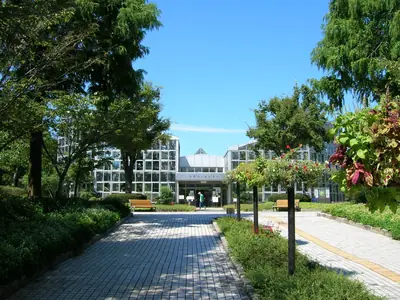
In Shirakawa Park, the Nagoya City Science Museum combines hands-on exhibits with one of the city’s most striking buildings: the giant Brother Earth planetarium. Its dome measures 35 metres across, creating an immersive setting for views of the night sky and simulated journeys through space.
The museum has three main areas devoted to modern technology, life sciences and general science. Exhibits cover subjects including space, transport and future technology. The complex developed from an astronomy museum opened in 1962 and was expanded and renovated several times, including major work in 2011 and 2012.
Sakae, Misono-za and central Nagoya
Sakae brings together department stores, cafés, green spaces and urban landmarks. It is also home to cultural attractions such as the Aichi Prefectural Art Theater and Oasis 21.
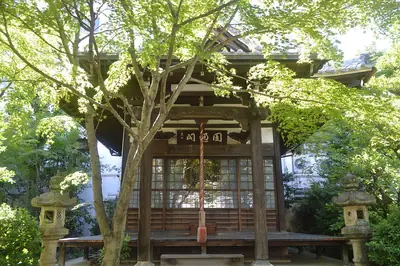
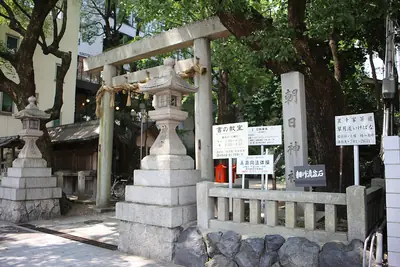
Nearby, Misono-za has a long theatrical history dating back to its original construction in the 1800s. The theatre is known for presenting both kabuki and Western stage plays. The area also includes Asahi Shrine, a Shinto place of worship along Hirokoji-dori in Nishiki, and Enrin-ji Temple in Nishiki 3-chōme.
Osu and its temples
Osu has a more eclectic atmosphere than Sakae, with temples, street food, vintage shops and lively festivals. Its streets are a good place to experience Nagoya’s everyday energy while moving between historic and contemporary city life.
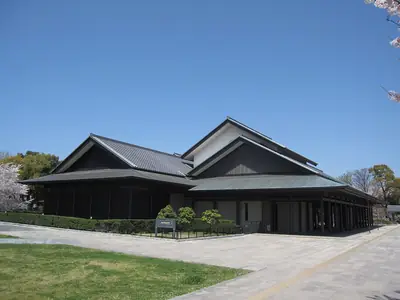
Wakamiya Hachiman Shrine lies in the Sakae area, while the nearby central districts also include the Aichi Sento Museum. This small exhibition facility focuses on sentō, Japan’s public bathhouse tradition.
Nagoya’s industrial and railway heritage
Nagoya’s modern identity is closely tied to manufacturing. The Toyota Commemorative Museum of Industry and Technology occupies an early Toyoda factory and explains how textile machinery developed into the automobile company associated with Toyota.
For another perspective on Japanese engineering, SCMAGLEV and Railway Park explores the country’s railway technology. Together, these museums show how industry and transport have shaped the city.
A visit to Nagoya can also be combined with nearby destinations in Aichi, including Toyota and Inuyama.
Nagoya’s quieter museums and cultural stops
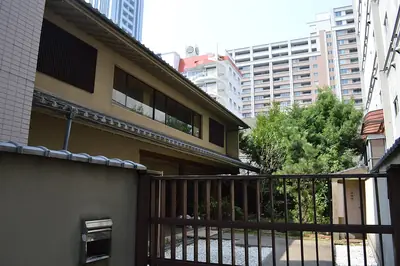
Nagoya has plenty to explore beyond its best-known landmarks. The Tamesaburo Memorial Museum preserves the former residence of Furukawa Tamesaburo, built in 1934 in the sukiya style. Its main building, Ishuntei, stands beside a Japanese garden and the Chisokuan teahouse. The Furukawa Art Museum is about 50 metres southwest and forms the other part of this local cultural stop.
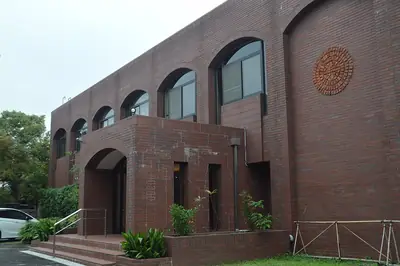
The Showa Museum of Art offers a peaceful cultural visit in the quiet Shiomi residential district. The Rakushi Art Museum, also known as Rakushi Bijutsukan, is another museum in Nagoya City.
Other specialised places include the Historical Museum of Waterworks and Sewerage, which presents the history of Nagoya’s water supply and sewerage systems, and PEACE AICHI in Meitō Ward, a museum devoted to materials about war and peace.
Temples and Christian heritage
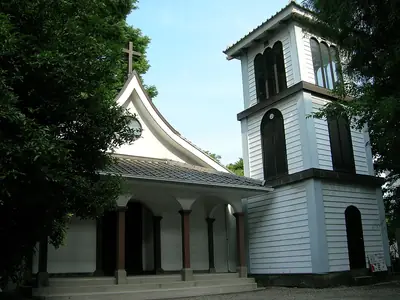
Nagoya’s religious history includes both Buddhist and Shinto traditions, as well as an important Christian presence. Zenryu-ji Temple is associated with the Cultural Path Futaba Museum and Futabakan. Catholic Chikaramachi Church, also known locally as Chikaramachi Church, was established in 1887 and is described in the supplied history as Nagoya’s oldest Catholic church. Its official name is Church of Our Lady.
These sites are part of the city’s wider historical texture, where older places of worship remain alongside modern streets and museums.
Try Nagoya-meshi
Food is another essential part of understanding Nagoya. The city’s local cuisine, known as Nagoya-meshi, includes hearty miso-based dishes, crispy tebasaki chicken wings and ogura toast, a combination of butter and sweet red bean paste often served with coffee.
These specialities give Nagoya a culinary identity distinct from the better-known food cultures of Tokyo, Kyoto and Osaka.
Explore Nagoya with Neywo
Neywo’s Nagoya audio guide lets you discover the city independently, with each story playing as you reach the place, at your own pace, with no group and no schedule. Narration is available in 11 languages.
The guide includes five walking tours and one bus route:
- Nagoya Castle: the golden shachi and the Tokugawa legacy — a 2.98 km walk lasting 76 minutes, with 6 narrated stops.
- Sakae and Osu: glass roofs, planetariums and kabuki — a 4 km walk lasting 110 minutes, with 10 narrated stops.
- Tokugawa Nagoya: samurai treasures and quiet museums — a 4.52 km walk lasting 111 minutes, with 8 narrated stops.
- Meieki and Noritake: Toyota, porcelain and the Spiral Towers — a 4 km walk lasting 87 minutes, with 6 narrated stops.
- Atsuta: the home of the Kusanagi sword — a 2.45 km walk lasting 60 minutes, with 5 narrated stops.
- Meguru: Nagoya’s tourist loop bus — a 17.4 km route lasting 75 minutes, with 7 narrated stops.
Download Neywo and explore Nagoya with a free audio guide that tells the story of each place when you arrive. For more ideas across the country, continue exploring Japan.
Places with an audio guide in Nagoya
8 places in Nagoya with a Neywo audio guide. Each one starts telling its story as you reach it.
Self-guided tours in Nagoya
6 tours in Nagoya, free in the Neywo app. Each stop tells its story as you reach it.
- Bus ride
Meguru: Nagoya's tourist loop bus
The Meguru is the city's sightseeing loop bus, a one-day-ticket ride from Nagoya Station. It rolls past the Toyota museum, the Yamato-e museum, the Central Church, Asahi Shrine, Misono-za theatre and Touken World, and finishes at Noritake Garden. Hop off where you like.
Toyota Commemorative Museum of Industry and Technology · Morimura Museum of Yamato-e Art · Nagoya Central Church · Asahi Shrine · Misono-za · Touken World Nagoya Marunouchi …
Open this tour: Meguru: Nagoya's tourist loop bus - Walk
Nagoya Castle: the golden shachi and the Tokugawa legacy
Nagoya's castle district in one walk: the golden shachi on the keep of Nagoya Castle, the Noh theatre at its foot, the old prefectural gymnasium site, a shrine to the god who made the land and Touken World, where Japan's swords are celebrated. A short, easy walk with the best sights of Tokugawa Nagoya.
Nagoya Castle · Nagoya Noh Theater · Aichi Prefectural Gymnasium · Sukunahikona Shrine · Nagoya Shrine · Touken World Nagoya Marunouchi
Open this tour: Nagoya Castle: the golden shachi and the Tokugawa legacy - Walk
Sakae and Osu: glass roofs, planetariums and kabuki
From the red lanterns of Osu to the glass roof of Oasis 21: a stroll through Nagoya's entertainment heart. Meet the only yose theatre in the region, a planetarium sphere called Brother Earth, an art museum that borrows from shrines and castles, the shrine Ieyasu moved here in 1610 and a roof full of water.
Osu Engeijo · Suehiro-za · Wakamiya Hachiman Shrine · Nagoya City Art Museum · Nagoya City Science Museum · Misono-za …
Open this tour: Sakae and Osu: glass roofs, planetariums and kabuki - Walk
Tokugawa Nagoya: samurai treasures and quiet museums
Walk east of the castle to the old samurai district. Visit the Tokugawa Art Museum with the family's national treasures, the Money and Ukiyo-e Museum, quiet temples and art museums, then finish at the twin spires of Nunoike Cathedral.
Tokugawa Art Museum · Money & Ukiyo-e Museum · Zenryu-ji Temple (Nagoya) · Hori Art Museum · Catholic Chikaramachi Church · Yokoyama Art Museum …
Open this tour: Tokugawa Nagoya: samurai treasures and quiet museums - Walk
Meieki and Noritake: Toyota, porcelain and the Spiral Towers
Start at the Nagoya Mosque, then discover the city that built Toyota: the Toyota Commemorative Museum, Noritake Garden's porcelain, Nagoya Station and the Mode Gakuen Spiral Towers.
Nagoya Mosque · Toyota Commemorative Museum of Industry and Technology · Noritake Garden · Nagoya Station · Kintetsu Nagoya Station · Mode Gakuen Spiral Towers
Open this tour: Meieki and Noritake: Toyota, porcelain and the Spiral Towers - Walk
Atsuta: the home of the Kusanagi sword
A short walk through the grounds around Atsuta Jingu, the shrine that keeps one of Japan's three sacred treasures, the Kusanagi sword. Visit the shrine's treasure museum and sword hall, then the parks and quiet temples to the north.
Atsuta Jingū Museum · Treasure Trove of Swords Kusanagi-kan · Atsuta Jingu Park · Shirotori Park · Unshin-ji Temple
Open this tour: Atsuta: the home of the Kusanagi sword
Walk Nagoya with Neywo
Neywo turns Nagoya into a self-guided audio tour. Stories arrive as you reach the place they belong to, and the route reshapes when you wander off it.

