Things to Do in Kamakura, Japan: Walking Guide
Things to Do in Kamakura: Temples, Shrines and Samurai History
Kamakura is a coastal city in Kanagawa known for its Buddhist temples, Shinto shrines and deep connections with Japan’s medieval warrior culture. The best things to do in Kamakura range from seeing the Great Buddha and exploring major Zen monasteries to finding quiet gardens, historic monuments and small shrines. Neywo offers a free audio guide for Kamakura with 44 narrated places, available in 11 languages.
What to See in Kamakura
Kōtoku-in Temple and the Great Buddha
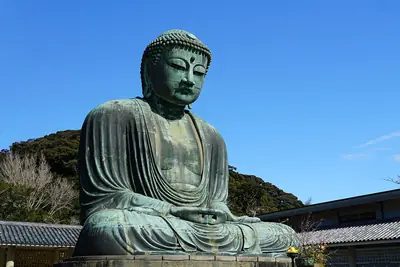
Kōtoku-in is home to the Great Buddha of Kamakura, a monumental bronze image of Amitābha and one of Japan’s most famous icons. The statue stands about 11.3 metres high and is recognized as a National Treasure.
The temple belongs to the Jōdo-shū, or Pure Land, Buddhist sect. The Great Buddha was once enclosed in a wooden temple building, but that structure was destroyed by a tsunami in the late fifteenth century. The statue survived and remains remarkably close to its original form. Records trace its history back to 1252, although the exact relationship between the image constructed then and the statue standing today remains uncertain.
Gokuraku-ji Temple
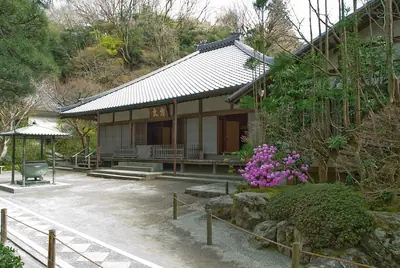
Gokuraku-ji is a distinctive Buddhist temple near Gokuraku-ji-zaka Pass, one of Kamakura’s seven historic passes. It belongs to the Shingon Ritsu tradition, an unusual affiliation in the city, and its principal image is Shakyamuni Buddha.
The temple was established by Hojo Sh重時, with the monk Ninsho as its founding religious leader and effective founder. The precinct and Ninsho’s tomb are designated as a national historic site, connecting the temple’s religious history with the surrounding landscape.
Amanawa Shinmei Shrine
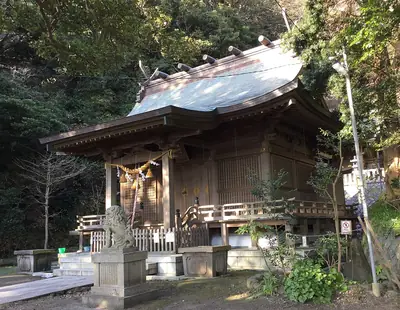
Founded in 710, Amanawa Shinmei Shrine is considered Kamakura’s oldest Shinto shrine. It is dedicated to Amaterasu, the sun goddess, and has two principal buildings: the haiden, or oratory, at the front and the honden, or sanctum, behind it.
The roofs display the chigi, or crossed hornlike planks, and five katsuogi logs. These features identify the Shinmei-zukuri style of Shinto architecture. The shrine’s older buildings were destroyed in the Great Kantō earthquake of 1923 and rebuilt in 1936; the most recent reconstruction was completed in 1998.
Zeniarai Benzaiten Ugafuku Shrine
Zeniarai Benzaiten Ugafuku Shrine, usually called Zeniarai Benten, is a small Shinto shrine built around a spring inside a cave. Tradition says that washing money in the spring can make it multiply, so visitors wash coins and paper money there in the hope that their wealth will increase.
The shrine’s origins are linked to a dream received by Minamoto no Yoritomo in 1185. According to the legend, the dream revealed the deity Ugafukujin, leading Yoritomo to establish a place for worship. Despite its compact size, Zeniarai Benten is described as Kamakura’s second most popular spot after Tsurugaoka Hachimangū.
Jōchi-ji Temple
Jōchi-ji is one of the most atmospheric Zen temples in the hills of Kita-Kamakura. It holds the fourth rank among Kamakura’s Five Mountains, the elite network of Zen monasteries that once influenced the city’s spiritual and political life.
Inside the main hall, three seated Buddhas represent the past, present and future: Amida, Shaka and Miroku. This arrangement is known as the Three World Buddhas. Jōchi-ji was founded in the early 1280s by Hōjō Munemasa and Hōjō Morotoki, members of the powerful Hōjō clan. A stone monument also commemorates the novelist Natsume Sōseki, who practised Zen meditation here.
Meigetsu-in, the Temple of Hydrangeas
Meigetsu-in is a Rinzai Zen temple tucked into the hills of Kita-Kamakura. It is widely known as the Temple of Hydrangeas because thousands of blue hydrangeas bloom along its paths and around the main hall in early summer.
The temple’s formal name is Fugenzan Meigetsu-in, and its principal image is Shō Kannon, the goddess of mercy. Its grounds include a circular window that frames the inner garden, as well as a dry landscape garden, moss garden, quiet courtyards and an iris garden. The hillside also contains yagura, cave tombs carved into the soft rock, recalling the site’s long history as a place of prayer.
Kenchō-ji Temple
Kenchō-ji is the oldest Zen training monastery in Japan and the head temple of the Rinzai Kenchō-ji school. It occupies the first position among Kamakura’s Five Great Zen Temples and was completed in 1253 on the orders of Emperor Go-Fukakusa.
The temple’s principal object of worship is Jizō Bosatsu, the bodhisattva associated with travellers and children. At its height, Kenchō-ji had a seven-hall garan and 49 subtemples. Fires damaged the complex repeatedly over the centuries, but it was rebuilt in its original style. Its paths preserve the atmosphere of a place where generations of monks have practised zazen for nearly 800 years.
Tsurugaoka Hachimangū
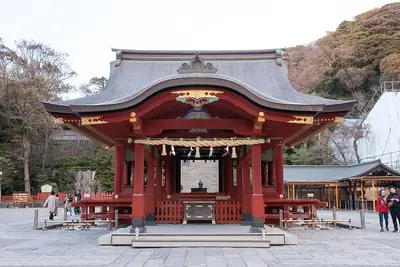
Tsurugaoka Hachimangū, also called Kamakura Hachimangū, is Kamakura’s most important Shinto shrine and a major cultural centre for the city. It was founded in the latter half of the eleventh century as a guardian shrine of the Minamoto clan. In 1180, Minamoto no Yoritomo moved it from Yui-ga-hama to its present site and expanded it.
The shrine became central to the Kamakura shogunate and served as a protector of the Kamakura warriors. For much of its history, it combined Hachiman worship with Tendai Buddhism. Near the entrance once stood an ancient ginkgo tree said to be 1,000 years old; a storm uprooted it on March 10, 2010.
Sugimoto-dera Temple
Sugimoto-dera is regarded as Kamakura’s oldest Buddhist temple. Its moss-covered stone steps are one of its most recognisable features, while the temple’s full name is Taizō-zan Kannon-in Sugimoto-dera.
It is one of only two Tendai temples in Kamakura, together with Hōkai-ji. Inside, three statues of Eleven-Faced Kannon are enshrined, two of them Important Cultural Properties. The temple is also known as Geba Kannon, or Dismount Kannon, referring to the traditional belief that horsemen were compelled to dismount as they passed.
Hatakeyama Shigeyasu’s Grave
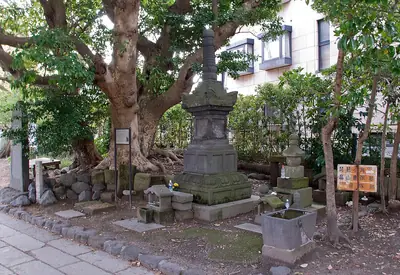
Near the Yuigahama end of Wakamiya Ōji Avenue, beside Tsurugaoka Hachimangū’s first torii, a stone pagoda beneath a tabu tree is traditionally identified as the grave of Hatakeyama Shigeyasu.
Shigeyasu was a Kamakura-period warrior who was killed in 1205 after Hōjō soldiers surrounded his residence in Yuigahama. The hōkyōintō monument is 3.45 metres high, made of andesite and recognised as an Important Cultural Property. A date carved on its base reads 1393, although the form suggests construction during the Muromachi period. The connection between the monument and Shigeyasu’s actual grave is not certain, making this a particularly intriguing historical stop.
Kamakura Museum of Literature
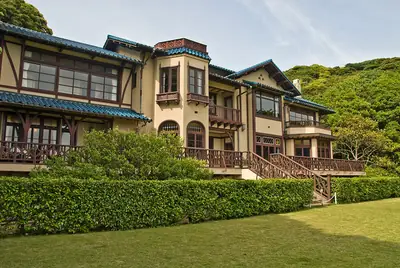
The Kamakura Museum of Literature combines a historic villa with a large garden and rose garden. Its collections focus especially on writers connected with Kamakura and include personal belongings, manuscripts, first editions and documents associated with more than 100 figures from Japanese literature.
The villa began as a residence of the old Maeda family and was built in 1936 by Toshinari Maeda. Set on a hillside overlooking Sagami Bay, it represents the villa architecture of its period. The building was registered as a National Registered Tangible Property in April 2000. It also has connections with former prime minister and Nobel Peace Prize winner Eisaku Satō, who used it as a villa, and with Yukio Mishima’s novel Spring Snow.
Kamakura Museum of History and Culture
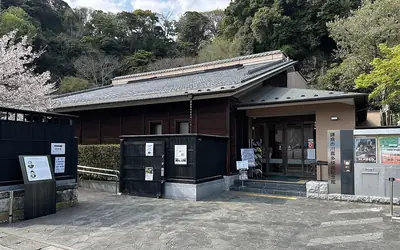
The Kamakura Museum of History and Culture is a municipal exhibition facility devoted to the city’s history and culture. It opened on May 15, 2017, offering another place to explore Kamakura’s past beyond its temples and shrines.
Kawakita Film Museum
The Kawakita Film Museum is a quieter cultural attraction dedicated to film. It adds a modern cultural perspective to a city more widely associated with medieval history, Buddhist temples and Shinto shrines.
Tatsumi Shrine and Kumano Shrine
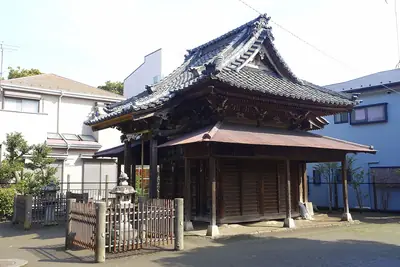
Tatsumi Shrine is a Shinto shrine in Kamakura and a brief stop for visitors exploring the city’s religious heritage. Kumano Shrine can be found in the Jōmyōji area, adding another Shinto site to the temple-rich eastern side of the city.
Explore Kamakura with a Self-Guided Audio Guide
A Kamakura self-guided walking tour makes it easier to connect the city’s scattered temples, shrines and historical sites. Neywo’s free Kamakura audio guide includes five walking tours and one bus route, with each story playing as you reach the place it describes.
The walks include:
- Wakamiya Ōji: The Shogun’s Avenue — 3.2 km, 120 minutes and 11 narrated stops.
- Five Mountains: Zen Temples of Kita-Kamakura — 3.67 km, 100 minutes and 7 narrated stops.
- The Great Buddha and the Hase Temples — 3.99 km, 113 minutes and 7 narrated stops.
- Eastern Kamakura: Pilgrim Temples and Hidden Valleys — 5.28 km, 113 minutes and 7 narrated stops.
- Koshigoe: Oldest Shrine and the Slam Dunk Crossing — 3.14 km, 65 minutes and 4 narrated stops.
There is also a bus route from Kamakura Station to Kita-Kamakura: 2.8 km, 12 minutes and 5 narrated stops. The app tells the story of each place as you reach it, at your own pace, with no group and no schedule.
Download Neywo and explore Kamakura with a free audio guide that brings the Great Buddha, Zen temples, shrines and samurai history to life as you walk. Kamakura is one of the most rewarding places to discover in Japan, and it pairs naturally with a visit to nearby Yokohama.
Places with an audio guide in Kamakura
8 places in Kamakura with a Neywo audio guide. Each one starts telling its story as you reach it.
Self-guided tours in Kamakura
5 tours in Kamakura, free in the Neywo app. Each stop tells its story as you reach it.
- Bus ride
Kamakura Station to Kita-Kamakura by Bus
A public Enoden bus line from the Kamakura Station area out to the Zen temples of Kita-Kamakura. It passes Nichiren temples, the BAM museum on Wakamiya Ōji and the quiet temples of Yamanouchi, and saves the uphill walk.
Myōryū-ji Temple · BAM · Yakuō-ji Temple · Chōju-ji Temple · Jōchi-ji Temple
Open this tour: Kamakura Station to Kita-Kamakura by Bus - Walk
Wakamiya Ōji: The Shogun's Avenue
Follow the ceremonial avenue that Yoritomo built to the heart of his shogunate. You start at a Muromachi-era pagoda by the first torii, pass temples, a nunnery, a Catholic church, a film museum and a Kengo Kuma museum, and end at Kamakura's greatest shrine.
Hatakeyama Shigeyasu's grave · Kyōon-ji temple · Myōryū-ji Temple · Tatsumi Shrine · Catholic Yukinoshita Church · Kamakura Museum of History and Culture …
Open this tour: Wakamiya Ōji: The Shogun's Avenue - Walk
Five Mountains: Zen Temples of Kita-Kamakura
Walk through the valley where the Hōjō regents planted Japan's first Zen monasteries. Railway tracks cross one temple gate, hydrangeas crowd another, and the oldest Zen monastery in the country waits at the end of the trail.
Engaku-ji Temple · Jōchi-ji Temple · Meigetsu-in · Kenchō-ji Temple · Chōju-ji Temple · Yakuō-ji Temple …
Open this tour: Five Mountains: Zen Temples of Kita-Kamakura - Walk
The Great Buddha and the Hase Temples
Climb from the quiet Shingon Ritsu temple of Gokuraku-ji to the Hase Kannon with its eleven-headed statue, the bronze Great Buddha and the oldest Shinto shrine in the city. Then cross the hills to the cave spring of Zeniarai Benten, where visitors wash their coins to double them, and finish at Genjiyama Park and the Kuzuharaoka viewpoint.
Gokuraku-ji Temple · Hase-dera Temple · Kōtoku-in Temple · Amanawa Shinmei Shrine · Zeniarai Benzaiten Ugafuku Shrine · Genjiyama Park …
Open this tour: The Great Buddha and the Hase Temples - Walk
Eastern Kamakura: Pilgrim Temples and Hidden Valleys
Leave the crowds behind and head east to Nichiren's temples, the oldest temple in Kamakura, a Jōmyōji shrine and a leather artist's home studio. The walk ends in two valleys, one with a Zen rock garden carved into bedrock, one with a Hōjō temple that still feels medieval.
Tsuji no Yakushidō · Myōhon-ji Temple · Sugimoto-dera Temple · Kumano Shrine · Suigeikan · Zuisen-ji Temple …
Open this tour: Eastern Kamakura: Pilgrim Temples and Hidden Valleys
Walk Kamakura with Neywo
Neywo turns Kamakura into a self-guided audio tour. Stories arrive as you reach the place they belong to, and the route reshapes when you wander off it.

