Things to Do in Yokohama, Japan: Walking Guide
Things to do in Yokohama: a self-guided guide to the city
Yokohama is a port city where Japan’s international history meets modern waterfront culture, museums, parks and distinctive historic buildings. From the former foreign settlement on Yamate Bluff to Minato Mirai’s skyline, there are plenty of things to do in Yokohama, and Neywo offers a free audio guide with 111 narrated places to help you explore.
What to see in Yokohama
The city’s sights are spread across several neighbourhoods, each revealing a different part of Yokohama’s character.
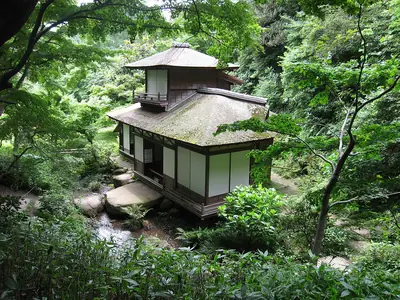
Sankeien Garden and Chōshūkaku
Sankeien Garden is home to Chōshūkaku, an elegant two-story pavilion whose name means something like “Pavilion of Listening to Autumn”. Its refined architecture, balanced roof lines and light, tower-like form make it one of the garden’s most notable structures. Along with Rinshunkaku, it is designated as a National Important Cultural Property of Japan.
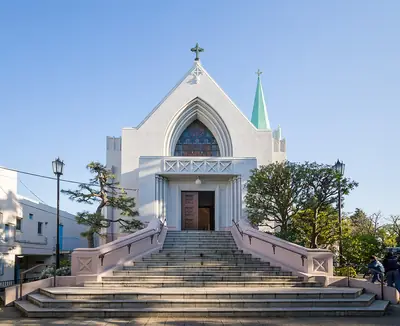
Sacred Heart Cathedral
Sacred Heart Cathedral, also known as Yamate Catholic Church, has been the spiritual centre for Catholics in the region since 1937. Its history reaches back to the first Catholic church in Yokohama’s foreign settlement, built in 1862 after Japan lifted its ban on Christianity.
The present Neo-Gothic building was designed by the Czech architect Jan Josef Švagr and completed in 1933. It replaced the earlier brick church in Yamate, which was destroyed in the Great Kantō Earthquake of 1923. Pointed arches, ribbed vaults and strong vertical lines give the cathedral its distinctive appearance.
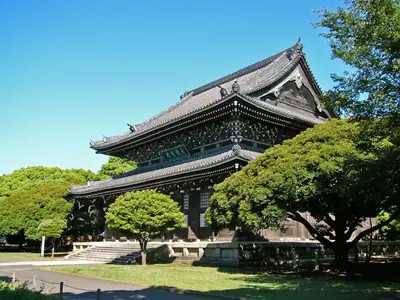
Sōji-ji Temple
Sōji-ji is one of the two head temples of the Sōtō school of Zen Buddhism. Its origins go back to 740, when it was founded as a Shingon Buddhist temple, but its identity as a Sōtō Zen centre began in 1321, when the monk Keizan re-established it.
After a devastating fire in 1898, the temple was relocated from the Noto Peninsula to Tsurumi in Yokohama. The present complex was rebuilt by 1911 and includes about twelve buildings. One was designed by Itō Chūta, an architect also associated with Meiji Shrine and Tsukiji Hongan-ji.
Yokohama’s waterfront and Hikawa Maru
Yamashita Park offers a relaxed setting beside the water and is home to the Hikawa Maru. The ship has been moored there since 1961 and is one of only two large Japanese vessels built before the Second World War that still survive; the other is the battleship Mikasa.
Launched in September 1929 by the Yokohama Dock Company, Hikawa Maru began its career on the North Pacific route between Kobe and Seattle. During the war it served as a hospital ship, later helping bring Japanese soldiers and civilians home. It returned to civilian service in 1953 and continued crossing the Pacific until 1960.
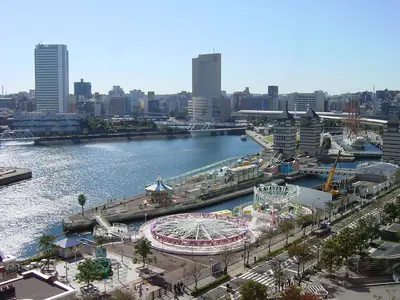
Minato Mirai and Yokohama Cosmo World
Minato Mirai is Yokohama’s modern waterfront district, defined by its urban skyline and major cultural attractions. The giant Cosmo Clock 21 Ferris wheel is one of its most recognisable landmarks. Yokohama Cosmo World is an urban theme park divided into three zones: Wonder Amuse Zone, Burano Street Zone and Kids Carnival Zone.
The park has around 27 attractions, including the Diving Coaster Vanish, whose track passes through an underwater tunnel. Entry to the park is free, while rides are paid for individually or through a day pass.
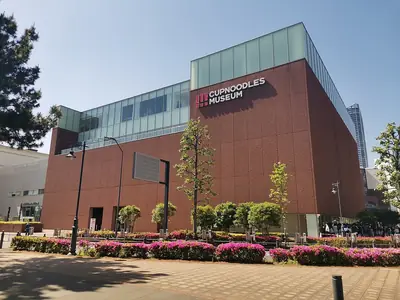
CupNoodles Museum Yokohama
CupNoodles Museum Yokohama explores the history of instant noodles and the work of their inventor, Momofuku Ando. Exhibits across four floors show how the idea developed from a backyard shed into a global food.
One of the museum’s highlights is the hands-on workshop, where visitors can create their own Cup Noodles by choosing the soup base, toppings and packaging. It is both an activity and a personalised souvenir.
Shin-Yokohama Raumen Museum
The Shin-Yokohama Raumen Museum combines a museum, food court and recreation of a Showa-era streetscape. Its exhibits trace ramen’s development from its Chinese origins to its many regional forms across Japan, with displays of bowls, shop signs and noodle-making techniques.
Downstairs, the food court recreates Tokyo in 1958, the year instant ramen was invented. Narrow lanes and retro storefronts are home to branches of ramen shops from regions including Kyushu and Hokkaido, making the museum a useful introduction to Japan’s varied ramen traditions.
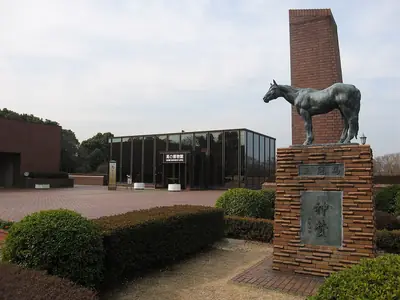
Equine Museum of Japan
Inside Negishi Forest Park, the Equine Museum of Japan examines the history and cultural importance of horses in Japan. It occupies the former site of the Negishi Racecourse, Japan’s first Western-style horse racing track, which operated from 1866 until 1942.
The collection contains more than 20,000 items, including horse equipment, samurai saddles, racing silks, trophies and a full-scale thoroughbred model. Ukiyo-e prints show horses in Edo-period life, from pulling carts to carrying warriors and appearing in festivals.
Nogeyama Park
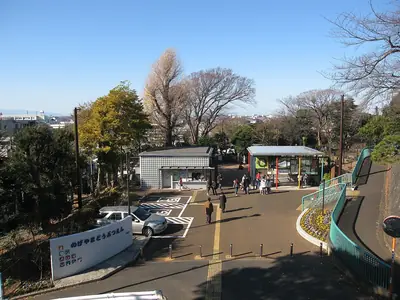
Nogeyama Park has been a local green space since 1926 and covers about nine hectares on a hill in Nishi ward. Its elevated position provides views towards the Minato Mirai skyline and, on a clear day, the bay.
The park is also known for its roughly 380 cherry trees, which turn the hillside pink in spring. Nogeyama Zoo is located within the park and is free to enter. Its collection includes red pandas, reptiles and birds, as well as a polar bear house and a petting area with guinea pigs and rabbits.
Museums for literature, trains and design
Yokohama’s museums cover subjects well beyond port history and food. The Kanagawa Museum of Modern Literature in Yamate preserves literary materials connected with Kanagawa and modern Japanese literature. The museum is also associated with names including the Iwasaki Museum, the Osaragi Jiro Memorial Museum and British House Yokohama.
The Hara Model Railway Museum displays thousands of detailed models, ranging from steam locomotives to modern electric trains. The exhibition occupies around 1,200 square metres in the Yokohama Mitsui Building.
At the Sogō Museum of Art, on the sixth floor of the Sogo Yokohama department store, visitors find Japan’s first museum established under the Museum Act inside a department store. The museum opened on 30 September 1985.
The Nissan Engine Museum, located at Nissan’s Yokohama plant, presents the company’s own collection of engines used in its cars over the decades.
The NYK Maritime Museum
The NYK Maritime Museum focuses on Japan’s modern shipping history and the NYK Line. It first opened in Yokohama’s Naka Ward in 1993 and is operated by the company.
The museum is currently closed for major renovation work. It shut in April 2023 and is not expected to reopen until spring 2027.
Historic buildings and the port-opening story
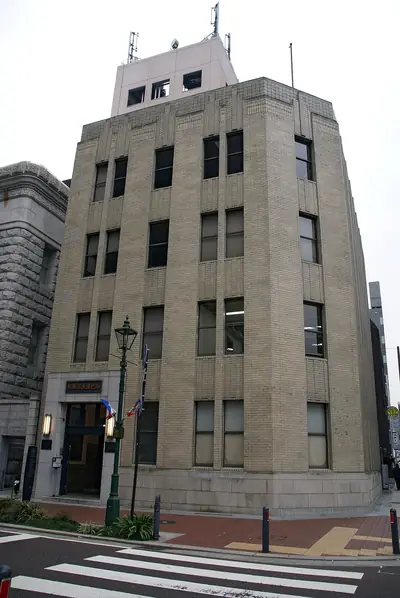
The Bashamichi Otsu Building is a modern-era structure on Minami-nakadori in Yokohama’s Naka Ward. It forms part of the city’s architectural history, particularly around the streets shaped by Yokohama’s development as an international port.
For a wider historical route, the city’s former foreign settlement and waterfront connect naturally with Kanagawa, the surrounding region. Yokohama also makes a strong contrast with nearby Kamakura, where temples, Buddhism and samurai history create a very different atmosphere.
Explore Yokohama with Neywo
Neywo turns a visit into a Yokohama self-guided walking tour. The app has five walking tours and one bus route, with narration available in 11 languages:
- Port Opening Trail: Where Japan Met the World — 3.39 km, 101 minutes and 10 narrated stops.
- Yamate Bluff: Foreign Settlement on the Hill — 2.36 km, 84 minutes and 10 narrated stops.
- Minato Mirai: The Waterfront of Tomorrow — 4.17 km, 111 minutes and 9 narrated stops.
- Nogeyama Hill to Yokohama Station: Parks, Stages and Trains — 3.65 km, 85 minutes and 6 narrated stops.
- Honmoku and Sankeien: Horses, Temples and Pavilions — 5.16 km, 110 minutes and 6 narrated stops.
- Bayside Blue: Kannai, Yamashita and Minato Mirai — a 10.8 km bus route lasting 46 minutes, with 8 narrated stops.
The app tells the story of each place as you reach it, at your own pace, with no group and no schedule. Download Neywo and explore Yokohama as a free audio guide, choosing the walk or bus route that best fits your day.
Places with an audio guide in Yokohama
8 places in Yokohama with a Neywo audio guide. Each one starts telling its story as you reach it.
Self-guided tours in Yokohama
6 tours in Yokohama, free in the Neywo app. Each stop tells its story as you reach it.
- Bus ride
Bayside Blue: Kannai, Yamashita and Minato Mirai
A city bus that runs between Yokohama Station and the harbour. Ride it past the Kanagawa Arts Theatre, the Hikawa Maru and the old British Consulate, then through Minato Mirai by the Cupnoodles Museum, Cosmo World and the Hara Model Railway Museum.
Kanagawa Arts Theatre · Hikawa Maru · Yokohama Archives of History · CupNoodles Museum Yokohama · Yokohama Anpanman Children's Museum · Yokohama Cosmo World …
Open this tour: Bayside Blue: Kannai, Yamashita and Minato Mirai - Walk
Port Opening Trail: Where Japan Met the World
Follow the story of Japan's opening in 1854, from the Kannai foreign settlement church where Hepburn preached to the Port Opening Memorial Plaza and the old British Consulate. Continue to Japan's first Protestant church, the Elephant's Nose Pier, Chinatown's Guan Di temple and the Hikawa Maru, a liner that has survived since 1930.
Yokohama Archives of History · The Church of Christ in Japan · Zou-no-hana Park · Kanagawa Arts Theatre · Yokohama Kuan Ti Miao · Yamashitachō Park …
Open this tour: Port Opening Trail: Where Japan Met the World - Walk
Yamate Bluff: Foreign Settlement on the Hill
Climb the Bluff, where foreign merchants built their homes after the port opened. Visit the Italian Garden, the Sacred Heart Cathedral and Christ Church, then wander through Motomachi's shrine and hillside park to the literature museum in the old Yamate quarter.
Yamate Italian Garden · Sacred Heart Cathedral · Itsukushima Shrine · Yokohama Cat Museum · Gaiety Theatre, Yokohama · Motomachi Hyakudan Park …
Open this tour: Yamate Bluff: Foreign Settlement on the Hill - Walk
Minato Mirai: The Waterfront of Tomorrow
Walk the reclaimed waterfront of Minato Mirai 21, from the Anpanman museum to the Landmark Tower, the old railway promenade, Cosmo World's giant Ferris wheel and the Cupnoodles Museum, ending at the Coast Guard museum.
Yokohama Anpanman Children's Museum · ぴあアリーナMM · Yokohama Museum of Art · Yokohama Landmark Tower · Kishamichi Promenade · Yokohama Cosmo World …
Open this tour: Minato Mirai: The Waterfront of Tomorrow - Walk
Nogeyama Hill to Yokohama Station: Parks, Stages and Trains
Start on Nogeyama hill, one of Yokohama's oldest parks, and walk through the Noh theatre, the Manyo poem monument and the civic art gallery toward Yokohama Station. Finish with the Hara Model Railway Museum and the Sogo Museum of Art.
Nogeyama Park · Yokohama Noh Theater · Yokohama Civic Art Gallery · Hara Model Railway Museum · Sogō Museum of Art
Open this tour: Nogeyama Hill to Yokohama Station: Parks, Stages and Trains - Walk
Honmoku and Sankeien: Horses, Temples and Pavilions
Head south to Yokohama's quieter shore. See the Equine Museum in Negishi Forest Park, the Zengyo-ji temple and Honmoku shrine, then the historic buildings gathered in Honmoku City Park and Chosyukaku, the 'Pavilion of Listening to Autumn' in Sankeien Garden.
Equine Museum of Japan · Zengyō-ji Temple · Honmoku Shrine · Chōshūkaku · Yokohama City Hasseiden Local Museum
Open this tour: Honmoku and Sankeien: Horses, Temples and Pavilions
Walk Yokohama with Neywo
Neywo turns Yokohama into a self-guided audio tour. Stories arrive as you reach the place they belong to, and the route reshapes when you wander off it.

