Asuka, Japan: Self-Guided Walking Tour
Things to Do in Asuka: Ancient Palaces, Temples and Rural Landscapes
Asuka is a historic village in Nara, Japan, where temples, burial mounds, palace sites and mysterious stone monuments are scattered through a peaceful rural landscape. Once the centre of Japan’s imperial court, it is worth visiting for the way its earliest history remains connected to rice fields, wooded hills and quiet village roads. Neywo offers a free audio guide for Asuka with 11 narrated places, available in 11 languages.
What to See and Things to Do in Asuka
The best things to do in Asuka are spread across the countryside rather than concentrated in one historic centre. Exploring them reveals how religion, politics and culture developed during Japan’s formative centuries.
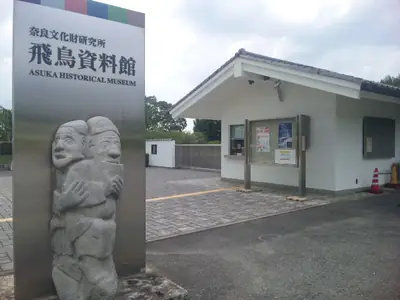
Asuka Historical Museum
The Asuka Historical Museum has preserved and presented the history of the region since 1975. It stands in the Okuyama area, within the same landscape where Japan’s early imperial history unfolded. The museum provides a useful introduction to the archaeological sites and political history found throughout Asuka.
Ikazuchi-no-Oka
Ikazuchi-no-Oka is a gentle hill rising about 110 metres above the surrounding landscape. Its name means “Thunder Hill” and inspired a poem by Kakinomoto no Hitomaro, one of the court poets represented in the Man’yoshu, Japan’s oldest poetry anthology.
Hitomaro used the double meaning of ikazuchi—thunder and the name of the hill—to imagine a deified ruler dwelling above the clouds. The site offers a direct connection between Asuka’s landscape and early Japanese poetry.
Toyura Palace
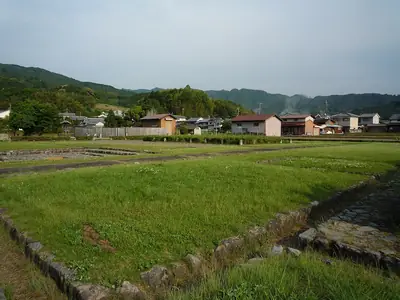
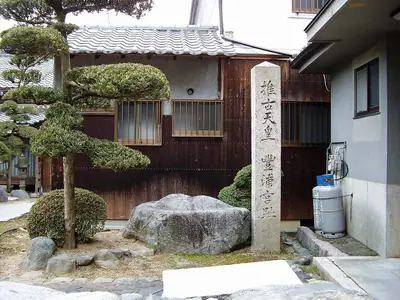
Toyura Palace was the residence of Empress Suiko in the early seventh century. Historical records place it near the area now known as Toyura in Asuka Village, although the exact footprint of the palace remains an archaeological estimate.
Asuka-dera Temple
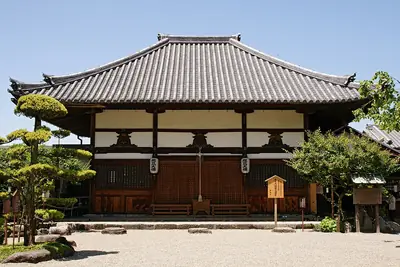
Asuka-dera is one of Japan’s oldest Buddhist temples and a key place to visit when exploring the origins of Japanese Buddhism. It was founded in the late sixth century by Soga no Umako, leader of the powerful Soga clan, and was originally known as Hōkō-ji, the clan temple of the Soga family.
Its construction marked the arrival of Buddhist culture on a much larger scale in Japan. In 588, the Korean kingdom of Baekje sent Buddhist relics, six monks and skilled craftsmen—including roof-tile specialists, painters and architects—to help build the temple complex.
The temple’s most important object is the Asuka Daibutsu, a bronze Shaka Nyorai statue cast in the early seventh century. It is the oldest known Buddhist image in Japan with a confirmed date. Although the building standing today is a later reconstruction, the statue connects the site with the beginning of Buddhist history in the country.
Sakafuneishi Site
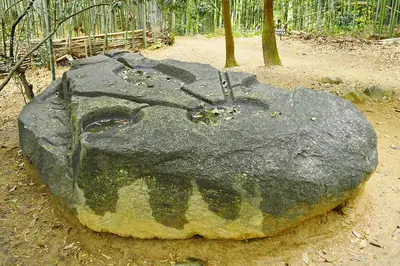
The Sakafuneishi Site is one of Asuka’s most enigmatic archaeological locations. Its central feature, the Sakafuneishi or “sake boat stone”, has channels and depressions carved into its surface. These have led to theories involving brewing, rituals and astronomical observations, but its original purpose remains uncertain.
Excavations in 2000 revealed additional stone features nearby, including a turtle-shaped structure and an oval one, along with sandstone walls and rammed-earth foundations. Archaeologists do not all agree that these discoveries belonged to a single complex, making the site particularly interesting for visitors drawn to unresolved historical questions.
Oka-dera Temple
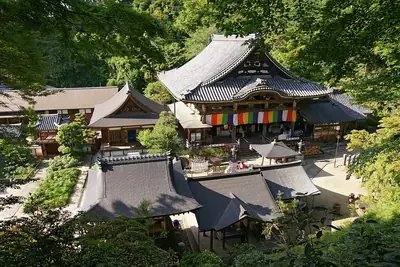
Oka-dera, formally Tokozan Shinjuin Ryugaiji, belongs to the Shingon Buzan sect of Buddhism. Founded in the seventh century by the priest Gien, it has attracted pilgrims for more than thirteen centuries and is recognised as Japan’s first yakuyoke sacred site.
The main hall contains an extraordinary national treasure: an eighth-century Nyoirin Kannon, the Bodhisattva of Compassion. Made entirely from clay, it is Japan’s largest clay statue. The scale and delicacy of the statue offer a striking example of the technical skill involved in creating monumental religious images from a fragile material. A statue of Gien is also enshrined at the temple and has been designated a national treasure.
Takamatsuzuka Mural Museum
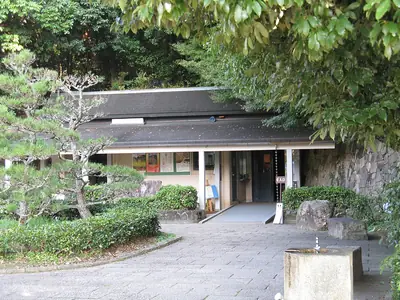
The Takamatsuzuka Mural Museum is associated with the ancient burial mound known as Nakao-yama Kofun. It introduces visitors to one of Asuka’s important archaeological discoveries and adds another perspective to the area’s funerary heritage.
Asuka Kiyomihara Palace
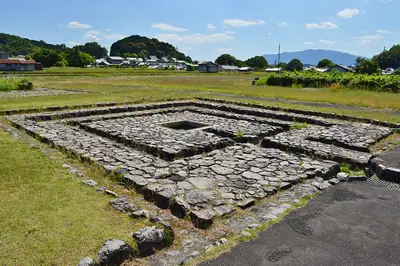
The site of Asuka Kiyomihara Palace is associated with two rulers of the late seventh century: Emperor Tenmu and Empress Jito. Earlier interpretations placed the palace elsewhere in Asuka, but more recent excavations have led archaeologists to identify its location with the hill known as Oka, at the site traditionally called the Asuka Itabuki Palace ruins.
Itabuki Palace
Itabuki Palace was an imperial residence in the mid-seventh century. Empress Kōgyoku made it her palace, and the site is generally known as Asuka Itabuki Palace. Like the other palace locations in Asuka, it helps explain why the village is best understood as a landscape of several royal residences rather than one surviving capital.
Asuka Station
Asuka Station is the arrival point for many visitors exploring the village. It is the only railway station in Nara Prefecture located within a village rather than a city or town. The station is on the Kintetsu Yoshino Line and has two ground-level platforms serving two tracks.
Its modest appearance suits the character of Asuka: from here, the railway gives way to the historic landscapes, archaeological sites and rural roads of the village.
Ishibutai Kofun
The Ishibutai Kofun is a massive stone burial mound from the late Kofun period and a Special Historic Site of Japan. It forms part of the Asuka-Fujiwara Palace Capitals World Heritage listing and is the country’s largest known megalithic structure, measuring 54 metres in length.
The earthen mound that originally covered the tomb has eroded, leaving the stone chamber exposed. Huge megaliths form its horizontal-entry passage and chamber, with some ceiling stones weighing dozens of tons. The site was designated a National Historic Site in 1935 and elevated to a Special Historic Site in 1954. It is also known as the Ishibutoya Kofun.
Explore Asuka with a Self-Guided Audio Guide
Neywo’s Asuka self-guided walking tour lets you explore the village without a group or schedule. The app tells the story of each place as you reach it, at your own pace, so you can connect the temples, palace sites and countryside as you walk.
There are two walking tours in Asuka:
- Thunder Hill to the Giant Stone Tomb: Japan’s First Capital — 4.69 km, 105 minutes and 7 narrated stops, including Asuka Historical Museum, Ikazuchi-no-Oka, Toyura Palace, Asuka-dera Temple, Sakafuneishi Site and Oka-dera Temple.
- Village Station, Painted Tomb and Palace Sites of Asuka — 3.24 km, 66 minutes and 4 narrated stops, including Asuka Station, Takamatsuzuka Mural Museum, Asuka Kiyomihara Palace and Itabuki Palace.
Download Neywo’s free Asuka audio guide and explore the village independently. Each story starts when you reach the place, with narration available in 11 languages—no group and no schedule.
Places with an audio guide in Asuka
8 places in Asuka with a Neywo audio guide. Each one starts telling its story as you reach it.
Self-guided tours in Asuka
2 tours in Asuka, free in the Neywo app. Each stop tells its story as you reach it.
- Walk
Thunder Hill to the Giant Stone Tomb: Japan's First Capital
Cross the countryside where Japan's first emperors and empresses held court. Climb a poet's Thunder Hill, find the vanished palace of Empress Suiko, meet the Great Buddha of Asuka, puzzle over the carved Sakafuneishi stones and finish at the huge Ishibutai tomb, with the clay Kannon of Oka-dera on the way.
Asuka Historical Museum · Ikazuchi-no-Oka · Toyura Palace · Asuka-dera Temple · Sakafuneishi Site · Oka-dera Temple
Open this tour: Thunder Hill to the Giant Stone Tomb: Japan's First Capital - Walk
Village Station, Painted Tomb and Palace Sites of Asuka
Start at Asuka Station, the only railway station in Nara Prefecture that stands in a village, walk to the burial mound of the Takamatsuzuka Mural Museum, and follow the fields to the sites of the Kiyomihara and Itabuki palaces, where emperors Tenmu and Jito and empress Kogyoku once ruled.
Asuka Station · Takamatsuzuka Mural Museum · Asuka Kiyomihara Palace · Itabuki Palace
Open this tour: Village Station, Painted Tomb and Palace Sites of Asuka
Walk Asuka with Neywo
Neywo turns Asuka into a self-guided audio tour. Stories arrive as you reach the place they belong to, and the route reshapes when you wander off it.

