Hakodate, Japan: Self-Guided Walking Tour
21 Things to Do in Hakodate: What to See in the City
Looking for things to do in Hakodate? This port city in southern Hokkaido brings together a distinctive star-shaped fortress, historic religious buildings, museums, fresh seafood, archaeological sites, and wide views from Mount Hakodate. Its layers of maritime, political, religious, and Jōmon history make it one of the most varied places to explore in Hokkaido. Neywo has a free audio guide for Hakodate with 21 narrated places, available in 11 languages.
What to See in Hakodate
Goryōkaku
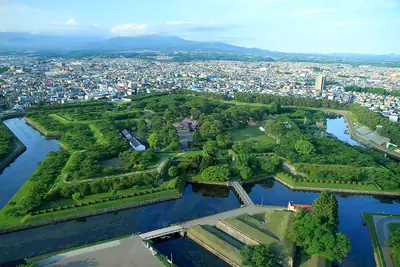
Goryōkaku is Hakodate’s distinctive five-point star fortress. Completed in 1866, it was built by the Edo shogunate on the outskirts of the city. Its Western-style design, with five projecting points, gives the fortress its name: “five-point fort.”
Goryōkaku became closely connected with the final conflict of the Edo period. It served as the headquarters of the short-lived Republic of Ezo and as the base of former shogunate forces during the Battle of Hakodate, the last stage of the Boshin War. The site was originally wetland with many willow trees, and was also known as Yanagino Castle. Most of the buildings inside the fortress were dismantled after the Meiji period began, leaving only one.
Hakodate Morning Market
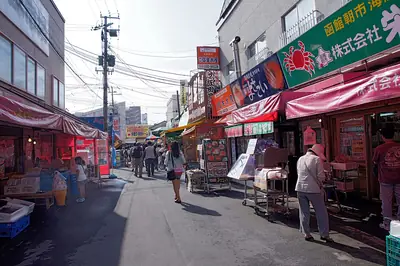
A few steps from Hakodate Station, Hakodate Morning Market is one of Japan’s best-known morning markets. Fresh seafood is its main attraction, with squid, crab, and salmon among its representative products. Fishmongers, produce sellers, and small eateries create a lively place to experience one of Hakodate’s most characteristic sides.
Mount Hakodate
Mount Hakodate rises at the western edge of the city centre and is famous for its views across the bay and the illuminated city. The name refers to a group of thirteen peaks; the highest is Mount Goten, where the observatory stands.
On a clear night, the summit offers a celebrated panorama that has received three stars from the Michelin Green Guide: Japan. You can reach the peak by hiking, bicycle, or regular cable car service. Mount Hakodate began as the result of underwater volcanic activity, while later changes in the land and the accumulation of sand connected the island to the mainland.
Museum Ship Mashu Maru
The Museum Ship Mashu Maru preserves the hull of a Tsugaru Maru-class ferry that served the Seikan route. Japanese National Railways operated the vessel, followed briefly by JR Hokkaido. It was taken out of service on 13 March 1988, when the undersea Seikan Tunnel opened.
Some of the ship’s interior remains from its working days. The vessel, also known as the Ferry Memorial Ship Mashu-maru, forms part of Seaport Park.
Hakodate City Museum of Northern Peoples
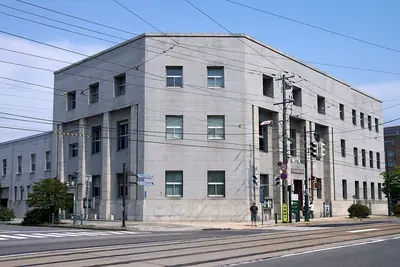
The Hakodate City Museum of Northern Peoples presents clothing, household objects, and other materials connected with the Ainu and other northern peoples. Its setting is significant too: the museum occupies the former Bank of Japan Hakodate Branch building, constructed in 1926.
The institution first opened in 1989 as the Hakodate City Museum of Northern Peoples and Ishikawa Takuboku. After materials relating to the poet were transferred to the Hakodate City Museum of Literature, it reopened in its current form in April 1993.
Shinshū Ōtani-ha Hakodate Betsu-in Temple
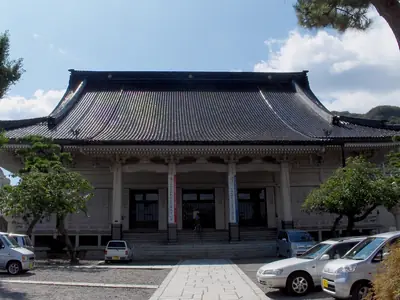
In Hakodate’s Motomachi area, Shinshū Ōtani-ha Hakodate Betsu-in Temple is a branch temple of Higashi Hongan-ji. It was rebuilt after a fire in 1907, and its main hall, completed in 1915, is recognized as the first temple in Japan built with reinforced concrete.
The bell tower and main gate date from between 1912 and 1925 and are designated Important Cultural Properties. Nearby, Catholic Motomachi Church is one of the three churches representing the Motomachi area. Its sanctuary contains a carved wooden main altar presented by Pope Benedict the Fifteenth.
UCCJ Hakodate Church
UCCJ Hakodate Church is a Methodist-affiliated church belonging to the United Church of Christ in Japan. It is one of the religious landmarks to notice while exploring Hakodate’s historic districts.
Hakodate City Museum
Located in Hakodate Park, Hakodate City Museum brings together the history and natural history of Hakodate and Hokkaido. Its origins reach back to the Hakodate Provisional Museum, whose first building opened in May 1879.
The present museum was established through legislation passed in 1948 and opened in April 1966. Earlier museum buildings later took on other roles, including a Fisheries Pavilion and an Indigenous Peoples Pavilion.
Hakodate Museum of Art, Hokkaido
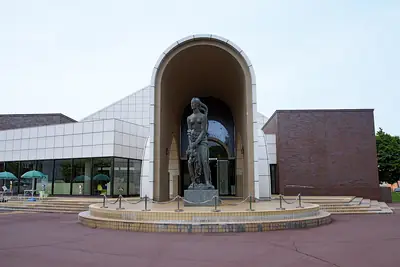
The Hakodate Museum of Art, Hokkaido focuses on the art of southern Hokkaido. Its collection includes paintings by Kakizaki Hakyō, calligraphy by Kaneko Ōtei, and other works connected with the region. Opened in 1986, the museum also presents special exhibitions alongside its permanent collection.
Hakodate Jōmon Culture Center
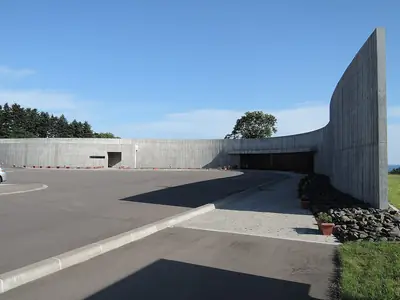
The Hakodate Jōmon Culture Center, also known as Kakku Center, explores the Jōmon period and archaeological discoveries from Hakodate. Opened in 2011, it has four exhibition rooms and displays around 1,200 pieces of earthenware and stoneware excavated in the city.
The central highlight is the Hollow Dogū, found at the Chobonaino Site and designated a National Treasure in 2007. It is described as the only National Treasure in Hokkaido.
Ōfune Site
The Ōfune Site preserves the remains of a large Jōmon-period settlement occupied from about 5,200 to about 4,000 years ago. Archaeologists have found large shell middens, pit dwellings, raised-earth structures, and flask-shaped pits.
The surrounding grounds make the site easier to understand. Jōmon-no-mori recreates the environment of the period, while Jōmon-no-niwa includes reconstructions of pit dwellings and raised-earth structures. An information building presents panels about Jōmon sites in the Minami-Kayabe area.
Trappistine Convent
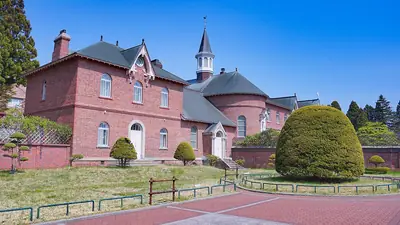
A little outside Hakodate, Our Lady of the Angels Trappistine Convent is also known as Tenshien, or the Angel Garden. Founded in 1898 by eight nuns sent from France, it is Japan’s first women’s contemplative monastery belonging to the Trappist order.
The public areas include the gardens and shop. The convent itself is not open to men, while the shop is known for handmade madeleines, called Madalena, and cookies.
Miharashi Park
Miharashi Park is a peaceful green space in Hakodate and has been selected as one of Japan’s 100 Historic Parks. It offers a quieter change of pace from the city’s museums, markets, and historic buildings.
Shōmyō-ji Temple
Shōmyō-ji Temple is a peaceful Buddhist temple in Hakodate. It provides another opportunity to encounter the city’s religious heritage while exploring its historic areas.
Hakodate and the Republic of Ezo
Hakodate played a central role in the short-lived Republic of Ezo. Established in 1869 on the island then known as Ezo, the separatist government was formed by part of the former Tokugawa military in opposition to the newly established Meiji government.
The Republic of Ezo became one of Japan’s earliest attempts to create a government through elections. Its forces strengthened defenses across the southern peninsula during the winter, with Goryōkaku at the centre. The Republic survived for only five months before imperial troops defeated its forces in the Battle of Hakodate in April 1869.
Explore Hakodate with Neywo
Download Neywo for a self-guided walking tour of Hakodate. Its walk, “Hakodate: Seafood, Ferries and the Motomachi Slope,” covers 4.6 km in 104 minutes and includes 7 narrated stops: Hakodate Morning Market, Museum Ship Mashu Maru of Hakodate, Hakodate City Museum of Northern Peoples, Shinshū Ōtani-ha Hakodate Betsu-in Temple, Hakodate Gokoku Shrine, Hakodate City Museum, and Mount Hakodate.
The app tells the story of each place as you reach it, at your own pace, with no group and no schedule. After Hakodate, continue discovering Sapporo, Otaru, Biei, or Asahikawa with Neywo.
Places with an audio guide in Hakodate
8 places in Hakodate with a Neywo audio guide. Each one starts telling its story as you reach it.

Self-guided tours in Hakodate
1 tour in Hakodate, free in the Neywo app. Each stop tells its story as you reach it.
- Walk
Hakodate: Seafood, Ferries and the Motomachi Slope
Start with the morning market's seafood stalls and the old Seikan ferry moored nearby, then climb into Motomachi, where a former Bank of Japan, a concrete temple and a hillside shrine record the port's opening to the world. The walk ends under Mount Hakodate, whose night view is one of Japan's most famous.
Hakodate Morning Market · Museum Ship Mashu Maru of Hakodate · Hakodate City Museum of Northern Peoples · Shinshū Ōtani-ha Hakodate Betsu-in Temple · Hakodate Gokoku Shrine · Hakodate City Museum …
Open this tour: Hakodate: Seafood, Ferries and the Motomachi Slope
Walk Hakodate with Neywo
Neywo turns Hakodate into a self-guided audio tour. Stories arrive as you reach the place they belong to, and the route reshapes when you wander off it.

