What to See in Trakai, Lithuania: Free Audio Guide
Things to Do in Trakai: Castles, Lakes and Karaite Heritage
Wondering what to do in Trakai? This historic town in Lithuania brings together medieval castles, lakeside scenery, religious landmarks and Karaite heritage. Its most famous sight is Trakai Island Castle, set on an island in Lake Galvė, but the surrounding old town and historical park offer plenty more to explore. Neywo has a free audio guide for Trakai with 10 narrated places.
What to See in Trakai
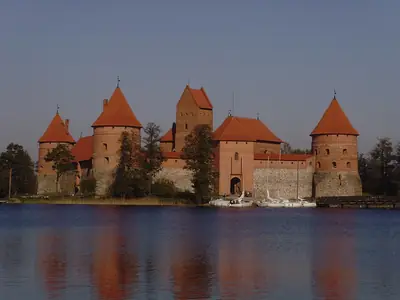
Trakai Island Castle
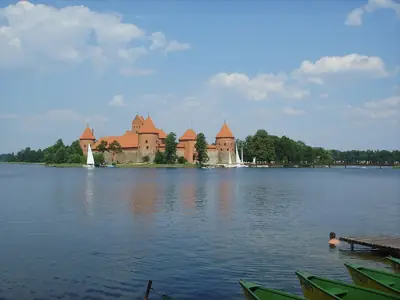
Trakai Island Castle is the town’s defining landmark, standing on an island in the middle of Lake Galvė and connected to Trakai by a wooden footbridge. Construction of the stone castle began in the 14th century under Grand Duke Kęstutis, while major works were completed around 1409 by his son, Vytautas the Great.
The castle was once one of the important residences of the rulers of the Grand Duchy of Lithuania. Vytautas the Great died here in 1430, adding a personal historical connection to the fortress. From the 17th century onward, the castle gradually fell into ruin, and the building visible today is largely a reconstruction carried out between 1951 and 1961.
The castle also houses the Historical Museum in Trakai. Its collections cover archaeology, numismatics, historical documents, applied arts and the history of the region.
Trakai Peninsula Castle
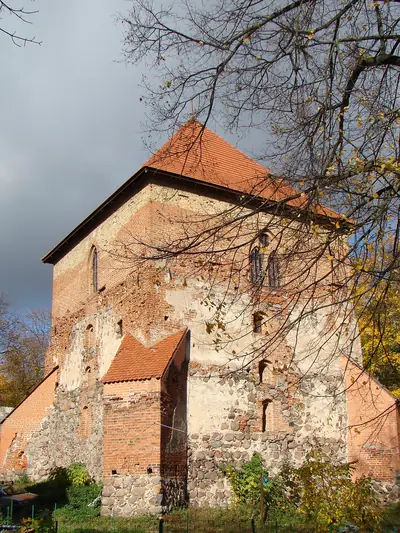
A short walk from the old town square, Trakai Peninsula Castle occupies a narrow peninsula between Lake Galvė and Lake Luka. Kęstutis, Duke of Trakai, built the fortress between about 1350 and 1377 to help defend Trakai and Vilnius from attacks by the Teutonic Knights.
The original castle had seven towers joined by a wall about 10 metres high. A wide moat, between 12 and 14 metres across, separated it from the town. The fortress was attacked several times during conflicts in the late 14th century, but after the Treaty of Melno in 1422 it lost much of its military importance. Today, its surviving ruins provide a different perspective on Trakai’s medieval defenses.
Church of the Visitation
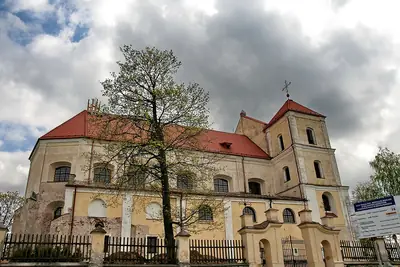
The Basilica of the Visitation of the Blessed Virgin Mary stands in the heart of Trakai’s old town, near Lake Lukos. Vytautas the Great founded the church in 1409, and it was originally built in the Gothic style.
Later Baroque alterations shaped much of the building’s present appearance, creating a combination of Gothic and Baroque features. Inside, the main altarpiece holds the icon of Our Lady of Trakai. The image was crowned by the popes and honored with a papal Golden Rose, reflecting its importance as a religious object.
Trakai Kenesa
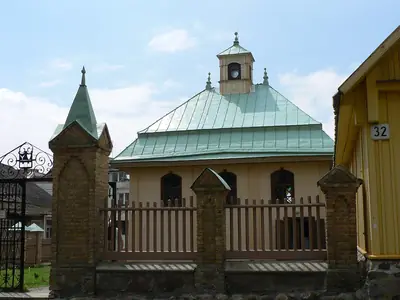
Trakai Kenesa is a rare wooden house of worship associated with the Karaite Jewish community. A kenesa has stood on this site since the end of the 14th century, although the building was destroyed and rebuilt several times.
Fires in the early 1500s, 1794, 1812 and 1824 shaped the structure’s history. After the 1794 fire, Karaites from Sluck and Crimea helped fund its reconstruction. When plans for a masonry building could not be financed after the 1824 fire, a wooden kenesa was built instead. The building that stands today is essentially that later structure.
The kenesa is an important reminder of Trakai’s multicultural past and the long-standing presence of the Karaite community in the town.
Orthodox Church in Trakai
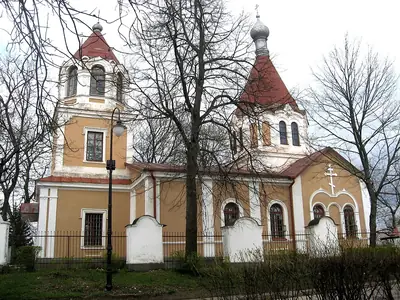
The Orthodox Church of the Nativity of the Most Blessed Virgin Mary is another notable place of worship in Trakai. Built in 1863, it belongs to the Trakai parish of the Nativity of the Most Blessed Virgin Mary and forms part of the Vilnius and Lithuanian Diocese of the Russian Orthodox Church.
Its presence adds another layer to the town’s religious and architectural history.
Trakų piliakalnis
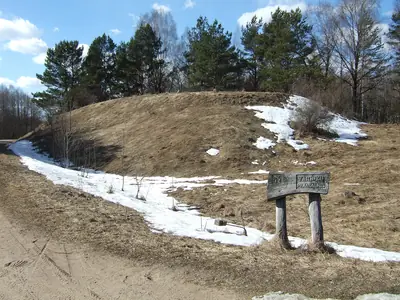
Trakų piliakalnis, also known as Pilies kalnas or Aukų kalnas, is a historic hillfort in the northern part of Trakai. It lies within Trakai Historical National Park, about 200 metres beyond the outer defensive works of Trakai Peninsula Castle.
The hillfort is a short walk from the main castle complex, reached from Karaimų Street via Kęstučio Street. It offers another way to encounter the fortified landscape around Trakai.
Varnikai Hillfort
Varnikai hillfort is an ancient fortified settlement in the Trakai district. Also known locally as Varnių piliakalnis or Veršupka, it belongs to the wider group of hillforts scattered across the region.
Compared with the major castles, it provides a quieter glimpse into Lithuania’s distant past and the area’s earlier fortified settlements.
Trakai Historical National Park
Trakai Historical National Park protects the historic heart of Lithuania’s statehood together with its natural surroundings. Established in 1991, the park covers roughly 8,200 hectares around Trakai, including forests, lakes and villages.
About 30 percent of the park is forest and 18 percent is covered by lakes. The historic town, Trakai Island Castle and Trakai Peninsula Castle form its central attractions, while the surrounding landscapes make it possible to combine cultural sightseeing with peaceful views of water and woodland.
Užutrakis Manor
Užutrakis Manor stands on a peninsula between Lake Galvė and Lake Skaistis, across the water from Trakai Island Castle. The estate was the residence of the Tyszkiewicz family, one of Lithuania’s prominent noble families, and is regarded as one of the country’s culturally valuable manor houses.
Architect Józef Huss designed the palace, which was built between 1896 and 1901. Its ground floor served as the principal reception level, while the upper floor contained private living quarters. The estate’s park is especially notable for combining two styles: natural English-style gardens on one side and a formal French garden designed by Édouard André on the other.
Explore Trakai with a Self-Guided Walking Tour
Neywo’s Trakai self-guided walking tour, “Two Castles, a Karaite Kenesa and a Lake-Ringed Old Town”, covers 2.54 kilometres in 79 minutes and includes six narrated stops. The walk takes in the Orthodox church, the Church of the Visitation, Trakai, Trakai Kenesa, Trakų piliakalnis, Trakai Peninsula Castle and Trakai Island Castle.
The app tells the story of each place as you reach it, at your own pace, with no group and no schedule. Narration is available in 11 languages, making it a practical way to follow a free walking tour in Trakai while exploring independently.
Download Neywo and Explore Trakai
Download Neywo to explore Trakai with one walking tour, covering 2.54 km in 79 minutes and featuring six narrated stops. The free audio guide includes 10 narrated places in total, and each story plays as you reach the place. Walk at your own pace, without a group or a schedule, and discover Trakai’s castles, churches, hillforts and Karaite heritage on your own.
If you are planning more of Vilnius, Trakai also makes a valuable complement to time in the Lithuanian capital. For more destinations in the country, explore Plateliai, Anykščiai or Kaunas.
Places with an audio guide in Trakai
8 places in Trakai with a Neywo audio guide. Each one starts telling its story as you reach it.
Self-guided tours in Trakai
1 tour in Trakai, free in the Neywo app. Each stop tells its story as you reach it.
- Walk
Trakai: Two Castles, a Karaite Kenesa and a Lake-Ringed Old Town
Walk from Trakai's quiet old town churches to the Karaite quarter, then out along the lake to the ruined Peninsula Castle and the red-brick Island Castle, the seat of Grand Duke Vytautas. Lakes shimmer on both sides and the story runs from Gothic Lithuania to the Karaite community that still lives here.
Orthodox church in Trakai · Church of the Visitation, Trakai · Trakai Kenesa · Trakų piliakalnis · Trakai Peninsula Castle · Trakai Island Castle
Open this tour: Trakai: Two Castles, a Karaite Kenesa and a Lake-Ringed Old Town
Walk Trakai with Neywo
Neywo turns Trakai into a self-guided audio tour. Stories arrive as you reach the place they belong to, and the route reshapes when you wander off it.

