What to See in Palanga, Lithuania: Free Audio Guide
Things to Do in Palanga: Amber, Dunes and the Baltic Sea
Palanga is a Lithuanian seaside resort known for its Baltic coast, historic Tiškevičiai heritage, botanical park and long wooden pier. The town combines cultural sights with an easy walk through dunes, greenery and the centre, making it a rewarding destination for a self-guided visit. Neywo offers a free audio guide for Palanga with 13 narrated places, available in 11 languages.
Located in Klaipėda County, Palanga is also a useful base for discovering Lithuania’s western coast, including Klaipėda, Nida and Juodkrantė.
What to see in Palanga
Palanga Botanical Park
Begin with Palanga Botanical Park, the green setting around the Palanga Amber Museum. Its symbolic founding date is 1897, and it was once known as Birutė Park and the Tiškevičiai Estate Park. The Counts Tiškevičiai commissioned the French landscape architect Édouard François André to design the park.
The grounds offer a natural introduction to Palanga’s aristocratic past, while also providing access to several of the town’s most important landmarks.
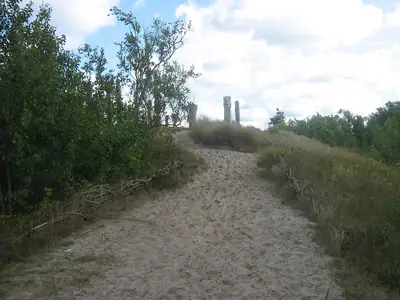
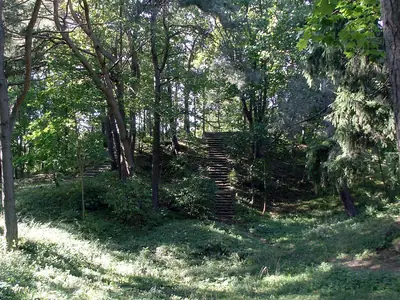
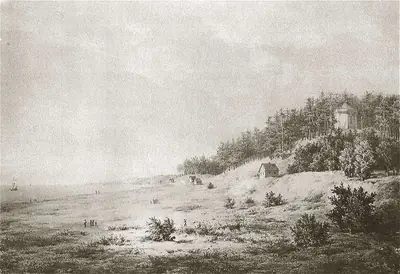
Birutė Hill
Within the botanical park, Birutė Hill is a distinctive relic dune rising about 150 metres from the Baltic Sea. Birutė Chapel stands at its summit, and the hill has appeared on maps since the seventeenth century.
At its foot is the sculpture “To Birutė”, created in 1965 by Konstancija Petrikaitė-Tulienė. Archaeological remains connected with a priestly cult were discovered here in 1989, adding historical depth to this coastal landscape.
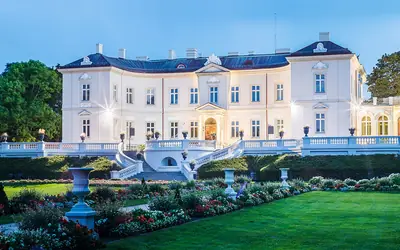
Palanga Amber Museum and Tiškevičiai Palace
The Palanga Amber Museum occupies the former Tiškevičiai Palace, also known as Palanga Manor or Tiškevičių rūmai. The Neo-Renaissance palace stands close to the Baltic Sea within the botanical park.
The museum’s collection contains more than 30,000 amber specimens, including around 15,000 with inclusions such as insects, plants and other small forms of life preserved in fossilized resin. Around 4,500 amber objects are exhibited, including jewellery and works of art.
One of the best-known pieces is the Saulės akmuo, or Sun Stone, described as the largest known fossil amber piece in Lithuania. The displays also explain amber’s formation, extraction, processing and practical uses. Established in 1963 by Lithuania’s Ministry of Culture, the museum is now a branch of the Lithuanian National Museum of Art, with changing exhibitions and concerts complementing the permanent collection.
Palanga Pier
Palanga Pier, or Palangos tiltas, extends into the Baltic Sea and is one of the town’s most recognisable sights. The wooden pier stretches 470 metres out over the water.
During its construction, the shoreline moved about 200 metres towards the Baltic, creating a headland along the coast. Walking out along the pier offers a different perspective on Palanga’s seaside setting and its relationship with the open sea.
Church of the Assumption of the Blessed Virgin Mary
In the centre of Palanga, the Church of the Assumption of the Blessed Virgin Mary stands beside the Rąžė stream. This Roman Catholic church is one of the city’s cultural heritage objects and an important landmark among the town’s central streets.
Its setting makes it easy to include on a walk between Palanga’s urban sights and the coast.
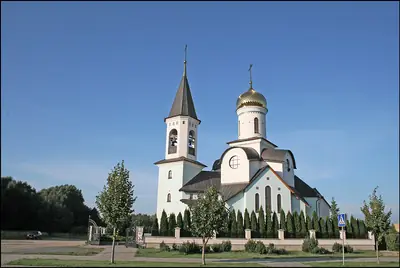
Orthodox Church of the Iveron Icon of the Mother of God
At the beginning of the road to Liepāja stands the Orthodox Church of the Iveron Icon of the Mother of God, also known as the Iveron Church. It belongs to Palanga’s Iveron Icon parish.
The building is distinctive because it is the only structure in Palanga built according to the canons of Russian Orthodox church architecture. It also has a notable place in Lithuania’s recent religious history: it was the first Orthodox church built in Lithuania in the previous sixty years.
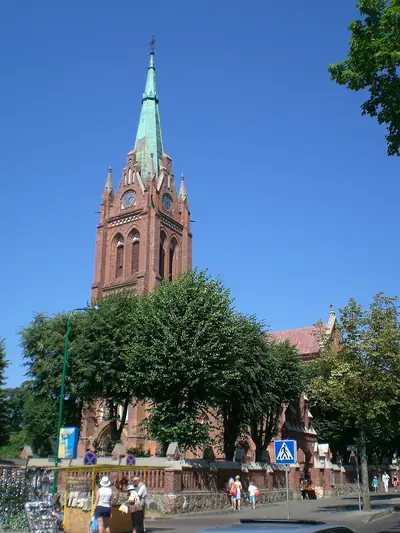
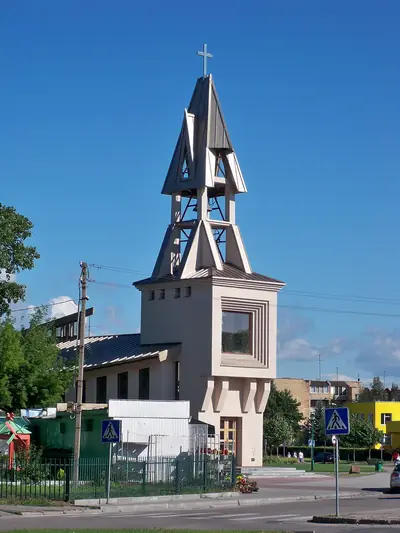
Evangelical Lutheran Church in Palanga
Palanga’s Evangelical Lutheran Church is a modern place of worship serving the city’s Lutheran community. Also known as Palangos evangelikų liuteronų bažnyčia, the building was completed in 2012.
Together with the Catholic and Orthodox churches, it reflects the variety of religious landmarks found in and around Palanga.
Palangos piliakalnis and Naglis Hill
Near the Baltic Sea, Palangos piliakalnis is an archaeological site associated with Birutė’s Hill. The site also includes an ancient settlement and a hillfort known as Naglis Hill.
It is more than a natural rise in the landscape: traces of earlier settlement connect the site with Palanga’s deeper past.
Žemaičių Alkas in Šventoji
In Šventoji, Žemaičių Alkas, or the Samogitian Sanctuary, is a reconstruction of a medieval shrine and paleoastronomical observatory once located on Birutė Hill in Palanga. Archaeological records guided the reconstruction, while wooden poles installed in June 1998 represent gods and goddesses of the Balts.
The carved figures include Perkūnas, Aušrinė, Žemyna, Austėja, Ondenis, Patrimpas, Patulas, Velnias and Lada. Their arrangement can be used to calculate the dates of important calendar celebrations, including Rasos, Stork Day, Užgavėnės and Christmas, particularly as the sun sets over the sea.
Evangelical Lutheran Church in Būtingė
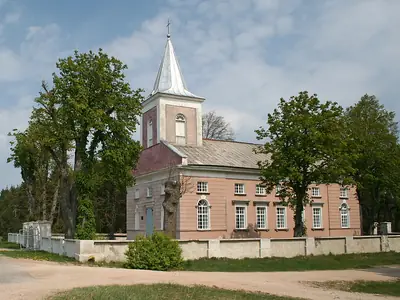
The Evangelical Lutheran Church in Būtingė is a neoclassical stone church beside the road from Klaipėda to Liepāja. It has three naves and a bell tower, and serves a Lutheran community including worshippers from Būtingė and nearby towns on the Latvian side of the border.
The local parish was founded in 1560. The present church was built in 1824, its bell tower was added in 1866, and a bell from Liepāja was installed in 1926. The church is both a regional architectural monument and a place of worship with a long and eventful history.
Other places to discover
Palanga’s old parish cemetery contains the wooden Chapel of Saint Mary Magdalene, known locally as Palangos kapinių koplyčia. Recognised as an architectural monument, it provides a quieter stop away from the resort’s central streets.
In northern Palanga, the Church of the Blessed Virgin Mary, Star of the Seas, is a local landmark in the centre of Šventoji. Palanga International Airport, meanwhile, is the main air gateway for Lithuania’s Baltic Sea resorts and serves Palanga, Klaipėda, parts of Samogitia and western Latvia.
A Palanga self-guided walking tour with Neywo
Download Neywo and explore Palanga with one walking tour: “Palanga: Amber, Dunes and a Pier into the Baltic.” The route covers 5.42 km and takes 112 minutes, with 7 narrated stops:
- Birutė Hill
- Palanga Botanical Park
- Palanga Amber Museum
- Palanga Pier
- Church of the Assumption, Palanga
- Evangelical Lutheran Church in Palanga
- Orthodox Church in Palanga
Neywo’s stories play as you reach each place, at your own pace. There is no group and no schedule: simply follow the route and listen as Palanga’s history, architecture and coastal landscape unfold around you.
Places with an audio guide in Palanga
8 places in Palanga with a Neywo audio guide. Each one starts telling its story as you reach it.
Self-guided tours in Palanga
1 tour in Palanga, free in the Neywo app. Each stop tells its story as you reach it.
- Walk
Palanga: Amber, Dunes and a Pier into the Baltic
Start on Birutė Hill, a relic dune with a chapel on top, and stroll through the Tiškevičiai park to the palace that holds the world's finest amber collection. Then follow the town towards the long wooden pier, the central church and the Lutheran and Orthodox churches. A seaside resort walk with a surprising amount of history.
Birutė hill · Palangos botanikos parkas · Palanga Amber Museum · Palangos tiltas · Church of the Assumption, Palanga · Evangelical Lutheran Church in Palanga …
Open this tour: Palanga: Amber, Dunes and a Pier into the Baltic
Walk Palanga with Neywo
Neywo turns Palanga into a self-guided audio tour. Stories arrive as you reach the place they belong to, and the route reshapes when you wander off it.

