Visiting Klaipėda, Lithuania: Top Sights on Foot
Things to Do in Klaipėda: History, Museums and Maritime Landmarks
Klaipėda is Lithuania’s coastal port city, shaped by maritime history, changing political borders and the cultural heritage of Lithuania Minor. Its Old Town, museums, castle site and distinctive public sculptures make it a rewarding city to explore on foot. Neywo’s free audio guide for Klaipėda tells the story of 45 narrated places as you discover the city.
What to See and Do in Klaipėda
Klaipėda Castle and the Castle Museum
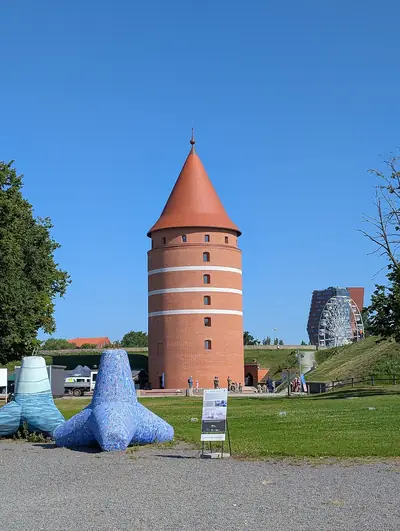
Begin with Klaipėda Castle, also known as Memelburg or Memel Castle. The castle was first mentioned in a written document dated 29 July 1252, when the Livonian Order and the Bishop of Courland agreed to build a castle between the Nemunas and the Danė. A wooden castle was built near the mouth of the Danė that same year.
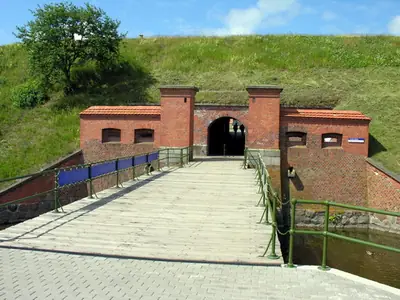
The stronghold was destroyed and rebuilt several times before becoming a fortress from the fifteenth century onwards. It served as an important border stronghold of the Teutonic Order and later the Kingdom of Prussia. The castle was eventually demolished in the nineteenth century, but its surviving bastions and archaeological remains preserve the site’s importance.
Beneath the embankment of Prince Frydrich’s bastion, the Castle Museum presents Klaipėda’s development from the thirteenth to the seventeenth century. Exhibits include Cursian weapons and jewellery, replicas of founding documents, a model of the medieval city and castle, household objects recovered from the site and a sixteenth-century gold ring decorated with precious gems.
LKL Sūduvis Ship Museum
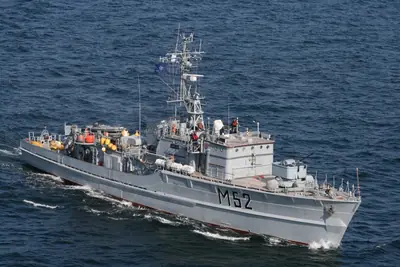
Near the castle, LKL Sūduvis, also called the M52 Sūduvis Ship Museum, offers a more recent perspective on the city’s naval history. The former minehunter was built in West Germany in 1957 as Koblenz, with the designation M1071. It entered service as a Lindau-class, or Type 320, minesweeper for the German Navy and was upgraded to a Type 331 minehunter during the 1970s.
Theatre Square and Taravos Anikė
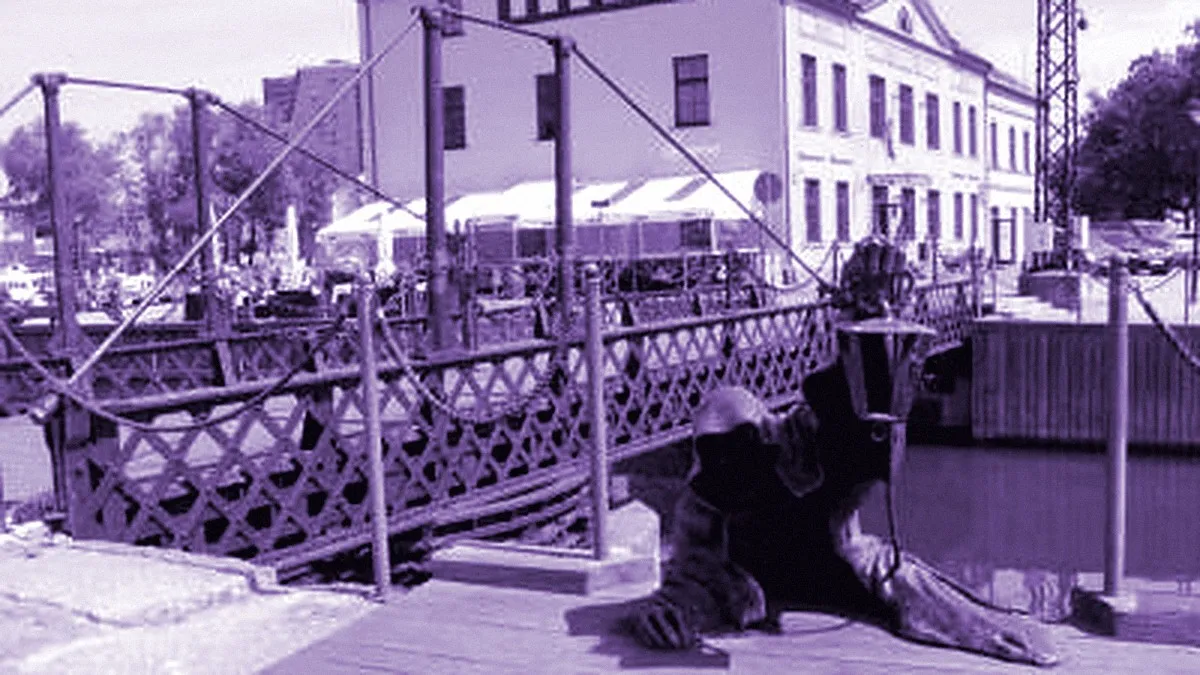
The sculpture Taravos Anikė, or Little Anne of Tharau, stands in Theatre Square and is one of Klaipėda’s symbols. It recalls the love of the poet Simon Dach, whose song made Anne of Tharau a lasting figure in local culture. The inscription on the pedestal describes her in German as the poet’s greatest treasure, soul, flesh and blood.
The nearby Theatre Square Fountain, also known as the Simon Dach Fountain, was built in 1912. It is dedicated to Simon Dach, who was born in Klaipėda, and the monument to Little Anne of Tharau stands at its top. The square itself took its present form in the nineteenth century, when it was part of a busy marketplace with Market Street and the New Market.
The History Museum of Lithuania Minor
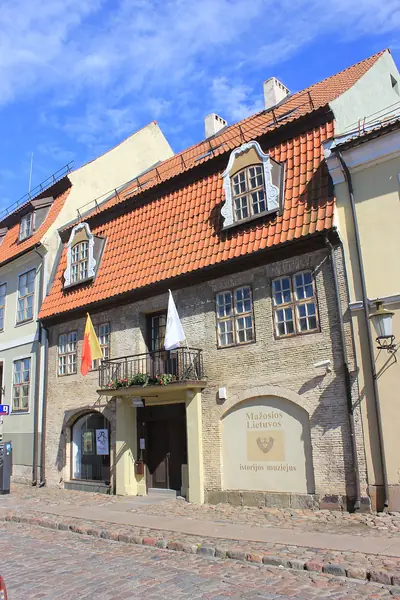
The History Museum of Lithuania Minor occupies a Baroque-style building dating from 1774 in Klaipėda’s Old Town. Its collections cover the history of Lithuania Minor and the Klaipėda region, from prehistoric times through the cultures and burial customs of the Curonians and Skalvians, and the conquests of the Teutonic Order.
The museum was established in 1924 by Adomas Brakas and the Klaipėda Region Museum Society. The building was originally owned by Johann Christian Witte, the director of the post office, and still features a well-maintained vineyard.
The Blacksmith Museum
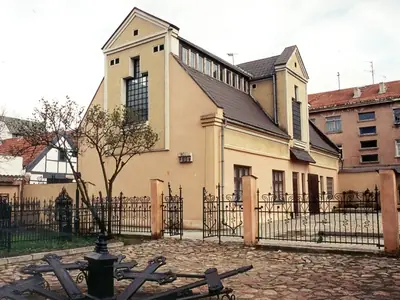
The Blacksmith Museum, or Kalvystės muziejus, is housed in a former smithy at Šaltkalvių Street 2 and 2A. Established in 1979 and opened to visitors on 5 August 1992, it explores the craft that produced many useful and decorative objects in the Klaipėda region.
The collection includes blacksmiths’ tools and finished objects, as well as crosses, fences and gates from Lithuania Minor and old Klaipėda cemeteries. Traditional weather vanes, strongly associated with the port city, are also represented. The museum has a working forge, and original blacksmith-made items are available to purchase.
The Clock and Watch Museum
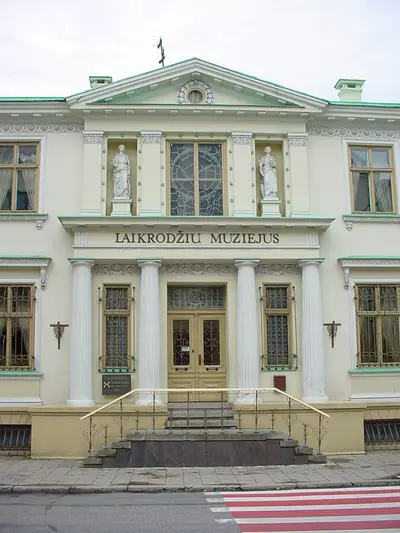
The Clock and Watch Museum, or Laikrodžių muziejus, traces the ways people have measured time through calendars, sundials and clocks from different periods. It was established in the building in 1984.
The historic property dates from the late eighteenth and early nineteenth centuries. Around 1820, an English architect designed a small suburban villa there for Johann Simpson, one of Klaipėda’s wealthiest patricians. The building later housed the Land Bank, became the House of Pioneers and Students after the Second World War, and was entrusted to the Lithuanian Arts Museum in 1979.
On the ground floor, four exhibition rooms contain knotted and wooden calendars, ancient sundials, water clocks, fire clocks, hourglasses and mechanical clocks.
The Lithuanian Sea Museum
The Lithuanian Sea Museum occupies Nerija Fort in Kopgalis, at the northernmost point of the Curonian Spit. The nineteenth-century coastal fortress was built to protect the approaches to Klaipėda’s seaport. After major damage during the Second World War, it was restored and transformed into the museum in 1979.
Indoor and outdoor displays explore Lithuanian shipping and the Baltic Sea. They include anchors, cannons, three Soviet-era trawlers and a restored fishing village. The museum’s dolphinarium has operated since 1994 and is home to Black Sea bottlenose dolphins, which are also successfully bred there. Performances combine entertainment with the opportunity to observe the animals closely.
Hagen’s Height and Albatrosas
In Smiltynė, Hagen’s Height, or Hageno kalnas, is a 36.4-metre-high sand dune about 600 metres west of the New Ferry Terminal. An interwar monument at the top commemorates Ludwig Hagen, a Prussian physicist and hydraulic engineer who led the planting of vegetation across the Curonian Spit.
The dune and the surrounding dunes of the Great Dune Ridge are protected within the Hagen Ridge Geomorphological Reserve, which covers 159.44 hectares. Nearby, Albatrosas is a distinctive steel monument integrated into the Smiltynė landscape.
Hillforts and Churches
Purmaliai Hillfort, or Purmalių piliakalnis, includes a hillfort and associated settlement in the Labrenciškė area of Klaipėda. The site lies beyond the old Klaipėda to Palanga road, now Kretingos Street, near the Purmalė stream.
Žardė Hillfort, also known as Kuncai, Bandužiai, Pilies kalnas and Gaidžių kalnas, is another hillfort with an associated settlement within Klaipėda city municipality.
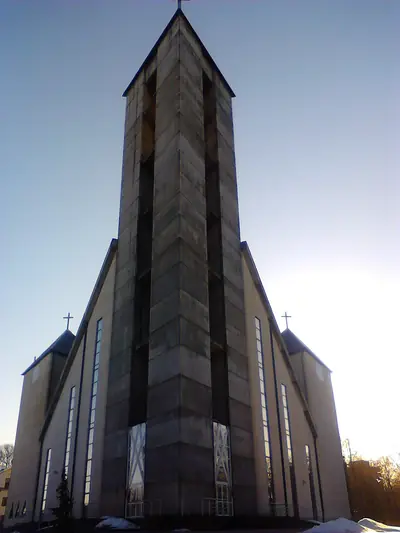
The city’s religious buildings include the Church of St. Casimir in northern Klaipėda and Klaipėdos naujoji apaštalų bažnyčia, a house of prayer for the New Apostolic Church.
Plan a Klaipėda Self-Guided Walking Tour with Neywo
Download Neywo’s free audio guide and explore Klaipėda independently. The app offers two walking tours:
- Memel’s Old Town to the Brick Quarter: Castle, Little Anne and a Lost Church Tower — 2.34 km, 86 minutes and 11 narrated stops.
- North of the Dane: Clocks, Brick Post Office and Sculptures — 1.99 km, 61 minutes and 7 narrated stops.
The walks include landmarks such as Klaipėda Castle, LKL Sūduvis, Theatre Square, Taravos Anikė, the History Museum of Lithuania Minor, the Blacksmith Museum, the Clock and Watch Museum, the Main post office building in Klaipėda and Klaipėda Sculpture Park. Each story plays as you reach the place, at your own pace, with no group and no schedule. Narration is available in 11 languages.
Klaipėda is the regional centre of Klaipėda County, Lithuania’s only county with a coastline. Once you have explored the port city, continue through the region to Nida, Juodkrantė or Palanga, or discover more destinations across Lithuania.
Places with an audio guide in Klaipėda
8 places in Klaipėda with a Neywo audio guide. Each one starts telling its story as you reach it.
Self-guided tours in Klaipėda
2 tours in Klaipėda, free in the Neywo app. Each stop tells its story as you reach it.
- Walk
Memel's Old Town to the Brick Quarter: Castle, Little Anne and a Lost Church Tower
Klaipeda was the Prussian port of Memel for seven centuries. Walk from the bastions of Lithuania's oldest brick castle past a retired minehunter, the square of Little Anne of Tharau, and museums of Lithuania Minor and blacksmiths. Pass where a lost 75-metre church tower once ruled the skyline, cross the lifting bridge over the Dane and finish among the clocks and neo-Gothic brick of the post office quarter.
Klaipėda Castle · LKL Sūduvis · Dramatic Theatre of Klaipeda · Sculpture Taravos Anikė in Klaipėda · The History Museum of Lithuania Minor · The Blacksmith Museum …
Open this tour: Memel's Old Town to the Brick Quarter: Castle, Little Anne and a Lost Church Tower - Walk
North of the Dane: Clocks, Brick Post Office and Sculptures
Cross the Dane to the quarter that was the Prussian city's red-brick showpiece. See Europe's oldest working Baptist church, a clock museum in a 1820 villa, the neo-Gothic post office with its carillon, and the park of 116 sculptures laid out over a former cemetery and finish at the Orthodox church of All Russian Saints.
Christ the King churches in Klaipėda · Evangelikų baptistų bažnyčia · Klaipeda Musical Theatre · The Clock and Watch Museum (Klaipėda) · Main post office building in Klaipėda · Klaipeda Sculpture Park …
Open this tour: North of the Dane: Clocks, Brick Post Office and Sculptures
Walk Klaipėda with Neywo
Neywo turns Klaipėda into a self-guided audio tour. Stories arrive as you reach the place they belong to, and the route reshapes when you wander off it.

