What to See in Kuching, Malaysia: Free Audio Guide
Things to Do in Kuching: Museums, Heritage and Riverside Landmarks
Kuching is the capital of Sarawak, set on the Sarawak River in the southwestern part of Sarawak, on the island of Borneo. The city is worth visiting for its museums, religious landmarks, Brooke-era heritage and distinctive cultural identity—including its place in UNESCO’s Creative Cities Network for gastronomy. Neywo offers a free Kuching audio guide covering 21 narrated places, so you can explore the city while hearing its stories as you walk.
Kuching is also one of the most interesting cities to discover in Malaysia, with a history shaped by Bruneian, Brooke, Japanese and Malaysian rule. Its two administrative regions, Kuching North and Kuching South, cover 431 square kilometres and offer a varied collection of museums, churches, mosques, palaces and riverside sights.
What to see in Kuching
The following places offer a useful introduction to Kuching’s history and cultural diversity, with many of the central landmarks close to the Sarawak River.
Sarawak State Museum
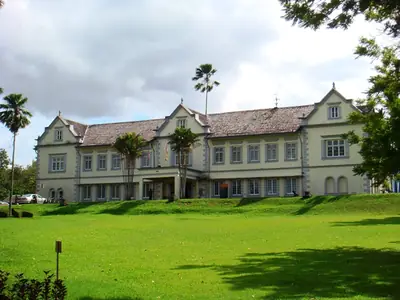
The Sarawak State Museum, or Muzium Sarawak, is one of Kuching’s most important cultural landmarks. Founded in 1888 and opened in 1891 in a purpose-built building, it is recognised as the oldest museum in Borneo. Its ethnology collections make it an important place to begin understanding Sarawak’s cultural heritage.
Fort Margherita and the Brooke Gallery
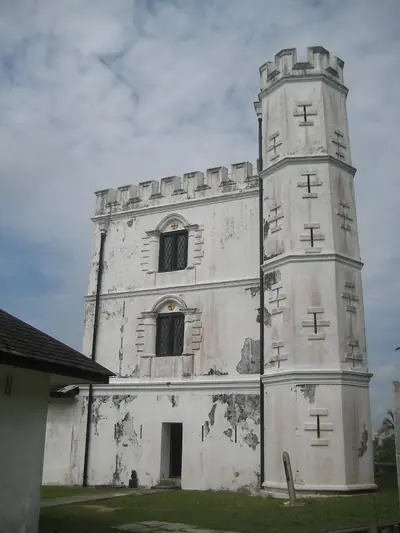
Fort Margherita is a castle-like fort built in 1879 by Charles Brooke, the second Rajah of Sarawak. Positioned on a hill across the Sarawak River, it was designed to defend Kuching against pirates approaching along the waterway.
The three-storey fort has an observation point, a high-walled courtyard and openings for cannons. Today, it houses the Brooke Gallery, an exhibition about Sarawak under Brooke rule, and forms part of the Kuching Heritage Trail. The fort stands near The Astana and the New Sarawak State Legislative Assembly Building.
The Astana
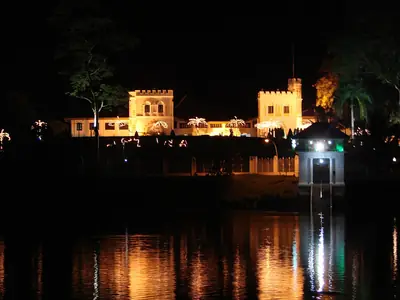
Across the river from the Kuching Waterfront, The Astana remains one of Kuching’s most recognisable landmarks. Charles Brooke built the palace in 1870 as a wedding gift for his wife, Margaret Alice Lili de Windt. Its name comes from “istana”, the Malay word for palace.
The Astana is the official residence of the Governor of Sarawak. From the waterfront, visitors can see the building and its landscaped gardens on the north bank of the river.
Chinese History Museum
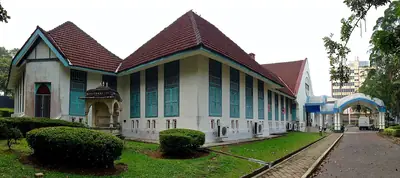
The Chinese History Museum stands at the Kuching Waterfront in a building dating from 1913. It opened as a museum in 1993, but its original purpose was different: the building served as a Chinese court dealing with matters including marriage and divorce.
The former court had six judges representing six Chinese groups, and its first chairman was Kapitan Ong Tiang Swee. The museum now explores the history and heritage of Sarawak’s Chinese communities.
Borneo Cultures Museum
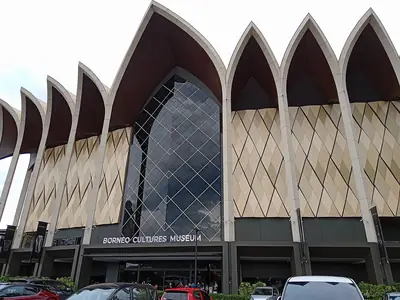
The Borneo Cultures Museum, or Muzium Budaya Borneo, focuses on the history and heritage of Sarawak’s local people and other communities from the island of Borneo. It is one of Kuching’s major cultural museums and helps place the city within the wider story of Borneo.
Islamic Heritage Museum
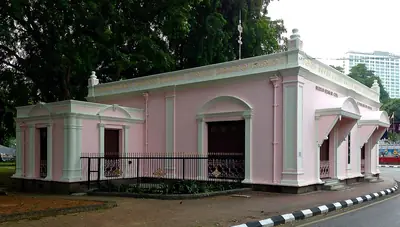
The Islamic Heritage Museum, also known as the Sarawak Islamic Heritage Museum, explores the history and influence of Islam in Sarawak. It offers another perspective on the religious and cultural traditions that have shaped the region.
Kuching Cat Museum
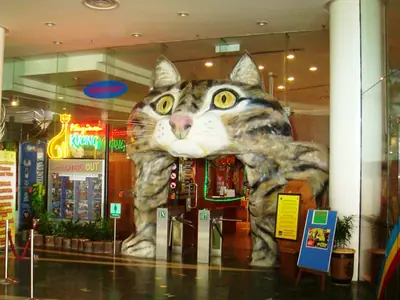
The Kuching Cat Museum, or Muzium Kucing, is devoted entirely to cats. The art museum is owned by Kuching North City Hall and is housed in the city hall’s headquarters.
Its subject connects directly with the city’s name: “kucing” means “cat” in Malay. The museum is described as the first in the world built entirely to showcase cats, making it an especially distinctive stop in the city known as the “City of Cats”.
Sarawak Cultural Village
About 35 kilometres from Kuching, at the foot of Mount Santubong, Sarawak Cultural Village offers a compact portrait of Sarawak’s cultural life. This living museum includes traditional homes and displays objects such as cooking equipment, traditional tools and musical instruments.
A cultural performance is held every day at 11:30 in the morning and again at 4:00 in the afternoon. The setting beneath Mount Santubong is part of the experience, adding a broader cultural excursion to a visit focused on Kuching’s city centre.
St. Thomas’s Cathedral
St. Thomas’s Cathedral is an Anglican cathedral in Kuching and the mother church of the Diocese of Kuching. It is an important place for the Anglican community in Sarawak and one of the city’s notable religious landmarks.
St. Joseph’s Cathedral
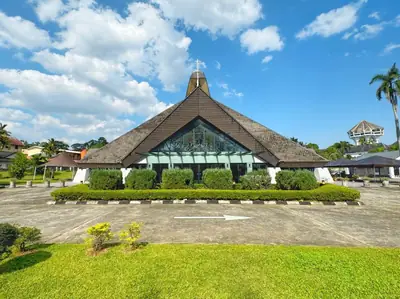
St. Joseph’s Cathedral, also known as Kuching Cathedral, is a Catholic landmark in the city. Its present status within the Catholic Church in Kuching is connected with the papal bull Quoniam Favente Deo, issued by Pope Paul the Sixth.
Petra Jaya State Mosque
Petra Jaya State Mosque is the state mosque of Sarawak. It is also known as Jamek Mosque, with the official name Masjid Jamek Negeri Sarawak.
Indian Mosque
The Indian Mosque, also known as the Floating Mosque, stands beside the Sarawak River. Its position at the riverbank gives it a particularly distinctive presence among Kuching’s landmarks. The mosque was officially opened on 1 March 2019 by Abdul Taib Mahmud, the former Yang di-Pertua Negeri of Sarawak.
Kuching’s parish churches
Kuching’s religious heritage also includes Blessed Sacrament Church, a Catholic parish church dedicated to the Blessed Sacrament, and Holy Trinity Church in Kenyalang Park, a Catholic parish church dedicated to the Holy Trinity. Together with the city’s cathedrals and mosques, they reflect the range of communities and places of worship found across Kuching.
Discover Kuching’s history on foot
Kuching’s present character reflects several periods of rule. It became the third capital of Sarawak under the Bruneian Empire in 1827. In 1841, it became the capital of the Kingdom of Sarawak after the territory was ceded to James Brooke following his help to the Bruneian Empire in suppressing a rebellion.
Under Charles Brooke, the city developed a sanitation system, hospital, prison, fort and bazaar. Its history also includes the difficult period of Japanese occupation during the Second World War. Walking between the museums, cat-themed attractions, religious buildings and river landmarks makes these different chapters easier to place within the city.
Explore Kuching with Neywo
Download Neywo to explore Kuching with two walking tours and 21 narrated places. The walks are:
- The White Rajahs’ Kuching: Waterfront, Palace and Fort — 3.51 km, 96 minutes and 8 narrated stops.
- Museums of Borneo: From Cathedral to Cultures — 3.36 km, 79 minutes and 5 narrated stops.
The app tells the story of each place as you reach it, at your own pace, with no group and no schedule. Narration is available in 11 languages, making a Kuching self-guided walking tour a flexible way to discover the city’s museums, heritage and riverside landmarks.
Places with an audio guide in Kuching
8 places in Kuching with a Neywo audio guide. Each one starts telling its story as you reach it.
Self-guided tours in Kuching
2 tours in Kuching, free in the Neywo app. Each stop tells its story as you reach it.
- Walk
The White Rajahs' Kuching: Waterfront, Palace and Fort
Start at Borneo's oldest museum, then stroll Kuching's riverfront through the legacy of the Brooke dynasty: a textile museum, an Anglican cathedral, a Chinese court, the Rajah's memorial and the Floating Mosque. Then cross the Sarawak River by boat to the Astana palace and the castle-like Fort Margherita.
Sarawak State Museum · Textile Museum Sarawak · St Thomas's Cathedral, Kuching · Chinese History Museum · Brooke Memorial · Indian Mosque …
Open this tour: The White Rajahs' Kuching: Waterfront, Palace and Fort - Walk
Museums of Borneo: From Cathedral to Cultures
Begin at the new Neo-Gothic Saint Peter's Church, modelled on the original St Joseph's Cathedral, and visit the cathedral itself. Walk on to the Islamic Heritage Museum, the huge Borneo Cultures Museum and Borneo's oldest museum, opened in 1891 after Alfred Russel Wallace urged its creation.
Saint Peter Church (Padungan) · St. Joseph's Cathedral, Kuching · Islamic Heritage Museum · Borneo Cultures Museum · Sarawak State Museum
Open this tour: Museums of Borneo: From Cathedral to Cultures
Walk Kuching with Neywo
Neywo turns Kuching into a self-guided audio tour. Stories arrive as you reach the place they belong to, and the route reshapes when you wander off it.

