Visiting Tumpat, Malaysia: Top Sights on Foot
Things to do in Tumpat
Tumpat is a district in Kelantan, Malaysia, known for its peaceful rural scenery, distinctive local speech, affordable regional food, and an exceptional concentration of Siamese Buddhist temples that reflect its historic links with Thailand. Neywo offers a free audio guide for Tumpat with 9 narrated places available in 11 languages, letting you explore at your own pace.
Key sights
Masjid Ismaili Bandar Tumpat
Located in the heart of Tumpat town, Masjid Ismaili Bandar Tumpat serves as the main mosque and a central landmark. It sits directly opposite the Tumpat Land and District Office, making it a convenient reference point for visitors exploring the area.
An-Nur Mosque
Situated in the Mukim Kampung Kota Kubang Labu within the Wakaf Bharu area, An-Nur Mosque is a notable place of worship. Its location in this part of the Tumpat district highlights the spread of Islamic facilities across the locality.
Wat Machimmaram
This Thai Buddhist temple traces its origins back roughly four hundred years, when it was known as Wat Klang (Central Temple). Recognised as a national heritage site, Wat Machimmaram is famed for its enormous outdoor Buddha statue seated on a lotus flower. The statue rises 30 metres high and spans 47 metres wide, making it the largest Buddha statue in Southeast Asia. Crafted by Thai artisans over ten years and completed in 2000, the statue received the royal name Phra Phuttha Barami Tham Chai Rasi Lok. The temple’s architecture blends Chinese, Thai, and Western styles into a unique whole.
Masjid Al-Ismaili
Found in Bandar Baru Pasir Pekan, Wakaf Bharu, Masjid Al-Ismaili was conceived as a gift from Sultan Muhammad V to his father, Sultan Ismail Petra. Its foundation stone was laid on 22 December 2011 (26 Muharram 1433H), with the sultan presiding over the ceremony. The mosque stands as both a place of worship and a filial tribute.
Wat Kok Seraya Wanaram
One of the area’s oldest Thai Buddhist temples, Wat Kok Seraya Wanaram has a history stretching back more than 350 years. Belonging to the Mahanikaya order, it lies in the village of Kok Seya. The main ubosot (ordination hall) dates from 1928, as confirmed by an inscription above the doorway. Built of brick and concrete, the structure features a distinctive palai roof, a two‑tiered porch with three doors, and banthakam‑decorated door frames. The front gable displays a mural of Garuda battling a serpent.
Wat Prachumthat Chanaram
This historic Thai Buddhist temple has stood for over four hundred years and was originally called Wat Yung Kao, a name linked to the burning of a large boat. During King Rama VI’s waterway journey in 1915, the temple’s abbot led local monks to welcome him. The ubosot, built in 1918, faces west and is a raised wooden structure with an open space underneath. Its roof is adorned with Malay‑style swan‑tail and naga‑head ornaments, and the hall is accessed via staircases on both sides of the front porch.
Wat Pikulthong
Estimated to be between 400 and 500 years old—possibly as old as 700 years—Wat Pikulthong is another ancient Thai Buddhist temple in the district. Its ubosot, constructed in 1924, is made of brick with plaster, faces west, and is surrounded by a balustrade. The base is decorated in a lotus‑and‑egg shape, with a single front door and three windows on each side wall. Inside resides the large Buddha image Phra Phuttha Lilaya Mahamongkhon (Luang Pho Sra Thong), created in 1986 after the Phra Si Sakyamuni Buddha at Nakhon Pathom’s Buddhist Park. The grounds also host a sacred Pikul tree believed to be over 300 years old.
Suluk Tok Selehor
This site marks the former pondok (religious school) founded by the Malay scholar Tok Selehor. After studying under teachers in Sungai Pinang, Patani, and Makkah—where he spent eighteen years—he returned in 1921 and established the centre on the banks of the Selehong River. Known for his ascetic Sufi lifestyle, Tok Selehor dug a private worship hole in the nearby Islamic cemetery for spiritual retreat.
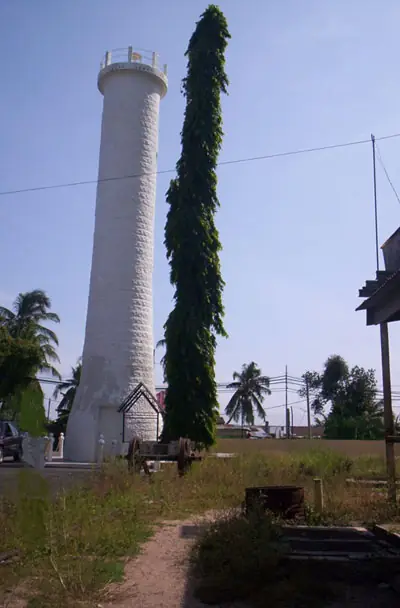
Tumpat Lighthouse
Known locally as Rumah Api Tumpat, the Tumpat Lighthouse is a disused round brick tower that tapers as it rises. It reaches about 70 feet (≈21 metres) in height, with a base circumference of roughly 37 feet (≈11.3 metres). A spiral staircase winds inside the tower. Though no longer active, the lighthouse remains a historical landmark that offers a glimpse into Tumpat’s maritime heritage.
Explore Tumpat with Neywo
Download the Neywo app to enjoy the free audio guide covering 9 narrated places in 11 languages, with stories that play automatically as you reach each site. You can walk at your own pace, with no group and no schedule.
For more destinations in Malaysia, see our guides to Shah Alam, Semporna, and Putrajaya.
Places with an audio guide in Tumpat
5 places in Tumpat with a Neywo audio guide. Each one starts telling its story as you reach it.




Walk Tumpat with Neywo
Neywo turns Tumpat into a self-guided audio tour. Stories arrive as you reach the place they belong to, and the route reshapes when you wander off it.

