Visiting Batticaloa, Sri Lanka: Top Sights on Foot
Things to Do in Batticaloa: What to See in Sri Lanka’s Lagoon City
Batticaloa is a coastal city in eastern Sri Lanka shaped by lagoons, colonial history, and a multicultural local character. The best things to do in Batticaloa include visiting its historic fort and museum, exploring important churches, and taking in the watery landscape that has earned the city its nickname, the Land of the Singing Fish. Neywo has a free audio guide for Batticaloa with five narrated places, available in 11 languages.
What to See in Batticaloa
Batticaloa Fort
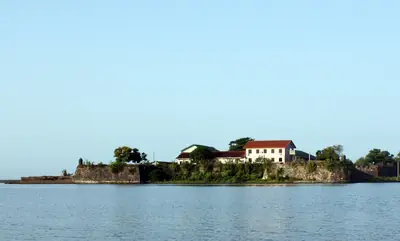
Batticaloa Fort stands on Puliyanthivu, an island where the lagoon wraps around two sides and a canal protects the other two. The Portuguese built the fort in 1628, but the Dutch captured it on 18 May 1638. From 1795, it came under British control and served as an administrative center.
Its compact design has four corner bastions. The lagoon acts as a natural moat on two sides, while the man-made canal completes the defensive system. The fort is considered one of the more elegant smaller Dutch forts in Sri Lanka, and the old structure remains in good condition.
The fort is still part of the working city: newer buildings inside the walls house local government offices. Walking along the ramparts gives a view across the lagoon and connects the present-day city with the Portuguese, Dutch, and British periods of its history.
Batticaloa Museum
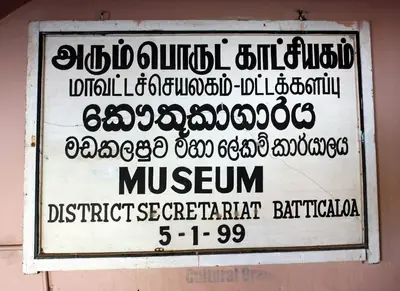
The Batticaloa Museum occupies a single room inside the old Kachcheri, a former government administrative building within the fort. Established in 1999, it offers a compact introduction to the history and communities of eastern Sri Lanka.
Its collection includes palm-leaf manuscripts, Hindu religious sculptures, objects from Tamil and Islamic cultural traditions, older tools and utensils, British-period administrative records and official seals, and ritual objects from earlier ceremonies. The museum is small, but its displays reflect the diverse cultural influences that have shaped Batticaloa.
Church of Our Lady of Presentation
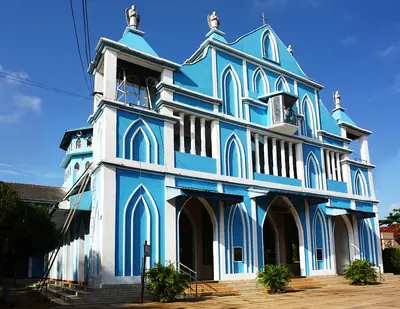
The Church of Our Lady of Presentation, also known locally as Thandavanveli Church, is one of the most significant Catholic landmarks in the Batticaloa district. Recorded documents identify it as the first and oldest church in the district.
The church was formerly known as the Church of Our Lady of Sorrows, or Viyagula Matha Kovil in Tamil. Its current name translates as Kaanikkai Matha Kovil. These different names reflect the church’s place within Batticaloa’s local Catholic and Tamil heritage.
Zion Church
Zion Church on Manressa Street has been part of Batticaloa’s Christian community for several decades. The evangelical congregation began in 1974, founded by Inbam Moses, and has grown into a center for gospel preaching in the Eastern Province.
It is one of the places that reveals the city’s religious diversity alongside its Catholic and Hindu traditions. Together with the churches, museum, and fort, it forms part of Batticaloa’s layered cultural landscape.
The lagoon and the city’s island setting
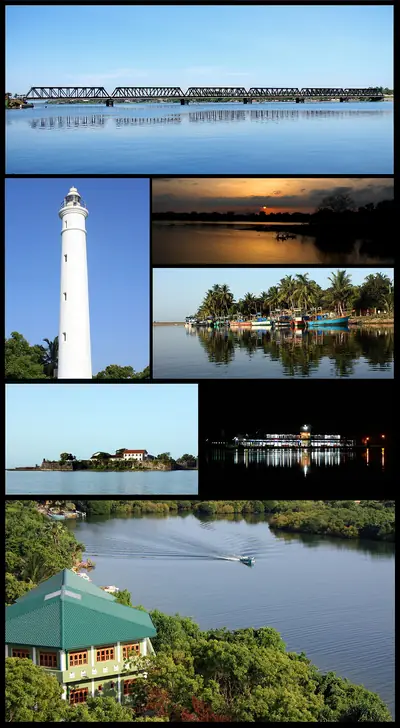
Batticaloa feels suspended between lagoon and sea on Sri Lanka’s eastern coast. The city stands essentially on an island connected to the mainland by causeways, with water extending around it. This geography has influenced how the city developed and remains central to its identity.
The lagoon is also linked to Batticaloa’s nickname, the Land of the Singing Fish. The city itself is low and flat, standing around 17 metres above sea level, while the highest nearby point reaches 116 metres. Water, causeways, and surrounding shores are not simply scenery here: they define the rhythm and appearance of Batticaloa.
Batticaloa is the largest city in the Eastern Province and the administrative capital of Batticaloa District. It was once the provincial capital and is now a major commercial hub, as well as the home of the Eastern University of Sri Lanka.
Beyond Batticaloa
For a different coastal atmosphere, Pasikudah lies 35 kilometres northwest. Its shallow, warm-water lagoons and beaches offer a contrast with Batticaloa’s working urban rhythm. Trincomalee is 111 kilometres to the north, while Colombo is more than 300 kilometres west.
Batticaloa also makes sense as part of a wider journey through Sri Lanka. Travellers planning a broader route may also compare the eastern city with destinations such as Colombo, Galle, or Ella.
Explore Batticaloa with Neywo
Neywo’s free Batticaloa audio guide covers five narrated places. The app tells the story of each place as you reach it, at your own pace, with no group and no schedule. Narration is available in 11 languages, making it a simple way to explore the fort, museum, churches, and other points of interest while walking through the city.
Places with an audio guide in Batticaloa
4 places in Batticaloa with a Neywo audio guide. Each one starts telling its story as you reach it.
Walk Batticaloa with Neywo
Neywo turns Batticaloa into a self-guided audio tour. Stories arrive as you reach the place they belong to, and the route reshapes when you wander off it.

