Colombo, Sri Lanka: Self-Guided Walking Tour
Things to do in Colombo: what to see in Sri Lanka’s capital
Colombo is Sri Lanka’s largest city and commercial capital, a coastal metropolis shaped by maritime trade and centuries of cultural exchange. The best things to do in Colombo include exploring the historic Fort and Pettah districts, visiting religious landmarks and museums, and seeing how colonial buildings, busy markets and modern Colombo meet along the Indian Ocean. Neywo offers a free audio guide to Colombo with 42 narrated places.
What to see in Colombo
Colombo’s landmarks are spread across several districts, each revealing a different side of the city. These are some of the most important places to include when deciding what to see in Colombo.
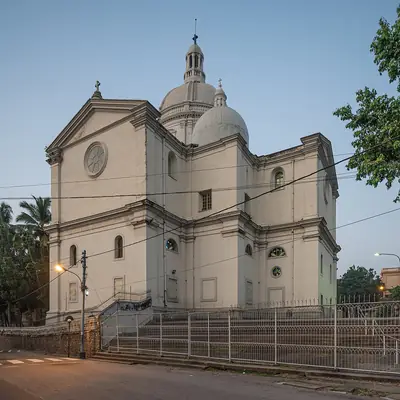
St. Lucia’s Cathedral
In Kotahena, St. Lucia’s Cathedral is the spiritual heart of Colombo’s Catholic community and the seat of the Archbishop of the Roman Catholic Archdiocese of Colombo. The cathedral grew from a small Catholic structure built during the Dutch occupation. Its present form dates from 1937 and draws on ancient Roman architectural traditions. It is the largest cathedral in Colombo.
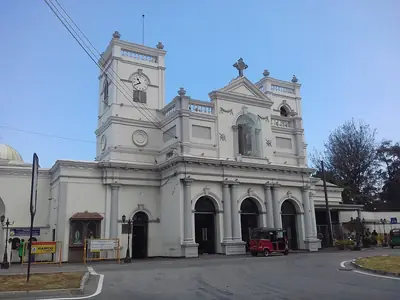
Nearby, St. Anthony’s Shrine in Kochchikade is one of Sri Lanka’s most important Catholic pilgrimage sites. Dedicated to Saint Anthony of Padua, it is both a national shrine and a minor basilica. A fragment of the saint’s tongue is preserved in a reliquary at the entrance.
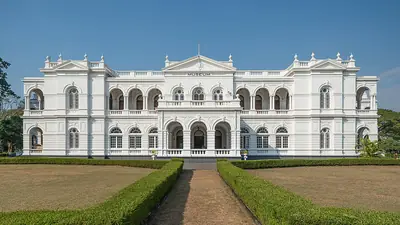
National Museum of Colombo
The National Museum of Colombo, also called the Sri Lanka National Museum, is the country’s largest and oldest museum. Founded in 1877 by William Henry Gregory, the British Governor of Ceylon, it occupies a two-storey building.
The ground floor presents Sri Lankan history, while the upper galleries explore folklore and traditional life. Its collections include the throne and regalia of the Kandyan monarchs, as well as artefacts connected with Sri Lanka’s cultural and natural heritage.
Next door, the National Museum of Natural History focuses entirely on the island’s natural heritage. Its collection includes more than five thousand mammal specimens, rare and endangered species found only in Sri Lanka, Jurassic fossils and geological rocks.
Colombo National Art Gallery
In Cinnamon Gardens, the Colombo National Art Gallery was Sri Lanka’s first state-sponsored art gallery. It opened in March 1932 in a building designed by Gate Mudliyar A. C. G. S. Amarasekara.
The gallery has three wings. Its central space contains a permanent collection of portraits and landscapes that trace Sri Lanka’s artistic heritage. The two adjoining wings are used for temporary exhibitions by contemporary Sri Lankan artists, giving the complex both historical and modern perspectives.
Cathedral of Christ the Living Saviour
The Cathedral of Christ the Living Saviour is the mother church of the Anglican Church of Ceylon and the seat of the Bishop of Colombo. Located in the leafy streets of Cinnamon Gardens, it has an unusual hexagonal plan inspired by the form of a traditional Sri Lankan Buddhist temple.
The building was constructed in modern concrete. Its foundation stone was laid in October 1968, and the cathedral was consecrated in November 1973. The result is a distinctive combination of Sri Lankan sacred geometry and mid-century engineering.
Jami Ul-Alfar Mosque
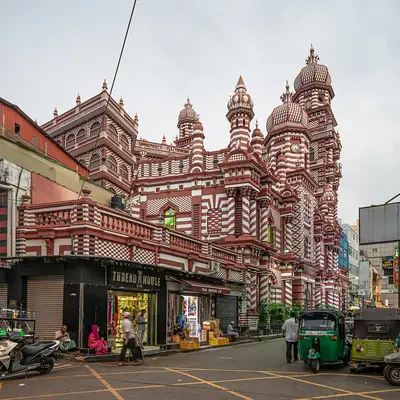
One of the most recognizable places in Pettah is Jami Ul-Alfar Mosque, widely known as the Red Mosque. Its red-and-white exterior makes it a striking landmark in the busy commercial district.
The mosque stands on Second Cross Street and is one of the oldest mosques in Colombo. It is also known locally as the Samman Kottu Palli, Rathu Palliya or Red Masjid. Its setting in the heart of Pettah makes it a natural stop while exploring the market streets.
Wolvendaal Church
Wolvendaal Church is a Dutch colonial landmark in Pettah and one of the most important surviving buildings from the Dutch period in Sri Lanka. Unlike many historic structures, it remains a functioning Protestant church and is among the oldest in the country to continue in use.
Its quiet setting contrasts with Pettah’s crowded commercial streets, making it an especially revealing stop for anyone interested in Colombo’s colonial history.
Pettah Floating Market
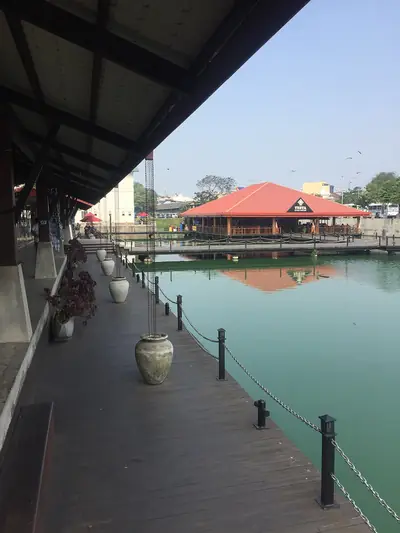
The Pettah Floating Market stretches along Bastian Mawatha beside Beira Lake. Its stalls and boats offer fresh produce and handmade crafts, with many vendors operating directly from boats on the water.
The market contains 92 trade stalls and was officially opened on 25 August 2014. Its development transformed Bastian Street into a greener corridor and included the cleaning of the nearby canal. The calm waters of Beira Lake provide a striking setting for this lively market.
Old Colombo Lighthouse
In the Fort district, the Old Colombo Lighthouse is now better known as the Colombo Fort Clock Tower. It began as Sri Lanka’s first lighthouse, guiding ships into Colombo Harbour, but the growing city eventually blocked its light. The tower was then converted into a clock tower.
It is the only lighthouse in Sri Lanka to have been fitted with a working clock. The mechanism was made by Dent & Co., the English firm associated with Big Ben’s clock. The 29-metre stone tower stands at the junction of Chatham Street and Janadhipathi Mawatha, with clock faces on all four sides.
President’s House
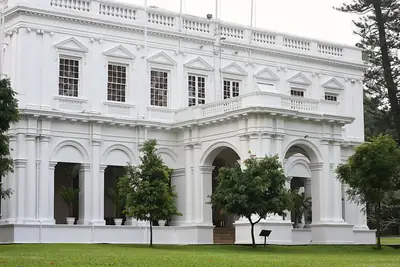
President’s House stands on Janadhipathi Mawatha in the Fort district and has been the seat of Sri Lanka’s highest office for more than two centuries. From 1804, it served as the residence of British Governors and Governors-General. Twenty-nine occupied the building, which was known as King’s House or Queen’s House under British rule.
After Sri Lanka became a republic in 1972, the building became President’s House. It is also associated with the political protests of 2022, when demonstrators entered the residence during a period of mass anti-government unrest.
Gangaramaya Temple
On the shores of Beira Lake, Gangaramaya Temple is one of Colombo’s most important Buddhist sites and is recognized as the city’s largest temple. Its architecture combines modern forms with Sri Lankan cultural influences.
The temple was completed in the late nineteenth century. Each February, on Navam Poya day, it hosts a major ceremony, adding a significant religious event to Colombo’s cultural calendar.
National Planetarium
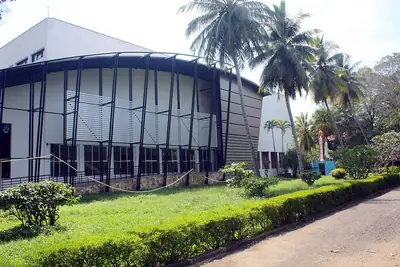
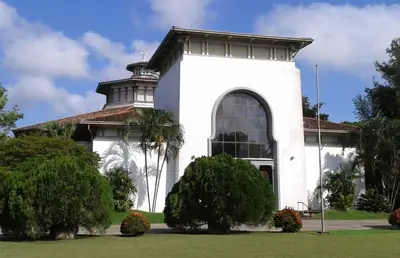
The National Planetarium is Sri Lanka’s first and only planetarium. Built in Colombo in 1965 for the Ceylon Industrial Exhibition, it was designed by the State Engineering Corporation, with chief engineer A. N. S. Kulasinghe drawing inspiration from Liverpool Metropolitan Cathedral and the Cathedral of Brasília.
The building is distinguished by its sweeping modern lines and large dome. Inside, a digital spherical Carl Zeiss projector creates an artificial sky above a 570-seat auditorium.
Saifee Villa
On Thurstan Road, Saifee Villa is a historic mansion that was once known as Lakshmigiri. It offers another glimpse of Colombo’s architectural heritage beyond the city’s major museums and religious buildings.
Remembering the 2019 bombings
Several places in Colombo also carry memories of the Easter Sunday bombings of 21 April 2019. Coordinated attacks targeted churches and hotels, including St. Anthony’s Shrine in Kochchikade and the Shangri-La, Cinnamon Grand and Kingsbury hotels.
The attacks killed 269 people and injured more than 500. Memorials at St. Anthony’s Shrine and the affected hotels honor those who died. These sites are part of Colombo’s recent history and reflect both the tragedy experienced by the city and the resilience of its communities.
Explore Colombo with a self-guided audio tour
Neywo’s Colombo audio guide includes four walking tours, with a total of 31 tour stops across the routes. Each story plays as you reach the place, at your own pace, with no group and no schedule. Narration is available in 11 languages.
The four walks are:
- Fort to Pettah: From the Clock Tower to the Red Mosque — 4.32 km, 110 minutes and 9 narrated stops.
- Mosques, Churches and Wolf’s Valley: Old Pettah and Kotahena — 2.68 km, 71 minutes and 6 narrated stops.
- Independence Square and the Museum Mile of Cinnamon Gardens — 3.65 km, 100 minutes and 9 narrated stops.
- Park, Pagodas and Lotus: Colombo’s Green Heart — 4.52 km, 100 minutes and 7 narrated stops.
Together, the walks cover Fort, Pettah, Kotahena, Cinnamon Gardens and Colombo’s green central districts. They include landmarks such as the Old Colombo Lighthouse, Jami Ul-Alfar Mosque, Wolvendaal Church, St. Lucia’s Cathedral, the National Museum of Colombo, the National Museum of Natural History, Gangaramaya Temple and the National Planetarium.
Download Neywo and explore Colombo with a free audio guide that tells the story of each place as you reach it. You can also continue exploring Sri Lanka and discover other destinations such as Galle, Negombo, Ella or Batticaloa.
Places with an audio guide in Colombo
8 places in Colombo with a Neywo audio guide. Each one starts telling its story as you reach it.
Self-guided tours in Colombo
4 tours in Colombo, free in the Neywo app. Each stop tells its story as you reach it.
- Walk
Fort to Pettah: From the Clock Tower to the Red Mosque
Begin at Colombo Fort's old lighthouse-turned-clock-tower, once the zero point for every distance on the island. Pass the President's House, a Dutch prison turned maritime museum and the oldest city church before crossing into the colourful lanes of Pettah, with its candy-striped Red Mosque and floating market.
Old Colombo Lighthouse · Currency museum · President's House, Colombo · Colombo Port Maritime Museum · St. Peter's Church, Colombo · Jami Ul-Alfar Mosque …
Open this tour: Fort to Pettah: From the Clock Tower to the Red Mosque - Walk
Mosques, Churches and Wolf's Valley: Old Pettah and Kotahena
Colombo's religious melting pot on foot: the first Methodist church in Asia, a mosque rebuilt for centuries on the same ground, a Dutch church named for a wolf valley and the Catholic shrine that keeps a saint's relic in a glass case.
Methodist Church, Pettah · Colombo Grand Mosque · Wolvendaal Church · St. Thomas' Church, Colombo · St. Anthony's Shrine, Kochchikade · St. Lucia's Cathedral
Open this tour: Mosques, Churches and Wolf's Valley: Old Pettah and Kotahena - Walk
Independence Square and the Museum Mile of Cinnamon Gardens
Colombo's leafy museum district: the national museums, a theatre named for a photographer, a planetarium built from East German concrete and the hall where Ceylon marked independence in 1948. It ends at a hexagonal cathedral modelled on a Buddhist temple.
National Museum of Natural History · National Museum of Colombo · Lionel Wendt Art Centre · Navarangahala · National Planetarium · Independence Memorial Hall …
Open this tour: Independence Square and the Museum Mile of Cinnamon Gardens - Walk
Park, Pagodas and Lotus: Colombo's Green Heart
Walk through Colombo 7: a Scottish kirk with stained glass shipped from England, the lakeside Gangaramaya temple, a war memorial moved to dodge enemy guns, and South Asia's tallest tower shaped like a lotus bud.
St. Andrew's Presbyterian Church · St Michael and All Angels Church, Polwatte · Cenotaph War Memorial, Colombo · Colombo Public Library · Gangaramaya Temple · Postal museum, Colombo …
Open this tour: Park, Pagodas and Lotus: Colombo's Green Heart
Walk Colombo with Neywo
Neywo turns Colombo into a self-guided audio tour. Stories arrive as you reach the place they belong to, and the route reshapes when you wander off it.

