Visiting Ella, Sri Lanka: Top Sights on Foot
Things to Do in Ella, Sri Lanka
Looking for things to do in Ella? This hill-country destination is surrounded by tea-covered slopes, forests, valleys and mountain scenery, with historic bridges, temples, churches and waterfalls to discover nearby. Neywo has a free audio guide for Ella covering 12 narrated places, available in 11 languages.
What to See in Ella and the Surrounding Region
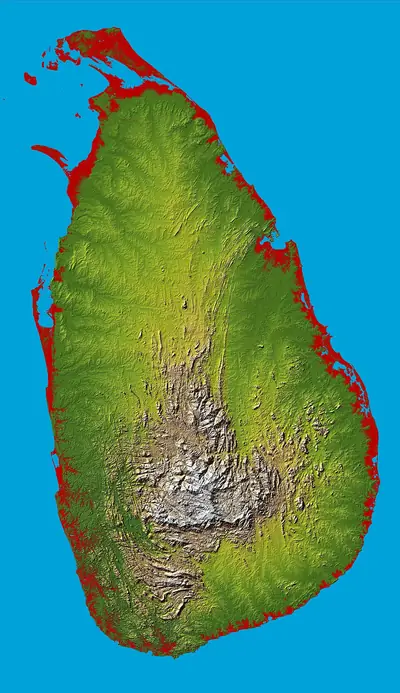
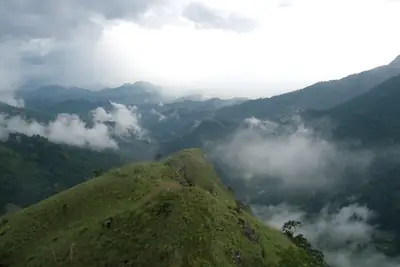
Ella lies in Uva Province, a part of Sri Lanka known for its mountains, forests, waterfalls, plateaus, valleys, rivers and lakes. The provincial capital, Badulla, sits in a valley surrounded by hills and the Namunakuli mountain range. Together, Ella and its wider surroundings offer a varied mix of highland landscapes and historic sites.
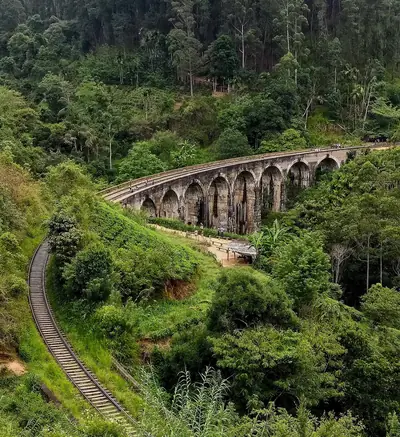
Nine Arches Bridge, Demodara
The Nine Arches Bridge is one of the best-known sights near Ella. Also called the Demodara Nine Arch Bridge or the Bridge in the Sky, it stands between Ella and Demodara railway stations.
The viaduct was completed in 1919 as part of Sri Lanka’s colonial-era railway network. Its nine arches carry the railway through a difficult nine-degree curve and a steep gradient. Local workers built it under British supervision, using concrete cornice blocks to support the arches and locally produced sand-cement blocks for the facing. Today, the bridge is an archaeologically protected monument.
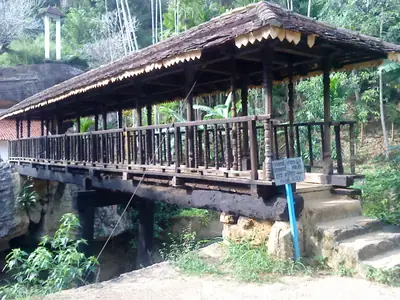
Bogoda Wooden Bridge
The Bogoda Wooden Bridge offers a glimpse into traditional Sri Lankan construction. Built entirely from wood, it is regarded as the oldest surviving wooden bridge in Sri Lanka.
The bridge dates from the sixteenth century, during the Dambadeniya era, and formed part of the historic route between Badulla and Kandy. Its wooden construction extends to the nails used to hold it together. The roof tiles also reflect the influence of the Kingdom of Kandy, adding another historical detail to this unusual viewpoint.
Dhowa Rock Temple
Near the road between Bandarawela and Badulla, Dhowa Rock Temple, or Dhowa Rajamaha Viharaya, is set discreetly into a hillside. The Buddhist heritage site is traditionally associated with King Valagamba, who is said to have taken refuge there and organised his forces while hiding from his enemies.
The temple’s most striking feature is a large Buddha image carved into the rock face. The carving is described as unfinished, and a piece of wood nearby is said to have supported the statue during its creation. Inside the shrine, Buddhist paintings represent several periods of artistic history, including scenes from the Telapatta Jataka.
Badulla
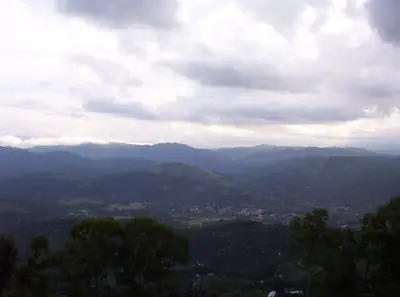
Badulla is the capital and largest city of Uva Province. Its setting makes the relationship between the town and the surrounding highlands especially clear: the city occupies a valley among hills and forests, with the Namunakuli mountain range rising around it.
The city was governed by Sinhala kings before British rule and later became a British administrative centre. The railway built under British rule ended in Badulla, helping transport plantation products towards the Colombo area and connecting the city with the wider region.
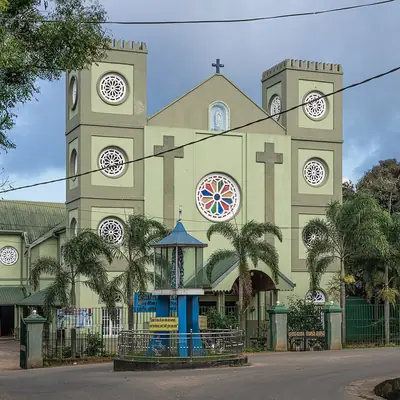
St. Mary’s Cathedral, Badulla
St. Mary’s Cathedral is the seat of the Roman Catholic Diocese of Badulla. The cathedral was established on 13 September 1881, while the present church was built in the 1950s by Reverend Father Peter Farina of the Order of Saint Benedict.
The building is also part of Sri Lanka’s modern visual history: St. Mary’s Cathedral appeared on Christmas postage stamps issued by the Sri Lankan government in 2009. Its annual feast is celebrated on the second Sunday of October.
St Mark’s Church, Badulla
St Mark’s Church, also known as St. Mark’s Church, is an Anglican church in central Badulla. It stands at the junction of the Mahiyangana to Badulla main road, known as the B36.
The church was consecrated on 25 April 1857 by Bishop James Chapman. Its church building and bell tower were formally recognised as archaeological protected monuments by the Government in 2008.
Diyaluma Falls
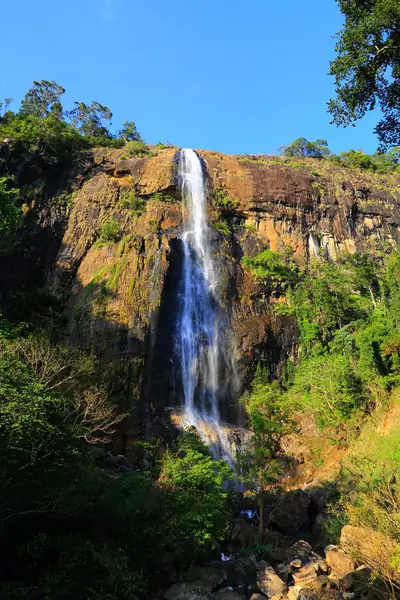
Diyaluma Falls is a natural viewpoint near Koslanda in Badulla District. The waterfall lies along the Colombo to Badulla highway, making it one of the region’s notable landscape stops.
It is part of the broader natural character of Uva Province, which is also known for Bambarakanda Falls, Dunhinda Falls, Manawela Falls and Ravana Ella Falls.
Sorabora Wewa
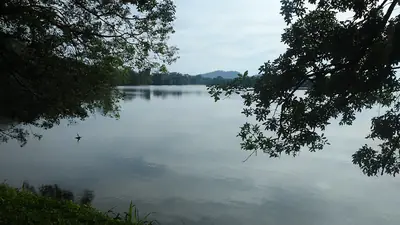
Sorabora Wewa is an ancient reservoir in Mahiyangana, in Badulla District. Tradition places its construction during the reign of King Dutugemunu, between 161 and 137 BC, and attributes the work to a giant named Bulatha. In ancient times, the reservoir was known as the Sea of Bintenna.
The reservoir was formed by damming the Diyawanna Oya with an embankment about 485 metres long. Its unusual sluice gate, known as the Sorowwa, was made using the massive natural rock around the tank and placed away from the embankment. The supplied account describes it as the only sluice gate of its kind in Sri Lanka.
Adisham Hall
Near Haputale, Adisham Hall is a preserved country house that is now home to the Adisham Monastery of Saint Benedict. Its period rooms, furnishings and grounds give the building a distinctive character.
The house was built in 1931 for Sir Thomas Villiers, an English aristocrat and planter. Designed by R. Booth and F. Webster in Tudor and Jacobean styles, it retains its period fittings and furniture and is open to visitors. The property covers seven acres granted from the Tangamale Strict Nature Reserve by an act of the British Parliament.
St. Andrew’s Church, Haputale
St. Andrew’s Church is a small Neo-Gothic church on Haputale’s A16 road. It is one of the town’s oldest buildings and one of the oldest European buildings in Badulla District.
The foundation stone was laid on 7 April 1869, and the church was consecrated later that year on 19 September. Inside, red velvet and leather cover the pews and kneelers, whose ends feature detailed woodcarving. Stained-glass windows imported from Scotland frame the altar, while a marble baptismal font from England stands near the entrance. The church was declared a protected archaeological site in November 2002.
Explore Ella with Neywo
Neywo’s free audio guide lets you explore Ella independently, with 12 narrated places and narration in 11 languages. The app tells the story of each place as you reach it, at your own pace, with no group and no schedule.
Download Neywo and explore Ella while discovering the history of its bridges, churches, temples, waterfalls and mountain landscapes. If you are continuing through Sri Lanka, you can also discover other destinations such as Galle, Colombo, Negombo and Batticaloa.
Places with an audio guide in Ella
8 places in Ella with a Neywo audio guide. Each one starts telling its story as you reach it.
Walk Ella with Neywo
Neywo turns Ella into a self-guided audio tour. Stories arrive as you reach the place they belong to, and the route reshapes when you wander off it.

