Kandy, Sri Lanka: Self-Guided Walking Tour
Things to do in Kandy: historic temples, royal heritage and museums
Kandy is Sri Lanka’s cultural capital and the last capital of the Sinhalese monarchy. Set among the forested hills of the Central Province, the city brings together Buddhist heritage, royal architecture, colonial history and the story of Ceylon tea. Neywo has a free audio guide for Kandy, with 17 narrated places to discover as you explore.
What to see in Kandy
The most important places to visit in Kandy are concentrated around the former royal complex and the city’s historic centre. Together, they explain why Kandy remains one of the key cultural destinations in Sri Lanka.
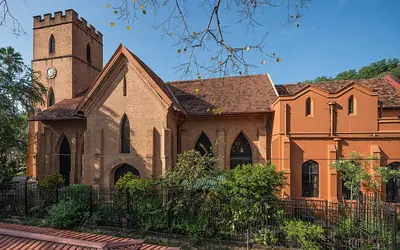
St. Paul’s Church
St. Paul’s Church is an Anglican church in Kandy’s historic district, standing on sacred grounds west of the Temple of the Tooth. Its location reflects the layers of religious and colonial history found across the city.
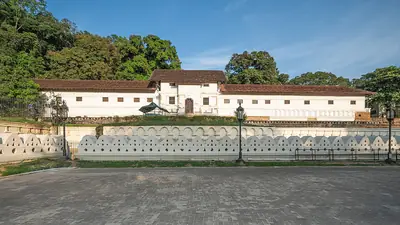
Royal Palace of Kandy
The Royal Palace of Kandy, also known as the Old Royal Palace, was the official residence of the monarchs of the former Kingdom of Kandy until British colonial rule began in 1815. The complex includes several important buildings, including the Audience Hall, the Queen’s Palace and the King’s Palace.
Its traditional Kandyan architecture is one of its defining features. Intricate woodwork, carefully made stone carvings and ornate wall murals reveal the attention given to both the buildings and their decoration. The palace complex also encompasses the Temple of the Tooth Relic.
Temple of the Tooth
Sri Dalada Maligawa, commonly called the Temple of the Sacred Tooth Relic, is one of Kandy’s most important Buddhist temples. Its inner chamber contains a relic believed to be a tooth of the Buddha, giving the temple profound religious significance and a direct connection with the history of the Kingdom of Kandy.
The relic also had political importance: it was traditionally believed that whoever possessed it held the right to govern the country. For this reason, it was kept by the Sinhalese kings and became closely tied to the monarchy.
The temple’s Nanumura Mangallaya ceremony takes place on Wednesdays. During this ritual, the relic is symbolically bathed with scented water and fragrant flowers. The water is believed to have healing powers and is distributed among those present.
Temple of the Tooth Museum
The Sri Dalada Museum occupies the first and second floors of a wing of the Temple of the Tooth. Its exhibits explore the temple’s history, religious objects and royal connections.
Historical records on the first floor include lists of the Chief Prelates, records of the Kandyan Kings and portrait busts linked to the institution. The second floor contains religious objects and historical artefacts, including caskets, statues and jewellery.
Among the notable objects are a silver water pot offered by King Kirti Sri Rajasimha, a silver hanging lamp presented by King Rajadhi Rajasimha and a painted replica of the Buddha’s footprint sent by King Borom Kot of Thailand. The collection also includes garments associated with King Keerthi Sri Rajasinha and a relic casket containing bodily relics of the Thera Moggliputta.
National Museum of Kandy
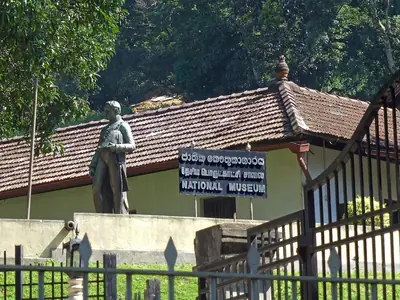
Beside the Temple of the Tooth, the National Museum of Kandy occupies part of the former Royal Palace. Its collections cover the Kandyan era and the period that followed British colonial rule.
The main displays are housed in Palle Vahala, also known as the lower or middle palace. Built during the reign of King Sri Vickrama Rajasingha, the building once served as quarters for the king’s queens. Its Kandyan architectural design makes the structure itself part of the museum experience.
More than five thousand objects are displayed, including weapons, jewellery, tools and other artefacts from the seventeenth to nineteenth centuries, as well as from the post-British colonial era. A second exhibition is located in the main palace building, where historical documents include a copy of the 1815 agreement that transferred the Kandyan provinces to the British. The museum opened to the public in 1942.
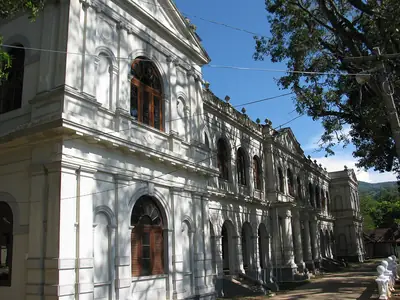
International Buddhist Museum
The International Buddhist Museum stands beside the National Museum of Kandy and the Temple of the Tooth. It is described as the world’s first museum devoted to international Buddhism, making it a useful stop for understanding the religion’s development across Asia.
The building has its own layered history. The site was once the palace of Kandian King Wimaladharmasuriya. Under British rule, a Victorian-era building was constructed there and used as the Kandy Kachcheri.
Giragama Walawwa
Giragama Walawwa is a historic residence built in 1814 for Kudamudiyanse Giragama, a former Diyawadana Nilame. It is considered the oldest walawwa building in Kandy and is recognised by the government as an archaeological protected monument.
The building’s unusual central wooden tower sets it apart. No other walawwa in the country is known to have one, and archaeologists believe it may have served as a watchtower or security tower. Restoration was completed in September 2015.
Bogambara Prison
Bogambara Prison was a former maximum-security prison and Sri Lanka’s second-largest prison after Welikada Prison in Colombo. It operated for 138 years before closing on 1 January 2014.
The site is planned as the Bogambara Cultural Park, a cultural tourism centre. Its presence adds another chapter to Kandy’s modern institutional and colonial history.
Meera Makam Mosque
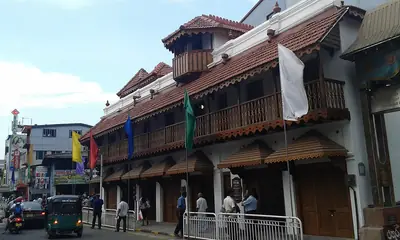
Meera Makam Mosque, also known as Meera Maccam Masjid or Meera Maqam Masjid, is one of Kandy’s oldest and largest mosques. Its white-and-green façade stands at the corner of Wariyapola Sri Sumangala Mawatha and Gamini Dissanayake Mawatha.
The rectangular building has neither a main minaret nor a dome, giving it a distinctive appearance. The land was gifted to a Muslim courtier by King Kirhi Sri Rajasinha, from land owned by the Asgiri Maha Viharaya. The present mosque was begun in 1855 and completed in 1864.
Other religious and historic sites
Kandy’s heritage extends beyond its best-known monuments. Katukele Jumma Mosque, also called Katukele Grand Mosque, stands in the Katukele neighbourhood. Hikma Mosque is a local place of worship in Uda Talawinna, in Kandy district.
The Highway Museum complex in Kiribathkumbura offers a different perspective on the region’s history. Maintained by the Road Development Authority, it is Sri Lanka’s first highway museum. Its collection includes stone, steam and oil road rollers, tar boilers, coal scales and road signs. Some objects are reportedly more than 175 years old. A model of the Bogoda Wooden Bridge is also displayed there.
Ceylon tea and the hills around Kandy
The Central Province is shaped by Sri Lanka’s central mountains, with forests, valleys, high plateaus, rivers, reservoirs and waterfalls. Kandy has served as the province’s capital since 1469, and the city’s setting among rising hills gives it a distinctly elevated character.
Tea is one of the province’s defining products. Cultivation began in the 1860s under British rule after a disease destroyed the coffee plantations. The surrounding tea-growing landscapes remain closely associated with the highland towns and districts of the region.
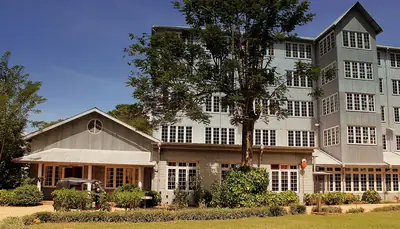
The Ceylon Tea Museum, a short distance south of Kandy, tells this story inside the former Hanthana Tea Factory. Built in 1925, the four-storey factory later became a research site for the Tea Research Institute of Ceylon. Its original equipment includes nineteenth-century colonial generators, rollers, dryers, fermentation tables and sorting machines, showing the stages involved in turning tea leaves into a finished product. The museum was incorporated in 1998.
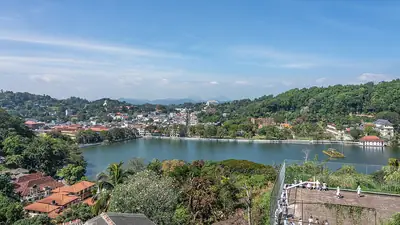
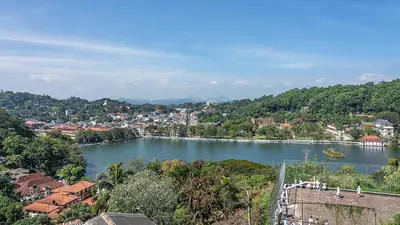
The province also includes destinations such as Gampola, Hatton and Nuwara Eliya, as well as natural areas including Horton Plains, the Knuckles mountains, Ramboda Pass, Kandy Lake and Devon Falls.
Explore Kandy with Neywo
Download Neywo and follow the “Kings, Relics and Colonial Kandy” walking tour. It covers 3.16 km in 101 minutes and includes 10 narrated stops: Bogambara Prison, Giragama Walawwa, Meera Makam Mosque, Trinity College Chapel, the Temple of the Tooth Museum, St. Paul’s Church, the International Buddhist Museum, the Royal Palace of Kandy, the Temple of the Tooth and the National Museum of Kandy.
Neywo tells the story of each place as you reach it, at your own pace, with no group and no schedule. Its Kandy narration is available in 11 languages, making this self-guided walking tour a flexible way to explore the city’s royal, religious and colonial heritage.
Places with an audio guide in Kandy
8 places in Kandy with a Neywo audio guide. Each one starts telling its story as you reach it.
Self-guided tours in Kandy
1 tour in Kandy, free in the Neywo app. Each stop tells its story as you reach it.
- Walk
Kings, Relics and Colonial Kandy
Start at the former Bogambara prison, now planned as a cultural park, then walk into Kandy's World Heritage core. See the old walawwa with its one-of-a-kind watchtower, a white-and-green mosque with no minaret, a chapel built like a Buddhist hall, the palace of the last Kandyan kings and the temple that holds the Buddha's tooth relic.
Bogambara Prison · Giragama Walawwa · Meera Makam Mosque · Trinity College Chapel · Temple of the Tooth Museum · St. Paul's Church, Kandy …
Open this tour: Kings, Relics and Colonial Kandy
Walk Kandy with Neywo
Neywo turns Kandy into a self-guided audio tour. Stories arrive as you reach the place they belong to, and the route reshapes when you wander off it.

