Visiting Santa Cruz, United States: Top Sights on Foot
Things to Do in Santa Cruz: History, Surfing and Waterfront Attractions
The best things to do in Santa Cruz include exploring its mission heritage, learning about local surfing, visiting museums and marine science centres, and experiencing the classic attractions of the waterfront. The city brings together Pacific views, historic buildings, university culture and one of California’s most famous amusement parks. Neywo has a free audio guide for Santa Cruz with 51 narrated places, available in 11 languages.
What to See in Santa Cruz
Museum of Art and History
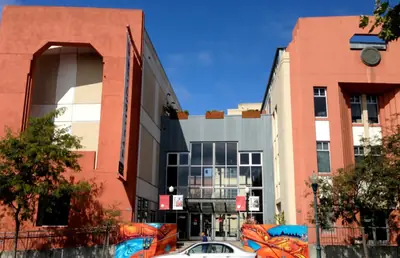
In downtown Santa Cruz, the Museum of Art and History, or MAH, brings art, local history and community life together at the McPherson Center. The nonprofit museum was founded in 1996 and grew from the Santa Cruz County Museum of Art and the Santa Cruz Historical Society.
Its history collection contains more than 7,000 items. A permanent gallery explores the history of the Monterey Bay Area, while a research library and archive provide further insight into the region’s past. Exhibitions, interactive installations and educational programmes are designed for visitors of all ages.
Santa Cruz Mission State Historic Park and Mission Santa Cruz
Santa Cruz Mission State Historic Park preserves one of the few surviving parts of the original mission complex. Mission Santa Cruz was founded in 1791 by the Franciscan order and was first built on the floodplain of the San Lorenzo River before flooding led to its relocation to Mission Hill.
The park includes archaeological remains, historic adobe buildings and a half-size replica of the original mission church. One of the most important surviving structures is the Neary-Rodriguez Adobe, built between 1822 and 1824. It originally served as housing for Indigenous families connected with the mission and is described as the oldest surviving structure in Santa Cruz County.
Nearby, Holy Cross Church was built in 1889 on the foundation of the original mission church. The replica chapel, the adobe buildings and the present church together tell the story of the site’s changing religious and architectural history.
Holy Cross Catholic Church
Holy Cross Catholic Church is closely connected with Mission Santa Cruz. The present building was constructed in 1931 in the style of the original church. Inside, the tabernacle from the earlier church stands near the altar, while the domed ceiling is decorated with colourful tiles.
The church also contains eighteenth- and nineteenth-century vestments made from detailed silk fabrics. Outside, a Spanish-style garden includes statuary, a fountain, a walkway and benches. It is a peaceful setting and a particularly scenic place for photographs.
Santa Cruz Lighthouse and Surfing Museum
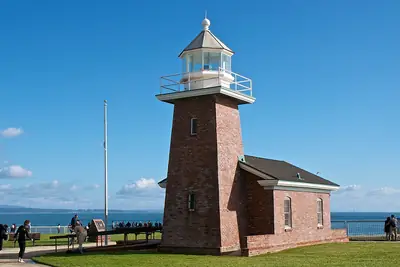
At Lighthouse Point, the Santa Cruz Lighthouse overlooks Steamer Lane and the Pacific surfing scene. The building houses the Santa Cruz Surfing Museum, which opened in 1986 as the first surfing museum in the world.
Its collection documents more than a century of surfing in Santa Cruz through photographs, videos and surfboards. The boards trace the development of the sport, from hollow paddle boards and redwood planks used in the 1930s and 1940s to foam, fiberglass and the short boards that appeared in the 1970s.
The lighthouse itself was constructed in 1967 as a tribute to Mark Abbott, a surfer who died while surfing at nearby Pleasure Point.
Santa Cruz Museum of Natural History
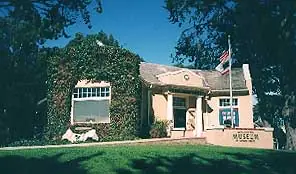
The Santa Cruz Museum of Natural History is sometimes called the “whale museum” by local residents. It began with the collection of Laura Hecox, a Santa Cruz native who devoted her life to natural sciences. She gave the collection to the city in 1904, creating the foundation for its first public museum.
The museum officially opened on August 21, 1905, and is now housed in the historic Carnegie Library, completed in 1915. Its collections include natural history specimens, Native American and archaeological artefacts, minerals and biological materials.
The museum’s outdoor exhibit kiosks on the Santa Cruz Wharf explore marine life, local fishing history and the story of the wharf. Its connection with surfing continues at the Santa Cruz Surfing Museum in the Mark Abbott Memorial Lighthouse.
Monterey Bay National Marine Sanctuary Exploration Center
The Monterey Bay National Marine Sanctuary Exploration Center introduces visitors to one of the largest protected marine areas in the United States. Established in 1992, the sanctuary follows California’s central coast and protects kelp forests, rocky shores, sandy beaches and estuaries.
These habitats support 36 species of marine mammals, more than 180 kinds of seabirds and shorebirds, at least 525 fish species, as well as numerous invertebrates and types of algae. Oil drilling, ocean dumping and seabed mining are prohibited within the sanctuary.
The centre provides a useful introduction to the coastal environment and to activities such as whale watching, diving and exploring the region’s varied marine landscapes.
Seymour Marine Discovery Center
At the Seymour Marine Discovery Center, ocean science is presented through exhibitions, hands-on activities and links with marine research. The centre stands beside the Monterey Bay National Marine Sanctuary and includes touch pools and aquariums featuring species from the local ecosystem.
Visitors may encounter sea stars, sea urchins, hermit crabs and swell sharks. One of the most striking displays is the world’s largest whale skeleton. Tours, educational talks and practical programmes encourage visitors to approach the ocean like researchers by asking questions and investigating how marine life is understood.
The centre also offers views of Monterey Bay and includes the Ocean Discovery Shop.
University of California, Santa Cruz
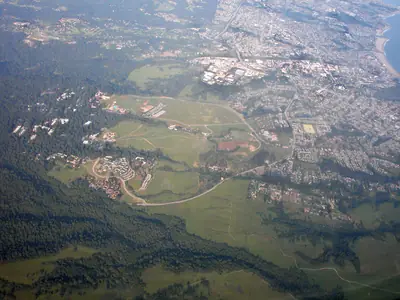
The University of California, Santa Cruz occupies rolling, forested hills overlooking the Pacific Ocean. Its residential college system is one of its defining features: ten small colleges give the campus a structure inspired by the Oxbridge model.
The university is also a major research centre. Its setting on the edge of Santa Cruz combines an academic environment with wooded hills and coastal views.
Quarry Amphitheater
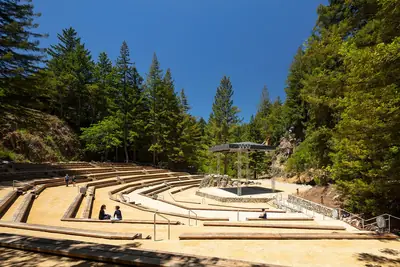
The Quarry Amphitheater is an outdoor concert and events venue on the UC Santa Cruz campus. It occupies a former limestone quarry that supplied limestone during the nineteenth century. When the campus was built in the early 1960s, the quarry was transformed into an amphitheatre.
The venue can accommodate 2,800 people and became home to campus events and major musical performances after a reconstruction in 2017. It is the largest outdoor venue in Santa Cruz County.
Giant Dipper and Santa Cruz Looff Carousel
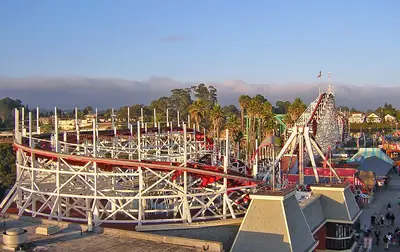
The Giant Dipper is the historic wooden roller coaster at Santa Cruz Beach Boardwalk. It opened on May 17, 1924, during the Golden Age of roller coasters, replacing Thompson’s Scenic Railway. The ride was built in 47 days and rises 70 feet, reaching a maximum speed of 55 miles per hour.
Its wooden structure preserves the character of an earlier era of amusement-park design. Nearby, the Santa Cruz Looff Carousel is another historic attraction and a natural companion stop for anyone exploring the Boardwalk.
Santa Cruz Civic Auditorium and Rio Theatre
The Santa Cruz Civic Auditorium opened in 1940 and has hosted concerts, conventions, exhibitions, conferences and sporting events. Its architecture combines Mission-style elements with modern details and has also been described as Art Deco.
The Rio Theatre offers another place to experience Santa Cruz’s cinema culture. Together, these venues reflect the city’s long-standing interest in live performance, film and public events.
La Corona
La Corona is a small mountain in Santa Cruz County. It rises 137 metres above sea level, with the city of Santa Cruz approximately 4.7 kilometres to the southwest. It adds a natural landmark to the city’s mixture of coastal, historic and cultural sights.
Explore Santa Cruz with a Self-Guided Audio Tour
Neywo’s Santa Cruz audio guide includes two walking tours and one bike route, with 51 narrated places across the city:
- Mission Hill to Pacific Avenue: Downtown Santa Cruz Through Fire and Faith — a 3.5-kilometre walk lasting 95 minutes, with 10 narrated stops.
- Surf, Sea Lions and Roller Coasters: Santa Cruz’s Waterfront — a 4.1-kilometre walk lasting 99 minutes, with 9 narrated stops.
- West Cliff to the Boardwalk by Bike — a 2.2-kilometre bike route lasting 11 minutes, with 3 narrated stops.
Download Neywo and explore Santa Cruz at your own pace. The app tells the story of each place as you reach it, so you can discover the city with no group and no schedule. You can also continue exploring California and the wider United States with Neywo.
Places with an audio guide in Santa Cruz
8 places in Santa Cruz with a Neywo audio guide. Each one starts telling its story as you reach it.
Self-guided tours in Santa Cruz
3 tours in Santa Cruz, free in the Neywo app. Each stop tells its story as you reach it.
- Bike ride
West Cliff to the Boardwalk by Bike
Ride the cycle path along the cliffs from Lighthouse Point, where surfing arrived in California, to the Beach Boardwalk and its 1924 wooden roller coaster. A flat, easy seaside ride with sea views all the way.
Santa Cruz Surfing Museum · Santa Cruz Looff Carousel · Giant Dipper
Open this tour: West Cliff to the Boardwalk by Bike - Walk
Mission Hill to Pacific Avenue: Downtown Santa Cruz Through Fire and Faith
Follow Santa Cruz from its Spanish mission roots to the brick-and-neon downtown that rose after the great fire of 1894. You start at an eight-sided hall of records that outlived the blaze, pass the art museum, the Art Deco cinema and the Civic Auditorium, then climb to the mission adobe, Holy Cross Church and a cemetery that tells the story of the city's Chinese community.
Kaiser Permanente Arena · Octagon Building · Museum of Art and History · Del Mar Theater · Santa Cruz Cinema · Santa Cruz Civic Auditorium …
Open this tour: Mission Hill to Pacific Avenue: Downtown Santa Cruz Through Fire and Faith - Walk
Surf, Sea Lions and Roller Coasters: Santa Cruz's Waterfront
Walk the shoreline where surfing arrived in California in 1885. Begin at the lighthouse that holds the world's first surfing museum, stroll to the long wooden wharf and its sea lions, then ride into the Beach Boardwalk with its 1924 Giant Dipper and 1894 carousel, ending at the last Queen Anne villa of Beach Hill.
Lighthouse Field State Beach · Santa Cruz Surfing Museum · Santa Cruz Wharf · Golden Gate Villa · Casa del Rey Hotel · Santa Cruz Beach Boardwalk …
Open this tour: Surf, Sea Lions and Roller Coasters: Santa Cruz's Waterfront
Walk Santa Cruz with Neywo
Neywo turns Santa Cruz into a self-guided audio tour. Stories arrive as you reach the place they belong to, and the route reshapes when you wander off it.

