Visiting Saratoga Springs, United States: Top Sights on Foot
Things to do in Saratoga Springs: a self-guided itinerary through racing, art and history
The best things to do in Saratoga Springs combine mineral-spring traditions, horse-racing heritage, historic architecture and a lively arts scene. From Congress Park and the Canfield Casino to museums, churches and the Saratoga Race Course, the city rewards travellers who explore it on foot. Neywo offers a free audio guide for Saratoga Springs with 30 narrated places, so you can discover the city while its stories play at the places themselves.
What to see in Saratoga Springs
Congress Park and Canfield Casino
Congress Park is one of the clearest introductions to Saratoga Springs. Its paths bring together mineral springs, fountains, gardens, historic buildings and landscaped green space. The park’s Canfield Casino now houses the Saratoga Springs History Museum, also known as the Saratoga Historical Society Museum.
The Italian Gardens add a formal touch, with marble statues and carefully maintained grounds developed by Richard Canfield in the late nineteenth century. Look for the Spit and Spat fountain, created in 1903 by an Italian sculptor. Its two mermen send water from marble conch shells, making it one of the city’s enduring symbols. The park also has a wooden carousel that is 120 years old.
Gideon Putnam Burying Ground
This small cemetery preserves more than 160 marked graves dating from 1812 to 1871. Among them is Gideon Putnam, regarded as the founder of Saratoga Springs. He arrived in the area in 1789, built Putnam’s Tavern near Congress Spring in 1802 and laid out the city’s grid plan in 1805.
The headstones include marble and granite examples, some decorated with nineteenth-century funerary motifs. The site began primarily as a Putnam family plot before being transferred to the village in 1835.
Bethesda Episcopal Church
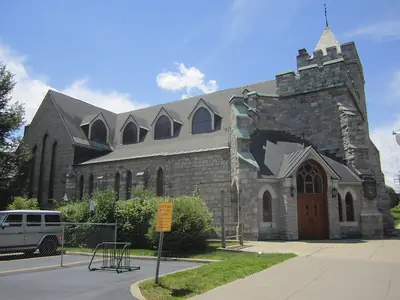
Bethesda Episcopal Church is an important landmark on Washington Street. Its stone walls, distinctive tower and stained glass reflect several stages of the church’s development. Richard Upjohn designed the main church in the English Gothic style; construction began in 1842, and the first services took place in 1844.
Inside, the hammer-beamed ceiling is a particularly striking feature. The parish itself was incorporated in 1830 and had previously held services in a refitted spring house donated by John Clarke at what is now Congress Park.
Universal Preservation Hall
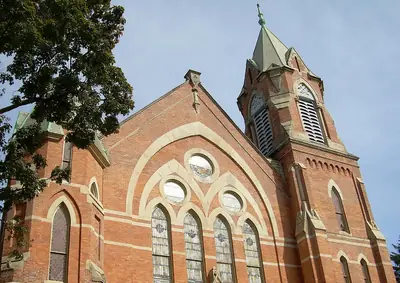
Universal Preservation Hall shows how Saratoga Springs can give historic buildings a new purpose. Originally built in 1871 as the First Methodist Episcopal Church, it is regarded as one of the earliest and finest examples of High Victorian Gothic architecture in the country.
Rose-coloured brick and Ohio sandstone frame the pointed arches around the doors and windows. The restored interior includes soaring 45-foot ceilings, Tiffany-inspired stained glass, a main theatre and the Great Hall, with cathedral ceilings, wraparound balconies and hand-carved details. The building reopened in restored form in 2020 as a year-round arts and community venue, while also providing worship space for the Universal Baptist Church.
Spring Street Gallery and Union Avenue
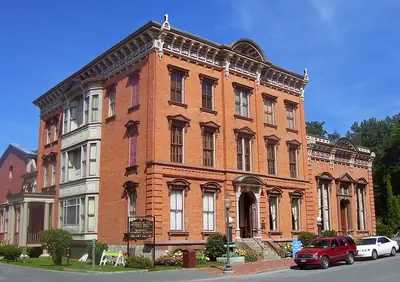
Spring Street Gallery is one of the stops that brings Saratoga Springs’ cultural side into a historic urban setting. Nearby, the Union Avenue Historic District forms a one-and-a-half-mile corridor of Victorian-era architecture running from Congress Park to the Adirondack Northway.
Its Queen Anne mansions feature towers, turrets, bay windows, decorative stonework and half-timbered façades. The district also includes Saratoga Race Course, which dates back to 1864. At its eastern end, Yaddo is a late Victorian castellated mansion set within a 245-acre estate containing formal rose gardens, five lakes and 13 historic buildings.
The Dark Horse Mercantile
Located in the Saratoga Marketplace, The Dark Horse Mercantile occupies a restored historic building that combines shopping, galleries and places to eat. Exposed brick walls, restored woodwork, hardwood floors and an open staircase preserve the building’s character.
More than a dozen boutiques, galleries and eateries are gathered here. The selection includes apparel and accessories, handmade jewellery, home décor, gifts and fine art.
National Museum of Racing and Hall of Fame
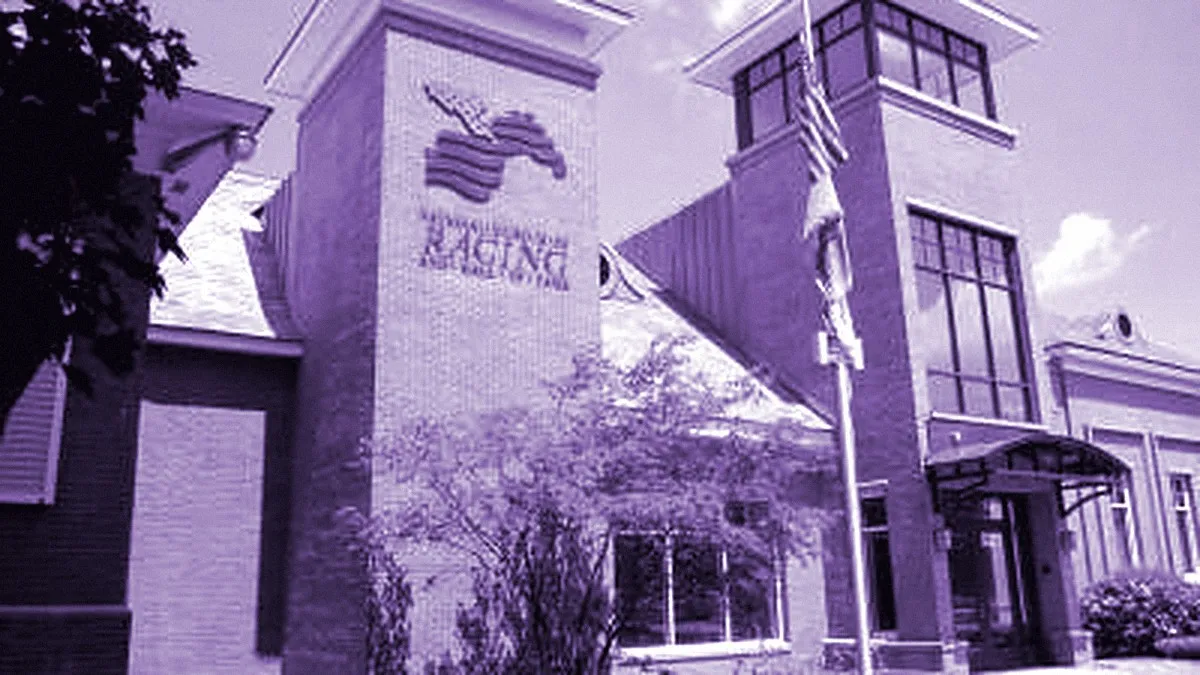
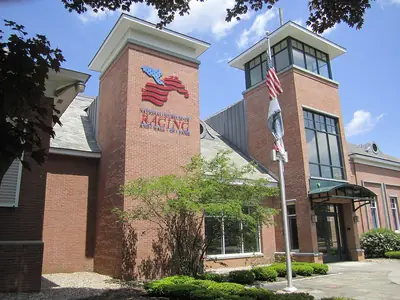
Across Union Avenue from Saratoga Race Course, the National Museum of Racing and Hall of Fame explores the history of American Thoroughbred racing. Founded in 1950 and moved to its current location in 1955, the museum’s central feature is the Hall of Fame.
Its collections trace horse racing from the eighteenth century to the present through trophies, photographs, fine art, objects and memorabilia. The Hall of Fame recognises colts and horses, fillies and mares, jockeys and trainers, while exhibitions and educational programmes explain how the sport developed.
Saratoga Race Course Walk of Fame
Saratoga Race Course has stood on Union Avenue since 1863 and is considered one of the oldest major sporting venues in the United States. It is recognised as the country’s fourth oldest racetrack. John Morrissey organised its first meeting during the Civil War; the event lasted four days and led to the construction of a permanent grandstand.
The course remains central to Saratoga Springs’ summer life. Its six-week racing season lasts 40 days, from mid-July through Labor Day in early September, and includes major events such as the Travers Stakes.
Saratoga Spa State Park and the Saratoga Automobile Museum
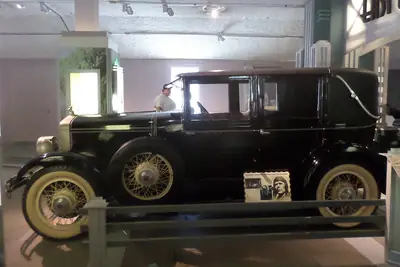
Inside Saratoga Spa State Park, the Saratoga Automobile Museum occupies a former water bottling plant completed in 1935. The restored New York State Bottling Plant is a neoclassical building with two floors and three galleries.
Around 30 vehicles appear in permanent and rotating exhibitions. The museum’s permanent displays include Racing in New York and East of Detroit, while the building also contains a small theatre and an art gallery. Gallery A is especially distinctive, with 30-foot ceilings, original tile walls and three floor-to-ceiling Palladian windows.
Tang Museum
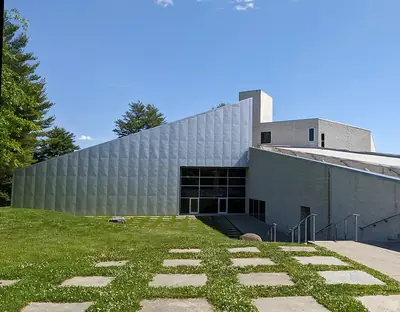
The Frances Young Tang Teaching Museum and Art Gallery, commonly called the Tang Museum, opened at Skidmore College in 2000. It is designed as a teaching museum, with galleries functioning as interactive classrooms where students engage with art, curatorial practice, research and interpretation.
The collection contains more than 5,000 works from diverse cultures and periods. It includes African, South Asian, Chinese and American art, as well as works by Rembrandt van Rijn, Albrecht Dürer, Francisco de Goya, Roy Lichtenstein, Andy Warhol, Garry Winogrand, Nan Goldin and Kara Walker. The building, designed by Antoine Predock, has a dramatic exterior and bright interior shaped by environmentally responsive design.
New York State Military Museum
The New York State Military Museum preserves the military history of New York and the stories of its veterans. Established in 2001 inside a historic armory designed by Isaac Perry in 1889, it contains objects, flags, records and personal evidence spanning from the Revolutionary War to the Gulf War.
Its collection includes more than 1,700 flags, making it the largest state battle flag collection in the country and the most extensive Civil War flag collection in the world. More than 10,000 military artefacts are displayed, including weapons, uniforms, artillery and artwork.
Saratoga Gas, Electric Light and Power Company Complex
The surviving buildings at this seven-acre site preserve the history of Saratoga Springs’ first power station. The complex began in 1873, expanded in 1886 and included street-lighting operations.
The most distinctive building is the gasholder house, a rare brick structure with a conical slate roof. It measures about 70 feet across, while its thick walls extend 23 feet underground for stability. A second surviving structure, the substation, stands about 200 feet south of it.
Explore Saratoga Springs with Neywo
For a Saratoga Springs self-guided walking tour, Neywo offers two walking tours and one bus route, covering the city through 30 narrated places. The walks include:
- Gilded Age Saratoga: Springs, Casino and Spit and Spat — 2.57 km, 71 minutes and 8 stops.
- Healing Waters, Power and Racing — 4.19 km, 82 minutes and 5 stops.
- Downtown Saratoga on CDTA 452 — a 2.6 km, 11-minute bus route with 4 stops.
The app tells the story of each place as you reach it, at your own pace, with no group and no schedule. Narration is available in 11 languages. Download Neywo’s free Saratoga Springs audio guide and explore the city independently, from its springs and historic streets to its museums and racing landmarks. You can also continue discovering New York and the wider United States.
Places with an audio guide in Saratoga Springs
8 places in Saratoga Springs with a Neywo audio guide. Each one starts telling its story as you reach it.
Self-guided tours in Saratoga Springs
3 tours in Saratoga Springs, free in the Neywo app. Each stop tells its story as you reach it.
- Bus ride
Downtown Saratoga on CDTA 452
Ride CDTA 452 along Broadway from the 1910 post office to Congress Park and the Canfield Casino, then out to High Rock Spring and the old power station. It is an ordinary city bus, so you see the Gilded Age spa town the way locals move through it.
United States Post Office · Canfield Casino and Congress Park · High Rock Spring · Saratoga Gas, Electric Light and Power Company Complex
Open this tour: Downtown Saratoga on CDTA 452 - Walk
Gilded Age Saratoga: Springs, Casino and Spit and Spat
A downtown stroll through the Saratoga that wealthy summer visitors knew. Start at the founder's graveyard, pass Victorian churches and a Greek Revival mansion, cross Broadway where the world's largest hotel once stood, and finish in Congress Park beside the Canfield Casino and the Spit and Spat fountain.
Gideon Putnam Burying Ground · Hiram Charles Todd House · Bethesda Episcopal Church · Universal Preservation Hall · United States Post Office · Grand Union Hotel …
Open this tour: Gilded Age Saratoga: Springs, Casino and Spit and Spat - Walk
Healing Waters, Power and Racing
From the Skidmore campus and its teaching museum, walk to High Rock Park, where the Mohawk Medicine Spring once flowed, then pass the old gas and electric works and the historic East Side to the National Museum of Racing opposite the Saratoga track.
Tang Museum · High Rock Spring · Saratoga Gas, Electric Light and Power Company Complex · East Side Historic District · National Museum of Racing and Hall of Fame
Open this tour: Healing Waters, Power and Racing
Walk Saratoga Springs with Neywo
Neywo turns Saratoga Springs into a self-guided audio tour. Stories arrive as you reach the place they belong to, and the route reshapes when you wander off it.

