Suzhou, China: Self-Guided Walking Tour
Things to do in Suzhou
Suzhou, located in Jiangsu, is famed for its tranquil canals, classical gardens, silk heritage, and lively historic streets. Visitors come to experience the harmony of waterways, meticulously designed landscapes, and living traditions that reveal centuries of Wu culture. Neywo offers a free audio guide for Suzhou with 49 narrated places to enrich your self‑guided exploration.
Explore Suzhou’s highlights
Suzhou Silk Museum
The Suzhou Silk Museum traces the story of silk back to around 2000 BC. Opened in 1991 near the Beisi Pagoda, it displays historic looms, ancient fabric patterns, and explains the full process of sericulture from mulberry leaf to finished cloth.
Pan Gate
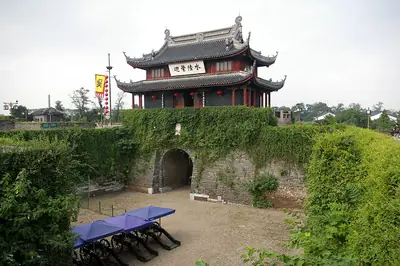
Pan Gate is the only surviving ancient city‑gate ruin in Suzhou and the country’s sole fully preserved land‑and‑water gate. Situated on the southern wall beside the Grand Canal, it dates to 514 BC, with the current stone structure rebuilt in 1351 during the Yuan dynasty.
Suzhou Museum of Education
Opened in 2017, the Suzhou Museum of Education is China’s first museum devoted entirely to the theme of education. It occupies the historic Chai Yuan garden on Cuku Lane in the Gusu District and presents a focused narrative on Chinese schooling through the ages.
Changmen
Changmen, also known locally as Wumen, was one of the eight original gates of the ancient city built by King Helü. In 506 BC the generals Sun Wu and Wu Zixu marched out through this gate to defeat the state of Chu, earning it the name “Po Chu Men.” Later Ming and Qing fortifications added a barbican and a drawbridge.
Suzhou Arts and Crafts Museum
Housed in the Qianlong‑era Shangzhi Tang building at No. 88 Northwest Street, the Suzhou Arts and Crafts Museum opened in 2003. Its collection of nearly one thousand items includes Suzhou embroidery, sandalwood carvings, tapestries, wood and stone carvings, Ming‑style furniture, ethnic instruments, bronzes, lacquerware, and metalwork.
Kaiyuan Temple
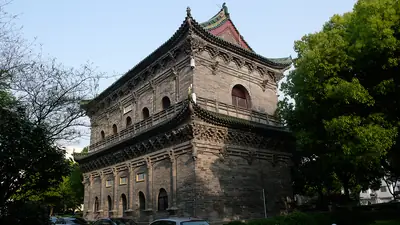
The Beamless Hall of Kaiyuan Temple (Wuliang Dian) is a remarkable brick‑arch structure built without wooden beams. Located in a residential compound of the Gusu District, it was recognized as a Jiangsu provincial cultural relic in 1956 and elevated to a national key cultural relic in 2013.
Xiangmen station
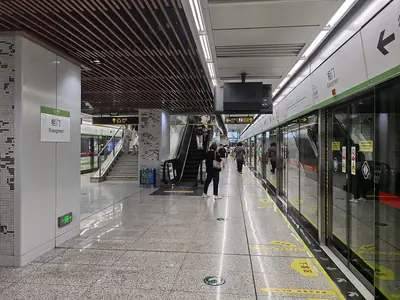
Xiangmen Station is an underground stop on Suzhou Metro Line 1, situated at the intersection of Ganjiang East Road and Cang Street. It opened on 28 April 2012, taking its name from the ancient Xiangmen city wall just to the west of the site.
Ruiguang Pagoda
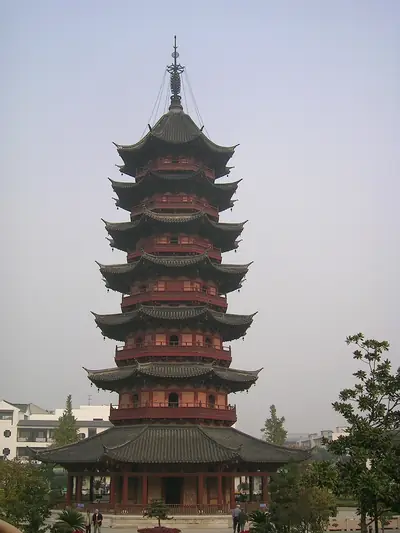
Standing in the Panmen area of the southwest old city, Ruiguang Pagoda has a history exceeding a thousand years. First erected during the Eastern Wu period under Emperor Sun Quan, it was later rebuilt into the seven‑story, eight‑sided brick pagoda that reaches about forty‑three metres today.
Hengtang Yizhan
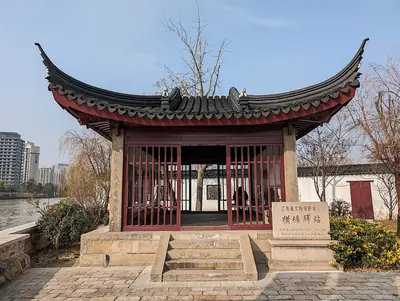
Hengtang Yizhan, also known locally as Caiyun Bridge or Caiyun Qiao, is a heritage relay station that recalls Suzhou’s historic role as a hub for communication and travel.
St. John’s Church, Suzhou
St. John’s Church is a Protestant place of worship just outside the west gate of Soochow University’s campus. Founded by the American Southern Methodist Mission in 1868, the present building dates from 1915, seats over eight hundred, and was designed by Dr. John M. Moor; two sister churches of the same design exist elsewhere.
Hanshan Temple
Hanshan Temple lies about five kilometres west of Suzhou’s old city, facing the Grand Canal in Fengqiao. It gained fame from the Tang poet Zhang Ji’s “Night Mooring at Maple Bridge,” and its midnight bell still draws visitors hoping to hear the legendary chime associated with the monk Hanshan (Cold Mountain).
Precious Belt Bridge
The Precious Belt Bridge is a linked‑arch stone bridge crossing the mouth of Tantai Lake near the Grand Canal. With fifty‑three arches, it stretches 318 metres long and about four metres wide, making it the longest surviving multi‑arch ancient stone bridge in Jiangsu and the structure with the most arches of any connected stone arch bridge in China. Dating to the Tang Dynasty (816‑819 AD), the current Qing‑Dynasty version is flanked by pairs of stone lions.
Lion Grove Garden
Lion Grove Garden is one of Suzhou’s four most celebrated classical gardens and a UNESCO World Heritage Site. Situated on Yuanlin Road in the Gusu District, its centrepiece is a labyrinth of taihu rocks that resemble lions, creating winding paths and hidden grottoes that invite contemplative wandering.
Suzhou Museum
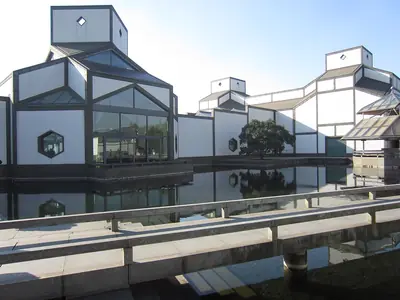
The Suzhou Museum attracts over two million visitors each year with its collection of ancient Chinese art, paintings, calligraphy, and crafts. Founded on New Year’s Day 1960, it combines the former residence of the Taiping Heavenly Kingdom’s Prince of Loyalty with a modern pavilion designed by I. M. Pei, which opened in 2006.
Lake Tai
Lake Tai (Taihu Lake) is one of China’s five great freshwater lakes and the third largest in the country. Straddling the Jiangsu‑Zhejiang border, most of its waters belong to Jiangsu, with Suzhou’s outskirts wrapping around its shore. The lake covers roughly 2,250 square kilometres, averages only about two metres in depth, and is dotted with around ninety islands.
Discover Suzhou with Neywo
Neywo’s free audio guide for Suzhou includes four self‑guided walking tours.
- Panmen: Land‑and‑Water Gate, Pagoda and Beamless Hall – 3.81 km, 109 minutes, 7 stops (Pan Gate, Ruiguang Pagoda, Kaiyuan Temple, Suzhou Confucian Temple, Suzhou Museum of Education, Wanshou Palace, Dinghui temple).
- Gardens, Silk and I. M. Pei – 4.46 km, 114 minutes, 8 stops (Suzhou Silk Museum, Lion Grove Garden, Suzhou Museum, Classical Gardens of Suzhou, Couple’s Retreat Garden, Suzhou Pingtan Museum, Suzhou Museum of Opera and Theatre, 升恒电影廊(仁恒仓街店)).
- West of the Walls: Changmen, Lingering Garden and the Cold Mountain Bell – 4.58 km, 107 minutes, 5 stops (Changmen, Lingering Garden, Xiyuan Jiechuanglü Temple, 下津桥, Hanshan Temple).
- Gates, Rock Mountains and Art – 4.48 km, 91 minutes, 4 stops (Ping Men, Suzhou Art Museum, Mountain Villa with Embracing Beauty, 万年桥).
Each tour plays the story of a site automatically as you reach it, letting you explore at your own pace with no group and no schedule. Narration is available in eleven languages, making the experience accessible to visitors from around the world. Download Neywo, choose a walk, and let the city reveal itself step by step.
Places with an audio guide in Suzhou
8 places in Suzhou with a Neywo audio guide. Each one starts telling its story as you reach it.
Self-guided tours in Suzhou
2 tours in Suzhou, free in the Neywo app. Each stop tells its story as you reach it.
- Walk
Panmen: Land-and-Water Gate, Pagoda and Beamless Hall
Begin at the only surviving land-and-water city gate in China and the brick Ruiguang Pagoda beside it, then slip into a residential compound to find the Beamless Hall of Kaiyuan Temple. Continue to the Confucian Temple, home of the Song-dynasty map of Suzhou carved in stone, the museum of education in a garden, a Qing palace and the twin pagodas of Dinghui Temple.
Pan Gate · Ruiguang Pagoda · Kaiyuan Temple · Suzhou Confucian Temple · Suzhou Museum of Education · Wanshou Palace …
Open this tour: Panmen: Land-and-Water Gate, Pagoda and Beamless Hall - Walk
Gardens, Silk and I. M. Pei
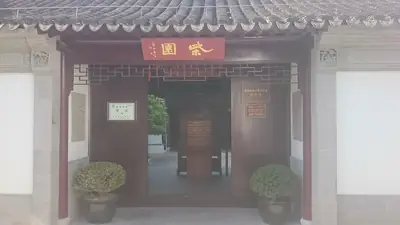
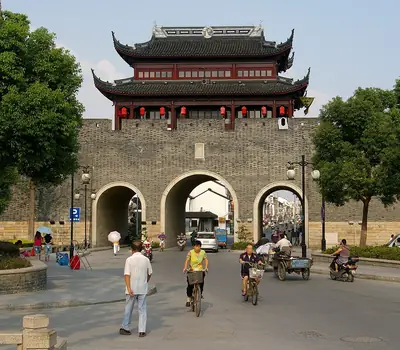
A walk through Suzhou's classical gardens and craft traditions: the Silk Museum by the North Temple Pagoda, the rock maze of Lion Grove Garden, I. M. Pei's museum beside the UNESCO gardens, the Couple's Retreat Garden in the Pingjiang quarter, the museums of Pingtan storytelling and Kunqu Opera in a Ming-dynasty theatre, and the restored Xiangmen city gate.
Suzhou Silk Museum · Lion Grove Garden · Suzhou Museum · Classical Gardens of Suzhou · Couple's Retreat Garden · Suzhou Pingtan Museum …
Open this tour: Gardens, Silk and I. M. Pei
Walk Suzhou with Neywo
Neywo turns Suzhou into a self-guided audio tour. Stories arrive as you reach the place they belong to, and the route reshapes when you wander off it.

