Things to Do in Luoyang, China: Walking Guide
Things to do in Luoyang: what to see in China’s historic capital
Luoyang is one of China’s great historic cities, with Buddhist cave art, ancient temples, royal burial sites and museums devoted to its long cultural past. The city and its surroundings offer plenty to explore, from the Longmen Grottoes and White Horse Temple to collections that trace Chinese civilization, folk traditions and the Grand Canal. Neywo has a free audio guide for Luoyang with 20 narrated places, available in 11 languages.
What to see in Luoyang
Longmen Grottoes
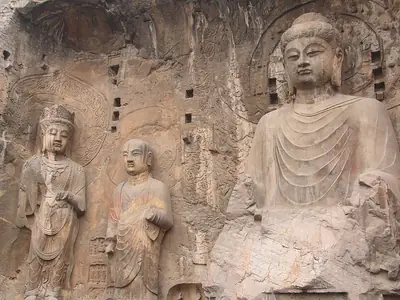
The Longmen Grottoes are one of the world’s extraordinary collections of Buddhist art. Carved into limestone cliffs along the Yi River south of Luoyang, the site contains more than two thousand caves and niches spread across roughly one kilometre of cliff on both banks.
Carving began in 493 AD during the Northern Wei dynasty and continued for more than four hundred years, through the Tang dynasty and into the Northern Song. Around thirty percent of the caves date from the Northern Wei period, while about sixty percent come from the Tang period. Together, they contain around one hundred thousand Buddha statues, from tiny figures to a central Buddha more than 57 feet high.
The name Longmen means “Dragon’s Gate”. It refers to the two hills on either side of the Yi River, which resemble the gate towers that once marked Luoyang’s southern entrance. The area was historically known as Yique, or the Gate of the Yi River.
White Horse Temple
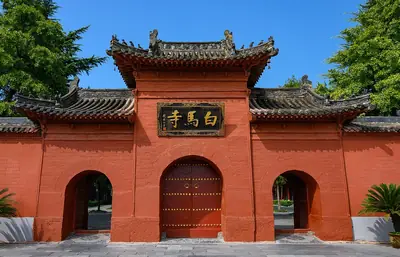
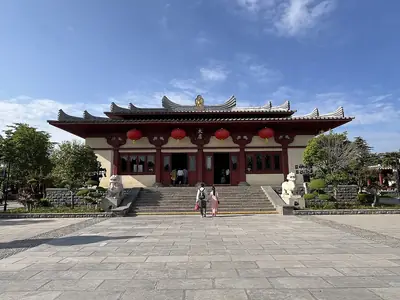
White Horse Temple is traditionally regarded as the first Buddhist temple built in China. According to tradition, it dates from 68 AD, during the reign of Emperor Ming of the Eastern Han dynasty, and became known as an ancestral court and source of Chinese Buddhism.
The temple stands east of Luoyang, south of Mangshan Mountain and near the Luo River. Its name recalls the two white horses said to have carried Indian monks and Buddhist scriptures to China. Stone statues of the horses remain at the site, alongside two mythical lions at the entrance.
Most of the buildings visible today were reconstructed during the Ming and Qing dynasties. The complex is arranged around courtyards and manicured gardens, with numerous halls to explore.
Guanlin
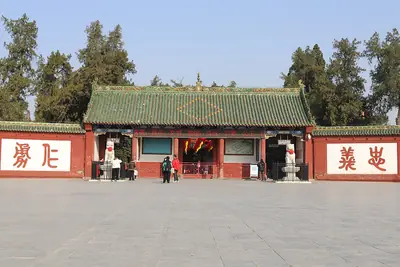
Guanlin is the legendary resting place of Guan Yu, the famed general of the late Eastern Han dynasty who served under Liu Bei. His head is said to be buried here.
The site combines a tomb, a temple and a sacred forest in one architectural complex. It was originally established in the late Eastern Han dynasty and rebuilt in 1592 during the Ming dynasty under Emperor Wanli. The halls, gates and courtyards that survive today reflect the traditional architecture of the Ming and Qing periods.
Walking through Guanlin offers a glimpse into the way Guan Yu has been remembered and honored over the centuries.
Luoyang Museum
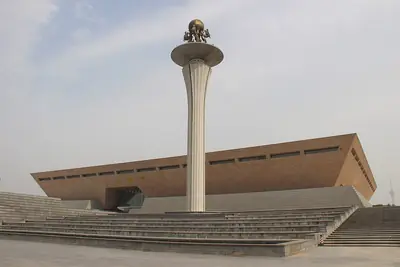
Luoyang Museum is a major place to visit for anyone interested in the city’s role in Chinese history. Its collection spans the Neolithic period, the Xia, Shang and Zhou dynasties, and the later Ming and Qing eras.
The museum was established in 1958, moved to its current location near Wangcheng Park in 1973, and opened a new building in 2011. More than 11,000 artifacts are displayed. The permanent Heluo Civilization Exhibition focuses on the history of the Luoyang region through its archaeological finds.
Highlights include ancient jade, bronze ritual vessels, stone carvings, Han dynasty pottery figurines, Tang dynasty sancai glazed ceramics and Qing dynasty imperial court objects.
Luoyang Museum of Ancient Tombs
The Luoyang Museum of Ancient Tombs is dedicated entirely to ancient tombs and was established as the world’s first museum of its kind. Founded in 1984 and opened to the public in 1987, it is recognized as a national first-class museum in China.
Its buildings cover more than 8,200 square metres and contain relocated and preserved tombs from several dynasties. It is a distinctive way to explore China’s funerary history through the tombs themselves rather than only through objects displayed in cases.
Tianzijialiu Museum
The Tianzijialiu Museum is built around an archaeological discovery from the Zhou dynasty. Its name refers to an ancient royal chariot and horse burial, which forms the centrepiece of the museum.
The site provides a rare look at the ceremonial practices associated with Zhou dynasty rulers and is one of Luoyang’s most distinctive historical museums.
Luoyang Folk Museum
The Luoyang Folk Museum occupies the Luzhe Guild Hall, a complex of Qing dynasty buildings. The architecture is part of the experience: visitors encounter folk culture and everyday traditions in a historic setting rather than in a modern museum building.
The museum opened in 1988 and is recognized as a national second-class museum. It also oversees several other institutions in Luoyang, including the Luoyang Indenture Documents Museum, the Luoyang Plaque Museum and the Luoyang Ancient Porcelain Specimen Museum.
Luoyang Indenture Documents Museum and Luoyang Plaque Museum
These two museums form part of the Luoyang Folk Museum complex in the Chanhe Hui District.
The Luoyang Indenture Documents Museum focuses on paper records, especially the contracts and agreements that shaped everyday life in the city. Next door, the Luoyang Plaque Museum explores inscribed plaques: carved wooden boards bearing calligraphy expressing honor, aspiration or identity. The Plaque Museum opened in 2009 and became a national second-class museum in 2018.
Sui and Tang Dynasty Grand Canal Culture Museum
The Sui and Tang Dynasty Grand Canal Culture Museum explores the history of one of ancient China’s great engineering achievements. It first opened in 2014 in the historic Shanxi and Shaanxi Guild Hall, later moving to a new building in Luoyang’s Old City District in 2022.
The museum became a national second-grade museum in 2024. It also oversees the Luoyang Ten Thousand Li Tea Road Museum and the Luoyang Granary Museum, extending the story beyond the main collection.
Luoyang Ancient Porcelain Specimen Museum
Located in the Qingwang Pavilion beside the riverfront in Luopu Park, the Luoyang Ancient Porcelain Specimen Museum opened in 2021. It is a branch of the Luoyang Folk Museum and holds nearly 500 exhibits focused on ancient pottery and porcelain specimens.
The collection offers a compact introduction to the evolution of ceramic art in China.
Peony Museum
The Peony Museum is devoted to the peony, one of the flowers most closely associated with Luoyang. It is located in the Luoyang Peony Pavilion scenic area in Luolong District and is also known as the Luoyang Peony Museum or China Peony Museum.
Mount Laojun
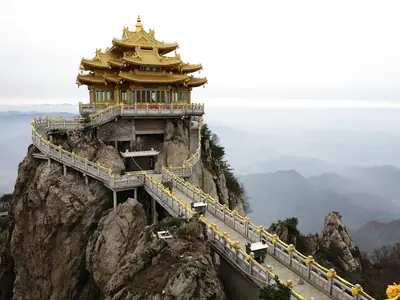
Mount Laojun is the main peak of the Funiu Mountain range, east of Luanchuan County. Its highest summit, Yuhuangding, reaches 2,200 metres above sea level.
The mountain was originally called Jingshi Mountain. During the Tang dynasty, it became associated with Laozi, the legendary founder of Taoism, who was said to have practised secluded meditation there. Laojun Temple stands at the summit and has roots reaching back to the Northern Wei dynasty. Mount Laojun received China’s highest tourist rating, the AAAAA designation, in 2012.
Xin’an Museum
The Xin’an Museum is a local history museum in Xin’an County, part of Luoyang. It opened in June 2007 and is classified as a national third-tier museum. Its location east of Century Square in Xin’an’s new town makes it possible to combine the museum with a walk around the square.
Explore Luoyang with Neywo
A Luoyang self-guided walking tour is an easy way to connect the city’s historic museums and streets without joining a group. Neywo’s two walking tours include:
- Old Luoyang: Guild Halls, Contracts and Canals — 3.63 km, 85 minutes and 6 narrated stops.
- Capital of the Zhou: Royal Chariots and the Luoyang Museum — 3.05 km, 64 minutes and 4 narrated stops.
The app tells the story of each place as you reach it, at your own pace, with no group and no schedule. Download Neywo to explore Luoyang with its free audio guide and discover more of China, or continue travelling through cities such as Beijing, Chengdu and Pingyao.
Places with an audio guide in Luoyang
8 places in Luoyang with a Neywo audio guide. Each one starts telling its story as you reach it.
Self-guided tours in Luoyang
2 tours in Luoyang, free in the Neywo app. Each stop tells its story as you reach it.
- Walk
Old Luoyang: Guild Halls, Contracts and Canals
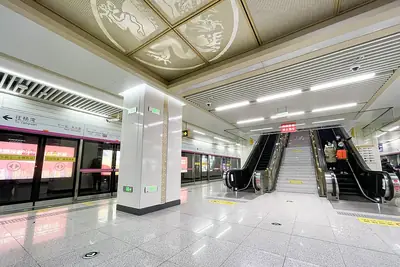
Begin at the old-town metro stops beside the Jiulong Ding landmark, then explore Luoyang's old city through its small museums, set in Qing guild halls and riverside pavilions. Meet everyday folk traditions, centuries-old contracts and plaques, the Grand Canal of the Sui and Tang dynasties and a pavilion of ancient porcelain.
Lijingmen station · Luoyigucheng station · Luoyang Folk Museum · Luoyang Indenture Documents Museum · Sui and Tang Dynasty Grand Canal Culture Museum · Luoyang Ancient Porcelain Specimen Museum
Open this tour: Old Luoyang: Guild Halls, Contracts and Canals - Walk
Capital of the Zhou: Royal Chariots and the Luoyang Museum
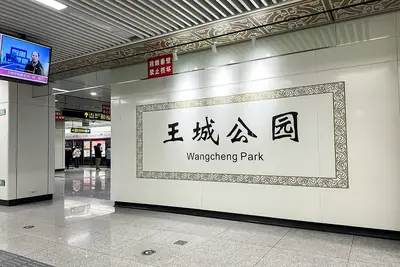
Follow Metro Line 1 through the Zhou royal city. See the Wangcheng Park area, the square named after the Zhou capital and the museum built around an ancient royal chariot and horse burial. End at the Luoyang Museum, with more than 11,000 artifacts from the Neolithic to the Qing.
Wangcheng Park station · Zhouwangcheng Square station · Tianzijialiu Museum · Luoyang Museum
Open this tour: Capital of the Zhou: Royal Chariots and the Luoyang Museum
Walk Luoyang with Neywo
Neywo turns Luoyang into a self-guided audio tour. Stories arrive as you reach the place they belong to, and the route reshapes when you wander off it.

