What to See in Lanzhou, China: Free Audio Guide
Things to Do in Lanzhou
Lanzhou, the capital of Gansu Province, sits in a narrow valley along the Yellow River and blends riverfront scenery, Islamic heritage, and Silk Road history. It offers travelers a more local, unhurried experience of northwestern China. Neywo provides a free audio guide for Lanzhou with 9 narrated places.
The city’s character is shaped by the Yellow River, which winds through neighborhoods dotted with historic bridges, parks, and places of worship. Its position on ancient trade routes left a layered cultural legacy that can be explored on foot, by bike, or simply by wandering the riverside promenades.
Key Sites Along the Yellow River
Jintian Guan
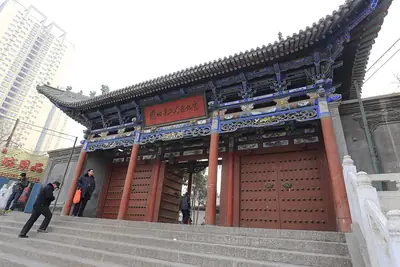
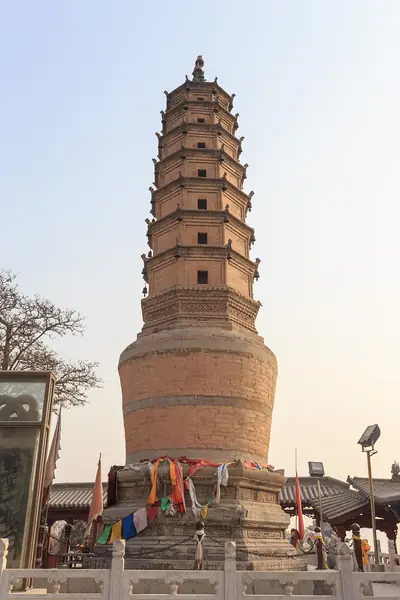
Jintian Guan, also known as 金天观, was founded in 1400 on sloping ground outside the old city’s western gate, beside the Leitan River. The complex originally covered about twenty mu and was oriented toward the south before the Lanzhou Xinjiang Railway shifted its main gate to the north, giving it an unusual north‑facing layout. Today it is protected at the municipal, provincial and national levels, and its surviving halls—including the Yuantan Shrine (Black Tiger Hall), Zhenwu Shrine, Earth God Hall, Ta Yi Hall and Celestial Master Hall—are arranged along a central axis with side wings on the east and west.
Zhongshan Bridge
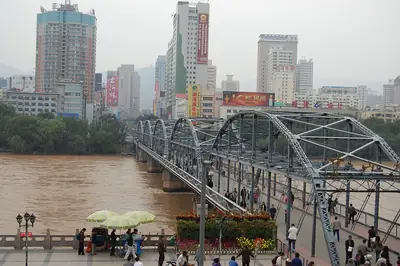
Zhongshan Bridge spans the Yellow River beneath Baita Mountain and is recognized as the first permanent bridge ever built across the river. Construction began in 1908 after a 1906 contract, and the bridge opened to traffic on August 19, 1909, initially called the First Bridge. It was renamed in 1928 to honor Sun Yat‑sen. A 1954 reinforcement added arch‑shaped steel beams above the original truss, and its wartime camouflage—dark grey paint applied during the Second Sino‑Japanese War to avoid bombing—remains visible today.
Gansu Provincial Museum
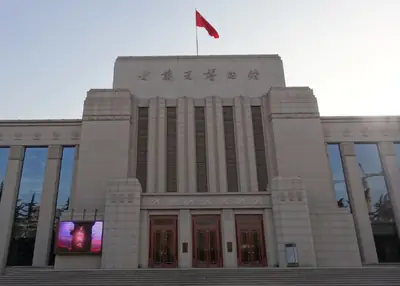
The Gansu Provincial Museum holds more than 350,000 artifacts and specimens that trace the region’s story from ancient times to the modern era. It originated as the Gansu Science Education Hall in 1939, one of western China’s earliest comprehensive local museums, and was converted into a natural history museum after renovations completed in 1956. Now a national first‑class museum, it features eighteen exhibition halls organized around five permanent themes, including Gansu Painted Pottery, with separate sections for history and natural science.
Gansu Bamboo Slips Museum
Located on Matan Cultural Island in Qilihe District, the Gansu Bamboo Slips Museum focuses exclusively on bamboo and wooden slips, preserving ancient written records that offer insight into early administration, literature and daily life in the area.
Xiguan Mosque
Xiguan Mosque, also called the West Cross Mosque, serves the Muslim community in Chengguan District. Its Chinese name, Xiguan Qingzhensi (兰州西关清真大寺), reflects its longstanding role as a center of Islamic worship and cultural exchange in Lanzhou.
Baita Mountain Park
Baita Mountain Park occupies the northern bank of the Yellow River in Chengguan District. Known locally as the Lanzhou Forest of Steles (兰州碑林), the park combines natural scenery with a collection of stone inscriptions, offering panoramic views of the river and the cityscape beyond.
Former Lu Tusi Yamen
The Former Lu Tusi Yamen in Liancheng Village, Yongdeng County, was the administrative seat of the Lu family’s tusi rule from the Ming through the Qing dynasties. The yamen was first erected in 1378 during the Hongwu era and underwent several expansions. By 1931 the tusi system had ended after nineteen generations of the Lu line. The site covers nearly 40,000 square meters, with Ming‑era buildings occupying about 2,877 square meters arranged on a south‑facing axis of brick and timber. Within the complex are additional temples such as Xianjiao Temple, Leitan and the Datong Temple, which was built in 1427 and later renamed Miaoyin Temple during the Guangxu period.
Dongfanghong Square
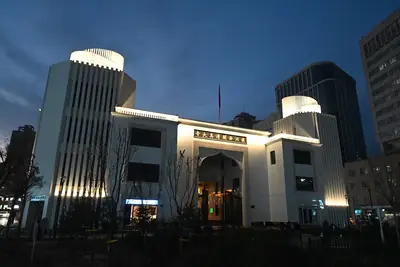
Dongfanghong Square is a large central public space that received its present name in 1968. Fountains and grassy patches were added in 1981, a stadium was erected on the west side in 1984, and a partly underground shopping mall was completed in 1993, enlarging the area. The square stretches roughly 638 meters east‑west and 155 meters north‑south, covering about 92,172 square meters, with the stadium to the west and Guofang Department Store to the east.
Shanzishi Church
At the northeast corner of Lanzhou’s Central Square, beside the Yellow River, stands Shanzishi Church (马衔宝山平面龙王寺). Founded in 1885 by the China Inland Mission, it is recognized as the largest Christian Protestant congregation in Lanzhou and throughout northwest China.
Food and Local Culture
Lanzhou is widely associated with hand‑pulled beef noodles, a dish that reflects the city’s culinary identity. Halal cooking, influenced by longstanding Muslim communities in Gansu, appears in many neighborhood restaurants and markets. Exploring these food venues offers a direct taste of Lanzhou’s everyday life and cultural diversity.
Use Lanzhou as a Gateway
Lanzhou’s transport links make it a practical starting point for trips farther into northwestern China. From the city you can travel to Xining, Zhangye, Jiayuguan, Dunhuang and Urumqi, each offering distinct landscapes, historic sites and Silk Road connections.
Explore Lanzhou with Neywo
Neywo’s free audio guide includes one walking tour titled “Where the Yellow River First Got a Bridge.” The route is 6.46 kilometers long, takes about 115 minutes to complete, and stops at four locations: the Gansu Provincial Museum, Jintian Guan, Zhongshan Bridge and Baita Mountain Park. Across the city the app provides narration for nine places in eleven languages, playing automatically as you reach each site so you can explore at your own pace, without a group or fixed schedule. Download Neywo to enrich your visit with stories that unfold step by step.
Places with an audio guide in Lanzhou
6 places in Lanzhou with a Neywo audio guide. Each one starts telling its story as you reach it.
Walk Lanzhou with Neywo
Neywo turns Lanzhou into a self-guided audio tour. Stories arrive as you reach the place they belong to, and the route reshapes when you wander off it.

