Visiting Rab, Croatia: Top Sights on Foot
Things to do in Rab
Rab is a small Adriatic island in northern Croatia where medieval stone towns, fragrant oak forests, and quiet beaches combine to create a relaxed island atmosphere. Known as the “Island of Love,” it draws visitors with its secluded swimming spots, sandy coves, and clear waters, while its historic centre offers a glimpse of centuries‑old religious and wartime history. Neywo provides a free audio guide for Rab with four narrated places, available in eleven languages, so you can explore each site at your own pace without a group or a schedule.
Explore Rab’s Highlights
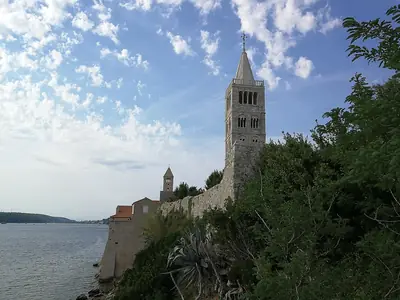
Cathedral of the Assumption of the Blessed Virgin Mary
The cathedral stands on the site of an early Christian church dating back to the fourth or fifth century. Rebuilt in the ninth century, it received a ciborium that still hangs above the main altar. The twelfth‑century façade shows Romanesque influences from Tuscany, while the bell tower was added in the fifteenth century after a lightning strike destroyed the original Romanesque tower. In the sixteenth century the chapel of the Holy Cross gained a new apse and an altar featuring a colorful late‑Renaissance wooden crucifix. Inside, the church preserves liturgical objects, enameled copper plates and a twelfth‑century reliquary.
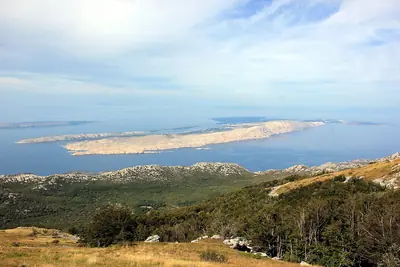
Rab Island Overview
Rab lies in the Kvarner Gulf, south of Krk and north of Pag, within the Primorje-Gorski Kotar County region of Croatia. The island’s landscape is striking: the northeastern side is barren karst, while the southwestern side shelters one of the last Mediterranean oak forests. Its highest point, Kamenjak, reaches 408 metres. Continuous settlement since the arrival of the Romans in the second century BC has left traces across the island, which is today divided between the town of Rab and the community of Lopar in the north, with additional villages such as Banjol and Kampor.
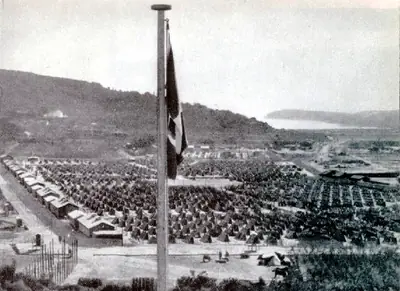
Rab Concentration Camp Memorial
Near the village of Kampor, the Italian fascist authorities established a camp in July 1942, known locally as Koncentracijski logor Kampor. It held thousands of civilians—Slovenes, Croats and Jewish prisoners—under harsh conditions in a low‑lying area prone to flooding. The improvised tent settlement could accommodate up to ten thousand detainees according to some sources, or around fifteen thousand according to others. After Italy’s capitulation in 1943 the camp was dissolved, but surviving internees secretly formed the Rab Brigade, consisting of five battalions. Once the Italian garrison was disarmed, former prisoners helped some soldiers return to Italy, and the brigade later resisted German occupiers. A memorial park created in 1953 now marks the site, offering a place for reflection.
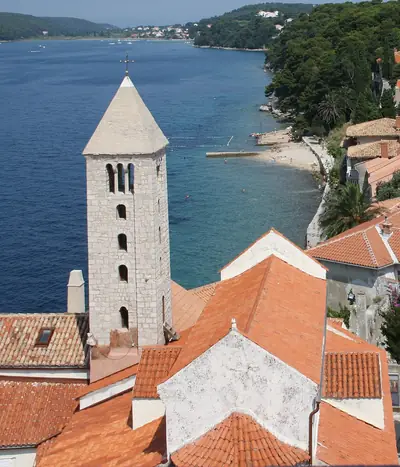
Sv. Andrije Monastery
Sv. Andrije is a modest monastery on the island. Though the source notes provide few details, its presence adds to the religious heritage scattered across Rab’s landscape, complementing the cathedral and other historic buildings.
Experience Rab with Neywo
Neywo’s free audio guide turns a walk around Rab into a self‑guided tour. As you approach each of the four narrated places—the cathedral, the island overview panel, the concentration‑camp memorial, and the monastery—the app plays a short story automatically, in your chosen language. There are no fixed routes, no groups, and no timetables; you simply follow the paths that interest you and listen when you reach a point of interest. The guide works offline after download, so you can explore the oak forests, the sandy coves, and the medieval streets at your own leisure.
If you enjoyed learning about Rab’s heritage and natural beauty, download Neywo and let the audio guide accompany you on your next visit. Whether you are strolling through Rab Town’s stone lanes, pausing at a quiet beach, or walking beneath the ancient oaks, the app will tell you the story of each place exactly when you arrive.
Places with an audio guide in Rab
4 places in Rab with a Neywo audio guide. Each one starts telling its story as you reach it.
Walk Rab with Neywo
Neywo turns Rab into a self-guided audio tour. Stories arrive as you reach the place they belong to, and the route reshapes when you wander off it.

