What to See in Šibenik, Croatia: Free Audio Guide
Things to do in Šibenik
Šibenik is a historic coastal city in Dalmatia, Croatia, where medieval stone walls, a UNESCO‑listed cathedral and a chain of hilltop fortresses overlook the Adriatic Sea. Its compact old town blends Venetian palaces, lively squares and a vibrant maritime setting, offering visitors a tangible sense of centuries‑long history. Neywo offers a free audio guide for Šibenik with 13 narrated places.
Explore Šibenik’s Highlights
Cathedral of St. James
The Cathedral of St. James dominates the skyline as the most important Renaissance monument on the Adriatic coast. Built entirely of limestone between 1431 and 1536, it contains no brick or wood. Inside, the stone dome rises 32 metres, and the exterior portals are richly sculpted. A remarkable frieze of carved human heads surrounds the apses, each portrait believed to depict a real citizen of Dalmatia from the period. The cathedral suffered shelling during the 1991 war but was repaired and remains a UNESCO World Heritage site.
Saint Michael’s Fortress
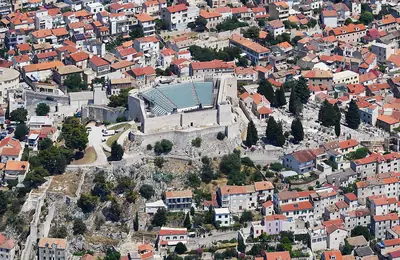
Perched on a rocky hill about 70 metres above sea level, Saint Michael’s Fortress is the oldest preserved defensive structure in Šibenik. Archaeological finds show the hill has been occupied since the Iron Age, and the fortress itself is first mentioned in historical records in 998. Its commanding position guarded the entrance to Šibenik Bay and the canyon of the Krka River, making it the linchpin of the city’s medieval fortification system.
Saint John’s Fortress
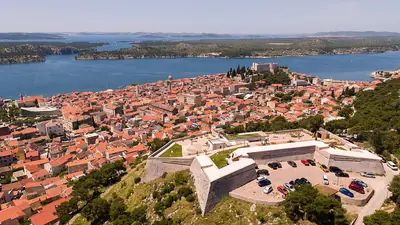
Locally called Tanaja, Saint John’s Fortress sits 115 metres above sea level to the north of the old town. It was erected in a remarkable burst of work during August and September 1646, when citizens rushed to build a star‑shaped fortification to deter an Ottoman advance. The northern side features a high earthen rampart shaped like a pair of pliers (the tenaglia), which gave the fortress its local name. Just a year after completion, it withstood a month‑long siege by Ottoman forces under Tekeli‑pasha in 1647.
Barone Fortress
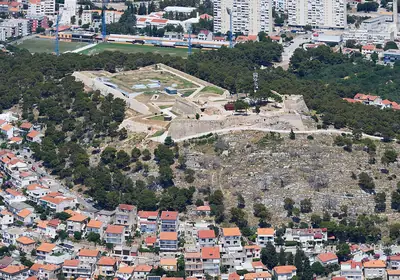
Barone Fortress crowns Vidakuša hill at roughly 80 metres above sea level. Constructed in the same year as Saint John’s Fortress (1646), it covers just under 4 000 square metres across two levels. The upper level held the main defensive works, while the lower level housed barracks and storage. Its hilltop position proved a serious obstacle for Ottoman forces during the Cretan War, forcing them to undertake lengthy approaches to reach the city.
St. Nicholas Fortress
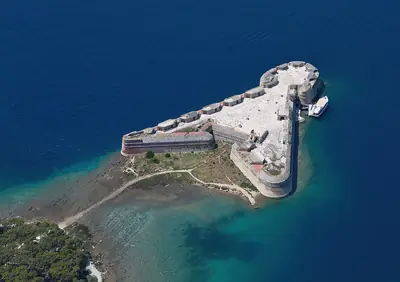
Situated on the tiny islet of Ljuljevac at the entrance to St. Anthony Channel, St. Nicholas Fortress is a maritime defensive work built to protect the channel leading into Šibenik. It formed part of the Venetian Stato da Terra network and was added to the UNESCO World Heritage list in 2017 as part of the Venetian Works of Defence (16th‑17th centuries). After a two‑year reconstruction, the fortress reopened to visitors in July 2019, offering panoramic views of every ship that approaches the port.
Duke’s Palace
Flanking the Cathedral of St. James, the Duke’s Palace (Kneževa palača) dates from the 13th and 14th centuries and served as the residence of the city’s duke or captain. From the original complex, two wings survive, including the Tower of the Duke’s Palace—the largest defensive structure on the coast, built in the 14th century. Between this tower and the Bishop’s Palace a preserved Renaissance city gate from the 16th century can be seen, illustrating the layers of Šibenik’s fortifications.
Cathedral of the Dormition of the Mother of God
This Baroque Orthodox cathedral, built between the 17th and 18th centuries, stands on a site with much older roots. A 12th‑century building once occupied the location, originally a Roman Catholic church dedicated to St. Saviour and later used by the Knights Templar. In 1810, during Napoleonic rule, the church was transferred to the Serbian Orthodox Eparchy of Dalmatia under Bishop Benedikt Kraljević. Its façade features a striking Baroque bell tower designed by the local master Ivan Skoko, and the interior houses a treasury of Italo‑Cretan icons, religious objects and an extensive library.
St. Anne’s Church
A modest yet charming church tucked into the old town, St. Anne’s offers a quiet spot for reflection. Its simple architecture and peaceful setting make it a pleasant pause while wandering Šibenik’s streets.
Croatian National Theatre in Šibenik
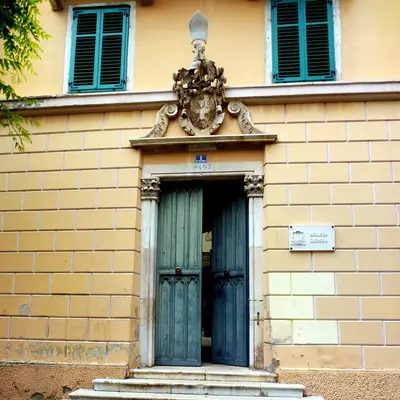
Founded in 1870, the Croatian National Theatre holds the distinction of being the first theatre ever built in the city. For over a century it has hosted performances, concerts and cultural events, remaining a central venue for Šibenik’s artistic life.
Church of St. Dominic
Built in the early twentieth century, the Church of St. Dominic is a protected cultural monument dedicated to Saint Dominic. Its modest façade and interior reflect the modest ecclesiastical architecture of the period.
Church of Saint Chrysogonus
Recognised as the oldest surviving sacred building in Šibenik, the Church of Saint Chrysogonus dates to the twelfth century and was originally constructed in the Romanesque style. Today the nave houses the Saint Chrysogonus Gallery, a space for modern art exhibitions that contrasts the ancient walls with contemporary creativity.
Church of the Holy Spirit
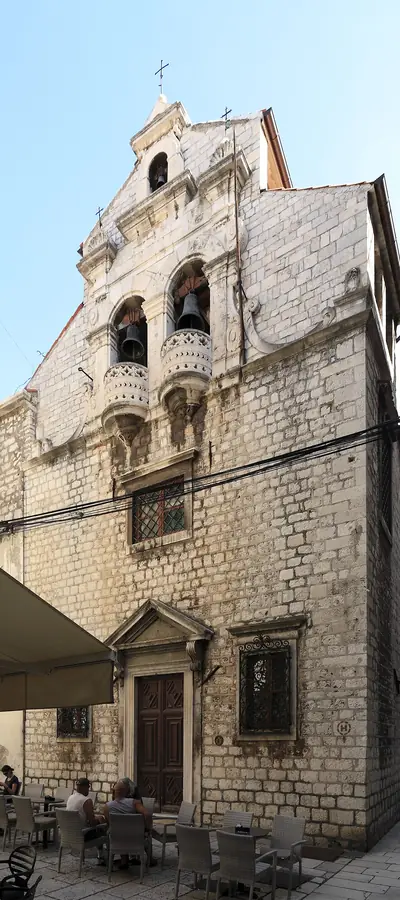
This Roman Catholic church stands on the square named after historian Dinko Zavorović. An earlier church, possibly Romanesque, was destroyed in the great fire of 1458. The surviving Gothic stone balustrade on the west side was restored in the fifteenth century, while the façade received a Baroque makeover in the early seventeenth century. The Baroque design incorporates Renaissance elements reminiscent of Pietro Lombardo’s work in Venice, and a decorative round rose window crowns the semicircular gable. The front is finished with a Baroque bell tower built in the ‘na preslicu’ style.
Beyond these highlights, Šibenik’s lively Poljana square—once an open area beyond the medieval walls—now hosts the Šibenik Theatre (19th century) and a modern library that incorporates part of a former 16th‑century bastion. A statue of the Archangel Michael watches over the old fortification, and a monument to King Petar Krešimir IV stands in a park dedicated to the botanist Roberto de Visiani.
Explore Šibenik with Neywo
Download the free Neywo app and let the city’s stories unfold as you walk. Neywo provides one walking tour in Šibenik: “Stone by Stone: Šibenik’s Cathedral and Old Town,” covering 2.84 kilometres in about 120 minutes with 11 narrated stops. Each story plays automatically when you reach the site, allowing you to explore at your own pace—no group, no schedule. The guide is available in 11 languages, giving you the flexibility to discover Šibenik’s medieval heritage, fortresses and cultural landmarks exactly as you wish.
Places with an audio guide in Šibenik
8 places in Šibenik with a Neywo audio guide. Each one starts telling its story as you reach it.
Self-guided tours in Šibenik
1 tour in Šibenik, free in the Neywo app. Each stop tells its story as you reach it.
- Walk
Stone by Stone: Šibenik's Cathedral and Old Town
Follow the marble lanes of Šibenik, a city founded by Croats and not by Romans or Greeks. See the UNESCO cathedral built without a single brick, the Duke's Palace, medieval churches and Baroque bell towers, then climb through St Michael's, St John's and Barone, the hilltop fortresses that held off an Ottoman army in 1647.
Croatian National Theatre in Šibenik · Church of St. Dominic · Church of the Holy Spirit · Cathedral of the Dormition of the Mother of God · Church of Saint Chrysogonus · Šibenik Cathedral …
Open this tour: Stone by Stone: Šibenik's Cathedral and Old Town
Walk Šibenik with Neywo
Neywo turns Šibenik into a self-guided audio tour. Stories arrive as you reach the place they belong to, and the route reshapes when you wander off it.


More in Croatia
Elsewhere in Croatia
- DubrovnikDubrovnik-Neretva County
- KorčulaDubrovnik-Neretva County
- StonDubrovnik-Neretva County
- BaleIstria County
- MotovunIstria County
- PorečIstria County
- PulaIstria County
- RovinjIstria County
- UmagIstria County
- CresPrimorje-Gorski Kotar County
- Mali LošinjPrimorje-Gorski Kotar County
- RabPrimorje-Gorski Kotar County