Things to Do in Trogir, Croatia: Walking Guide
Things to Do in Trogir
Trogir is a compact island town on the Adriatic coast, celebrated for its exceptionally well‑preserved medieval streets and layered history that stretches from Greek settlers to Venetian rule. Its stone palaces, churches and fortifications create a living museum that feels remarkably untouched by time, making it a rewarding stop for anyone exploring central Dalmatia. Neywo offers a free audio guide for Trogir with 23 narrated places, available in 11 languages, so you can hear the story of each site as you walk.
Exploring Trogir’s Highlights
Trogir Cathedral
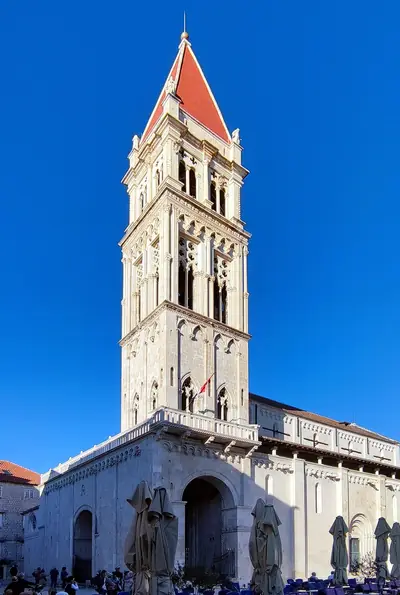
The Cathedral of St. Lawrence dominates the main square and has been part of the UNESCO World Heritage list since 1997. Built over roughly four centuries from 1213 to 1598, its core is a three‑nave Romanesque basilica with a narthex and three semicircular apses. The main entrance features Radovan’s Portal, carved in 1340, and inside the narthex you can see the baptismal font created by Andrija Aleši in 1467. The bell tower rises 47 metres and dates to the 14th century, ranking among the finest in Dalmatia.
Ćipiko Palace
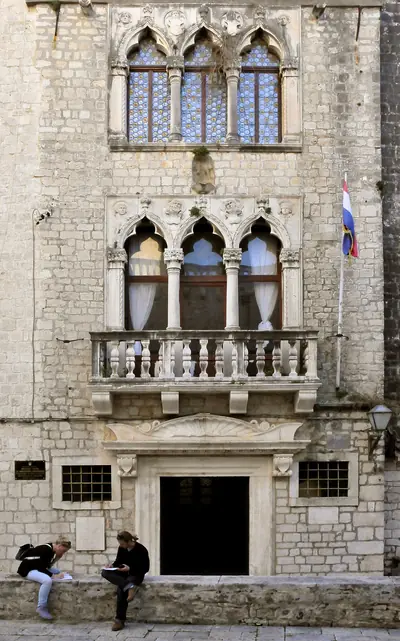
Opposite the cathedral stands the Ćipiko Palace, a noble residence that grew from early‑medieval walls into a 13th‑century complex. Its most striking transformation came in the 15th century under Koriolan Ćipiko, a humanist, warrior and writer of the prominent Ćipiko family. The palace is sometimes called the Great Ćipiko Palace to distinguish it from the smaller building nearby that belonged to the same family.
Kamerlengo Castle
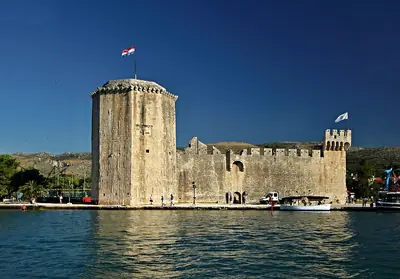
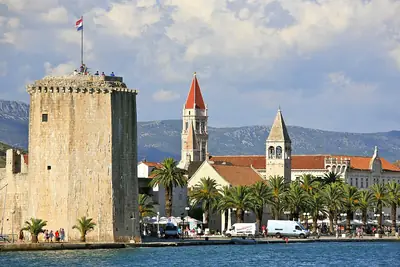
At the southwestern edge of the old town, Kamerlengo Castle was erected to guard the sea channel and harbor approach. Its oldest element is a polygonal tower from the late 14th century, while the current walls were shaped between 1420 and 1437 during Venetian rule. The fortress housed a Venetian garrison and today its courtyard hosts summer concerts and film screenings.
Church of St. Barbara (Town Clock Tower)
Adjacent to the main square, the town clock tower is attached to the Church of St. Sebastian. Both were erected in 1476 on the site of an earlier medieval church, St. Mary of the Market, and some decorative fragments from that older building were incorporated into the new walls. Instead of a traditional bell tower, the structure carries the town clock, giving the tower its name.
Small Lodge of Trogir
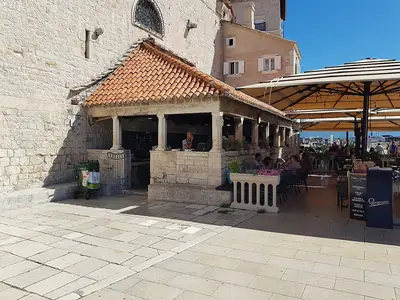
Known locally as Mala loža, this modest building sits at number 11 Obala bana Berislavića along the waterfront promenade. Though small, it is noted as a distinctive element of Trogir’s historic streetscape.
Historic City of Trogir
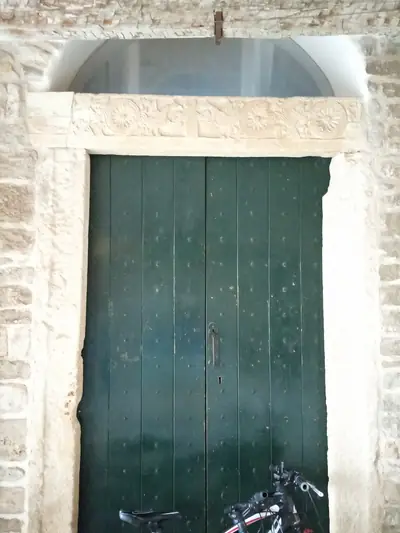
The entire old town is a UNESCO World Heritage Site praised as one of the best‑preserved medieval towns on the Adriatic. Walking its streets reveals a living gallery of stonework: ornate capitals, portals, courtyard arcades, bifora and trifora windows, balconies and playful decorative details. The refinement of the stone carving gives the town a cohesive, artistically rich character.
Church of St. John the Baptist
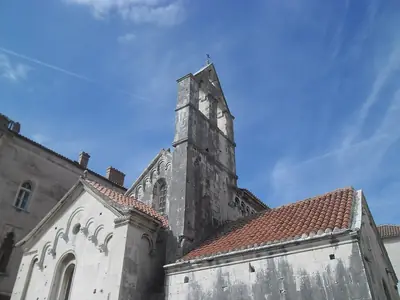
Located on Trg Ivana Pavla II, this Roman Catholic church belongs to a Benedictine monastery for men that was founded in the 11th century. Its long monastic history adds a spiritual layer to the town’s historic core.
Church of St. Peter
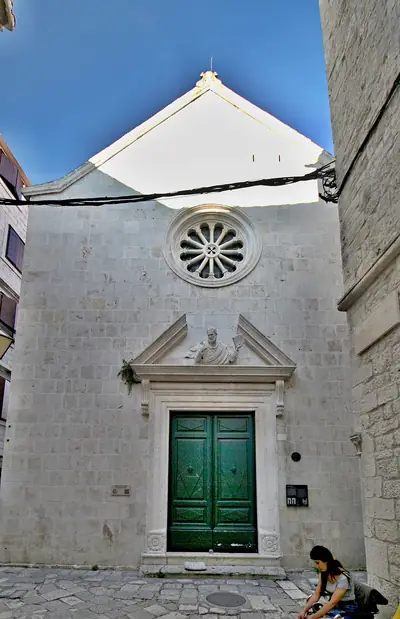
Tucked away on Ivana Duknovića Street, the Church of St. Peter recalls the city’s monastic past. It once belonged to a women’s monastery dedicated to St. Peter and likely stands on the site of an even earlier late‑antique church. The building acquired its Baroque appearance in the first half of the 18th century and resembles the parish church in Kaštel Štafilić. After the convent was abolished in 1760 and a fire in 1796 damaged the complex, the former monastic buildings were converted into residential use; only fragments such as a section of the southern wing wall, a bell tower, a cloister remnant and a wellhead remain.
Tower of St. Mark
At the northwestern edge of the historic centre stands the Tower of St. Mark (Kula svetog Marka), a round defensive tower built by the Venetians during the 15th century to counter Turkish raids. Construction began around 1470 and was completed by the century’s end. Its circular shape was designed to better withstand cannon fire. The tower faces inland, reflecting the expectation that danger would come from the land side, and it originally linked to the city walls and Kamerlengo Fortress as part of a larger defensive system.
Marmont’s Gloriette
Near the promenade, Marmont’s Gloriette is a circular colonnade erected in the classical style in 1809 (research suggests it may date to 1807 or have been intended for Napoleon). It stands as a rare reminder of the French administration of Dalmatia during the Napoleonic era and exemplifies classicist architecture in the region.
Garagnin‑Fanfogna Palace (Trogir City Museum)
This medieval noble residence now houses the Trogir City Museum. The palace consists of several interconnected buildings with vaulted passages that form a labyrinthine complex across three streets. It belonged to the Venetian Garagnin family from the 18th century onward, later united with the Fanfogna family from Zadar. The museum opened to the public on 9 May 1966 and holds a library of around 5 500 titles from the Garagnin collection.
Dominican Monastery in Arbanija
On the island of Čiovo, the Dominican Monastery of the Holy Cross in Arbanija dates to the 15th century. After the friars passed away in 1852 the monastery fell into disuse for over a century, but from the late 20th century onward pilgrims revived the site through prayer and veneration of the Holy Cross statue, restoring it as a living tradition for the local parish.
Čiovo
Čiovo is a green island that closes off Kaštela Bay and is linked to Trogir by a drawbridge. It covers about 28.8 square kilometres, with its highest point at Rudine reaching roughly 218 metres. The island’s limestone bedrock supports low Mediterranean scrub, pine forest, numerous hidden coves and beaches. The Okrug Riviera, only about 4 kilometres from Trogir’s centre, is the most popular tourist area in the region and offers a base for combining island life with visits to the historic town.
Park Garagnin‑Fanfogna
Designed around 1800, Park Garagnin‑Fanfogna is a classicist green space in the heart of Trogir. Its paths are threaded with Roman artefacts from the Ivan Luka Garagnin collection, including stelae, a sarcophagus, a torso of a toga‑wearing sculpture, a milestone and an altar dedicated to Statilius Maximus from the 2nd century CE. Originally the private garden of the Garagnin family, the park is now largely public and has retained a rich botanical heritage, with records showing around 130 plant species in the early 19th century and about thirty still present in a 1989 survey.
Church and Friary of St. Nicholas
This Benedictine complex on Gradska ulica comprises a church and its friary, both protected as cultural heritage sites. The modest façade reflects the order’s spiritual simplicity, and the site remains a quiet place for reflection amid the bustling old town.
Explore Trogir with Neywo
Neywo’s free audio guide turns a walk through Trogir into a self‑guided discovery. The app offers two walking tours and one bus route:
- “Cathedral Square and the Heart of Trogir” – 0.9 km, 81 minutes, 9 stops (including Park Garagnin‑Fanfogna, the City Museum, the Cathedral, Ćipiko Palace, the clock tower, the Church of St. John the Baptist, the Church and Friary of St. Nicholas, the Small Lodge and the Church of St. Jacob).
- “Venetian Walls, Friars and Napoleon’s Gloriette” – 0.7 km, 66 minutes, 8 stops (Church of St. Peter, Historic City of Trogir, Church of Our Lady of Mount Carmel, Church of All Saints, Church of St. Dominic, Kamerlengo Castle, Tower of St. Mark, Marmont’s Gloriette).
- “Line 42: Across the Bridge to Čiovo” – 4.1 km, 18 minutes, 4 stops (Trogir Cathedral, Church of St. Jacob, Church of the Lady by the Sea on Čiovo, Dominican Monastery in Arbanija).
Each story plays automatically when you reach the corresponding spot, allowing you to move at your own pace with no group and no schedule. Narration is available in 11 languages, so you can choose the language that suits you best. Download Neywo, select Trogir, and let the town’s stories unfold as you wander its stone‑paved streets.
For more information about the region, see the Split‑Dalmatia County page, or explore the country overview at Croatia. If you wish to visit a nearby city, consider a trip to Split.
Places with an audio guide in Trogir
8 places in Trogir with a Neywo audio guide. Each one starts telling its story as you reach it.
Self-guided tours in Trogir
3 tours in Trogir, free in the Neywo app. Each stop tells its story as you reach it.
- Bus ride
Line 42: Across the Bridge to Čiovo
Promet Split's local line 42 runs from Trogir over the bridge to the island of Čiovo and out to Arbanija. Ride it from the cathedral past St Jacob to an 11th-century pre-Romanesque church by the sea and the Dominican Monastery of the Holy Cross, 3 km out.
Trogir Cathedral · Church of St. Jacob in Trogir · Church of the Lady by the Sea on Chiovo · Dominican monastery in Arbanija
Open this tour: Line 42: Across the Bridge to Čiovo - Walk
Cathedral Square and the Heart of Trogir
Trogir's UNESCO old town sits on a tiny island, and its centre is one square. Start in the classicist Garagnin garden, pass through the Landward Gate to the palace-museum, then take in the Romanesque cathedral, the Ćipiko Palace opposite, the clock tower and the waterfront Small Lodge.
Park Garagnin-Fanfogna · Trogir City Museum · Trogir Cathedral · Ćipiko Palace · Clock tower in Trogir, Croatia · Crkva svetog Ivana Krstitelja …
Open this tour: Cathedral Square and the Heart of Trogir - Walk
Venetian Walls, Friars and Napoleon's Gloriette
The quieter west side of the island, where Trogir kept its defences. Wander past churches of nuns and Dominicans, then follow the old fortifications to the round Tower of St Mark, the sea-guarding Kamerlengo Castle and a rare monument left by the French in 1809.
Church of St. Peter in Trogir · Historic City of Trogir · Church of Our Lady of Mount Carmel, Trogir · Church of All Saints, Trogir · Church of St. Dominic · Kamerlengo Castle …
Open this tour: Venetian Walls, Friars and Napoleon's Gloriette
Walk Trogir with Neywo
Neywo turns Trogir into a self-guided audio tour. Stories arrive as you reach the place they belong to, and the route reshapes when you wander off it.

