Visiting Dijon, France: Top Sights on Foot
Things to do in Dijon
Dijon is a city in France celebrated for its medieval architecture, renowned gastronomy, and vibrant cultural life. Its compact centre invites visitors to explore landmarks such as the Palace of the Dukes, the Gothic cathedral, and lively markets. Neywo offers a free audio guide for Dijon with 121 narrated places.
Explore Dijon’s Heritage
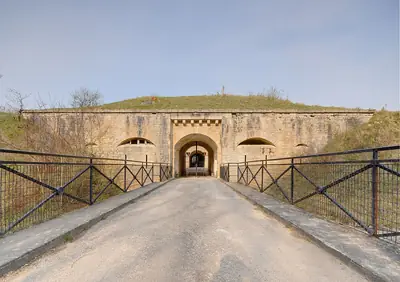
Fort de la Motte‑Giron
A little further on you’ll find Fort de la Motte‑Giron, also known briefly as Fort Roussin. This fortified work stands near the western edge of the commune and forms part of the ring of detached forts that surround the urban area.
Dijon Cathedral
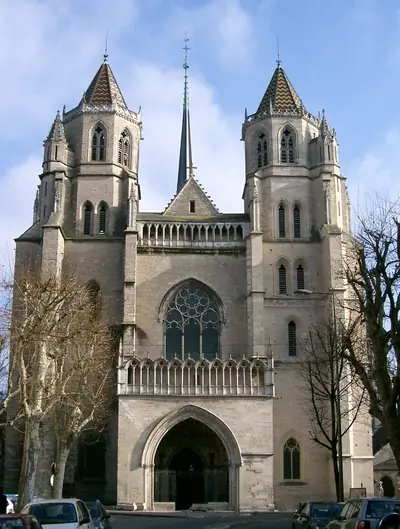
As you arrive at Dijon Cathedral, also called Cathédrale Saint‑Bénigne, you sense layers of history. The Gothic building was erected between 1280 and 1325 and dedicated on 9 April 1393 to Saint Benignus, a second‑century martyr. Tall slender columns support ribbed vaults, large stained‑glass windows flood the interior with light, and the soaring arches create a feeling of height. The cathedral replaced the earlier Church of Saint‑Étienne after the diocese was created in 1731, became the city’s cathedral during the French Revolution, and the diocese was raised to an archbishopric in 2002. One highlight is the ancient crypt, which belonged to an earlier Romanesque church and formed the lower level of a great rotunda.
Church of Notre‑Dame of Dijon
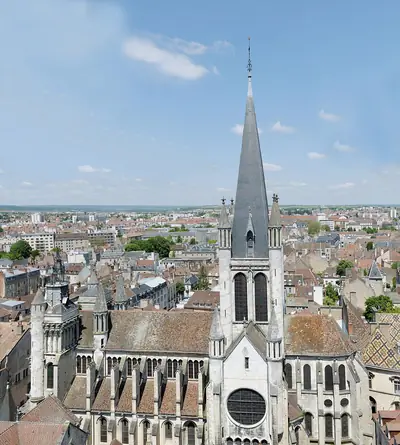
Rising on Place Notre‑Dame near the Palace of the Dukes, this 13th‑century Gothic masterpiece was begun around 1230 and finished between the 1220s and 1250s. Its interior follows a Latin‑cross plan, with six tall arcades on cylindrical columns, a triforium, and an upper gallery with high windows. At the transept five lancet windows lead the eye to a rose window, while a lantern tower crowns the crossing. Two symbols of Dijon are carved into the stone: the owl and the jacquemart, a bell‑striking automaton that arrived from Kortrijk in Belgium in 1382 and was installed on the south tower the following year.
Palace of the Dukes and Estates of Burgundy
Take a look at the Palace of the Dukes and Estates of Burgundy, one of Dijon’s most important architectural ensembles. Its buildings trace almost a thousand years of political life in the city. Today the palace houses the City Hall and the Museum of Fine Arts. The oldest sections date from the 14th and 15th centuries, when the Gothic ducal palace served as the residence and seat of power for the Dukes of Burgundy. Most of what is visible today was added in the 17th and especially the 18th centuries in a classical style, when the complex became a royal residence and hosted the Estates of Burgundy. Surviving medieval elements include the residential building, the ducal kitchens in the Cour de Bar, the Tour de Bar, and the tall Tour Philippe le Bon. A 19th‑century museum façade was later placed on the Place de la Sainte‑Chapelle, on the site of Dijon’s Sainte‑Chapelle, demolished in 1802. The palace’s story is closely linked to the Duchy of Burgundy, a feudal principality whose capital was Dijon and which, from 1363, was ruled by the Valois dukes, beginning with Philippe the Bold.
Église Saint‑Philibert de Dijon
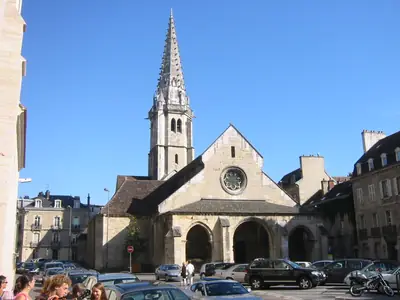
A few steps from Saint‑Bénigne Cathedral you’ll find the former Saint‑Philibert Church on Rue Michelet. Built in the 12th century, it is the only Romanesque religious building in Dijon. Although no longer used for worship, it remains an important part of the city’s architectural heritage. The church’s porch, northern chapels and stone bell tower belong to later periods, with the bell tower dating from the beginning of the 16th century and displaying Gothic features. The building was abandoned during the French Revolution, assigned to the military garrison in 1795, and listed as a French historic monument in 1862 and again on 20 August 1913. In 1920 the army transferred it to the city of Dijon; the following year it became part of the Archaeological Museum, and restoration work began. In 2015 the church was included in the World Heritage listing of the Climats of the Burgundy vineyards.
Musée Perrin de Puycousin
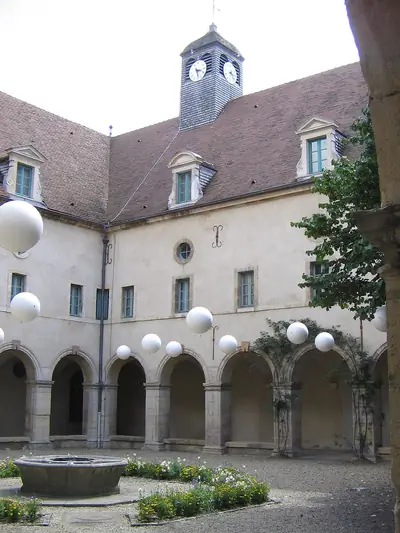
A little further on you’ll encounter the Musée Perrin de Puycousin, also known as the Museum of Burgundian Life. Housed in the cloister of the former Bernardine convent, it invites you to discover everyday life in Burgundy from the 18th to the 20th century. On the main floor life‑size figures in period clothing recreate scenes from Burgundian life in the late 19th century—weddings, work and family life are shown as vivid domestic tableaux. Upstairs you enter a world of reconstructed shops and businesses that shaped life in Dijon from the late 18th century until the Second World War, including a beauty parlour, a watchmaker, a pharmacy and the Pernot biscuit factory (closed in 1963, but whose posters remain iconic). Some displays are accompanied by video footage explaining how these enterprises operated. The top floor brings traditional crafts and forms of work into view through photographs. Since opening in 1982 the museum has also hosted temporary exhibitions devoted to particular aspects of Burgundian life.
Chapel of the Carmelites
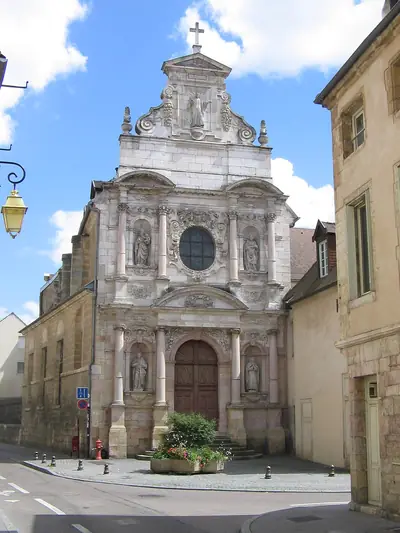
A little further on you’ll find the Chapel of the Carmelites, or Chapelle des Carmélites. It is one of the surviving traces of a 17th‑century Carmelite convent in the historic centre of Dijon. Take a moment to look at the façade; its Baroque style reflects the period when the convent was built, and the façade has been protected as a historic monument since 1910. The chapel is all that remains of the former Carmelite convent, a modest reminder of a religious complex that once stood here.
Synagogue of Dijon
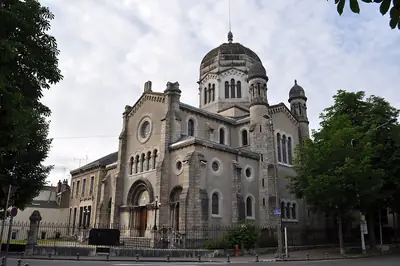
As you arrive at the Synagogue of Dijon, also known as the Synagogue Fondation Ed Kahn, you notice a 19th‑century house of worship in the Côte‑d’Or department. The synagogue is protected in its entirety on France’s Supplementary Inventory of Historic Monuments, having been added by a prefectural order dated 15 March 1989.
Castel
Take a look at Castel, an educational building in Dijon. It houses a lycée offering general, technological and vocational education. The school is located in the Côte‑d’Or department, within the Bourgogne‑Franche‑Comté region.
Château de Montmusard
As you discover the Château de Montmusard you encounter one of France’s masterpieces of the Greek style. Conceived as a pleasure house in Dijon, it was designed to make architecture itself the main attraction. Construction began in 1765 for Jean‑Philippe Fyot de La Marche, following plans by Charles De Wailly. The château may have remained unfinished or been partly destroyed at the end of the 18th century; today its surviving wing and a wealth of historical images keep the memory of this remarkable residence alive.
Chapelle Saint‑Jean le Théologien de Dijon
Take a moment to discover the Chapelle Saint‑Jean le Théologien, also known as the Maladière Chapel. This place of worship in Dijon is dedicated to Orthodox Christianity and belongs to the Coptic Orthodox community. Since December 1977 the chapel has hosted the liturgy of the Patriarchate of Alexandria. It is also protected as a historic monument, following its registration by decree on 16 January 1947.
Grande chapelle de l’hôpital général de Dijon
Take a look at the Grande Chapelle of Dijon General Hospital, also known as the Climats Chapel. Today this historic space welcomes exhibitions within the International City of Gastronomy and Wine. The chapel stands inside the former General Hospital of Dijon. Its story began in the 16th century, when the building served as the hospital’s ward for patients. It was transformed into a chapel in 1843 and remained one until 2015, when it was deconsecrated. Over the centuries the building was altered several times; both its façade and interior are now protected as historic monuments, making the chapel an important part of the former hospital complex.
Église Sainte‑Anne de Dijon
As you come to Sainte‑Anne Church you’ll notice an unusual silhouette in Dijon. This 18th‑century church is circular and crowned by a copper dome with a green patina. Its Baroque design and connection with the Bernardines monastery make it a distinctive landmark on Rue Sainte‑Anne. The church is dedicated to Saint Anne and stands in Dijon’s protected historic centre; it has been classified as a historic monument since 1945. Today it houses Dijon’s Museum of Sacred Art, which opened in 1980. Rather than following a simple rectangular plan, the church is arranged around a circular space beneath its domed roof. The green copper covering gives the Baroque structure its most recognizable feature. Beside the church you’ll find the former Bernardines Monastery, a 17th‑century complex with its own character and history. Together the monastery and church form a closely connected religious ensemble in the centre of Dijon. The monastery combines Classical and Renaissance styles and has been listed as a historic monument since 26 May 1926. Since 1993 it has housed the Perrin de Puycousin Museum of Bu…
Dijon Obelisk
Take a look at the Dijon Obelisk on Place du Premier‑Mai. This distinctive landmark is one of the protected historic monuments of Dijon. The obelisk has been protected as a historic monument since an official order dated 5 March 1964.
Abbaye Saint‑Étienne de Dijon
Take a look at this historic site in the heart of Dijon. The former Saint‑Étienne Church is no longer used for worship, but it remains an important part of the city’s heritage and now brings together cultural spaces, including the Musée Rude. The church dates from the 15th century and was restored in the 17th century; its façade, with a distinctive Jesuit style, was added in the 18th century. The building has been protected as a historic monument since 1862. A little further into the story you encounter the former Saint‑Étienne Abbey. Its surviving remains are part of Dijon’s protected historic centre, which has been listed as UNESCO World Heritage since 2015. The abbey began as a collegiate church whose clergy depended on the Bishop of Langres. At the beginning of the 12th century it became an abbey of regular canons. In 1611 Pope Paul V made it secular again. When the Diocese of Dijon was created in 1731, Saint‑Étienne became the seat of its cathedral chapter. That role lasted until the French Revolution, when the chapter was transferred to Saint‑Bénigne Cathedral in 1792. Inside part of this former religious complex you’ll find additional cultural spaces.
Explore Dijon with Neywo
Neywo provides four walking tours and one bus route in Dijon.
- “The Dukes’ Dijon: Palace, Cathedral and the Owl” covers 1.86 km in about 100 minutes with 10 stops, including Darcy’s garden, Guillaume’s Gate, Dijon Cathedral, the archaeological museum, the Palace of the Dukes, the Musée des Beaux‑Arts, the Musée Magnin, the Hôtel Chambellan and the Church of Notre‑Dame.
- “Abbey Quarter, Mansions and the Halles” runs 1.91 km in roughly 100 minutes with 11 stops, visiting the Saint‑Bénigne abbot’s palace, Église Saint‑Philibert, Église Saint‑Jean, several historic mansions, the Musée Perrin de Puycousin, Église Sainte‑Anne, the Chapel of the Carmelites and the Halles de Dijon.
- “Churches, Gates and Place Wilson” is 1.66 km long, takes about 86 minutes and includes 10 stops such as Saint‑Michel church, the former Église Saint‑Étienne, Hôtel de Vienne, the Jesuit college church, the Synagogue of Dijon, Porte Saint‑Pierre, the Wilson kiosk, Église Saint‑Pierre, Porte des allées du parc and Le Consortium.
- “The Well of Moses, Gardens and Gastronomy” stretches 2.32 km, lasts about 79 minutes and has 8 stops, featuring the Well of Moses, Champmol, the Arquebuse botanical garden, the natural history museum, FRAC Bourgogne, the International City of Gastronomy and Wine, the Grande chapelle de l’hôpital général and the Dijon obelisk.
- The bus line “Divia CITY: Dijon’s Free Centre Shuttle” runs 4.9 km in about 21 minutes with 9 stops, linking the Church of Notre‑Dame, the former Église Saint‑Étienne, Hôtel de Vienne, Hôtel de Lux, Guillaume’s Gate, Dijon Cathedral, the Grande chapelle, the Musée Perrin de Puycousin and the Chapel of the Carmelites.
Each story plays automatically as you reach the place, allowing you to explore at your own pace with no group and no schedule. The narration is available in 11 languages.
Download Neywo and Enjoy Your Visit
Ready to discover Dijon at your own rhythm? Download the free Neywo app and let its 121 narrated places guide you through the city’s streets, monuments and hidden gems. Whether you follow one of the themed walks or hop on the bus shuttle, the app tells the story of each site exactly when you arrive, giving you a flexible, personal experience. Start your adventure today and see why Dijon remains one of Burgundy’s most captivating destinations.
Places with an audio guide in Dijon
8 places in Dijon with a Neywo audio guide. Each one starts telling its story as you reach it.
Self-guided tours in Dijon
5 tours in Dijon, free in the Neywo app. Each stop tells its story as you reach it.
- Bus ride
Divia CITY: Dijon's Free Centre Shuttle
Divia's CITY electric minibus loops through the historic centre for free, Monday to Saturday. Hop on near Notre-Dame and ride past Saint-Étienne, the cathedral and Place Darcy to the Cité de la Gastronomie.
Church of Notre-Dame of Dijon · Eglise Saint-Etienne (ancienne) · Hôtel de Vienne · Hôtel de Lux · Guillaume's Gate · Dijon Cathedral …
Open this tour: Divia CITY: Dijon's Free Centre Shuttle - Walk
The Dukes' Dijon: Palace, Cathedral and the Owl
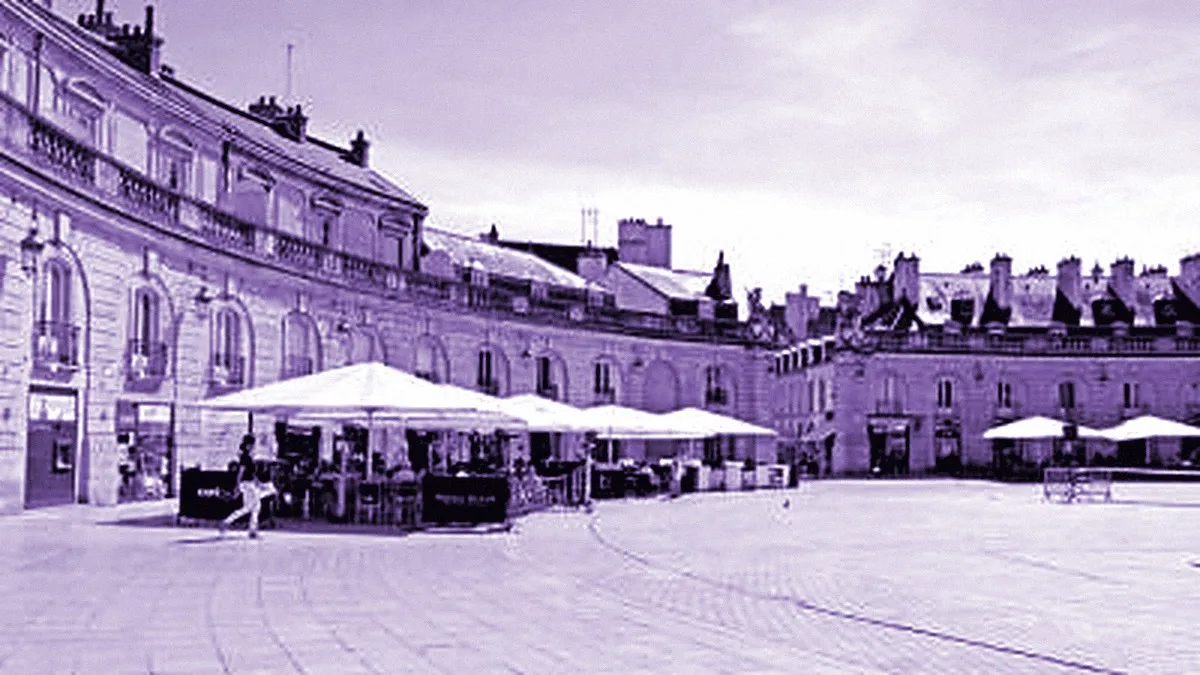
Follow the road the Dukes of Burgundy knew, from the triumphal arch of Porte Guillaume and Darcy's white bear to the cathedral crypt, the half-circle square before the ducal palace and its 52-metre tower. Finish at Notre-Dame, where an automaton family still strikes the hours.
Darcy's garden · Guillaume's Gate · Dijon Cathedral · Musée archéologique de Dijon · Square of Liberation · Palace of the Dukes of Burgundy …
Open this tour: The Dukes' Dijon: Palace, Cathedral and the Owl - Walk
Abbey Quarter, Mansions and the Halles
Dijon's oldest quarter: the abbot's palace and the only Romanesque church in town, a flamboyant Gothic church turned theatre, merchants' hôtels particuliers and the cloister of Burgundian life. A round copper-domed church and Eiffel-school market hall close the loop.
Saint-Bénigne abbot's palace, Dijon · Église Saint-Philibert de Dijon · Église Saint-Jean de Dijon · Hôtel de Lux · Hôtel Brûlart · Hôtel de Sassenay …
Open this tour: Abbey Quarter, Mansions and the Halles - Walk
Churches, Gates and Place Wilson
Cross the east side of the historic centre through former abbey churches, a Jesuit chapel, a synagogue and the old city gates, with the bandstand of Place Wilson and the contemporary art of Le Consortium as a modern coda.
Saint-Michel church · Eglise Saint-Etienne (ancienne) · Hôtel de Vienne · Église du collège de Jésuites de Dijon · Synagogue of Dijon · Porte Saint-Pierre …
Open this tour: Churches, Gates and Place Wilson - Walk
The Well of Moses, Gardens and Gastronomy
Start at Claus Sluter's masterpiece, the Well of Moses, in the old Champmol charterhouse, then stroll through the botanical garden and natural history museum to the new International City of Gastronomy and Wine, installed in an old hospital and its chapel.
Well of Moses · Champmol · Jardin botanique de l'Arquebuse · Muséum d'histoire naturelle de Dijon · FRAC Bourgogne · International city of gastronomy and wine …
Open this tour: The Well of Moses, Gardens and Gastronomy
Walk Dijon with Neywo
Neywo turns Dijon into a self-guided audio tour. Stories arrive as you reach the place they belong to, and the route reshapes when you wander off it.

