What to See in Fort-de-France, France: Free Audio Guide
Things to do in Fort-de-France: what to see in Martinique’s capital
Looking for things to do in Fort-de-France? Martinique’s capital brings together a historic waterfront, French and Creole heritage, military forts, distinctive architecture, museums and gardens. A free Neywo audio guide for Fort-de-France covers 19 narrated places, helping you explore the city while its stories play as you arrive.
What to see in Fort-de-France
The city’s landmarks are spread between the waterfront, downtown streets and the hills above the bay. These are some of the most important places to include in a visit.
Fort Saint Louis
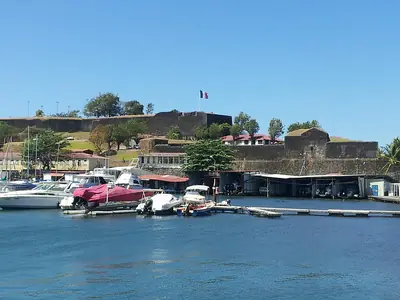
On the waterfront, Fort Saint Louis is one of Fort-de-France’s defining landmarks. The strongholds on this peninsula began taking shape as early as 1638, and the site later carried the names Fort Royal and Fort de la République before becoming Fort Saint Louis. The French military fortress was built in the Vauban style and remains connected to the French Navy’s base in the Antilles.
Schœlcher Library
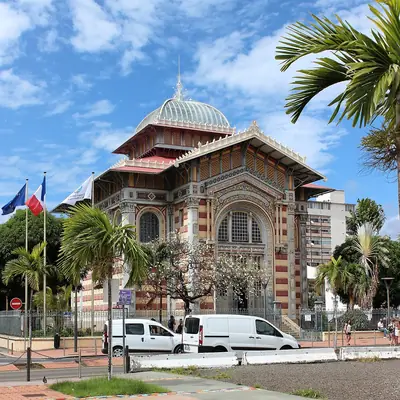
Facing the northern corner of La Savane, the Schœlcher Library stands out for its historicist design and garden setting. The building was constructed in 1886 and 1887 by architect Pierre-Henri Picq to house a collection donated by Victor Schœlcher.
Schœlcher left 10,000 books and 250 musical scores to Martinique’s General Council, on the condition that the library should be open to everyone, particularly to educate formerly enslaved Black people. Today, the building continues to serve as Martinique’s departmental public library.
Musée régional d’histoire et d’ethnographie de Martinique
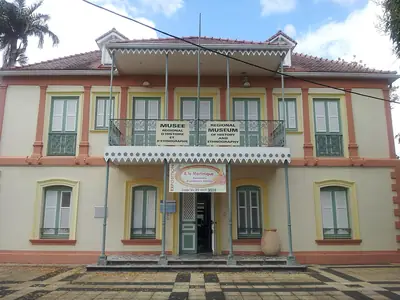
This museum occupies a villa dating from 1887, set in a 2,500-square-metre garden planted with mango and other fruit trees. The house was originally the residence of the director of artillery and included rooms such as a salon, dining room, sitting room, study and library.
The Musée régional d’histoire et d’ethnographie de Martinique was created in 1985. Its exhibitions and collections introduce the history and ethnography of the island, while the villa itself offers a glimpse of Fort-de-France’s older residential architecture.
Old Town Hall and Theatre
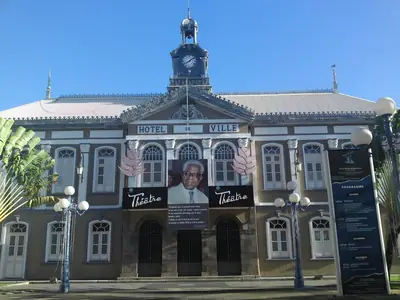
The former town hall on Rue Victor-Sévère now houses the Théâtre Aimé Césaire. Its construction began in 1884, but work was interrupted by the great city fire of 1890 and a cyclone the following year. The building was completed and inaugurated on September 21, 1901.
Its symmetrical neoclassical façade includes a central section, a small bell tower and the city’s coat of arms, together with the inscription “Semper Francia”. A statue attributed to Albert Carrier-Belleuse shows an enslaved man freeing himself from his chains. The building was designated a historic monument in 1979.
Palais des arts et des cultures de Fort-de-France
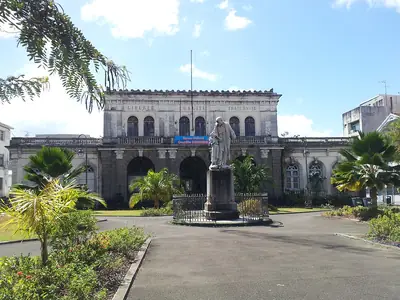
The former courthouse, now known as the Espace Camille-Darsières or Palais des arts et des cultures, occupies a site with a long institutional history. A convent of the Daughters of Providence was founded here in the eighteenth century, followed by a police facility and then a courthouse.
The courthouse was destroyed by the earthquake of January 11, 1839. A later building eventually became too small for its judicial role; its final session took place in November 2001, before the court moved to a new courthouse on Boulevard de Gaulle the following year. The neoclassical building has been listed as a historic monument since December 31, 1991, and now has a cultural purpose.
Fort-de-France Cathedral
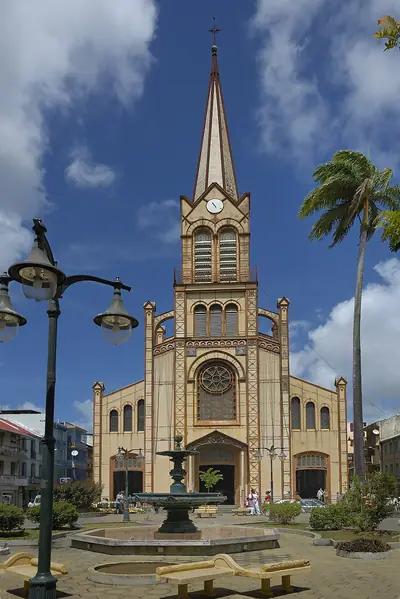
Saint-Louis Cathedral, also called Cathédrale Saint-Louis, stands at the intersection of Rue Victor Schœlcher and Rue Blénac. A church first opened on this site in 1657, but fires and earthquakes repeatedly damaged the buildings. The present cathedral dates from 1895 and is the seventh church to have stood here.
Its late nineteenth-century Romanesque Revival design was created by architect Pierre-Henri Picq. The cathedral’s iron frame was chosen to help it withstand future natural disasters, making its structure as significant as its religious role.
Musée Départemental d’Archéologie et de Préhistoire de la Martinique
The Musée Départemental d’Archéologie et de Préhistoire de la Martinique offers a place to discover the island’s archaeological and prehistoric heritage. It is one of the city’s museums to include when exploring Fort-de-France beyond its main streets and waterfront monuments.
Fort Tartenson
Fort Tartenson is the last military fort built in Fort-de-France during the nineteenth century. Its elevated position provides a panoramic view over the city. The name comes from a family from the Basses-Alpes who settled in Martinique during the seventeenth century.
Maison d’Aimé Césaire
Maison d’Aimé Césaire is the Fort-de-France house where the poet and politician lived from the beginning of the 1960s until his death in 2008. The house is open to the public for guided visits and offers a direct connection with both his literary and political life.
Fort Desaix
Above Fort-de-France, on Morne Garnier, Fort Desaix recalls the city’s military importance. The Vauban-style fort was built between 1764 and 1772 on the hill overlooking what was then called Fort Royal. It was first known as Fort Bourbon, then Fort la Convention, before taking its present name.
Villa Monplaisir and the city’s historic villas
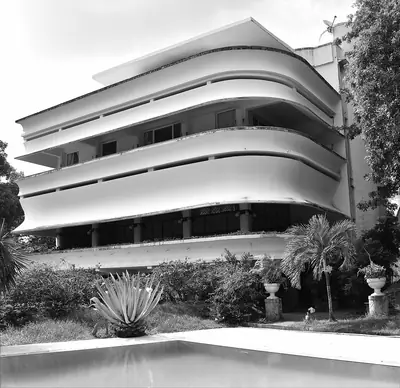
Villa Monplaisir was built in 1946 by architect Louis Caillat and is now a historic monument. Other villas add to the architectural story of Fort-de-France. Villa Louisiane remains a villa in the city, while Villa Primerose no longer stands: the colonial-style house was built in 1906, listed as a historic monument in 2004 and destroyed by fire in 2014.
Phare de la Pointe des Nègres
The Pointe des Nègres Lighthouse rises above the port on the point that gives it its name. It is a distinctive landmark on Fort-de-France’s waterfront and another way to experience the city’s relationship with the sea.
Jardin de Balata
Further along the Route de Balata, the Jardin de Balata is a private botanical garden set among Martinique’s landscapes. It provides a quieter stop away from the central streets, with a setting devoted to botanical variety.
Explore Fort-de-France with a self-guided walking tour
Neywo offers two walking tours in Fort-de-France, with a combined total of 11 tour stops drawn from the city’s historic and cultural landmarks. The app’s narration is available in 11 languages, and each story plays as you reach the place, at your own pace, with no group and no schedule.
The first walk, Downtown Fort-de-France: Forts, Libraries and a Cathedral of Iron, covers 2.07 km in 79 minutes and has six narrated stops: Fort Saint Louis, the Schœlcher Library, the Musée régional d’histoire et d’ethnographie de Martinique, the Old Town Hall and Theatre, the Palais des arts et des cultures de Fort-de-France, and Fort-de-France Cathedral.
The second, Hill Forts, Villas and Aimé Césaire, covers 3.94 km in 81 minutes and has five stops: Maison d’Aimé Césaire, Fort Desaix, Église Saint-Antoine-de-Padoue de Terres Sainville, Fort Tartenson and Villa Monplaisir.
Download Neywo and explore Fort-de-France as you walk. The app tells the story of each place when you reach it, so you can discover the city independently and follow the route at your own pace. You can also continue exploring France with destinations such as Ajaccio, Nantes or Dijon.
Places with an audio guide in Fort-de-France
8 places in Fort-de-France with a Neywo audio guide. Each one starts telling its story as you reach it.
Self-guided tours in Fort-de-France
2 tours in Fort-de-France, free in the Neywo app. Each stop tells its story as you reach it.
- Walk
Downtown Fort-de-France: Forts, Libraries and a Cathedral of Iron
Fort-de-France has burned and shaken more than once, and each rebuilding left a landmark. Start at the Vauban fortress on the waterfront, cross La Savane to Schœlcher's library, then follow the old courthouse, the theatre-town hall and the iron-framed cathedral designed to survive earthquakes.
Fort Saint Louis · Schœlcher library · Musée régional d'histoire et d'ethnographie de Martinique · Old Town Hall and Theatre · Palais des arts et des cultures de Fort-de-France · Fort-de-France Cathedral
Open this tour: Downtown Fort-de-France: Forts, Libraries and a Cathedral of Iron - Walk
Hill Forts, Villas and Aimé Césaire
Climb from the poet Aimé Césaire's house to Fort Desaix, built after the British took the town in 1762. Then follow the hillside to Saint Anthony's church and the colonial villas below Fort Tartenson, which look out over the whole bay.
Maison d'Aimé Césaire · Fort Desaix · Église Saint-Antoine-de-Padoue de Terres Sainville · Fort Tartenson · Villa Monplaisir
Open this tour: Hill Forts, Villas and Aimé Césaire
Walk Fort-de-France with Neywo
Neywo turns Fort-de-France into a self-guided audio tour. Stories arrive as you reach the place they belong to, and the route reshapes when you wander off it.

