Things to Do in Chamonix, France: Walking Guide
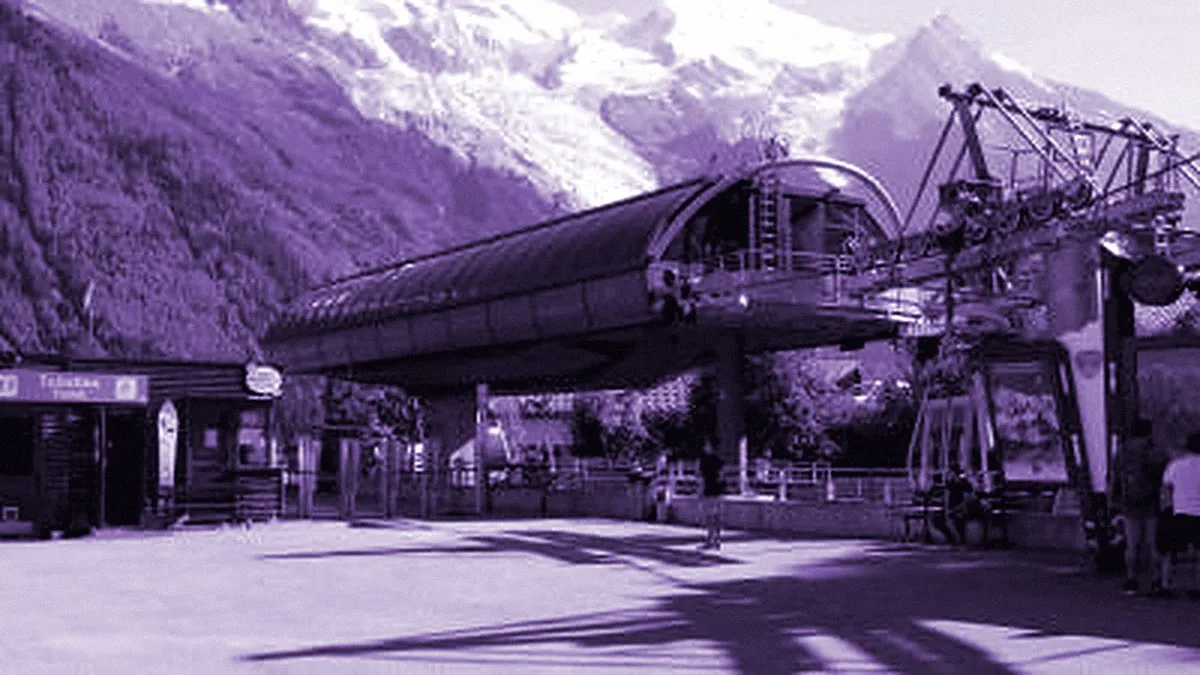
Things to do in Chamonix
Chamonix-Mont-Blanc lies at the foot of Western Europe’s highest peak, Mont Blanc, and is renowned as the birthplace of modern mountaineering and the host of the first Winter Olympic Games. The town combines dramatic alpine scenery, glaciers, and a rich cultural heritage that attracts hikers, climbers, and history lovers alike. Neywo offers a free audio guide for Chamonix with 40 narrated places to enrich your exploration.
What to see in Chamonix
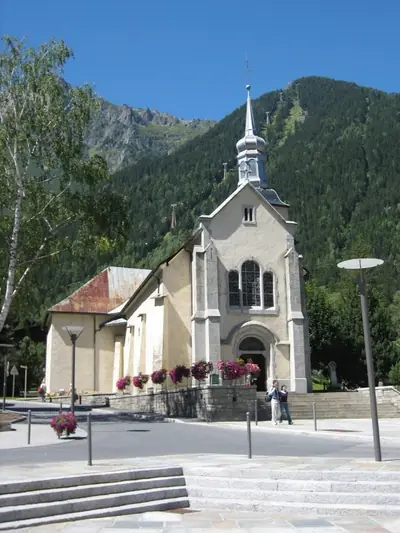
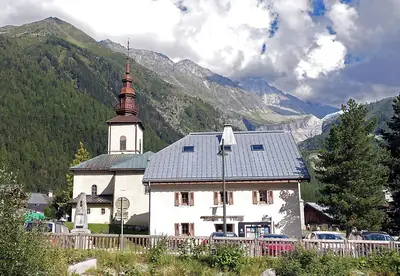
Église Saint-Michel de Chamonix-Mont-Blanc
This historic church showcases Savoyard Baroque architecture with a distinctive bulb‑shaped bell tower. Originally founded by the Benedictines in 1119, the current building dates from the early 18th century and houses an Empire‑style altarpiece completed in 1737‑38. Its majestic organ, inaugurated in 1992, was installed to keep the large stained‑glass window fully visible.
Aiguille du Midi
Rising to 3 842 metres, the Aiguille du Midi is the highest of the Chamonix needles and a major high‑mountain destination. Visitors reach the summit via the Aiguille du Midi cable car, whose upper station sits at 3 777 metres before a final elevator lifts you to the top. From here you can access the Vallée Blanche descent, the Panoramic Mont‑Blanc cable car toward Pointe Helbronner, and enjoy panoramic views of the Aosta Valley and Piedmont. The summit also hosts France’s highest radio transmission centre.
Alpine Museum of Chamonix (Musée Alpin)
Located in the historic Chamonix Palace, the museum traces the geological, human, and artistic story of the Mont Blanc region. When open, its two floors cover the pioneering ascents of Mont Blanc in the late 1700s on the first floor and Alpine painting—from amateur sketches to accomplished works—on the second floor. The museum is currently closed for renovations.
Glaciorium
Situated at Montenvers at an altitude of 1 909 metres, the Glaciorium is a museum devoted to glaciology, focusing on the Mer de Glace. It provides an accessible introduction to how glaciers form, move, and shape the landscape.
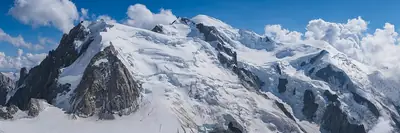
Mont Blanc
The massif’s summit reaches more than 4 800 metres above sea level, making it the highest mountain in the Alps and western Europe outside the Caucasus. Composed mainly of granite, its sharp ridges, deep valleys, and numerous glaciers create a powerful presence. The first recorded ascent took place on 8 August 1786, a date often cited as the start of mountaineering. Expert surveyors re‑measure the summit every two years; the 2023 reading was 4 805.59 metres.
Musée des Cristaux – Espace Tairraz
Housed in the Espace Tairraz, this crystal museum began in 1898 with Joseph Cusin‑Berlincourt’s personal collection. After a 2021 renovation, it displays exceptional Alpine minerals such as pink‑red fluorites, smoky quartz, axinites, siderites, and epidotes, alongside specimens from every continent, highlighting the international scope of the Alpine mineral world.
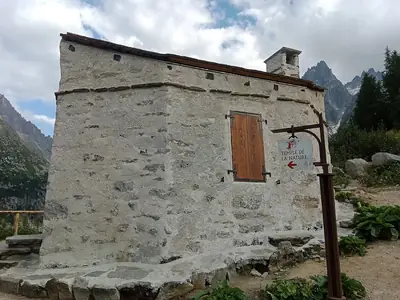
Temple of Nature (Temple de la Nature)
Also at Montenvers, this building reflects the early days of mountain tourism. Initially a refuge, later an annex to a neighboring hotel, and then a museum, it is now closed to the public but remains a testament to the Romantic era’s influence on alpine travel.
Église Saint‑Pierre d’Argentière
Located in the hamlet of Argentière, this eighteenth‑century French Catholic church contributes to the local character of the village. Its modest façade and interior details exemplify regional religious architecture of the period.
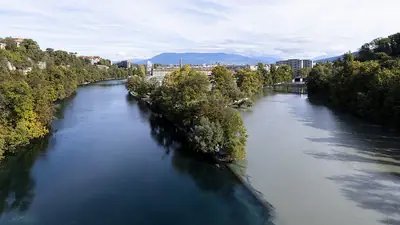
Arve River
The Arve originates in the Mont Blanc massif at 2 191 metres and flows about 108 kilometres through France and Switzerland before joining the Rhône at Geneva. Known for its heavy silt load, the river creates a striking visual contrast where it meets the Rhône. During the flood of 15 November 2023, peak flow reached 1 010 cubic metres per second at Geneva, the highest recorded since measurements began in 1935.
Protestant Temple of Chamonix
Found at 24 Passage du Temple, this quiet religious landmark adds to the town’s diverse spiritual heritage. Its simple design offers a place for reflection amid the bustling centre.
Chapelle du Tour 1865
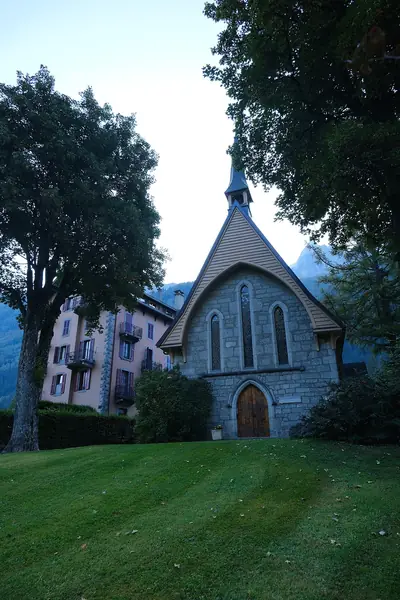
This modest chapel in Haute‑Savoie dates from 1865 and provides a tranquil spot for visitors seeking a moment of peace while exploring the valley.
1924 Winter Olympics
Chamonix-Mont‑Blanc hosted the inaugural Winter Olympic Games from 25 January to 5 February 1924. The event, originally called the International Winter Sports Week, featured 258 athletes from sixteen countries competing in sixteen events across six sports. Finnish speed skater Clas Thunberg won five medals, including three gold, and Norway topped the medal table. The International Olympic Committee later recognised the Games as the first official Winter Olympics, establishing the four‑year cycle still used today.
Western Alps
Chamonix lies within the Western Alps, a vast region that stretches across southeastern France, northwestern Italy, southwestern Switzerland, and the whole of Monaco. Mont Blanc, the area’s highest summit, dominates this mountainous landscape.
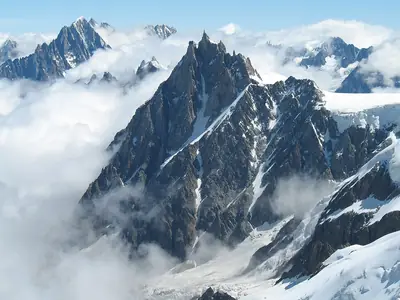
Aiguille du Dru
Known locally as Les Drus, this striking massif east of Les Praz comprises two summits: the Grand Dru at 3 754 metres and the slightly lower Petit Dru, famed for its immense granite north face rising about 1 000 metres with an average slope exceeding 75 degrees. The Petit Dru’s north face is considered one of the great north faces of the Alps. A rockfall in 2005 destroyed the southwest Bonatti Pillar and its associated climbing route, reminding visitors that the mountains are constantly evolving.
Explore Chamonix with Neywo
Neywo’s free audio guide turns your walk into a self‑guided experience. The app offers 1 walking tour in Chamonix:
- “Chamonix, Cradle of the Winter Olympics” – 3.9 km, 98 minutes, 9 narrated stops
As you reach each stop, the app tells the story of that place, allowing you to move at your own pace with no group and no schedule. Narration is available in 11 languages, and the guide covers 40 narrated points across the town.
Ready to discover Chamonix’s alpine heritage, glaciers, and Olympic history? Download Neywo, start the walking tour, and let the city’s stories unfold step by step.
Places with an audio guide in Chamonix
8 places in Chamonix with a Neywo audio guide. Each one starts telling its story as you reach it.
Self-guided tours in Chamonix
1 tour in Chamonix, free in the Neywo app. Each stop tells its story as you reach it.
- Walk
Chamonix, Cradle of the Winter Olympics
Chamonix hosted the very first Winter Olympics in 1924. Trace that story from the bobsleigh track and the Olympic stadium to the Baroque church, the village square, the Montenvers train station and the cemetery where early alpine climbers rest, always with Mont Blanc in view. It ends at CREA Mont-Blanc, the research centre that studies how climate change is reshaping the high Alps.
Bobsleigh at the 1924 Winter Olympics · Chamonix-Aiguille-du-Midi railway station · Cross-country skiing at the 1924 Winter Olympics · Place Balmat · Église Saint-Michel de Chamonix-Mont-Blanc · Temple protestant de Chamonix …
Open this tour: Chamonix, Cradle of the Winter Olympics
Walk Chamonix with Neywo
Neywo turns Chamonix into a self-guided audio tour. Stories arrive as you reach the place they belong to, and the route reshapes when you wander off it.

