What to See in Tours, France: Free Audio Guide
Things to Do in Tours: What to See in the Historic City
Tours is a historic city in France’s Centre-Val de Loire region, known for its medieval streets, religious monuments, museums, and position on the Loire. Its compact historic centre makes it especially rewarding to explore on foot, from Vieux-Tours and Place Plumereau to the cathedral, former abbeys, and the city’s bridges. Neywo offers a free audio guide for Tours with 93 narrated places, available in 11 languages.
What to See in Tours
Explore Vieux-Tours and Place Plumereau
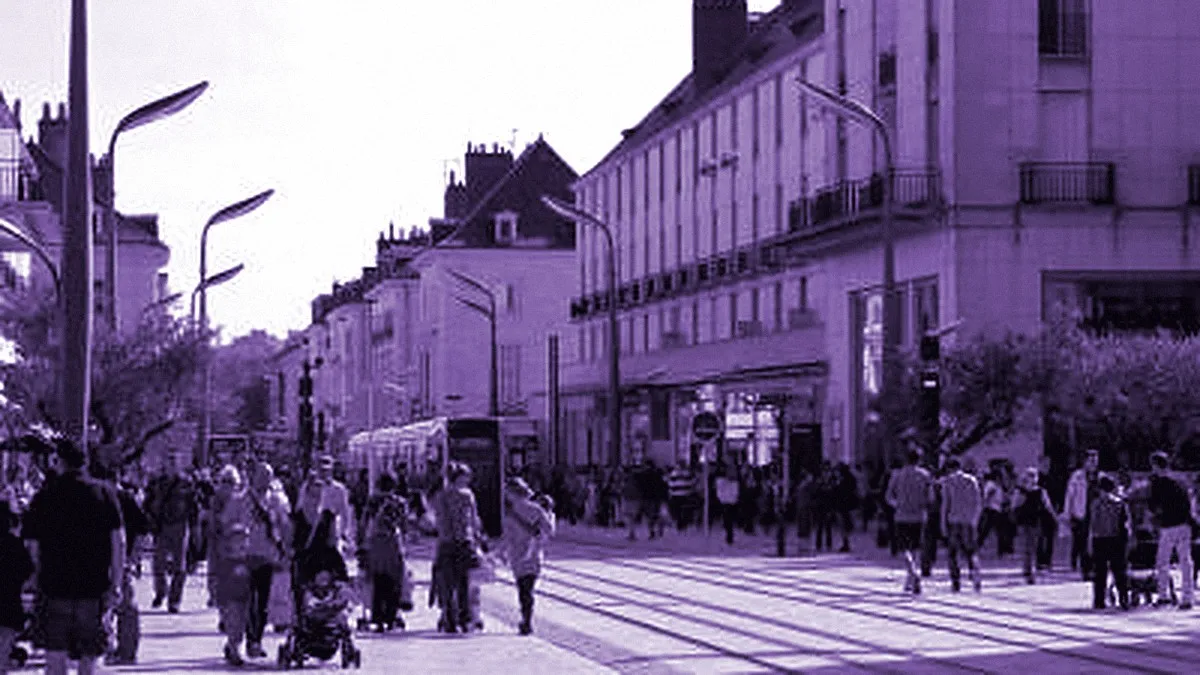
Vieux-Tours is the natural starting point for discovering the city. Around Place Plumereau, Place du Grand Marché, and Place de Châteauneuf, cobbled streets pass restored medieval half-timbered houses. The area is also home to restaurants, bars, and shops, creating a lively contrast with its historic architecture.
The old town is known for the combination of pale stone buildings and traditional blue-tiled roofs. Its streets bring together the architectural character and everyday atmosphere that make Tours a pleasant city to explore on foot.
Tours Cathedral
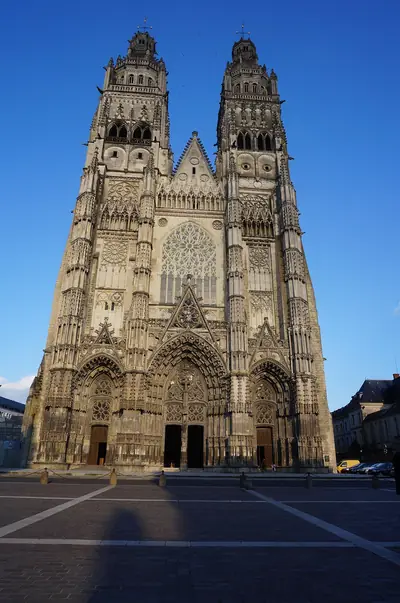
Tours Cathedral, or Cathédrale Saint-Gatien, rises at the edge of Vieux-Tours. Built between 1170 and 1547, it brings together Romanesque, Gothic, Rayonnant, and Renaissance elements, reflecting the different campaigns that shaped the building.
The cathedral is dedicated to Saint Gatianus, the first bishop of Tours, and serves as the metropolitan cathedral of the Tours ecclesiastical province. Its great stained-glass rose windows at the west, north, and south ends are among its most striking features. Enormous flying buttresses and spires support the sides, while the north transept has additional buttresses and a rose window reinforced by a bar.
Basilica of Saint Martin
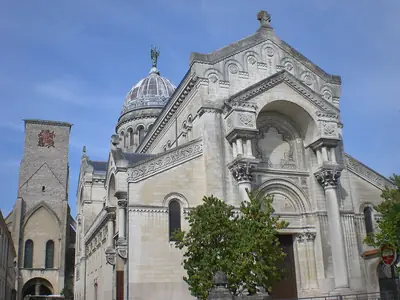
The Basilica of Saint Martin stands over the tomb of Saint Martin of Tours, preserved in the crypt. The site has a long religious history: an early chapel was followed by a basilica consecrated in 471 and later by a collegiate church governed by canons.
The medieval basilica was destroyed during the French Revolution. After the former church was abandoned, damaged, and used as a stable, its vaults collapsed in 1797 and the building was demolished. Two towers and part of a cloister gallery survived. The present basilica was designed by Victor Laloux in a Neo-Byzantine style and built between 1886 and 1924. Inside, mural paintings and stained-glass windows tell parts of Saint Martin’s story.
Château de Tours
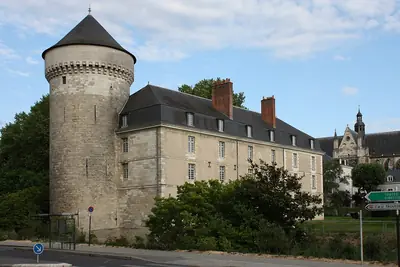
Beside the Loire and close to the cathedral, the Château de Tours occupies a site connected with the ancient city. The present complex is only a remnant of a much larger medieval castle, which began in the eleventh century as a residence for the Lords of France and was enlarged in the thirteenth and fifteenth centuries as a royal residence.
Most of the castle was destroyed in the eighteenth century. Two towers survived, and a later building was added around them for military use. After serving as a barracks, the complex was restored in the second half of the twentieth century, with archaeological excavations revealing parts of its foundations.
The château also recalls a significant episode in French history: on 13 May 1429, Joan of Arc was received there by Charles the Seventh shortly after she had saved Orléans. Today, the monument hosts cultural and heritage activities.
Musée des Beaux-Arts de Tours
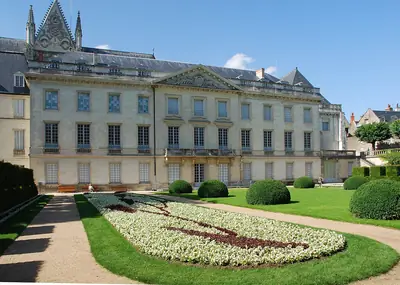
The Musée des Beaux-Arts de Tours occupies a former episcopal palace beside the cathedral. Its collection, housed there since 1910, spans from antiquity to contemporary art and includes more than twelve thousand works, with around one thousand displayed at a time.
The museum is particularly noted for its paintings, including works by Andrea Mantegna, Rubens, Rembrandt, Le Sueur, and Philippe de Champaigne. Its galleries cover French painting before the nineteenth century as well as movements such as Neoclassicism, Romanticism, Orientalism, Realism, Impressionism, and Symbolism.
The grounds are also worth seeing. They include a formal French garden, a tall Lebanese cedar, and Fritz, a stuffed Asian elephant. The entire site has been protected as a historic monument since 1983.
Hôtel Goüin
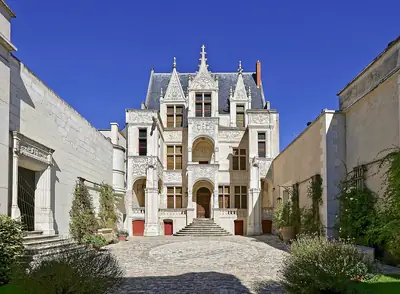
The Hôtel Goüin is one of the rare surviving examples of Renaissance architecture in Old Tours. The mansion began as a fifteenth-century hôtel particulier, and René Gardette transformed the earlier Gothic structure during the sixteenth century by adding a porch, a loggia, and a new wing.
The building takes its name from the Goüin family, wealthy Breton bankers who acquired it in 1738. It suffered severe damage during the bombings of 1944, when only the façade remained standing. Restoration in the 1950s concentrated on the principal accommodation and entrance. Today, the building is associated with the Goüin Museum and the Touraine Archaeological Society.
Abbaye Saint-Julien
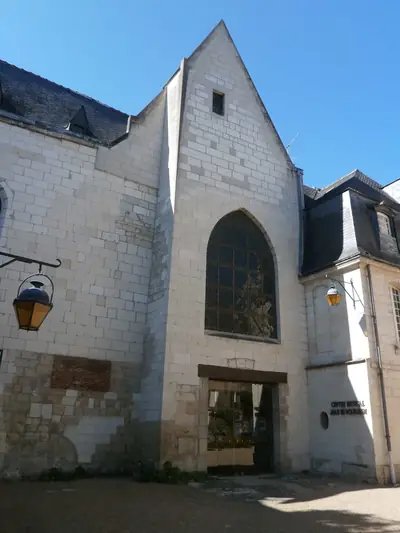
The Saint-Julien abbey complex brings together Romanesque and Gothic architecture in the centre of Tours. The church was once the abbey church of a Benedictine abbey, while the surrounding buildings date from the tenth to the sixteenth century.
The present form of Saint-Julien Church is largely thirteenth-century. A hurricane destroyed the nave in 1224, and it was rebuilt between 1243 and 1259 in the Gothic style. The bell tower, rising about twenty-five metres, probably belongs to the Romanesque rebuilding of the eleventh century.
The former abbey also included a cloister, cellars for storing harvests, and a library. These different elements explain the variety of historic structures still visible at the site.
Saint-Pierre-le-Puellier
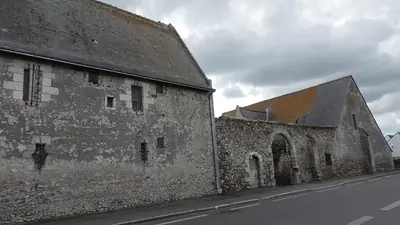
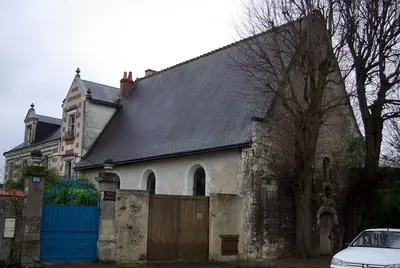
North of Place Plumereau, the remains of Saint-Pierre-le-Puellier offer a glimpse of medieval Tours. The former monastery may have origins reaching back to the sixth century, while the Gothic church was built around 1170.
After the French Revolution, the church was sold as national property and almost entirely destroyed. Parts of the north aisle survive, including the first two bays and a room with its original Western Gothic vault. Some capitals and decorative details can still be seen among the remains, which have been protected as historic monuments since 1946.
Former churches and historic sites
Tours contains several other buildings whose importance lies in the changes they have undergone. The former Saint-Denis Church was founded in 1188, rebuilt in the fifteenth century, and closed as a church in 1782.
Saint-Jean-de-Beaumont first depended on the Abbey of Notre-Dame de Beaumont-lès-Tours before becoming a parish church. Sold during the Revolution, it was gradually reduced: its bell tower and later its choir disappeared, and the remaining structure was incorporated into a dwelling. It was listed as a historic monument in 1983.
Notre-Dame-la-Riche has an even older history. A church was built on the site by Saint Lidoire in the fourth century, and records mention a later church by 920. Much of the present building dates from the fifteenth century, although it suffered damage during the religious conflicts of the sixteenth century and was used for saltpeter production during the French Revolution.
Saint-Grégoire des Minimes began as the church of the Minim Friars. Construction started in 1626, and the church was consecrated in 1635. Its Baroque façade and carved oak canopy, created between 1677 and 1679, are notable surviving features.
Pont Wilson and the Library of Tours
Pont Wilson, also known as the Pont de Pierre, is the oldest bridge in Tours. Built between 1765 and 1778, it crosses the Loire on 15 arches and extends for 434 metres. It replaced the deteriorating Pont d’Eudes, an older bridge dating from the eleventh century.
Near Place Anatole-France and the bridge, the Library of Tours stands beside the Loire. The present building replaced an earlier library destroyed during the bombing of 1940. Reconstruction was entrusted to Pierre Patout in 1950, and the library opened in November 1957.
Explore Tours with Neywo
There are no scheduled group departures or fixed pace to follow with Neywo. The app tells the story of each place as you reach it, allowing you to explore Tours independently and spend as much time as you like at each stop. Download Neywo to discover Tours with a free audio guide covering 93 narrated places, available in 11 languages.
While exploring the region, you can also continue to Centre-Val de Loire or discover nearby cities such as Orléans and Blois. Tours is part of France, a country with many historic cities to explore.
Places with an audio guide in Tours
8 places in Tours with a Neywo audio guide. Each one starts telling its story as you reach it.
Walk Tours with Neywo
Neywo turns Tours into a self-guided audio tour. Stories arrive as you reach the place they belong to, and the route reshapes when you wander off it.

