Visiting Saint-Malo, France: Top Sights on Foot
Things to Do in Saint-Malo: What to See in the Walled City
Saint-Malo is a historic port in Brittany, known for its granite ramparts, maritime heritage, powerful tides and fortified old town. The city’s churches, castle, wartime sites and coastal ruins reveal different chapters of its history, making it a rewarding place to explore on foot. Neywo offers a free audio guide for Saint-Malo with 27 narrated places.
What to See in Saint-Malo
Saint-Malo Cathedral
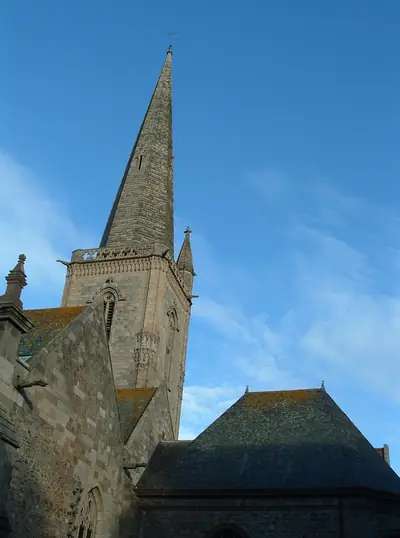
Saint-Malo Cathedral, also known as the Cathédrale Saint-Vincent, is one of the city’s most important historic monuments. Its architecture combines Romanesque and Gothic elements, reflecting the long period of its construction between 1146 and 1163 under Bishop Jean de Châtillon. The church was built on the site of an older seventh-century church and became the seat of the Bishopric of Saint-Malo in 1145.
The cathedral was severely damaged by bombing and shelling in August 1944. Restoration continued for twenty-eight years, with completion celebrated on 21 May 1972. It has been protected as a historic monument since 1910 and is one of the seven cathedral stops on the Breton pilgrimage route known as the Tro Breiz.
Saint-Malo Castle
At the northeast corner of the walled city stands the Château de Saint-Malo, also known as the Château de la Duchesse Anne. The dukes of Brittany built it to strengthen their authority over Saint-Malo and to help defend the city against possible British conquest.
Construction began in the fifteenth century and continued through the eighteenth. John V, Duke of Brittany, initiated the complex; Francis II and Anne of Brittany later expanded it, and the military engineer Sébastien Vauban contributed to its development in the late seventeenth century. Its different sections therefore represent several centuries of construction. The earliest parts have been protected as historic monuments since 1886.
The Ramparts and the Historic Center
Walking the ramparts is one of the essential things to do in Saint-Malo. From the elevated path, the city’s fortified skyline meets sandy beaches, offshore islands, harbor waters and the changing sea. The Bidouane Tower is a particularly strong reminder of the city’s defensive past.
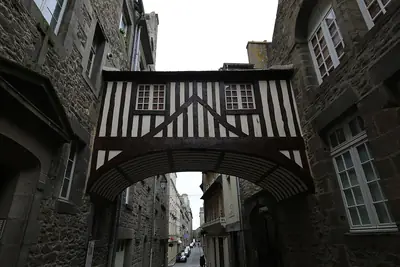
Within the walls, narrow streets pass between stone houses, squares, seafood restaurants and places connected with Saint-Malo’s corsair heritage. The historic center was rebuilt after wartime destruction, but its compact layout and maritime character remain central to the city’s identity.
Chapelle Saint-Aaron
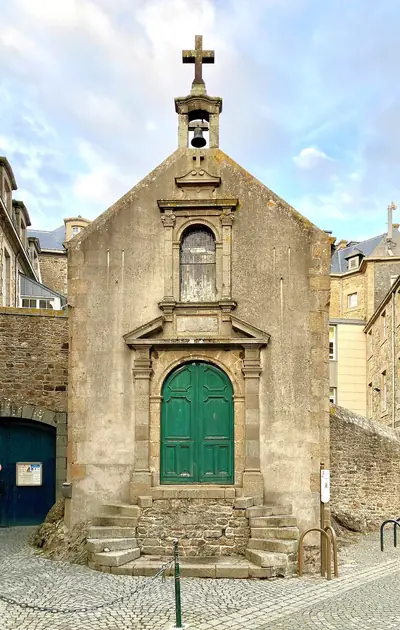
The small Chapelle Saint-Aaron has an intimate character and is dedicated to Saint Aaron, traditionally regarded as the spiritual father of Saint Malo. Tradition associates the chapel’s location with Saint Malo’s landing, hermitage or tomb, although none of these possibilities is established as certain. The chapel has been listed as a Monument historique since 1946.
Église Saint-Sauveur de Saint-Malo
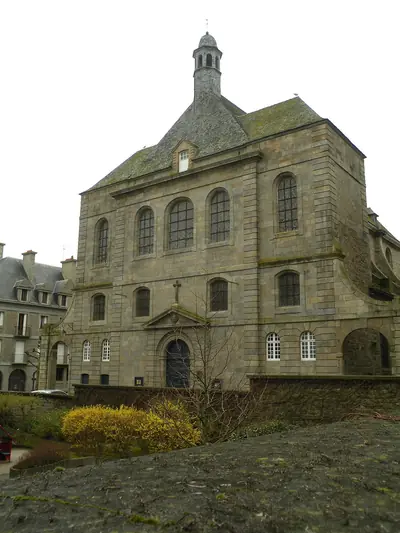
Église Saint-Sauveur, also called Saint-Sauveur Chapel, was once the chapel of the Hôtel-Dieu. It is no longer used for religious worship and now serves as a venue for cultural events, preserving its history through a different role.
Couvent des Récollets
The Couvent des Récollets is a religious building and a quiet reminder of Saint-Malo’s religious heritage. It forms part of the historic city’s network of churches, chapels and former religious institutions.
Saint-Servan and the Origins of Saint-Malo
The Saint-Servan district offers a different perspective on the city’s past. Its religious and military sites help explain the relationship between the older settlement around Aleth and the fortified city that later grew on the rocky islet of Saint-Malo.
Aleth Cathedral
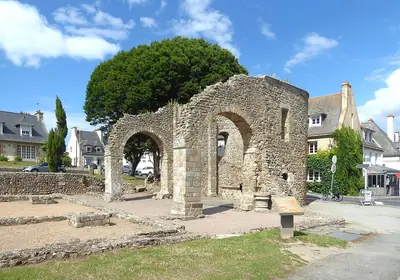
The ruins of Aleth Cathedral, also known as Saint-Pierre d’Aleth, stand on a peninsula beside the Rance estuary. Aleth was once the seat of the Diocese of Aleth, but Bishop Jean de Châtillon moved the bishopric to Saint-Malo in 1146.
Aleth had already been destroyed by Norman invaders in the tenth century and rebuilt afterward. Its final destruction came in 1255, following an armed conflict caused by resentment over Saint-Malo’s tax demands. After Aleth’s defeat, its walls, fortress and church were dismantled. Today, the former cathedral is a protected historic and archaeological site. The ruins of a chapel dedicated to Saint Peter in the cathedral’s choir area have been classified as a historic monument since 1945, while the wider archaeological site has been protected since 1996.
Sainte-Croix Church
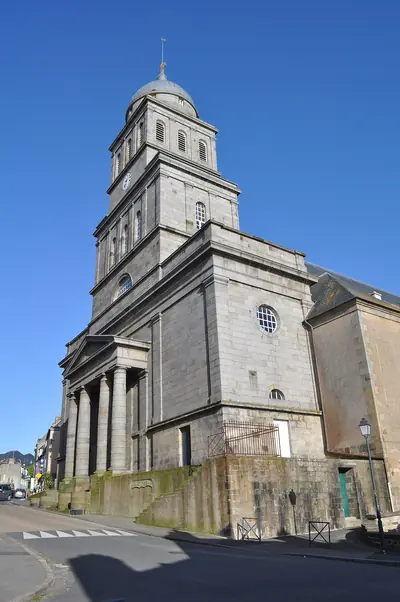
Église Sainte-Croix de Saint-Servan is a Roman Catholic church in the Saint-Servan district. It is one of the area’s notable religious buildings and a useful stop when exploring the part of Saint-Malo associated with Aleth.
The Protestant Temple
The Protestant Temple of Saint-Malo is a Protestant church in the city. Together with the district’s Catholic churches and former religious buildings, it adds to the variety of Saint-Malo’s religious heritage.
Mémorial 39-45
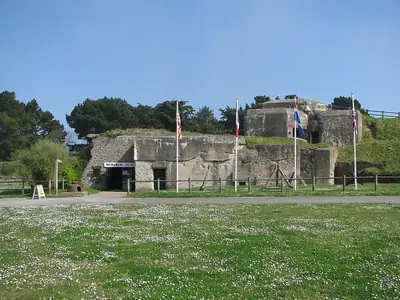
The Mémorial 39-45 de Saint-Malo, also known as the Mémorial 1939-1945, examines the city during the Second World War, with particular attention to the German military occupation. It provides historical context for the destruction that affected Saint-Malo and the later rebuilding of its historic center.
Other Churches and Chapels
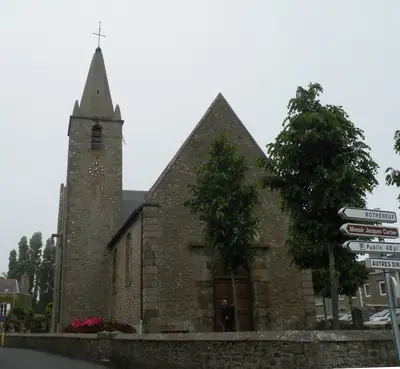
Saint-Malo’s wider area includes several additional religious sites. The former Saint-Malo Church of Paramé, also known as the Paramé annex town hall, is a historic place in the city. Église Notre-Dame des Grèves, Église Saint-Barthélemy and Chapelle Notre-Dame de Lorette offer further stops for visitors interested in the city’s religious architecture.
Grand Bé at Low Tide
At low tide, the route to Grand Bé can be walked from the fortified city. This rocky islet is home to the tomb of François-René de Chateaubriand, one of France’s celebrated Romantic writers. It also offers views back towards Saint-Malo’s fortified skyline.
The changing sea is part of the experience: access depends on the tide, and the relationship between the city, the rocks and the water is one of the defining features of Saint-Malo.
Explore Saint-Malo with a Free Audio Guide
Neywo turns Saint-Malo into a self-guided audio experience. The app has two walking tours and one bus route, covering 27 narrated places in total. Each story plays as you reach the place, at your own pace, with no group and no schedule. Narration is available in 11 languages.
The tours include:
- Corsair City: Ramparts, Castle and Cathedral of Saint-Malo — a 1.36 km walk lasting 75 minutes, with 10 narrated stops.
- Saint-Servan: Where Saint-Malo Began — a 2.03 km walk lasting 52 minutes, with 4 narrated stops.
- Bus 8: From the Ramparts to Saint-Servan — a 7.8 km route lasting 33 minutes, with 4 narrated stops.
Download Neywo and explore Saint-Malo while the app tells the story of each place as you arrive. It is a flexible way to discover the ramparts, cathedral, castle and Saint-Servan without joining a group or following a fixed schedule. After Saint-Malo, continue exploring Rennes or Vannes, two other cities in Brittany.
Places with an audio guide in Saint-Malo
8 places in Saint-Malo with a Neywo audio guide. Each one starts telling its story as you reach it.
Self-guided tours in Saint-Malo
3 tours in Saint-Malo, free in the Neywo app. Each stop tells its story as you reach it.
- Bus ride
Bus 8: From the Ramparts to Saint-Servan
The MAT line 8 links the walled town with the Saint-Servan peninsula. Ride from the squares by the old gates, past the harbour and the Etoile du Roy, to the ruins of Aleth Cathedral and the church of Sainte-Croix, for a cheap look at the town's two halves.
Place Guy-La-Chambre · Étoile du Roy · Aleth Cathedral · Église Sainte-Croix de Saint-Servan (Saint-Malo)
Open this tour: Bus 8: From the Ramparts to Saint-Servan - Walk
Corsair City: Ramparts, Castle and Cathedral of Saint-Malo
Start by the harbour with the three-masted Etoile du Roy, a replica of an 18th-century privateer frigate, and enter the walled town to Anne of Brittany's castle. Thread the granite streets to the chapel of Saint Aaron and the cathedral whose restoration after the 1944 bombing took 28 years.
Étoile du Roy · Place Guy-La-Chambre · Musée d’Histoire de la Ville et du Pays Malouin · Saint Malo Castle · Place Chateaubriand · Chapelle Saint-Aaron …
Open this tour: Corsair City: Ramparts, Castle and Cathedral of Saint-Malo - Walk
Saint-Servan: Where Saint-Malo Began
Leave the walls for the Saint-Servan peninsula, the site of ancient Aleth, the Gallo-Roman city that Saint-Malo outgrew. See the ruins of its cathedral, the parish church of Sainte-Croix, the Protestant temple and the memorial to the wartime occupation.
Temple · Église Sainte-Croix de Saint-Servan (Saint-Malo) · Aleth Cathedral · Mémorial 39-45 de Saint-Malo
Open this tour: Saint-Servan: Where Saint-Malo Began
Walk Saint-Malo with Neywo
Neywo turns Saint-Malo into a self-guided audio tour. Stories arrive as you reach the place they belong to, and the route reshapes when you wander off it.

