What to See in Orléans, France: Free Audio Guide
Things to do in Orléans
Orléans is a historic city on the Loire River in the Centre-Val de Loire region of France, renowned for its pivotal role in the Hundred Years’ War and its connection to Joan of Arc. Visitors can explore medieval churches, Renaissance houses, and the grand Gothic cathedral while enjoying the lively riverside atmosphere. Neywo offers a free Orléans audio guide with 68 narrated places, providing self‑guided walking tours of the city.
What to see in Orléans
Église Notre-Dame-de-Recouvrance
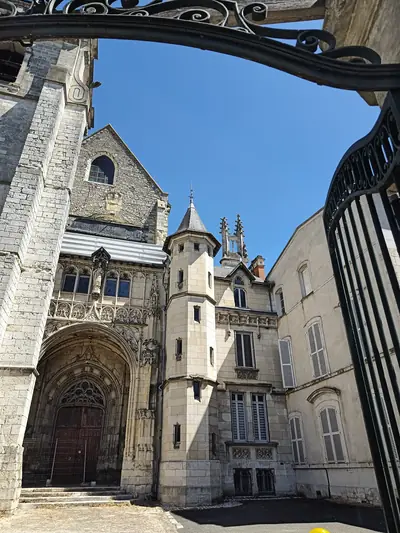
This Catholic church sits in the heart of Orléans, not far from the right bank of the Loire. Dating back to the 15th and 16th centuries, it was built against the Late Roman fortified walls of the old suburb of Avenum. A 16th‑century stained glass window adorns the high altar, and the building has been a monument historique since 1904, with the adjoining clergy house protected since 1928.
Église Saint-Pierre-le-Puellier
Regarded as the oldest church in Orléans that has never been destroyed, this building was deconsecrated in 1958 and no longer serves as a place of worship. It stands in the very centre of the city.
Église Saint-Euverte
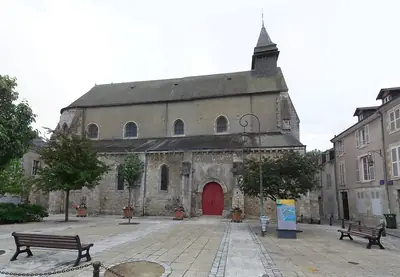
Located in eastern Orléans near the Loire and the Pont René Thinat, this church traces its origins to the ninth century, when the site began as an abbey. It has been used for Catholic worship ever since and underwent modifications during the Hundred Years’ War and the Wars of Religion.
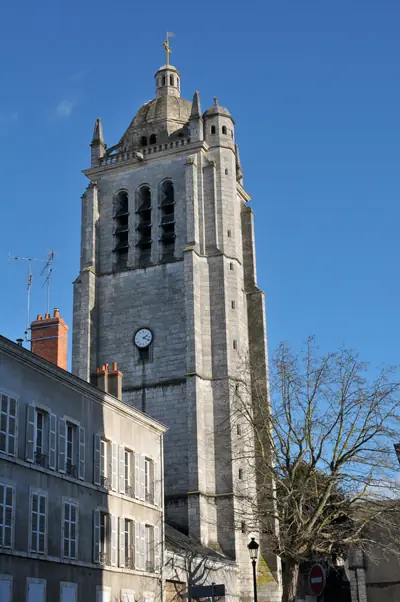
Saint-Aignan d’Orléans
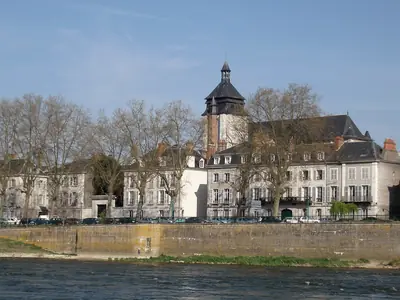
The collegiate church in the Bourgogne quarter on the north bank of the Loire is dedicated to the fifth‑century bishop Anianus, who, according to legend, persuaded Attila the Hun not to sack the city. A basilica existed here by the late 500s, a monastery by the first half of the seventh century, and its shrine once rivalled that of Saint Martin of Tours. Queen Balthild introduced Benedictine and Irish Columbanus rules, and during Viking raids on the Loire the relics of Saint Benedict were brought to Saint‑Aignan for safekeeping.
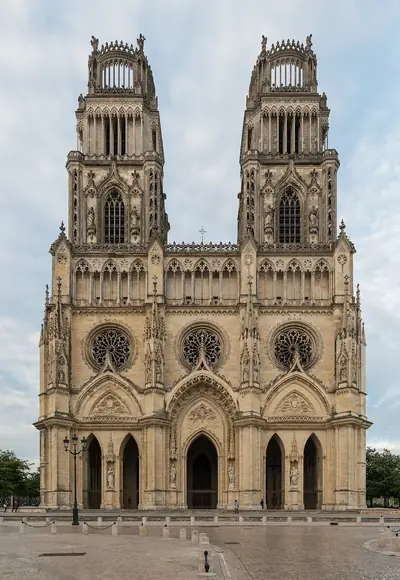
Orléans Cathedral (Basilique-Cathédrale Sainte-Croix)
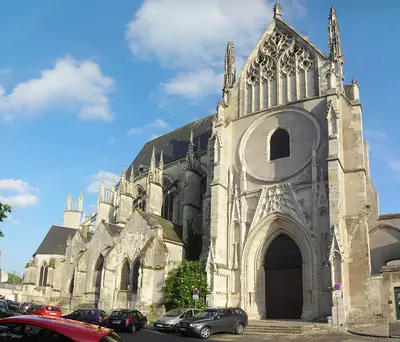
Built on the ruins of a Roman temple, the original Gothic structure was erected between 1278 and 1329, making it one of the largest and last Gothic cathedrals in France. Joan of Arc visited the cathedral frequently during the Siege of Orléans. After partial destruction by the Huguenots in 1568, it was rebuilt in Gothic style from 1601 to 1829 and elevated to a minor basilica by Pope Pius IX in 1855.
Restes de l’église Saint-Paul
These remains mark the site of the former Church of Saint‑Paul‑Notre‑Dame‑des‑Miracles, a quiet spot that recalls where the church once stood within the Diocese of Orléans.
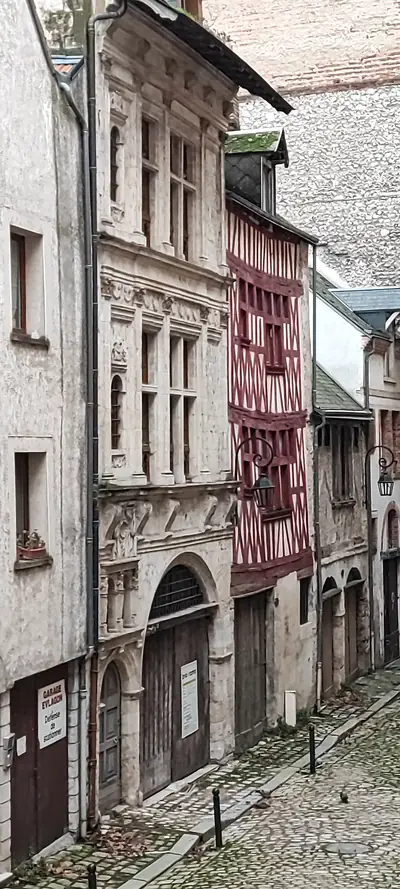
Maison de la Coquille
This historic house, whose name means “House of the Shell,” is part of a stretch of traditional architecture that gives Orléans its distinctive streetscape.
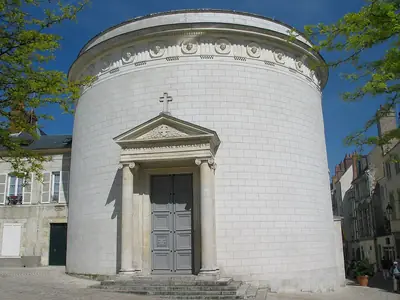
Protestant temple of Orléans
Located at 2 rue du Cloître Saint‑Pierre Empont, this Reformed place of worship serves the local Protestant community.
Departmental Conservatory of Orléans
The school of music, dance and theatre traces its roots to the École nationale de musique founded in 1968 and took its current name in 2006. It stands where the Siege of Orléans unfolded in 1428‑1429, a turning point of the Hundred Years’ War when Joan of Arc arrived to lift the English siege.
Église Saint-Pierre-du-Martroi
This central Orléans church has been known successively as Saint‑Pierre‑et‑Sainte‑Lée, Saint‑Pierre‑Ensentelée and now Saint‑Pierre‑du‑Martroi.
Equestrian statue of Joan of Arc
Standing on Place du Martroi, the city’s main square, the statue was sculpted by Denis Foyatier and unveiled in 1855. It shows Joan on horseback, sword raised high, embodying her determination and courage.
Musée des Beaux-Arts d’Orléans
Founded in 1797, this is one of France’s oldest provincial museums. Its collection includes around 2,000 paintings, 700 sculptures, more than 1,200 decorative art objects, 10,000 drawings and 50,000 prints, with roughly 700 works on permanent display. The pastel collection is second only to the Louvre, and the painting galleries feature masters such as Correggio, Velázquez, Van Dyck, Watteau, Boucher, Delacroix and Courbet.
Maison n°25‑36
A row of historic houses numbered 25, 27, 28, 30, 32, 34 and 36 showcases traditional Orléans architecture.
Beffroi (Hôtel des Créneaux)
This sixteenth‑century mansion has served as city hall, courthouse, Museum of Fine Arts and Natural History Museum. Today it houses part of the Orléans conservatory, where music often drifts from its halls. It has been listed as a historic monument since 1840, one of France’s earliest protected buildings.
Maison n°10
Another charming row of historic houses adds to the traditional streetscape of Orléans.
Explore Orléans with Neywo
Neywo provides a free Orléans audio guide with 68 narrated places. The guide includes four walking tours and one bike route:
- In the Footsteps of Joan of Arc – 2.38 km, 115 minutes, 12 stops
- Survivors of a Besieged City – 2.82 km, 95 minutes, 8 stops
- Old Orléans: Arcades, Ducerceau and Renaissance Houses – 1.05 km, 61 minutes, 8 stops
- Saint‑Marceau: Joan, Roses and Remembrance – 1.85 km, 51 minutes, 5 stops
- Along the Loire Quays (bike route) – 1.9 km, 10 minutes, 5 stops
Each story plays automatically as you reach the corresponding site, letting you explore at your own pace with no group and no schedule. Narration is available in 11 languages.
The nearby city of Tours makes an easy day trip. Orléans is also a convenient base for visiting Blois.
Places with an audio guide in Orléans
8 places in Orléans with a Neywo audio guide. Each one starts telling its story as you reach it.
Self-guided tours in Orléans
5 tours in Orléans, free in the Neywo app. Each stop tells its story as you reach it.
- Bike ride
Along the Loire Quays
A flat, easy ride on the signed Loire à Vélo cycle path beside the river, passing the old churches of the Loire quarter from the western end of town to the Bourgogne district.
Église Saint-Laurent d'Orléans · Église Notre-Dame-de-Recouvrance · Maison de la Coquille · Église Saint-Pierre-le-Puellier · Saint-Aignan d'Orléans
Open this tour: Along the Loire Quays - Walk
In the Footsteps of Joan of Arc
In 1429 a teenage girl lifted the English siege of Orléans and turned the Hundred Years' War. Start at her statue on Place du Martroi, stroll down the arcaded Rue Royale, visit the reconstructed house where she stayed, then pass the Renaissance Hôtel des Créneaux, the city's museums and the conservatory before reaching the great Gothic cathedral she knew well, its quiet cloister and the theatre beyond.
Equestrian statue of Joan of Arc · Rue Royale · Maison dite de Jeanne d'Arc in Orléans · Musée historique et archéologique de l'Orléanais · Hôtel des Créneaux · Église Saint-Pierre-du-Martroi d'Orléans …
Open this tour: In the Footsteps of Joan of Arc - Walk
Survivors of a Besieged City
Orléans was torn down and rebuilt again and again, by sieges, Vikings and religious wars. This walk through the old quarters links the churches that endured: the oldest never-destroyed church in town, the ruins of Saint-Paul, the abbey of Saint-Aignan and the ninth-century church of Saint-Euverte.
Église Notre-Dame-de-Recouvrance · Église Notre-Dame-des-Miracles d'Orléans · Restes de l'église Saint-Paul · Église Saint-Donatien · Église Saint-Pierre-le-Puellier · Saint-Aignan d'Orléans …
Open this tour: Survivors of a Besieged City - Walk
Old Orléans: Arcades, Ducerceau and Renaissance Houses
The streets between the Loire bridge and the cathedral hold what survived the bombs of June 1940. Walk up the symmetrical Rue Royale ordered by Louis XV, then wander the lanes around Place du Châtelet to find timber and stone houses from the Renaissance and the lively Rue de Bourgogne.
Maison de la Coquille · Maison 21 rue Royale, Orléans · Maison de Ducerceau · Maison de l'Ours · Place du Châtelet · Maison Renaissance …
Open this tour: Old Orléans: Arcades, Ducerceau and Renaissance Houses - Walk
Saint-Marceau: Joan, Roses and Remembrance
Cross the Loire to the left bank, where Joan of Arc rides a bronze horse in the Square de la Pucelle. Continue to the war memorial, the Saint-Marceau church and the rose garden of the old nurserymen's quarter, and end in the botanical garden.
Jeanne d'Arc guerrière · Mémorial Orléans Domrémy · Église Saint-Marceau d'Orléans · Roseraie Jean-Dupont · Jardin des plantes d'Orléans
Open this tour: Saint-Marceau: Joan, Roses and Remembrance
Walk Orléans with Neywo
Neywo turns Orléans into a self-guided audio tour. Stories arrive as you reach the place they belong to, and the route reshapes when you wander off it.

