What to See in Reggio Calabria, Italy: Free Audio Guide
Things to Do in Reggio Calabria: What to See in the City
Reggio Calabria is a coastal city in southern Italy, facing Sicily across the Strait of Messina. Its archaeological museums, post-earthquake architecture, historic churches, castles, and waterfront make it one of the most interesting places to explore in Calabria. Neywo offers a free audio guide for Reggio Calabria with 65 narrated places.
What to See in Reggio Calabria
National Museum of Magna Græcia and the Riace Bronzes
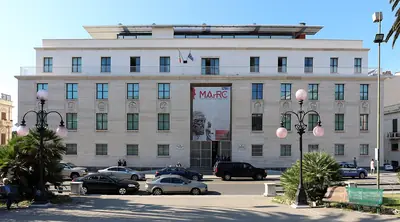
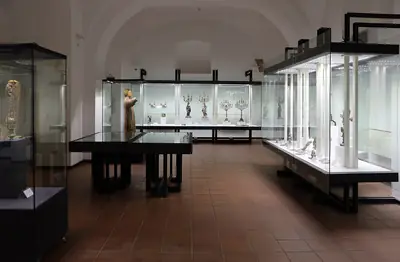
The National Museum of Magna Græcia, also known as the National Archaeological Museum of Reggio Calabria, holds one of the most important collections of archaeological finds from Magna Græcia, the ancient Greek world of southern Italy.
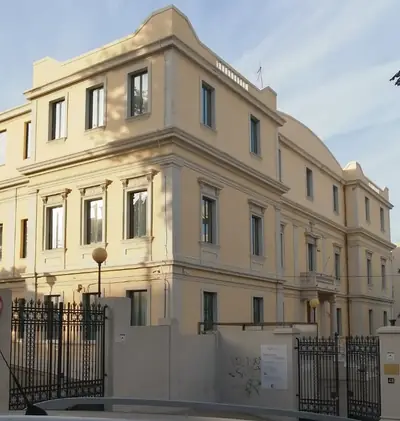
The museum grew from Reggio Calabria’s civic collections and was later enriched by discoveries from archaeological excavations across Calabria. Its most celebrated display is devoted to the Riace Bronzes, the bronze statues found in 1972. The museum is housed in Palazzo Piacentini on Piazza De Nava, a square building designed by Marcello Piacentini, planned in 1932 and completed in 1942.
Reggio Calabria Cathedral
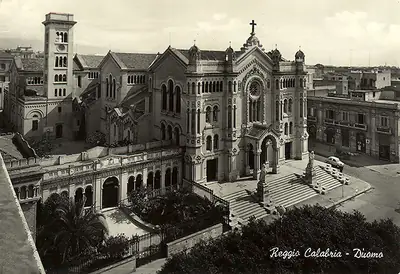
On Piazza del Duomo stands Reggio Calabria Cathedral, also known as the Duomo or the Basilica of Maria Santissima Assunta. It is the largest religious building in Calabria and one of the central landmarks of the historic centre.
The cathedral is included in Neywo’s walk focused on the city’s cathedral, castle, and palaces rebuilt after the 1908 earthquake.
The Diocesan Museum
The “Mons. Aurelio Sorrentino” Diocesan Museum occupies part of the archbishop’s complex. Also known simply as the Diocesan Museum, it forms part of a wider religious and cultural setting close to the cathedral.
Aragonese Castle
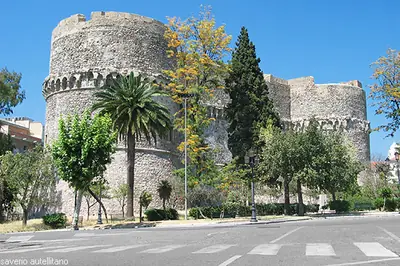
The Aragonese Castle, or Castello Aragonese, is one of Reggio Calabria’s principal historical symbols, alongside the Riace Bronzes. It stands at Piazza Castello, between Via Aschenez and Via Possidonea.
The fortification dates from the sixth century. Its central position reflects the castle’s role in the city’s history as a place of defence and makes it a natural stop on a walk through Reggio Calabria’s historic centre.
Arena dello Stretto
Along the Falcomatà waterfront, the Arena dello Stretto is a modern open-air theatre inspired by the form of ancient Greek theatres. Its semicircular seating faces the Strait of Messina, creating one of the city’s distinctive combinations of architecture and sea views.
The theatre is also known as the Ciccio Franco Amphitheatre. Two broad ramps lead to the lower part of the arena, allowing access for people with disabilities. Before the 1908 earthquake, the Molo di Porto Salvo stood on this site.
The Lungomare and Palazzo Barbera
Reggio Calabria’s Lungomare is one of its defining public spaces, with views across the water toward Sicily. Along the seafront stands Palazzo Barbera, also known as Casa Barbera, at the corner of Corso Vittorio Emanuele III and Largo Cristoforo Colombo.
The palace is a neoclassical building from the 1920s. Its original project was drawn up in 1924 by engineer Antonio Marino, then revised in January 1926 by engineer Domenico Corigliano.
Civic Pinacotheca of Reggio Calabria
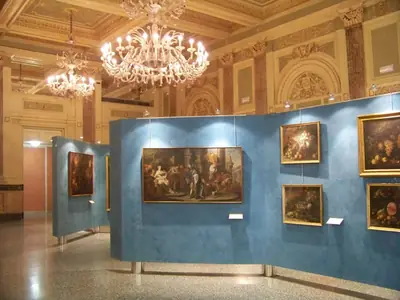
The Civic Pinacotheca, or Pinacoteca Civica, is housed inside the Francesco Cilea Theatre. Its collection brings together paintings, canvases, and sculptures owned by the city.
Among the works are painted panels by Antonello da Messina, as well as works by Mattia Preti, Giuseppe Benassai, and Renato Guttuso. The sculpture section includes marble busts and classical sculptures. The Pinacotheca opened on May 26, 2008, after municipal collections previously held in different museums and public buildings were brought together.
Museo dello Strumento Musicale
A short distance from the waterfront, the Museo dello Strumento Musicale explores musical instruments from around the world. The collection presents different families of instruments and the many ways in which sound can be produced.
The museum has also occasionally hosted small acoustic concerts. Its collection suffered a serious setback when about twenty percent of its musical and library holdings were destroyed in a fire on November 4, 2013.
Museo San Paolo
Museo San Paolo is housed in the Palazzo della Cultura, behind the Sanctuary of San Paolo, also known as San Paolo alla Rotonda. The Palazzo della Cultura opened in 2016 after acquiring numerous paintings confiscated from the entrepreneur Gioacchino Campolo, who was linked to the ’ndrangheta.
The museum is included in a longer walk through the southern quarter, which also visits historic churches and palaces.
San Giorgio al Corso and Palazzo Mazzitelli
The Church of San Giorgio al Corso stands around the Piazzetta di San Giorgio, with its main entrance on Corso Garibaldi and a side along Via Giudecca. Dedicated to Saint George, the patron saint of Reggio Calabria, it has also been known as San Giorgio Intra Moenia, San Giorgio de Gulpheriis, San Giorgio in la Judeca, and the Temple of Victory.
Nearby, Palazzo Mazzitelli occupies the corner between Corso Giuseppe Garibaldi, Via Fata Morgana, and the piazzetta. Its 1920s design combines neoclassical elements with Art Nouveau details.
Corigliano Palace
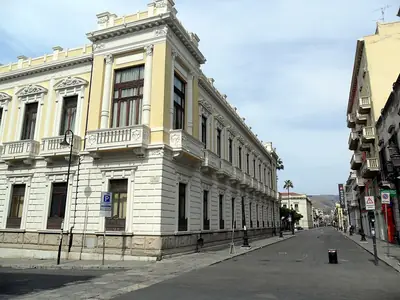
Corigliano Palace is one of Reggio Calabria’s distinctive Liberty-style buildings. Liberty is the Italian expression of Art Nouveau, and the palace was built in the 1920s.
Its principal façade faces Corso Giuseppe Garibaldi, while the other façades extend toward Corso Vittorio Emanuele III, Via Tenente Panella, and Via XXIV Maggio.
Fortini di Pentimele
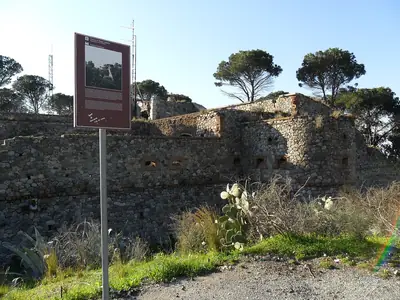
Above the city, the Fortini di Pentimele occupy a panoramic position on Pentimele Hill. Their location overlooks both Reggio Calabria and the Strait of Messina, explaining why the hill was chosen for military defence.
Plans for a castle on the site began in 1547 after repeated pirate raids, but the project was abandoned when funds ran out. The Fortini di Pentimele themselves were built around 1896. After years of neglect, the former military structures underwent restoration and redevelopment.
Reggio Calabria After the 1908 Earthquake
The 1908 Messina earthquake profoundly changed Reggio Calabria and Messina, the two cities most severely affected on opposite sides of the strait. The earthquake struck at 5:21 in the morning on December 28, 1908, and the shaking lasted 37 seconds.
Around half of Messina’s population and one third of Reggio Calabria’s population lost their lives. The disaster remains part of the city’s story, visible in its rebuilt architecture and remembered in places such as the Arena dello Stretto.
Explore Reggio Calabria with Neywo
Neywo’s Reggio Calabria audio guide includes 65 narrated places and four walking tours, plus one bus route. The walks range from 1.23 to 3.52 kilometres and from 71 to 110 minutes, with 10 to 12 narrated stops each:
- Reggio Reborn: Cathedral, Castle and the Palaces After 1908 — 1.23 km, 81 minutes, 12 stops.
- Liberty Seafront: Villas, Theatres and the Strait — 1.34 km, 74 minutes, 11 stops.
- The Riace Bronzes and the Northern Corso — 1.49 km, 71 minutes, 10 stops.
- Greek Church, Old Churches and the Southern Quarter — 3.52 km, 110 minutes, 12 stops.
There is also one 3-kilometre, 13-minute bus route with nine stops, connecting Santa Lucia and the Riace Museum with the Central Station.
Download Neywo and explore Reggio Calabria at your own pace. The app tells the story of each place as you reach it, with no group and no schedule. Narration is available in 11 languages. Reggio Calabria is also a starting point for discovering other destinations in Italy, including Scilla and Cosenza.
Places with an audio guide in Reggio Calabria
8 places in Reggio Calabria with a Neywo audio guide. Each one starts telling its story as you reach it.
Self-guided tours in Reggio Calabria
5 tours in Reggio Calabria, free in the Neywo app. Each stop tells its story as you reach it.
- Bus ride
Line 101: Santa Lucia and the Riace Museum to the Central Station
ATAM line 101 leaves from the central station and runs through Reggio's main axis past the national museum with the Riace Bronzes. Ride it from the northern church of Santa Lucia down through a string of Liberty palaces and the central post office to Piazza Garibaldi.
Santa Lucia · National Museum of Magna Græcia · Corigliano Palace · De Blasio Palace · Giuffrè Palace · Palazzo Zani …
Open this tour: Line 101: Santa Lucia and the Riace Museum to the Central Station - Walk
Reggio Reborn: Cathedral, Castle and the Palaces After 1908
In 1908 an earthquake flattened Reggio. Walk from the Duomo to the Aragonese Castle and along Corso Garibaldi, where Liberty and neoclassical palaces rose from the rubble. Only one building on the Corso survived the quake.
Piazza Duomo · Reggio Calabria Cathedral · "Mons. Aurelio Sorrentino" Diocesan Museum · Palazzo dei Tribunali · Aragonese Castle · Chiesa degli Ottimati …
Open this tour: Reggio Reborn: Cathedral, Castle and the Palaces After 1908 - Walk
Liberty Seafront: Villas, Theatres and the Strait
Stroll from the Post Office and Government Palace to the Lungomare Falcomata, which Gabriele D'Annunzio called the most beautiful kilometre in Italy. On the way: an Antonello da Messina gallery, a villa museum and an open-air Greek-style arena facing Sicily.
Palazzo delle Poste · Palazzo del Governo · Palazzo Zani · Guarna Palace · Civic Pinacotheca of Reggio Calabria · Palazzo ex Hotel Miramare …
Open this tour: Liberty Seafront: Villas, Theatres and the Strait - Walk
The Riace Bronzes and the Northern Corso
Start at Santa Lucia and the fascist-era Casa del Fascio and head south past the national museum that holds the Riace Bronzes, two Greek warriors pulled from the sea in 1972. Finish among the Liberty palaces and theatres of the upper Corso.
Santa Lucia · Casa del Fascio · Piazza Giuseppe De Nava · National Museum of Magna Græcia · Barbera Palace · Corigliano Palace …
Open this tour: The Riace Bronzes and the Northern Corso - Walk
Greek Church, Old Churches and the Southern Quarter
A quieter walk through the southern old town: the Greek-rite Cattolica, the Church of Gesu e Maria, the Carmine and Piazza Garibaldi by the station. It ends at the San Paolo sanctuary and museum.
Piazza Garibaldi · Palazzo Pellicano di Reggio Calabria · Palazzo del Bufalo · Palazzo delle Finanze · Chiesa del Carmine · Palazzo Miccoli-Bosurgi …
Open this tour: Greek Church, Old Churches and the Southern Quarter
Walk Reggio Calabria with Neywo
Neywo turns Reggio Calabria into a self-guided audio tour. Stories arrive as you reach the place they belong to, and the route reshapes when you wander off it.

