Amalfi, Italy: Self-Guided Walking Tour
Things to Do in Amalfi: A Self-Guided Walk Through Its Maritime History
The best things to do in Amalfi combine a cathedral, medieval maritime heritage, quiet religious sites, and the everyday life of a town shaped by the sea. In the center of Amalfi, historic streets lead from the waterfront to Cathedral Square, while museums and monuments reveal how the town became one of Italy’s maritime republics. Neywo offers a free audio guide for Amalfi with 15 narrated places, available in 11 languages.
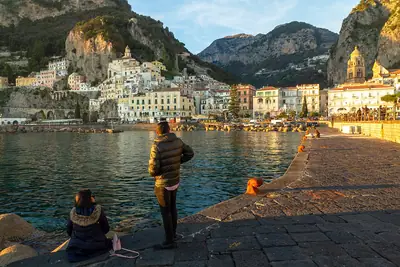
Amalfi is in Campania, on Italy’s celebrated coast. Its compact center is easy to explore on foot, and its landmarks tell a connected story of religion, navigation, trade, paper-making, and local life.
What to See in Amalfi
The following route brings together the central sights and several less familiar places included in Neywo’s audio guide.
Cathedral Square and Amalfi Cathedral
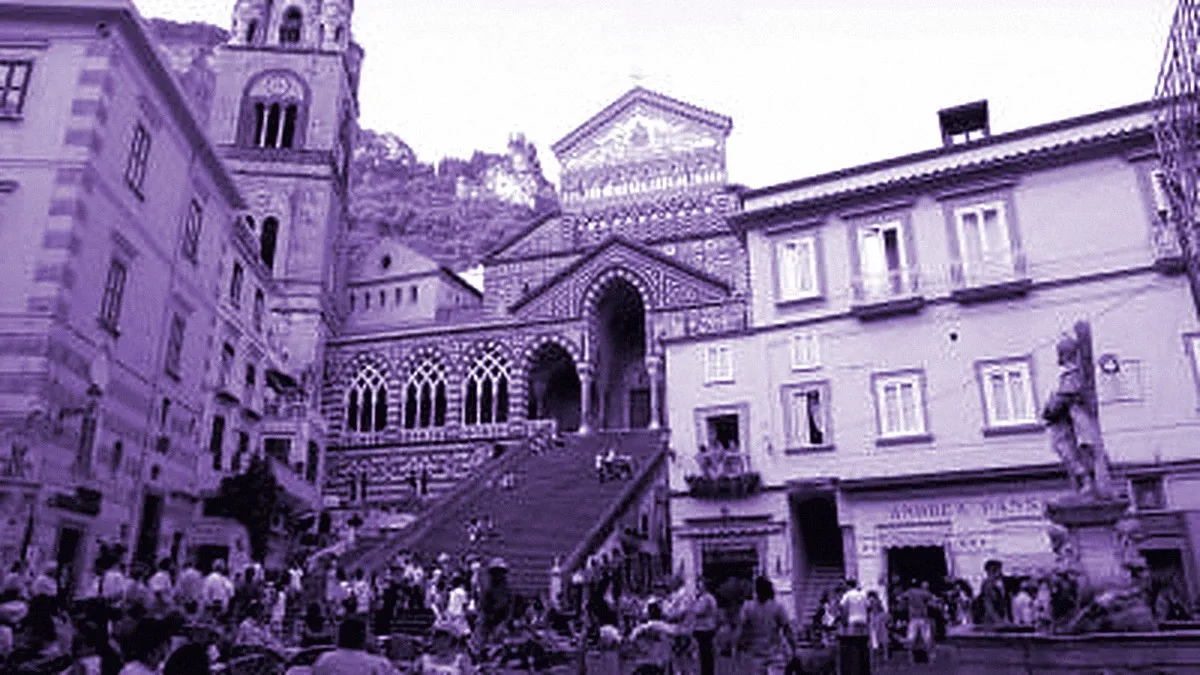
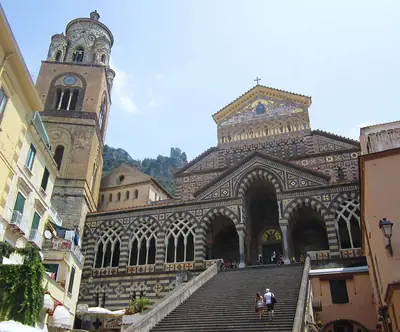
Cathedral Square has been the center of Amalfi’s religious, commercial, and public life for centuries. Its grand staircase leads to Amalfi Cathedral, dedicated to Saint Andrew the Apostle and located at the heart of town.
The cathedral’s history begins in the ninth century, when the first church was built here as Amalfi was developing as a maritime republic. By the mid-ninth century, two basilicas stood side by side. In the thirteenth century, they were united into a larger cathedral with five naves. Later generations added Romanesque, Baroque, Arab-Norman, and Byzantine elements.
The cathedral’s connection with Saint Andrew became especially important in 1208, when the apostle’s relics were brought from Constantinople. This helped turn Amalfi into a major pilgrimage destination.
The Cloister of Paradise and Diocesan Museum of Amalfi
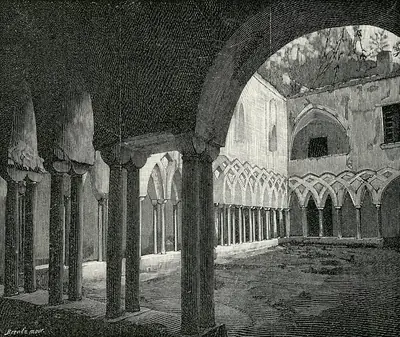
The Cloister of Paradise forms part of the cathedral complex. Built between 1266 and 1268 under Archbishop Filippo Augustariccio, it originally served as a burial ground for Amalfi’s noble families.
Its 120 marble columns support rows of Arabic-influenced arches, while palm trees and fragments of 13th-century frescoes create a peaceful setting close to the busy square. One arch frames a view of the cathedral’s campanile.
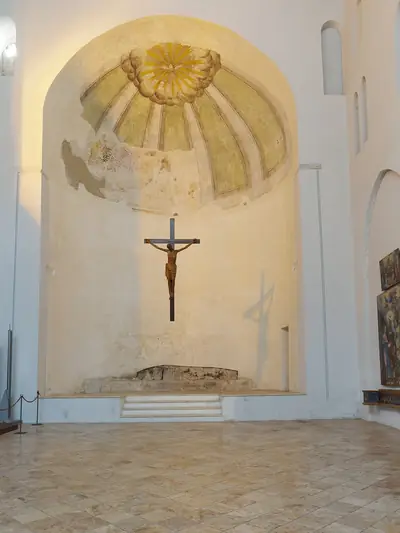
The cloister later became the passage linking the cathedral with the Diocesan Museum of Amalfi, housed within the ancient Basilica of the Crucifix. Together, these spaces offer a closer look at Amalfi’s religious and artistic heritage.
Sant’Andrea Fountain
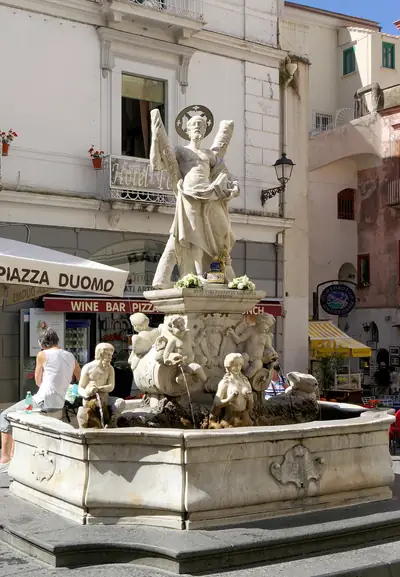
The Saint Andrew’s Fountain stands in Cathedral Square and is one of Amalfi’s most recognizable landmarks. This Baroque monument dates from 1760 and was created in honor of the town’s patron saint.
Its sculptural details form an allegory of the natural elements: a dove represents air, a fisherman known locally as a Pulicano represents land, a mermaid represents water, and Saint Andrew at the center reflects fire. Before becoming a monument, the fountain supplied fresh water to Amalfi’s residents.
Lorenzo d’Amalfi Street and the Historic Center
Lorenzo d’Amalfi Street runs from the waterfront towards Cathedral Square, following the valley that shaped the town. In medieval times, it served as a route for merchants, pilgrims, and goods arriving from the port.
Today, the street still expresses Amalfi’s everyday character. Shops display ceramics and handmade leather sandals, while lemon-themed products, sfogliatella, lemon pastries, cafés, and limoncello add to the atmosphere. Walking through this part of town is one of the simplest answers to what to see in Amalfi: the street itself connects the town’s maritime past with its modern life.
The Arsenal of the Maritime Republic
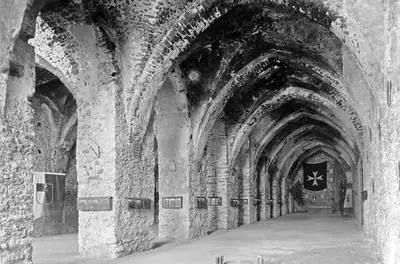
The Arsenale recalls the period when Amalfi was a powerful seafaring republic. Built in the eleventh and twelfth centuries, it was the center of the town’s naval operations, where ships were constructed and repaired for journeys across the Mediterranean.
Only part of the original complex survives, as much of the arsenal was lost to the sea. Its vaulted stone halls nevertheless preserve a strong link to Amalfi’s maritime history. The site is also associated with the Tabula Amalphitana, the maritime code that established rules for sailors, navigation, and life at sea.
Cap è Ciuccio Fountain
The Cap è Ciuccio, or Donkey’s Head Fountain, is tucked into a quieter corner of the historic center. Built in the eighteenth century, it was a practical stopping point for donkeys carrying fruit, vegetables, and firewood down from Pogerola.
Twin marble faces flank the basin, with water flowing from their mouths. Since 1974, the fountain has also contained a handcrafted presepe, or Italian nativity scene, with figures of Mary, Joseph, and the infant Jesus partly immersed in the flowing water.
The Museum of Handmade Paper
The Museum of Handmade Paper occupies a thirteenth-century paper mill in Amalfi’s Valley of the Mills. Paper-making reached Amalfi during the Middle Ages, probably through contact with Arab traders, and Amalfi paper became valued across the Mediterranean for its durability.
The museum explains the traditional process: linen rags are soaked, beaten into pulp, lifted in wooden frames, pressed, and dried. A live demonstration shows how the sheets were made, and visitors can try shaping a page themselves. The guided visit and demonstration take about fifteen to twenty minutes.
Paper-making became an important part of Amalfi’s economy after the town’s maritime power declined. Alongside fishing and citrus farming, it remains one of the traditions that connects the town to its wider landscape.
Convento dei Cappuccini
Above Amalfi, the Convento dei Cappuccini occupies the site of an earlier Cistercian abbey known as San Pietro della Canonica. The buildings seen today belong to the Capuchin order, adding a religious landmark beyond the central streets.
Chiesa di Santa Maria del Pino
In the southern part of Pastena, the Chiesa di Santa Maria del Pino stands where the Via Maestra dei Villaggi meets the pedestrian path towards Pogerola. It is also known as the Madonna del Carmine.
According to local legend, a flood almost destroyed the church, but the statue of the Madonna was later found intact in the branches of a pine tree. Inside, the altarpiece shows the Madonna and Child surrounded by angels.
The Monumental Cemetery
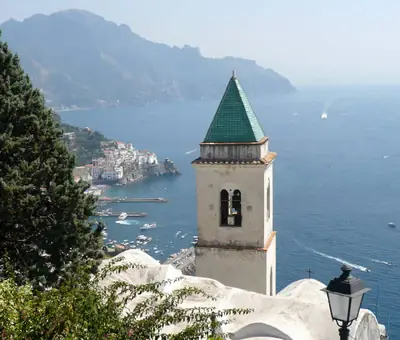
The Belvedere Monumental Cemetery sits on a hill overlooking Amalfi and its coastline. Its paths pass statues and sculptures ranging from classical to contemporary, making the cemetery an open-air collection of local artistic and historical memory.
It is also a place to pause away from the busiest parts of town, with views that connect the town’s heritage to its coastal setting.
Chiostro Convento Luna
The Chiostro Convento Luna began in 1222 as a Franciscan convent founded by Saint Francis of Assisi. Its historic cloister, with Moorish-style arches around an inner courtyard, remains the heart of the complex.
In 1821, the site became the first hotel on the Amalfi Coast. The former convent cells were transformed into rooms and suites, while the ancient guard tower became the Tower Suite. The complex preserves a rare combination of religious, architectural, and hospitality history.
Explore Amalfi with a Free Audio Guide
Neywo’s “Amalfi: Capital of a Sea Republic” is a 1.4-kilometre self-guided walking tour lasting 65 minutes, with eight narrated stops. It includes the Monumental Cemetery, Diocesan Museum of Amalfi, Amalfi Cathedral, Sant’Andrea Fountain, Arsenale, the historic center, Cap è Ciuccio Fountain, and the Museum of Handmade Paper.
The app tells the story of each place as you reach it, at your own pace, with no group and no schedule. Download Neywo to explore Amalfi independently, then continue discovering Salerno, Naples, Sorrento, or Pompei in the same way.
Places with an audio guide in Amalfi
8 places in Amalfi with a Neywo audio guide. Each one starts telling its story as you reach it.
Self-guided tours in Amalfi
1 tour in Amalfi, free in the Neywo app. Each stop tells its story as you reach it.
- Walk
Amalfi: Capital of a Sea Republic
Trace Amalfi's rise from medieval maritime republic to pilgrimage town. Start on the Belvedere hill, descend to the striped cathedral and the Cloister of Paradise, see the old shipyard where sea law was written, then climb the Via Lorenzo d'Amalfi past the donkey's-head fountain into the Valley of the Mills for handmade paper.
Cimitero monumentale · Diocesan Museum of Amalfi · Amalfi Cathedral · Sant'Andrea fountain · Arsenale · Amalfi …
Open this tour: Amalfi: Capital of a Sea Republic
Walk Amalfi with Neywo
Neywo turns Amalfi into a self-guided audio tour. Stories arrive as you reach the place they belong to, and the route reshapes when you wander off it.

