What to See in Himeji, Japan: Free Audio Guide
Things to Do in Himeji: What to See Beyond Himeji Castle
Himeji is a Japanese city best known for Himeji Castle, but its museums, gardens, parks and cultural landmarks make it worth exploring beyond the castle grounds. From the peaceful setting of Kōko-en to the red-brick Himeji City Museum of Art and the city’s unusual Azuki Museum, there are plenty of things to do in Himeji. Neywo offers a free audio guide for Himeji with 15 narrated places.
What to See in Himeji
Himeji Castle
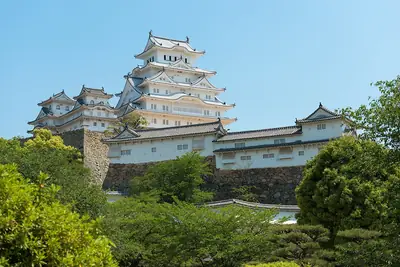
Himeji Castle is the city’s essential sight and one of Japan’s most celebrated castle complexes. Its brilliant white exterior has earned it the name Hakurojo, or White Egret Castle, because it is said to resemble a bird taking flight.
The castle stands on Himeyama Hill and includes 83 structures, including the main keep, turrets and other buildings arranged through a sophisticated defensive system. The entire site is both a UNESCO World Heritage cultural property and a National Special Historic Site.
Its history reaches back to 1333, when Akamatsu Norimura built a fort on the hill. The site became Himeyama Castle in 1346, and Toyotomi Hideyoshi added a three-storey keep in 1581. After the Battle of Sekigahara, Ikeda Terumasa received the castle and rebuilt and expanded it between 1601 and 1609. Further buildings were added by Honda Tadamasa between 1617 and 1618.
Kōko-en
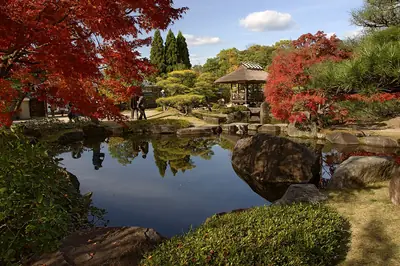
Just beside Himeji Castle, Kōko-en provides a quieter counterpoint to the castle’s imposing architecture. This Japanese garden occupies the area known formally as the Himeji Castle West Estate Ruins Garden.
Its name comes from Kōkodō, a domain school that once stood near the present entrance during the Edo period. The garden is part of the Himeji Park area, making it a natural addition to a visit to the castle.
Himeji City Museum of Literature
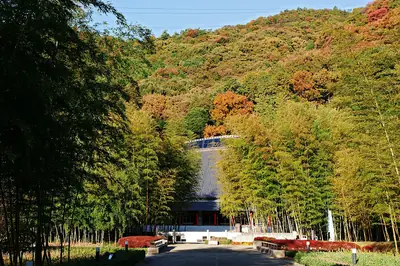
The Himeji City Museum of Literature, or Himeji Bungakukan, is close to Himeji Castle and occupies a modern architectural setting designed by Tadao Ando. Its North Building opened in 1991, followed by the South Building in 1996.
The museum reopened on July 30, 2016, after renovation work. Its first director was Susumu Nakanishi, followed by Masaaki Ueda and then Masahiko Fujiwara.
Himeji City Museum of Art
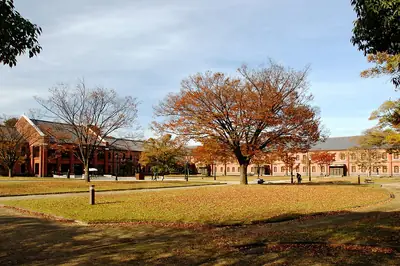
Set within Himeji Park, the Himeji City Museum of Art combines exhibitions with an unusually prominent building. Its red-brick complex was built in 1905 and enlarged in 1913. It originally served as the Himeji Army Arsenal, then became a clothing warehouse for the ordnance department of the Japanese Army’s Tenth Division.
After the war, the buildings were used as Himeji City Hall. They became an art museum in 1983, the year the museum opened, and the complex was registered as a Tangible Cultural Property in 2003. The museum includes permanent and special exhibition rooms, an auditorium, a café and a garden.
Himeji City Zoo
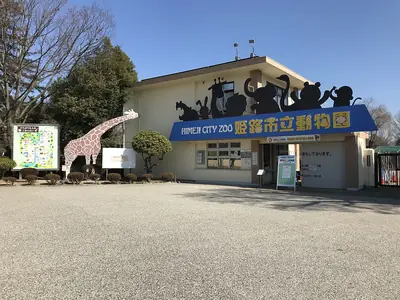
Himeji City Zoo stands beside Himeji Castle’s Sannomaru Square, within Himeji Park. Opened on December 1, 1951, to commemorate the signing of the San Francisco Peace Treaty, it offers a very different experience from the castle while remaining closely connected to its historic setting.
In 1955, the zoo was designated as a facility equivalent to a museum under the relevant museum system. As of 2011, it housed around 120 species and 400 individual animals. Its future is changing: in June 2024, Himeji City decided to move the zoo outside the castle grounds because the facilities had become aged and cramped, while expansion was restricted by plans to restore Himeji Castle’s inner moat and by the site’s status as a specially designated historic site.
Miki Museum of Art
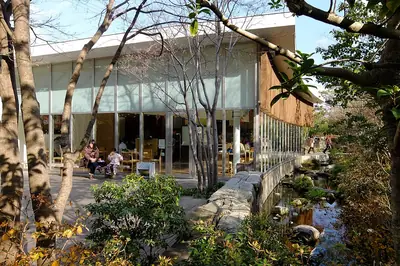
The Miki Museum of Art, known in Japanese as Miki Bijutsukan, is another cultural stop in Himeji. It opened in June 2008 and offers a chance to pause and explore art in the city.
Azuki Museum
The Gozasoro Azuki Museum is dedicated to azuki beans and opened in 2009 beside Gozasoro’s headquarters factory in Himeji. It is described as the world’s first museum dedicated to azuki beans.
The museum is part of a larger setting that includes a garden and a restaurant, making it a distinctive stop for anyone interested in the ingredients and food culture connected with Japan.
More Places to Visit in Himeji
Himeji’s cultural attractions extend beyond the area around the castle. The Himeji City Science Museum, locally known as Himeji Kagakukan, explores four themes: Earth, the nature of the local area, science and space. Its nickname is the House of Atom. The museum opened in April 1993 after the former Himeji City Science Museum moved from Tegara Central Park, now called Tegara Peace Park. The earlier museum had opened in 1965.
Tegarayama Central Park, also known as Tegarayama Heiwa Park, is a general-purpose park in Himeji. At the foot of Mount Shosha beside the Yumesaki River, the Shosha Art and Craft Museum provides another museum setting within the city.
For a different kind of collection, the Japan Toy Museum is one of Himeji’s most distinctive stops. This privately run museum is recognized around the world as one of Japan’s leading toy museums. Its collection was built over roughly fifty years, giving it an unusual scale and range.
The Kōdera Museum of Folklore, also known as Hirose Fureai Park, presents folklore materials in Himeji’s Kōdera district. It opened in 1971 during the Shōwa period and is operated by the Kōdera Museum of Folklore General Foundation.
In Aboshi Ward, the Former Aboshi Bank Head Office has continued to serve the town in changing roles. The building was originally constructed as the Aboshi Town Branch, although important meetings of senior executives and branch managers were often held there, and the branch was treated as having the status of a head office. Later, it became a women’s clothing store. In 2019, it was renovated and given a new life as a restaurant.
Himeji is part of a wider journey through Japan, with other city destinations including Hiroshima, Fukuoka and Fujikawaguchiko.
Explore Himeji with Neywo
Neywo’s free Himeji audio guide includes 15 narrated places. It offers one walking tour and one bike route:
- White Egret Castle and Its Park: a 3.91 km walk lasting 98 minutes, with 7 narrated stops
- Around Himeji Castle by Bike: a 1.7 km bike route lasting 8 minutes, with 5 narrated stops
The routes include Himeji Castle, Kōko-en, Himeji City Museum of Literature, Himeji City Museum of Art, Himeji City Zoo and Miki Museum of Art. The walking tour also includes the Azuki Museum.
Download Neywo and explore Himeji at your own pace. The app tells the story of each place as you reach it, with no group and no schedule. Narration is available in 11 languages, so you can follow a self-guided walking tour or bike route while discovering the city independently.
Places with an audio guide in Himeji
8 places in Himeji with a Neywo audio guide. Each one starts telling its story as you reach it.

Self-guided tours in Himeji
2 tours in Himeji, free in the Neywo app. Each stop tells its story as you reach it.
- Bike ride
Around Himeji Castle by Bike
A gentle loop through Himeji Park, where cycling is allowed: past Tadao Ando's literature museum, the Kōko-en garden and the castle itself, then the zoo and a small art museum to the south. Walk your bike across the bridges and through the keep's gates.
Himeji City Museum of Literature · Kōko-en · Himeji Castle · Himeji City Zoo · Miki Museum of Art
Open this tour: Around Himeji Castle by Bike - Walk
White Egret Castle and Its Park
Himeji Castle, a UNESCO World Heritage site, is the centre of this walk through Himeji Park. Visit a Tadao Ando museum, a restored garden, a red-brick army arsenal turned art museum and a zoo inside the castle grounds, then head south to a small art museum and the world's first museum of azuki beans.
Himeji City Museum of Literature · Kōko-en · Himeji Castle · Himeji City Museum of Art · Himeji City Zoo · Miki Museum of Art …
Open this tour: White Egret Castle and Its Park
Walk Himeji with Neywo
Neywo turns Himeji into a self-guided audio tour. Stories arrive as you reach the place they belong to, and the route reshapes when you wander off it.

