Arita, Japan: Self-Guided Walking Tour
Things to Do in Arita: A Walking Guide to Japan’s Porcelain Town
The best things to do in Arita revolve around its four-century tradition of porcelain making. In this quiet town in Saga Prefecture, museums, historic kiln sites and a remarkable ceramic shrine reveal how Arita ware developed from a local craft into an internationally admired style. Neywo offers a free audio guide for Arita with 8 narrated places, available in 11 languages.
Arita is a rewarding destination for travellers interested in Japanese history, design and craftsmanship. Rather than concentrating on one monumental landmark, the town is best understood by visiting the places connected to its ceramic heritage.
What to See in Arita
Arita Ceramic Museum
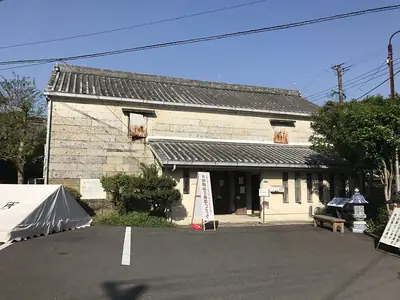
The Arita Ceramic Museum occupies a former two-storey stone warehouse built in the early Meiji period. The building was later renovated for museum use, and the museum opened on May 1, 1954.
Its original mission included both ceramics and research materials related to the ceramic industry. Today, the collection focuses on masterpieces that trace the history of Arita ceramics from the early seventeenth century to the present. Particular attention is given to works from the late Edo period through the modern era.
This is a useful starting point for understanding the styles and techniques encountered elsewhere in town.
Tōzan Shrine
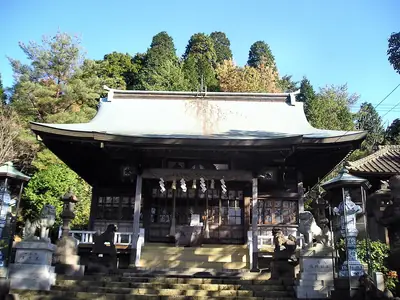
Tōzan Shrine reflects Arita’s porcelain tradition in an unusually direct way. Its torii gate is made of porcelain, as are the guardian lions beside the approach. Porcelain also appears in the gate pillars, votive plaques and amulets.
The shrine was founded in 1658, during the period when the Nabeshima clan controlled the domain and the porcelain trade. It was originally dedicated to Emperor Ōjin and Nabeshima Naoshige, the lord associated with bringing Korean potters to the area.
The porcelain torii dates from 1888 and was designated a Tangible Cultural Property in 2000. A memorial to Yi Sam-pyeong, known in Japan as Kanagae Sambee, stands on the hill behind the main hall.
Kyushu Ceramic Museum
The Kyushu Ceramic Museum explores the ceramic traditions of Kyushu, with a particular emphasis on the porcelain associated with Arita. Its Shibata Collection follows the development of Arita porcelain, known internationally as Imari ware, from its beginnings in 1603 through the end of the Edo period in 1867.
The Kanbara Collection presents old Imari pieces that were exported to Europe in the seventeenth and eighteenth centuries before returning to Japan. Its kinrande, or gold-brocade, works show the elaborate decoration that attracted European aristocrats.
The museum also covers Karatsu pottery, Takatori ware and other ceramic traditions from across Kyushu. Together, these collections place Arita’s work within the wider history of Japanese ceramics and international trade.
Kakiemon Kiln Site
The Kakiemon Kiln Site marks the setting where one of Japan’s best-known porcelain styles was developed. Kakiemon refers to a family name, a kiln tradition and a distinctive overglaze enamel technique.
By the 1680s, the style had acquired its characteristic appearance: asymmetrical designs in vivid red, green, blue and yellow, painted on a milky-white porcelain body with a warm, creamy tone.
Kakiemon ware became a celebrated form of Imari ware and was exported to Europe through the nearby port of Imari. Its influence spread widely. European factories including Meissen, Chantilly and Chelsea imitated the style, while Chinese kilns also produced versions for export.
The kiln site is therefore more than an archaeological place. It represents the origins of a style that shaped the international reputation of Japanese porcelain.
Arita Porcelain Park
Arita Porcelain Park is a theme park centred on the town’s ceramic heritage. Its main feature is a recreation of Dresden’s Zwinger Palace, the eighteenth-century Baroque building, together with formal gardens inspired by the original.
The park adds a different perspective to Arita’s porcelain story. While the museums focus on collections, history and production, the park presents the tradition through architecture, gardens and visitor experiences.
Arita History and Folklore Museum East
The Arita History and Folklore Museum East, known locally as the Arita-yaki Sankōkan, preserves local history and folk materials. It is one of the places that broadens a visit beyond porcelain objects themselves, offering a view of the community and traditions connected with Arita’s ceramic industry.
Nearby, the Arita East Library, also known as 喜遊楽, serves as a public library in Saga Prefecture.
Arita Town History and Folklore Museum West Building
The Arita Town History and Folklore Museum West Building, known locally as the Arita West Library, combines library and museum functions. It preserves local historical and folk materials for visitors and researchers.
Together with the East building, it helps explain the wider cultural setting in which Arita’s pottery and porcelain tradition developed.
Explore Arita with a Self-Guided Walking Tour
For a focused introduction to the town, Neywo’s “The Porcelain Trail: From Kakiemon’s Kilns to the Shrine of Clay” is a 4.68-kilometre walking tour lasting 97 minutes. It includes 4 narrated stops:
- Kakiemon Kiln Site
- Kyushu Ceramic Museum
- Tōzan Shrine
- Arita Ceramic Museum
The route connects several of the most important places in Arita’s porcelain history, from the kilns associated with Kakiemon ware to the museum collections and the ceramic shrine.
Neywo works as a self-guided walking tour: the app tells the story of each place as you reach it, at your own pace, with no group and no schedule. There is 1 walking tour in Arita, and no bus or bike routes are listed.
Download Neywo for Arita
Download Neywo’s free audio guide and explore Arita while walking between its museums, kiln sites and shrine. The app includes 8 narrated places, and its stories play when you reach each location, so you can discover the town independently and in 11 languages.
Arita is one destination within Japan, a country whose cities offer many different ways to explore history, architecture and local culture.
Places with an audio guide in Arita
5 places in Arita with a Neywo audio guide. Each one starts telling its story as you reach it.

Walk Arita with Neywo
Neywo turns Arita into a self-guided audio tour. Stories arrive as you reach the place they belong to, and the route reshapes when you wander off it.

