Visiting Nazaré, Portugal: Top Sights on Foot
Things to Do in Nazaré: What to See in Portugal’s Coastal Town
Looking for things to do in Nazaré? This coastal town in Portugal’s Leiria region brings together a historic hilltop district, religious landmarks, maritime traditions and the dramatic Atlantic setting that made its giant waves famous. A free Neywo audio guide for Nazaré narrates 13 places as you explore.
What to See in Nazaré
The most important sights are concentrated in and around Sítio, the upper part of town, while Pederneira preserves another layer of Nazaré’s religious and architectural heritage. The places below offer a useful route through the town’s landmarks.
Nazaré Funicular
The Nazaré Funicular, or Ascensor da Nazaré, links the town centre and Praia da Nazaré with Sítio on the promontory above. Designed by engineer Raul Mesnier de Ponsard, it was built to overcome the steep difference in height between the beach and the upper district. Its nineteenth-century architecture makes the journey part of Nazaré’s character.
Nazaré Bullring
Opened in 1897, the Nazaré Bullring is one of Sítio’s distinctive buildings. Known in Portuguese as Praça de Touros da Nazaré, it has revivalist architecture with a neo-Arab style. The venue remains associated with bullfights and is also used for cultural and leisure events. The present building replaced an earlier arena destroyed by fire.
Museu Doutor Joaquim Manso
The Museu Doutor Joaquim Manso is a regional and ethnographic museum in Sítio da Nazaré. Housed in an early twentieth-century summer residence, it introduces the maritime and historical identity of the coastal community.
Teatro Chaby Pinheiro
Near the Sanctuary of Our Lady of Nazaré, Teatro Chaby Pinheiro is a cultural heritage monument with early twentieth-century romantic architecture and Italian influence. Architect Ernesto Korrodi designed the building, giving it a distinctive place among Sítio’s landmarks.
Sanctuary of Our Lady of Nazaré
The Sanctuary of Our Lady of Nazaré is one of the town’s most important religious sites. It preserves a sacred wooden image of the Virgin Mary known as the Black Madonna.
According to tradition, the image was brought from Mérida in 711 by Friar Romano, a monk fleeing the Muslim invasions. It was first placed in a small cave beside the cliff, around 110 metres above the ocean beach. After the story of the miracle that saved Dom Fuas Roupinho, the Chapel of Memory was built above the cave in 1182.
The present sanctuary was founded by King Ferdinand the First in 1377. Its reconstruction took place in stages from the early seventeenth century until the end of the nineteenth century, making the building the result of a long architectural history.
Palácio Real do Sítio da Nazaré
The Palácio Real do Sítio da Nazaré reflects the connection between the Portuguese royal family and the sanctuary. Built in the eighteenth century, it provided accommodation for the royal family during pilgrimages to the Sanctuary of Nossa Senhora da Nazaré. Its sober design follows the tradition of civil palace architecture, with seventeenth-century inspiration.
Memory Hermitage of Nazaré
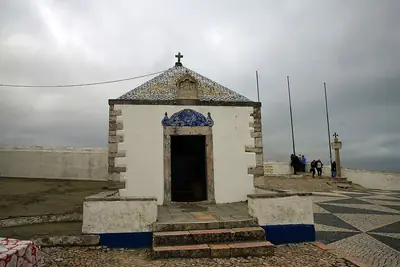
The Memory Hermitage, also called Ermida da Memória, Capela da Memória or Capelinha do Sítio, stands at the edge of the Sítio promontory. The simple four-sided chapel has blue-and-white tile decoration and a pyramidal roof. Its position and compact form make it one of the area’s most recognizable religious landmarks.
Veado
Veado is a sculpture by Adália Alberto in Nazaré. It offers a brief artistic stop within the route through Sítio and adds a contemporary detail to the district’s historic surroundings.
Fort of São Miguel Arcanjo
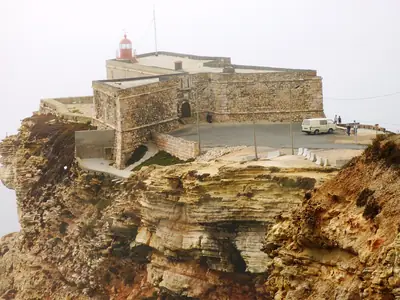
The Fort of São Miguel Arcanjo stands dramatically above Nazaré Beach. First constructed in 1577, it was remodelled and expanded several times, and it has been classified as a Monument of Public Interest since 1978.
The fort looks across the beach, the coast and the Atlantic. Its position makes it one of the best places to understand Nazaré’s landscape, especially when the famous waves draw surfers and spectators to the area.
Nazaré Lighthouse
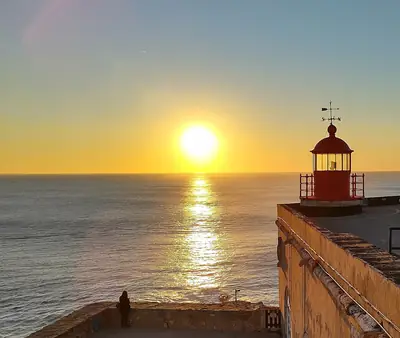
The Nazaré Lighthouse stands inside the Fort of São Miguel Arcanjo. Its bright red, round iron lantern is mounted directly on the fort’s wall and has a narrow service balcony. The lighthouse and fort have both been designated Properties of Public Interest since 1978. Against the fort’s stone walls, the red lantern is an especially distinctive feature.
Igreja da Misericórdia da Pederneira
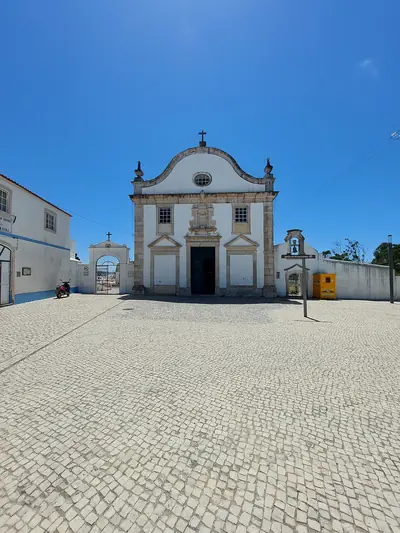
In Pederneira, the Igreja da Misericórdia da Pederneira is one of Nazaré’s landmarks. Also known as the Church of the Santa Casa da Misericórdia da Pederneira, it has a Mannerist character and was founded in the sixteenth century. Since 1978, it has been classified as a Property of Public Interest.
Igreja Paroquial da Pederneira
The Igreja Paroquial da Pederneira, also known as the Church of Nossa Senhora das Areias, is dedicated to São Pedro da Pederneira. Its architecture brings together Mannerist and Baroque elements, giving this local place of worship a distinctive appearance.
Igreja de São Gião
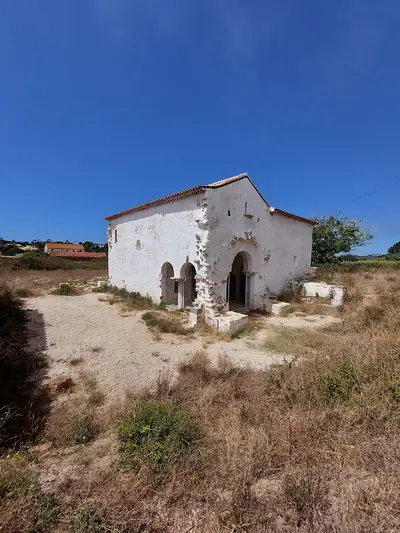
About five kilometres south of Nazaré, in Famalicão, the Igreja de São Gião stands near the dunes and the sea, roughly 500 metres from the coast. It is regarded as one of the oldest Christian temples in Portugal and the Iberian Peninsula.
The church was discovered at Quinta de São Gião by Eduíno Borges Garcia in 1961. Its origins remain debated: some researchers associate it with the Visigothic period, possibly the seventh century, while others point to Asturian characteristics and a possible tenth-century origin.
Explore Nazaré with a Self-Guided Walking Tour
Neywo’s Black Madonna to Big-Wave Fort: Nazaré’s Sítio is a 2.27-kilometre self-guided walking tour lasting about 88 minutes, with 10 narrated stops. The route includes the Nazaré Funicular, Nazaré Bullring, Museu Doutor Joaquim Manso, Teatro Chaby Pinheiro, Sanctuary of Our Lady of Nazaré, Palácio Real do Sítio da Nazaré, Memory Hermitage of Nazaré, Veado, Fort of São Miguel Arcanjo and Nazaré Lighthouse.
Download Neywo and explore Nazaré at your own pace. The app tells the story of each place as you reach it, with no group and no schedule. Nazaré’s narration is available in 11 languages, and the city has one walking tour. When planning more of your journey through Portugal, you can also continue to nearby Óbidos or Alcobaça.
Places with an audio guide in Nazaré
8 places in Nazaré with a Neywo audio guide. Each one starts telling its story as you reach it.

Self-guided tours in Nazaré
1 tour in Nazaré, free in the Neywo app. Each stop tells its story as you reach it.
- Walk
Black Madonna to Big-Wave Fort: Nazaré's Sítio
Ride the historic funicular up from the beach to the clifftop of O Sítio, where legend says a Black Madonna was hidden in a cave in 711. Visit the sanctuary, the blue-tiled Memory Hermitage, the royal pilgrims' palace and a neo-Arab bullring, then walk out along the headland to the fort and red-lantern lighthouse that look down on the surfers' giant waves.
Nazaré Funicular · Nazaré Bullring · Museu Doutor Joaquim Manso · Teatro Chaby Pinheiro · Sanctuary of Our Lady of Nazaré · Palácio Real do Sítio da Nazaré …
Open this tour: Black Madonna to Big-Wave Fort: Nazaré's Sítio
Walk Nazaré with Neywo
Neywo turns Nazaré into a self-guided audio tour. Stories arrive as you reach the place they belong to, and the route reshapes when you wander off it.

