What to See in Amarante, Portugal: Free Audio Guide
Things to Do in Amarante: Historic Churches and a Sacred Riverfront
Looking for things to do in Amarante? This town in the Porto region of Portugal is shaped by the Tâmega River, historic religious buildings, and a remarkable concentration of Romanesque heritage. Its best-known landmarks, Ponte de São Gonçalo and Igreja de São Gonçalo, form the symbolic heart of the town, while churches and monasteries extend the story into the surrounding parishes. Neywo has a free audio guide for Amarante covering 18 narrated places, with narration available in 11 languages.
What to See in Amarante
Ponte de São Gonçalo
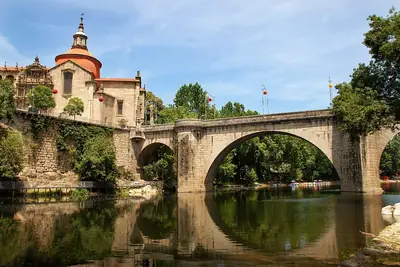
Ponte de São Gonçalo is one of Amarante’s defining landmarks. The bridge arches over the Tâmega River beside the church and convent, forming a group that has become an emblem of the town. It has been a National Monument since 1910.
The crossing connects the two banks of the river, but it is also one of the best places to take in Amarante’s characteristic view: the water, the historic buildings, and the silhouette of the convent beside the river. Looking both upstream and downstream reveals why this riverside setting is central to the town’s identity.
Igreja de São Gonçalo
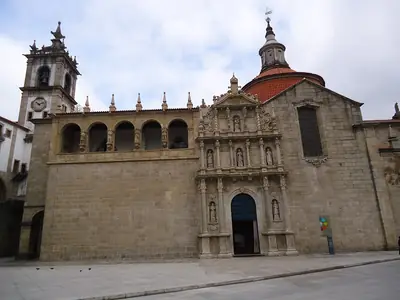
The Church of São Gonçalo stands at the centre of Amarante’s religious and historic life. It began as a Dominican monastery founded in the sixteenth century and dedicated to Gonçalo of Amarante, the town’s patron saint, who died here around 1260.
The building combines different architectural periods. Its nave was transformed into a richly decorated Baroque space in the eighteenth century, while the portal, royal gallery, sacristy, and two-storey cloister retain their early Renaissance character. Together with the cloister, the church has been protected as a National Monument since 1910.
Part of the former convent now houses the Amadeo de Souza-Cardoso Municipal Museum. Founded in 1947 as a municipal library and museum, it moved into these historic rooms in the 1980s after their adaptation by architect Alcino Soutinho.
Convento de Santa Clara
Convento de Santa Clara is another heritage monument in Amarante. It forms part of the town’s group of historic religious sites and is included among the places narrated by Neywo’s audio guide.
Igreja de São Domingos
In the centre of Amarante, Igreja de São Domingos is also known as the Church of Our Lord of the Afflicted. It has been recognized as a Property of Public Interest since 1978. Its dedication to Nosso Senhor dos Aflitos expresses devotion to Christ in his suffering and a tradition of seeking comfort through faith.
Church of São Pedro
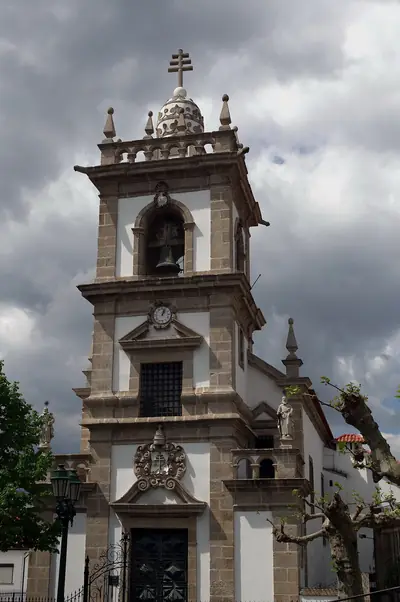
The Church of São Pedro is also known locally as the Church of São Domingos. It was built by the Brotherhood of Our Lady of Conception, founded here in 1626. Its façade is a notable example of Baroque architecture.
Paço de Dona Loba
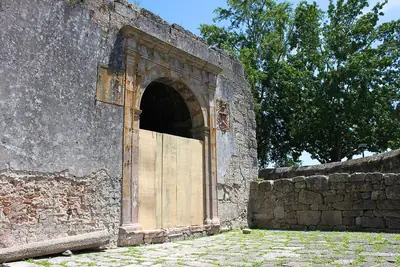
Paço de Dona Loba is a recognized cultural heritage monument in Amarante. It adds another historic site to the town’s wider collection of protected places.
Igreja do Salvador, de Freixo de Baixo
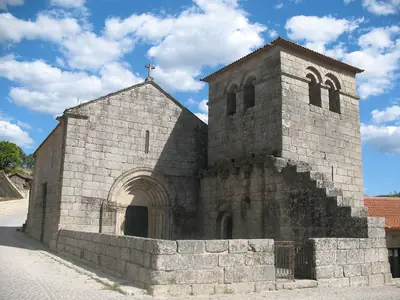
In the quiet village of Freixo de Baixo, the Church of the Savior occupies the site of what was once a Romanesque monastery founded by the Canons of Saint Augustine in the late eleventh century. The church itself was built in the thirteenth century.
Inside, fragments of late medieval mural paintings survive on the walls. The monastic community gradually declined, and after 1834 the monastery was abandoned. Restoration took place in the 1930s, and the church was classified as a national monument in 1935. It is now one of the stops on the Romanesque Route through the region.
Mosteiro de Travanca
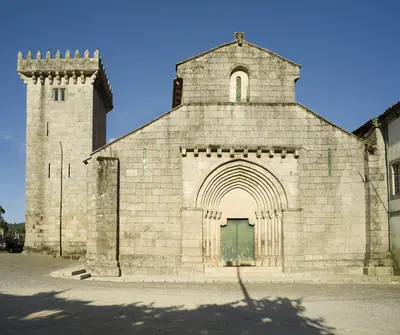
The Monastery of Travanca, also known locally as Mosteiro de São Salvador de Travanca, is one of Portugal’s most important Romanesque churches. Benedictine monks founded a monastery here in the middle of the eleventh century, while the church visible today was built in the thirteenth century.
The site includes the church, the convent where the monks lived and worked, and a substantial tower. Together, these elements form a remarkably complete medieval monastic ensemble. Its thick walls and rounded arches express the solid, restrained character of Romanesque architecture.
Igreja de Gatão
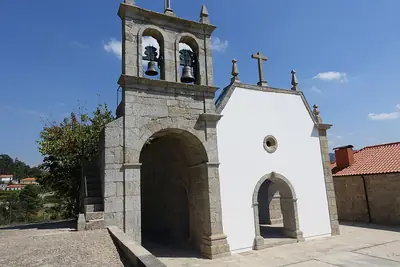
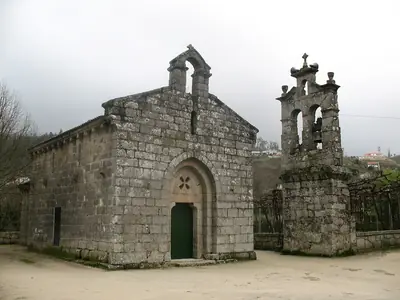
The Church of Saint John the Baptist of Gatão is a Romanesque church with origins in the Romanesque period. Its architectural and cultural value was recognized when it was classified as a national monument in 1944.
Igreja de Jazente
The Church of Santa Maria de Jazente is a Romanesque church in the parish of Jazente, outside Amarante. It has been recognized as a property of public interest since 1977.
Igreja de Lufrei
The Church of Lufrei, or Igreja do Salvador de Lufrei, is also known as the Monastery of Lufrei and the Parish Church of the Divine Savior. This Romanesque building in the parish of Lufrei has been protected as a Property of Public Interest since 1971.
Igreja de Mancelos
The Church of São Martinho is also called the Monastery of Mancelos. Its dual role as a parish church and former monastery reflects the long religious history of the parish of Mancelos.
Igreja românica de Telões
The Romanesque Church of Telões is known locally as Santo André de Telões. It is also referred to as the Telões Monastery and the Parish Church of Telões. The church was classified as a property of public interest in 1977.
Igreja Velha de Gondar
Igreja Velha de Gondar is a Romanesque church dating from the Middle Ages. Its other names—Mosteiro de Gondar, Igreja de Santa Maria, and simply Igreja Velha—reflect its history as a monastic site and parish centre.
Mamoa de São Simão
Mamoa de São Simão is a protected cultural heritage monument. It is also known as Mamoa da Mina de São Simão or Cova do Simão.
Explore Amarante with a Self-Guided Audio Tour
For an independent way to discover the town, try Neywo’s Amarante self-guided walking tour, Gonçalo’s Bridge: Amarante’s Sacred Riverfront. The walk covers 0.56 km, takes about 39 minutes, and includes five narrated stops:
- Ponte de São Gonçalo
- Igreja de São Gonçalo
- Convento de Santa Clara
- Igreja de São Domingos
- Church of São Pedro
The app tells the story of each place as you reach it, at your own pace, with no group and no schedule. Neywo offers one walking tour in Amarante, alongside its free audio guide covering 18 narrated places.
Download Neywo and Explore Amarante at Your Own Pace
Download Neywo to explore Amarante with a free audio guide that brings its bridges, churches, convents, and historic monuments to life as you walk. The app includes one 0.56 km walking route lasting 39 minutes, with five narrated stops, and the stories are available in 11 languages.
Places with an audio guide in Amarante
8 places in Amarante with a Neywo audio guide. Each one starts telling its story as you reach it.
Self-guided tours in Amarante
1 tour in Amarante, free in the Neywo app. Each stop tells its story as you reach it.
- Walk
Gonçalo's Bridge: Amarante's Sacred Riverfront
Cross the granite bridge that is the postcard of Amarante, then wander the compact cluster of convents and churches around the Tâmega: the shrine of the city's patron saint, a Clarissan convent and two Baroque churches. Everything sits within a few hundred metres, ideal for a slow, unhurried stroll with time to step inside.
Ponte de São Gonçalo · Igreja de São Gonçalo · Convento de Santa Clara · Igreja de São Domingos (Amarante) · Church of São Pedro
Open this tour: Gonçalo's Bridge: Amarante's Sacred Riverfront
Walk Amarante with Neywo
Neywo turns Amarante into a self-guided audio tour. Stories arrive as you reach the place they belong to, and the route reshapes when you wander off it.

