Things to Do in Vila Nova de Gaia, Portugal: Walking Guide
Things to do in Vila Nova de Gaia: historic landmarks, river views and the Atlantic coast
Looking for things to do in Vila Nova de Gaia? The city on the southern bank of the Douro combines remarkable monasteries, historic bridges, hilltop viewpoints, archaeological heritage and beaches along the Atlantic. It is also closely connected to Porto, with views across the river towards the city’s historic centre. Neywo offers a free audio guide for Vila Nova de Gaia with 23 narrated places.
Gaia is part of the Porto region, and its riverside landmarks make it a natural complement to a visit to Porto. From the heights of Serra do Pilar to the coast at Praia do Senhor da Pedra, the municipality offers plenty to explore beyond the famous port-wine cellars.
What to see in Vila Nova de Gaia
Monastery of Serra do Pilar
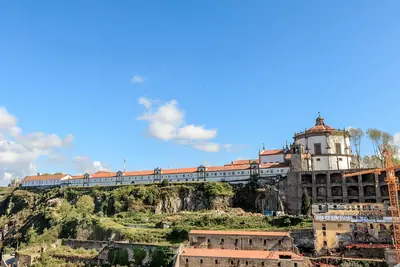
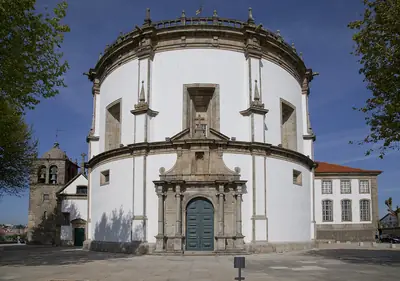
The Monastery of Serra do Pilar is one of Vila Nova de Gaia’s most distinctive landmarks. Set on the hilltop of Serra do Pilar, directly across the Douro from Porto, it offers views of the Dom Luís I Bridge and the city’s historic centre.
Its architecture is especially unusual: the church and cloister are both circular and share the same dimensions. The monastery belonged to the Order of Saint Augustine, and construction began in 1538 before continuing through several phases over the following centuries. The church and cloister became National Monuments in 1910. Today, the site combines religious, cultural and military functions.
Igreja da Serra do Pilar
The Igreja da Serra do Pilar forms part of the same historic complex. It is also known as the Igreja do Mosteiro de Santo Agostinho and the Igreja do Mosteiro da Serra do Pilar, names that reflect its origins as an Augustinian monastery.
Together with the cloister and the wider monastery, the church illustrates the unusual circular design that makes Serra do Pilar such an important example of classical architecture in Europe.
Ponte de D. Maria Pia
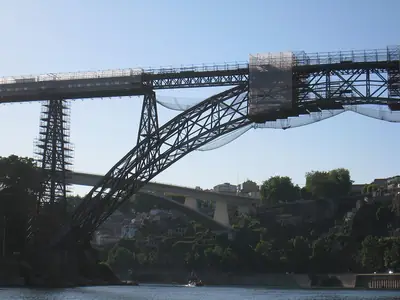
The Ponte de D. Maria Pia is a striking railway bridge spanning the Douro between Porto and Vila Nova de Gaia. Although trains no longer cross it, the bridge remains an impressive iron structure beside the river.
It was inaugurated on November 4, 1877, and served Portugal’s Linha do Norte for more than a century. Rail service ended on June 24, 1991, when the nearby Ponte de São João replaced it. At the time of its construction, the bridge had the world’s longest single-arch iron span. Its wrought-iron structure stretches 353 metres across the river and rises about 60 metres above the water. From the riverbanks, its double-hinged crescent arch is particularly easy to appreciate.
Antigo Convento de Corpus Christi
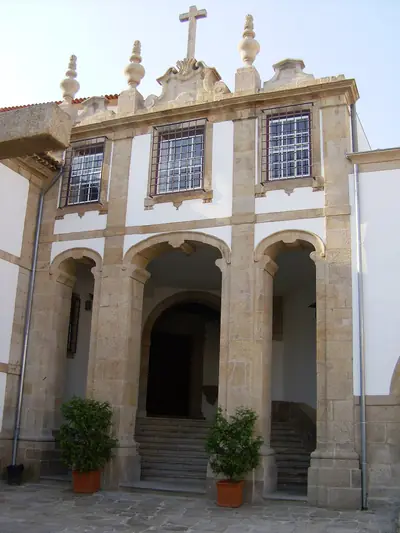
Along the Cais de Gaia, the Antigo Convento de Corpus Christi stands beside the waterfront. This former convent is also known as the Mosteiro de São Domingos das Donas de Vila Nova de Gaia and has also been called the Instituto do Bom Pastor.
Its position in the parish of Santa Marinha e São Pedro da Afurada makes it one of the historic buildings to look out for while exploring Gaia’s riverside.
Castelo de Gaia
The Castelo de Gaia is an ancient fortified settlement on a high hill in Gaia. Its elevated position once gave it a commanding view over the surrounding area.
The site adds an older defensive layer to the city’s history, complementing the religious buildings and bridges that define the Douro landscape.
Aqueduto da Serra do Pilar
The Aqueduto da Serra do Pilar is a historic aqueduct and recognised cultural heritage monument in Vila Nova de Gaia. It is also known as the Aqueduto dos Arcos do Sardão or the Aqueduto do Sardão.
These different names refer to the same structure, which forms another distinctive element of Gaia’s historic landscape.
Douro River
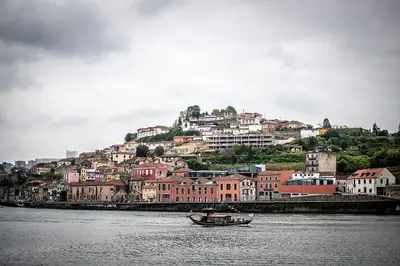
The Douro River shapes Vila Nova de Gaia’s identity and separates it from Porto before reaching the Atlantic. It is one of the great waterways of the Iberian Peninsula, running 897 kilometres from its source in Spain to the sea.
The river begins in the Picos de Urbión mountains in the Spanish province of Soria, at an altitude of 2,160 metres, and flows westwards through northern Spain and Portugal. In its final stretch, the riverbed narrows and deepens between steep cliffs known as the Arribas.
The Douro is also central to the Alto Douro wine region, whose terraced vineyards produce the grapes used for Port wine. UNESCO inscribed this cultural landscape on the World Heritage List on December 14, 2001. In Gaia, the riverfront offers a chance to experience this geography alongside views of Porto, historic bridges and the city’s traditional wine heritage.
Capela do Senhor da Pedra
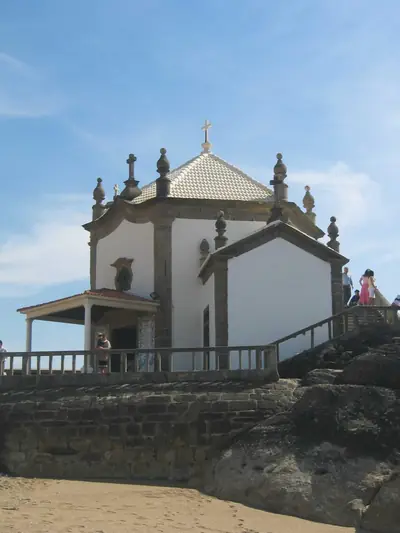
The Capela do Senhor da Pedra is a small chapel standing directly on Praia do Senhor da Pedra. It is located in Gulpilhares, within the municipality of Vila Nova de Gaia.
The chapel’s position on the beach gives this coastal landmark a distinctive setting. It is one of the clearest examples of how Gaia’s heritage extends beyond the riverfront and into its Atlantic landscape.
Castro da Senhora da Saúde ou Monte Murado
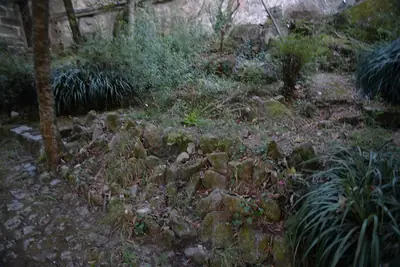
Also known as Monte Murado, the Castro da Senhora da Saúde is a cultural heritage site in Vila Nova de Gaia. This archaeological site brings a sense of depth and history to the municipality, with an atmosphere distinct from the busy riverside.
Centro de Educação Ambiental das Ribeiras de Gaia
The Centro de Educação Ambiental das Ribeiras de Gaia is a public environmental education centre run by Águas de Gaia. Its programmes focus on water, energy, waste management and nature conservation, with particular attention to the natural features of the municipality.
The centre includes a documentation centre specialising in environmental subjects, aquariums with species typical of local streams and waterways, and a monitoring room where visitors can observe the water quality of the Ribeira do Espírito Santo. Exhibition rooms complete the centre’s approach to local ecology.
Mosteiro de Pedroso
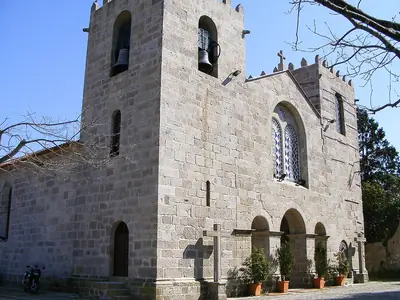
The Mosteiro de Pedroso is a historic monastery in the parish of Pedroso, within the municipality of Vila Nova de Gaia. It offers another opportunity to explore the religious heritage of the area beyond the monuments clustered around the Douro.
Mosteiro de Grijó
The Mosteiro de Grijó, also known as the Mosteiro de São Salvador de Grijó, stands in the parish of Grijó e Sermonde. Its most notable features include the tomb of Rodrigo Sanches, which has been classified as a National Monument since 1910.
Cine-teatro Eduardo Brazão
The Cine-teatro Eduardo Brazão is a historic theatre in Valadares. It opened on February 12, 1928, after being developed by Alexandre Marta da Cruz, who had arrived in Valadares from Africa in 1921.
The Vila Nova de Gaia City Council acquired the building in September 1992. Following a requalification led by architect Joaquim Massena, it reopened on May 19, 2007. The auditorium has a main floor and balcony, with seating for 241 and 61 people respectively. Its interior combines theatre architecture with paintings and allegorical sculptures created by José Rodrigues and José Emídio.
Quinta de Baixo
Quinta de Baixo, also known as the Quinta dos Condes de Paço Vitorino, is a historic estate in the parish of Vilar de Andorinho. It forms part of Gaia’s heritage beyond the central riverfront and highlights the municipality’s wider collection of historic properties.
Paço do Campo Belo
Paço do Campo Belo is a cultural heritage monument comprising a palace, a chapel and the surrounding gardens. The value of the site lies in this complete ensemble, where the buildings and landscaped grounds form a coherent historic setting.
Explore Vila Nova de Gaia with a self-guided walking tour
A Vila Nova de Gaia self-guided walking tour is an easy way to connect the city’s riverfront landmarks and hilltop heritage. Neywo’s walk, “Gaia’s riverfront heights: bridges, a convent and a round monastery”, covers 3.53 kilometres in around 113 minutes and includes eight narrated stops.
The route includes Castelo de Gaia, Paço do Campo Belo, the Antigo Convento de Corpus Christi, Igreja da Serra do Pilar, the Monastery of Serra do Pilar and Ponte de D. Maria Pia, as well as other landmarks along the way. The tour’s sequence brings together historic buildings, the Douro and the bridges that connect Gaia’s story with Porto.
Neywo tells the story of each place as you reach it, at your own pace, with no group and no schedule. The narration is available in 11 languages, making it a practical alternative to a conventional free walking tour Vila Nova de Gaia.
Download Neywo and discover Vila Nova de Gaia
Download Neywo to explore Vila Nova de Gaia with one walking tour covering 3.53 km, around 113 minutes and eight narrated stops. The app plays each story when you reach the corresponding place, so you can walk at your own pace without a group or a schedule.
After exploring Gaia, you can continue discovering the Porto region or travel elsewhere in Portugal.
Places with an audio guide in Vila Nova de Gaia
8 places in Vila Nova de Gaia with a Neywo audio guide. Each one starts telling its story as you reach it.
Self-guided tours in Vila Nova de Gaia
1 tour in Vila Nova de Gaia, free in the Neywo app. Each stop tells its story as you reach it.
- Walk
Gaia's riverfront heights: bridges, a convent and a round monastery
Stay on the south bank of the Douro and climb through the old heart of Vila Nova de Gaia. Start at the site of Gaia's medieval castle and the gardens of Paço do Campo Belo, drop to the former convent on the quay, then cross under the double-deck Luís I bridge to the round monastery of Serra do Pilar for the best view of Porto. Follow the river past the Eiffel-school iron arch of Maria Pia and finish at the low, twin-deck Freixo bridge.
Castelo de Gaia · Paço do Campo Belo, incluindo a capela e todo o seu conjunto circundante, nomeadamente os jardins · Antigo Convento de Corpus Christi · Igreja de Santa Marinha · Luiz I Bridge · Igreja da Serra do Pilar …
Open this tour: Gaia's riverfront heights: bridges, a convent and a round monastery
Walk Vila Nova de Gaia with Neywo
Neywo turns Vila Nova de Gaia into a self-guided audio tour. Stories arrive as you reach the place they belong to, and the route reshapes when you wander off it.

