What to See in Cascais, Portugal: Free Audio Guide
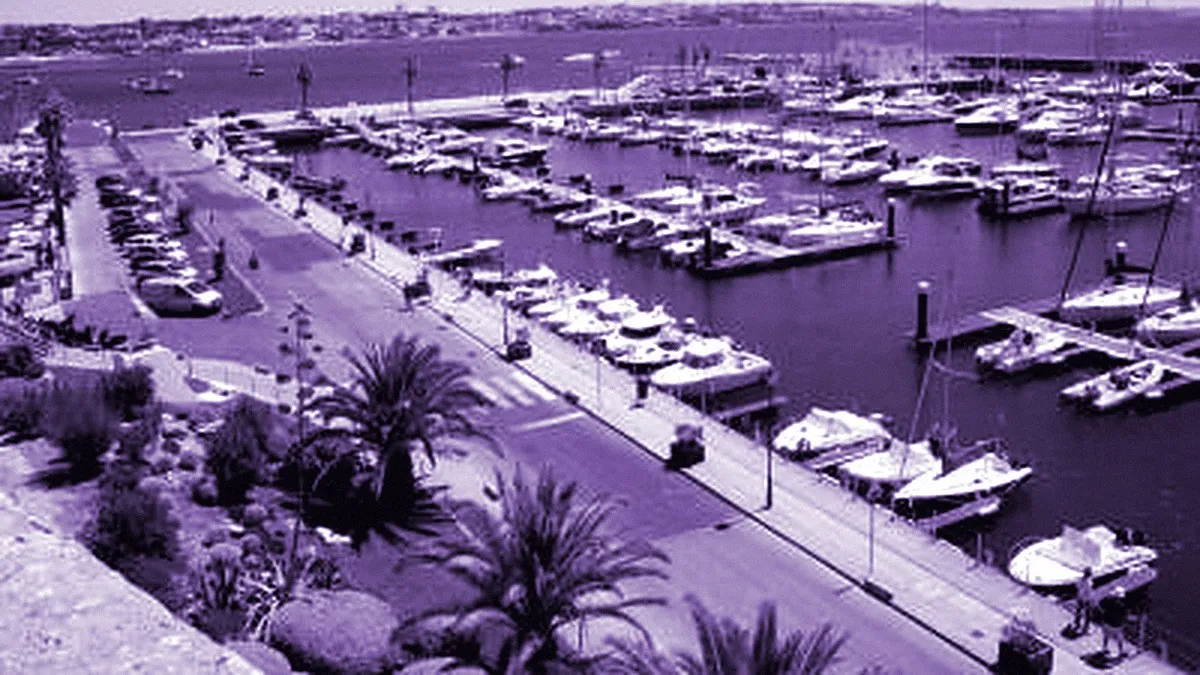
Things to do in Cascais: what to see on Portugal’s Atlantic coast
The best things to do in Cascais include exploring historic forts, summer palaces, archaeological sites and the coastline around its beaches. This seaside town combines Portugal’s maritime history with an unusually rich concentration of cultural heritage. Neywo offers a free audio guide for Cascais with 56 narrated places, so you can discover the town while walking at your own pace.
Cascais lies in the Lisbon region, making it a natural complement to a visit to Lisbon and nearby Sintra. Its landmarks range from seventeenth- and eighteenth-century coastal defences to prehistoric tombs and Roman settlements.
What to see in Cascais
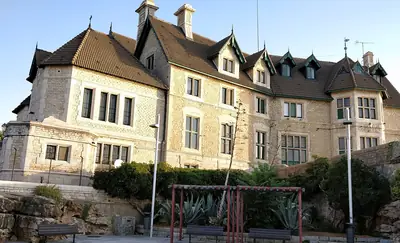
Palmela Palace
Palmela Palace, also known as Palácio Palmela or Conceição Velha, is one of the major examples of the summer architecture associated with Cascais. Built in 1874 for the Duke and Duchess of Palmela, it was created as a nineteenth-century summer residence.
The Cascais Citadel
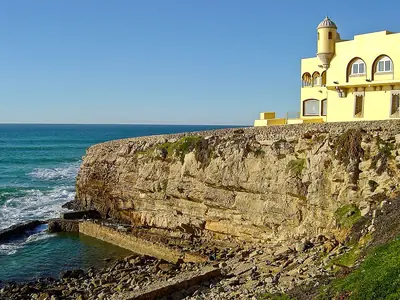
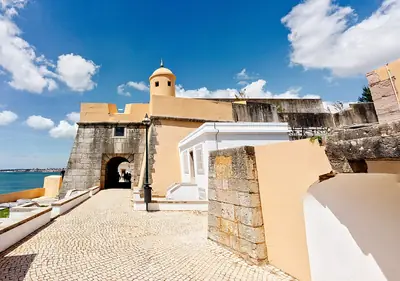
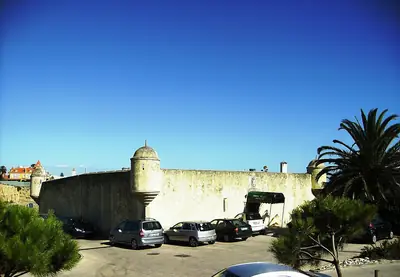
The Fortress of Nossa Senhora da Luz de Cascais, also known as the Cascais Citadel, occupies a commanding position above the bay of Cascais, on the right bank of the Tagus estuary. Its location reflects the strategic importance of the town and its coastline.
Fort of Nossa Senhora da Guia
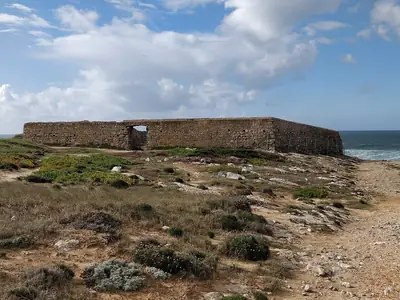
The Fort of Nossa Senhora da Guia stands between the Guia Lighthouse and Lage do Ramil, along Avenida Nossa Senhora do Cabo. Built during the Portuguese Restoration War, between 1640 and 1668, it became operational in 1646. The surviving sections connect Cascais with the coastal military history of that period.
The forts around Guincho and Cresmina
The coastline north of Cascais is marked by several historic defensive positions.
The Bateria Alta ao Norte da Praia da Água Doce, also called Bateria Alta or Hotel do Guincho, stands between Guincho Beach and Crismina Beach. Built in the eighteenth century during the reign of King José the First, it formed part of a coastal defence system with the batteries of Crismina and Galé. A rear wall added in the nineteenth century gave the complex its polygonal plan.
The small Fort of Cresmina stands beside Cresmina Beach, between the Marginal Road and the sea. Built in 1762, it was intended to make an enemy landing more difficult and housed a small garrison. The fort became private property in 1889 and was classified as a Property of Public Interest in 1978.
The forts of São João do Estoril
Several forts protect the shoreline east of Cascais.
The Fort of São Pedro, also known as Forte da Poça, stands at Poça Beach in São João do Estoril. Built between 1642 and 1648, it formed part of a defensive line connecting the Fort of São Julião da Barra with Cabo da Roca.
Above Poça Beach, the Fort of São Teodósio da Cadaveira was built between April 1642 and the following year. It worked with the nearby Fort of Santo António da Barra to protect the beach with crossfire. The fort is also known as Fort of São João or Fort d’Assubida, and it was classified as a Property of Public Interest in 1977.
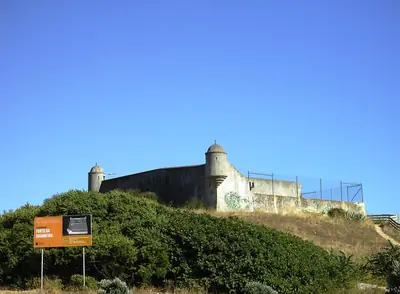
The Fort of Santo António da Barra, or Old Fort, occupies a position above the sea at São João do Estoril. It was linked to António de Oliveira Salazar, who used it as a seasonal residence during the Portuguese dictatorship. After a period of disuse and vandalism, the Municipality of Cascais restored it, and it opened to the public for the first time on 25 April 2018.
Ponte Filipina over the Caparide stream
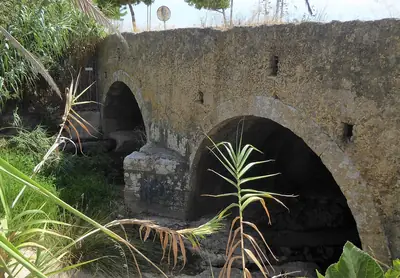
The Ponte Filipina over the Caparide stream is also known as the Ponte Filipina de São Pedro do Estoril or Ponte de Cai-Água. Its name recalls the earlier identity of the area, associated with a watermill and small cottages at the mouth of the Caparide stream. São Pedro do Estoril was originally called Cai Água before its name changed by decree on 31 August 1926.
Capela de Nossa Senhora da Nazaré
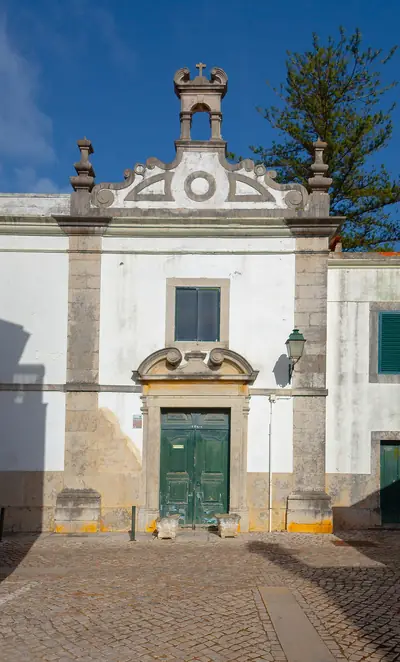
The Capela de Nossa Senhora da Nazaré is a recognised cultural heritage monument in Cascais. It offers a quieter stop among the town’s historic religious sites and is one of the places included in the old-town heritage route.
The caves of Poço Velho
The Gruta do Poço Velho, or Caves of Poço Velho, lies in the centre of Cascais. The caves were used primarily as a necropolis, with use believed to date back to the Paleolithic era. The name Poço Velho means “old well.”
The Artificial Caves of Alapraia
The Artificial Caves of Alapraia, also called the Alapraia Eneolithic Necropolis, consist of four underground tombs carved directly into natural rock with stone tools. They are believed to date from the last quarter of the fourth millennium BCE and served as a necropolis for more than a thousand years.
Some of the monuments lie partly beneath houses around a square with a well, creating an unexpected setting for a prehistoric archaeological site.
The Roman ruins of Casais Velhos
Near Areia, the Roman ruins of Casais Velhos preserve the remains of a rural Roman settlement. The site includes baths, two cemeteries, walls and ceramic objects. It is classified as a Property of Public Interest under a decree dated 25 September 1984.
The Roman villa of Alto da Cidreira
The Roman villa of Alto da Cidreira, also known as Alto do Cidreira, is in Carrascal de Alvide, in Alcabideche. The remains include a villa and adjoining bath complex. Archaeological discoveries at the site include an aqueduct, a Roman necropolis, a cellar used for olive oil, Roman mosaics and parts of the baths.
The site has been known since the nineteenth century and has been classified as a Property of Public Interest since 1992.
Azenha de Atrozela
Azenha de Atrozela is another cultural heritage monument in the municipality of Cascais. Like the bridge over the Caparide stream, it adds a reminder of the area’s older water-related landscape to the town’s better-known palaces and forts.
Discover Cascais with a self-guided audio tour
A Cascais self-guided walking tour lets you explore without joining a group or following a fixed timetable. Neywo has three walking tours, one bus route and one bike route in Cascais, with narration available in 11 languages.
The walks include:
- Royal Summers: Palaces and Lighthouse of Cascais — 2.16 km, 103 minutes and 12 narrated stops.
- The Forts of the Estoril Coast — 3.25 km, 105 minutes and 7 narrated stops.
- Cascais Old Town: Chapels, Palaces and the Ribeira Walls — 2.41 km, 103 minutes and 10 narrated stops.
There is also a 13 km bus route lasting 56 minutes, with 4 stops, taking in the Guincho coast forts. For cycling, the 7.9 km bike route from Cresmina to Santa Marta lasts 40 minutes and has 7 narrated stops.
Download Neywo and explore Cascais with its free audio guide. The app tells the story of each place as you reach it, at your own pace, with no group and no schedule. After Cascais, continue exploring Ericeira or discover more destinations in Portugal.
Places with an audio guide in Cascais
8 places in Cascais with a Neywo audio guide. Each one starts telling its story as you reach it.
Self-guided tours in Cascais
5 tours in Cascais, free in the Neywo app. Each stop tells its story as you reach it.
- Bike ride
Ride the Coast: Cresmina to Santa Marta
Cycle the coastal path from Cresmina beach through the dunes and fort-studded headlands of the Guincho coast to Boca do Inferno, then on to the Santa Marta lighthouse at the edge of Cascais. Seven forts, viewpoints and a lighthouse along 8 km of cycle lane, with the Atlantic beside you the whole way.
Fort of Cresmina · Forte de São Brás de Sanxete · Fort of São Jorge at Oitavos · Fort of Nossa Senhora da Guia · Vigia do Facho · Forte Novo …
Open this tour: Ride the Coast: Cresmina to Santa Marta - Bus ride
Bus M43 to the Guincho Coast Forts
A local circular bus from Cascais station out along the wild Atlantic coast via Guincho. Ride it past the Fort of Nossa Senhora da Guia, the Oitavos fort-museum beside the dunes and little Cresmina fort, and back to the caves of Poco Velho in the town centre.
Fort of Nossa Senhora da Guia · Fort of São Jorge at Oitavos · Fort of Cresmina · Gruta do Poço Velho
Open this tour: Bus M43 to the Guincho Coast Forts - Walk
Royal Summers: Palaces and Lighthouse of Cascais
Cascais grew from a fishing village into the summer retreat of Portuguese kings. Walk from the striped Santa Marta lighthouse past aristocratic summer houses and a storybook palace to the royal citadel, then through the old town to Paula Rego's red museum, the Mother Church and the square of the revolution.
Santa Marta Lighthouse · Casa de Santa Maria, Cascais · Condes de Castro Guimarães Palace · Cascais Citadel Palace Museum · Cascais tide gauge · Forte de Nossa Senhora da Luz de Cascais …
Open this tour: Royal Summers: Palaces and Lighthouse of Cascais - Walk
The Forts of the Estoril Coast
In the 1640s Portugal strung a line of forts along this shore to keep invaders away from Lisbon. Walk the Estoril seafront from the resort town and its fanciful stables past three of those forts above Poca beach to the old bridge at Sao Pedro do Estoril.
Estoril · Cocheiras de Santos Jorge · Chalet Barros, incluindo toda a área de jardim · Fort of São Pedro · Fort of São Teodósio da Cadaveira · Fort of Santo António da Barra …
Open this tour: The Forts of the Estoril Coast - Walk
Cascais Old Town: Chapels, Palaces and the Ribeira Walls
Wander the lanes behind Cascais bay where the fishing village grew. Start at the surviving wall bases on Ribeira beach, pass the old council house, the Nazareth chapel and the sailors' church, then climb past the caves of Poco Velho, the Misericordia and the Casa dos Almadas to the summer palace of the Dukes of Palmela.
Bases da muralha de Cascais · Hotel Albatroz Cascais - VillaCascais · Edifício dos antigos Paços do Concelho · Capela de Nossa Senhora da Nazaré · Igreja dos Navegantes · Gruta do Poço Velho …
Open this tour: Cascais Old Town: Chapels, Palaces and the Ribeira Walls
Walk Cascais with Neywo
Neywo turns Cascais into a self-guided audio tour. Stories arrive as you reach the place they belong to, and the route reshapes when you wander off it.

