What to See in Beja, Portugal: Free Audio Guide
Things to Do in Beja, Portugal: A Self-Guided Walk Through Alentejo History
Beja is a historic city in Portugal’s Alentejo region, where medieval monuments, Roman archaeology, churches and museums reveal the area’s long past. It is worth visiting for the variety of heritage sites concentrated in and around the city, from the Castle of Beja to the Roman ruins of Pisões. Neywo has a free audio guide for Beja with 17 narrated places, available in 11 languages.
What to See in Beja
The best things to do in Beja range from exploring a medieval fortress to discovering Visigothic, Roman and religious heritage. These are some of the most important places to include in your visit.
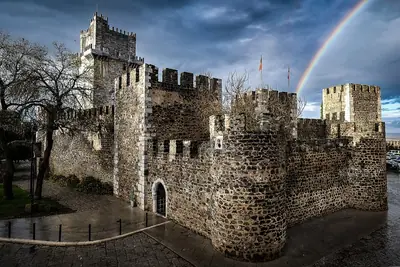
Castle of Beja
The Castle of Beja is a medieval fortress that rises above the city and has watched over Beja for centuries. Protected as a National Monument since 1910, it also contains the Museu Jorge Vieira, bringing together military history and contemporary Portuguese sculpture in the same historic setting.
Museu Jorge Vieira
Inside the Castle of Beja, the Museu Jorge Vieira is dedicated entirely to the work of Jorge Vieira, one of Portugal’s important sculptors. His pieces are displayed in the castle’s historic spaces, creating a contrast between modern sculpture and medieval architecture.
Igreja de Santo Amaro
The Igreja de Santo Amaro is also known as the Capela de Santo Amaro or the Capela de Santa Maria da Graça. Located on the Largo de Santo Amaro, it now forms the Visigothic nucleus of the Regional Museum of Beja, also called the Museu Rainha D. Leonor. The building is both a historic chapel and a museum space preserving the region’s early medieval heritage. It has been protected as a National Monument since 1936.
Museu Regional de Beja and Igreja de Nossa Senhora da Conceição
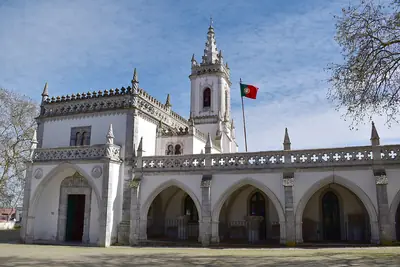
The Museu Regional de Beja, or Museu Rainha Dona Leonor, occupies the former Convent of Nossa Senhora da Conceição in Beja’s historic centre. Created in 1917 and opened to the public in 1927, it preserves archaeological and artistic heritage from the region.
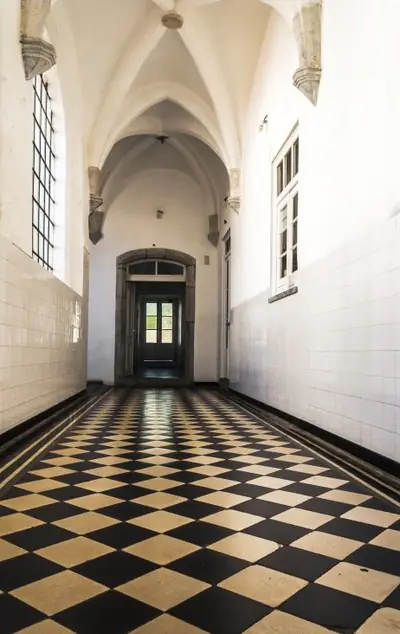
The convent itself is part of the experience: the museum’s cloisters and exhibition rooms occupy spaces once used by the religious community. Beside it stands the Igreja de Nossa Senhora da Conceição, the surviving church of the original Royal Monastery. It has been classified as a National Monument since 1922.
Hospital da Misericórdia de Beja
The Hospital da Misericórdia de Beja is also known as the Hospital de Nossa Senhora da Piedade and houses the Santa Casa da Misericórdia de Beja. The complex includes the Museu da Farmácia, or Núcleo Museológico da Botica, which preserves the history of the hospital’s former pharmacy.
Igreja da Misericórdia de Beja
The Igreja da Misericórdia de Beja is a classified cultural heritage monument in the heart of the city. It forms part of the compact historic centre, where religious buildings and civic landmarks help trace Beja’s development through the centuries.
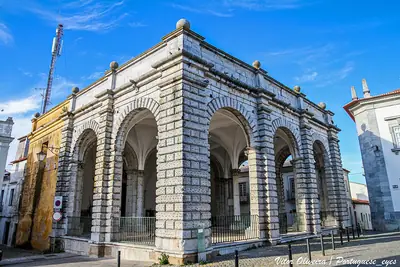
Pelourinho de Beja
The Pelourinho de Beja is a historic stone pillory in the city centre. It marked the place where municipal authority was proclaimed and justice was publicly administered. Located in the parish of Salvador e Santa Maria da Feira, it has been protected as a Property of Public Interest since 1933.
Cathedral of St. James the Great
The Cathedral of St. James the Great is the spiritual heart of Beja and the seat of its diocese. The present church was built over an earlier temple dedicated to Saint James and follows a Mannerist design by the architect Jorge Rodríguez.
The parish church was consecrated in 1590 and was later elevated to cathedral status by a Vatican decree in 1925. Following restoration and expansion, the new cathedral was inaugurated in 1937 and formally consecrated as the cathedral of the Diocese of Beja in 1946.
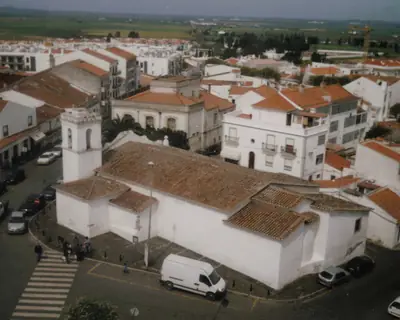
Church of Santa Maria da Feira
The Church of Santa Maria da Feira stands on the Largo de Santa Maria. It is also known as the Parish Church of Santa Maria da Feira or the Church of Our Lady of the Assumption. The church, its associated complex and its tower have been classified as a Property of Public Interest since 1959.
Igreja de Nossa Senhora dos Prazeres and Museu Episcopal de Beja
The Igreja de Nossa Senhora dos Prazeres is a cultural heritage monument and a long-standing place of faith in the Baixo Alentejo region. Beside it, the Museu Episcopal de Beja is directly attached to the church. Together, they form part of the Diocese of Beja Museum Network and show how religious art and devotion have shaped the region.
Cine-Teatro Pax Julia
The Cine-Teatro Pax Julia is one of Beja’s major cultural landmarks. Opened on December 19, 1928, it has served as both a cinema and a theatre, which explains its name. Also known locally as the Teatro Municipal Pax Julia, it remains closely associated with the city’s artistic life and the performing arts in the Alentejo.
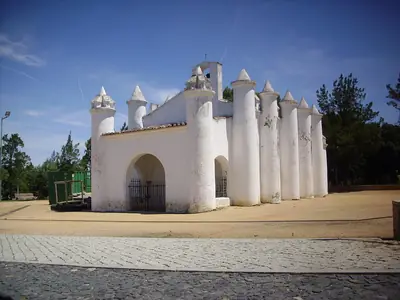
Ermida de Santo André and Church of Nossa Senhora do Pé da Cruz
The Ermida de Santo André is a small chapel in Beja, while the Church of Nossa Senhora do Pé da Cruz is another historic church in the city. Both add to the religious heritage encountered while walking through Beja’s historic streets.
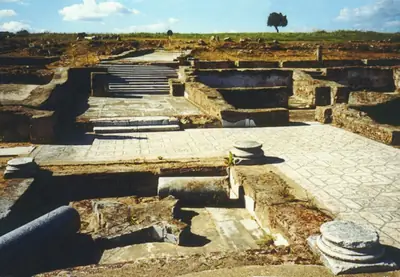
Roman ruins of Pisões
The Roman ruins of Pisões lie in the Alentejo countryside at Herdade de Algramaça, a short distance from Beja. The site is an exceptionally well-preserved Roman villa rustica, or working country estate, and was classified as a Property of Public Interest in 1970.
The settlement began in the first century AD and continued through the fourth century, with use extending into the Visigothic period. Archaeological work brought the villa to light in 1967 after centuries beneath the soil. Its residential complex includes rich mosaics with geometric patterns and figurative scenes, many of them still visible in situ.
Beja and the Alentejo Landscape
Beja is part of the Alentejo, Portugal’s large region between the Tagus and the Algarve, extending from the Spanish border to the Atlantic coast. Its name means “beyond the Tagus”. The landscape is marked by broad plains, wheat fields, olive groves and cork oak forests, giving the region its open horizons and spacious character.
A visit to Beja connects this countryside with a dense historical legacy. Roman settlement, Visigothic heritage, medieval fortifications, religious buildings and modern cultural institutions can all be found in or around the city.
The city is also a useful stop for discovering more of Portugal, including the historic city of Évora and the nearby fortified city of Elvas.
Explore Beja with Neywo’s Free Audio Guide
Neywo offers one walking tour in Beja: “Pax Julia: Roman Gate to Alentejo Convent.” The walk covers 1.13 km, takes about 94 minutes and includes 11 narrated stops. Its route features the Cathedral of St. James the Great, the Castle of Beja, Igreja de Santo Amaro, the Hospital da Misericórdia de Beja, Igreja da Misericórdia de Beja, the Pelourinho, Museu Jorge Vieira, Cine-Teatro Pax Julia, Museu Regional de Beja and the Church of Santa Maria da Feira.
Download Neywo and explore Beja at your own pace. The app tells the story of each place as you reach it, with no group and no schedule.
Places with an audio guide in Beja
8 places in Beja with a Neywo audio guide. Each one starts telling its story as you reach it.

Self-guided tours in Beja
1 tour in Beja, free in the Neywo app. Each stop tells its story as you reach it.
- Walk
Pax Julia: Roman Gate to Alentejo Convent
Beja was the Roman city of Pax Julia, and its walls still frame the old town. Start at the cathedral and pass through the Roman arch beside the castle, then wander past a Visigothic chapel, baroque charity buildings, the old pillory and the convent where a queen once prayed, ending in the square of Santa Maria da Feira.
Cathedral of St. James the Great, Beja · Castle of Beja · Arco romano de Beja · Igreja de Santo Amaro · Hospital da Misericórdia de Beja · Igreja da Misericórdia de Beja …
Open this tour: Pax Julia: Roman Gate to Alentejo Convent
Walk Beja with Neywo
Neywo turns Beja into a self-guided audio tour. Stories arrive as you reach the place they belong to, and the route reshapes when you wander off it.

