Visiting Bragança, Portugal: Top Sights on Foot
Things to Do in Bragança: Medieval Heritage and Historic Villages
Looking for things to do in Bragança? This northeastern Portuguese city brings together a remarkably preserved medieval fortress, unusual Romanesque architecture, historic religious sites, and archaeological remains scattered through the surrounding municipality. Neywo’s free audio guide for Bragança narrates 35 places as you explore.
What to See in Bragança
Castle of Bragança and the historic centre
Begin with the Castle of Bragança, one of the most important and best-preserved medieval castles in Portugal. Set beside the Fervença River, the fortress preserves its walls and offers broad views across the far northeast of the country. From the top, the landscape extends towards the Montesinho and Sanábria ranges, Rebordões and the Nogueira range.
The castle’s history reflects the changing power of the region, including occupation during the Umayyad Caliphate and the Christian reconquest of the Iberian Peninsula. It was classified as a National Monument in 1910. The castle area also includes the Military Museum of Bragança and, a short distance away, the Pillory of Bragança.
Domus Municipalis
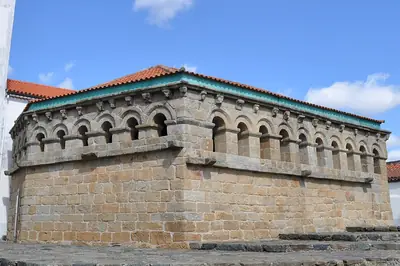
One of the most distinctive things to see in Bragança is the Domus Municipalis, an unusual example of civil Romanesque architecture. Its irregular pentagonal shape contains two levels: a lower cistern or water room and an upper hall surrounded by windows.
The building’s original purpose is uncertain. It may have been designed to collect and store rainwater, perhaps for use during wartime, although its first function remains debated. Its Latin name means “municipal house” and refers to its later use as Bragança’s municipal chamber.
Museu do Abade de Baçal
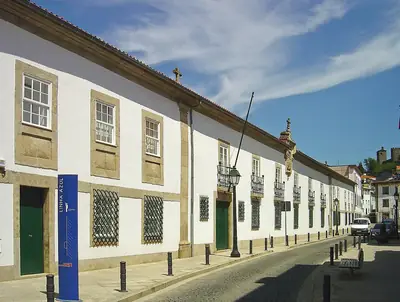
The Museu do Abade de Baçal occupies the former Episcopal Palace of Bragança, in the parish of Sé, Santa Maria and Meixedo. Its historic setting makes it an important stop among the city’s cultural attractions.
Church of Castro de Avelãs
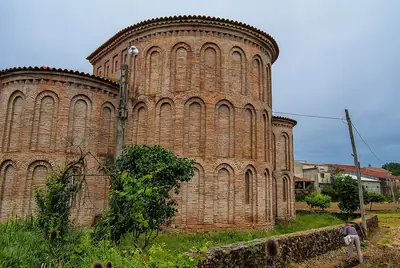
The Church of Castro de Avelãs, also known as the Church of São Bento, preserves a remarkable Mudéjar apse. This surviving section belonged to the former Benedictine Monastery of São Salvador, a monumental complex built in the twelfth or thirteenth century.
The monastery was deactivated in the sixteenth century and later fell into ruin. At the time, it had been the most influential monastic community in the Bragança region. The church has been classified as a National Monument since 1910.
Basilica of the Holy Christ, Outeiro
The Basilica of the Holy Christ, also called the Sanctuary of the Holy Christ, is an important pilgrimage site in Outeiro. It has been recognized as a national monument since 1927 and received the title of minor basilica in 2014.
Its story is linked to a reported miracle on April 26, 1698, when the image of the Holy Christ in an earlier chapel was said to have appeared to sweat blood. Construction of the present church began afterward. It opened for worship on May 3, 1713, although work continued until 1739.
The building combines Baroque design with inspiration from Manueline architecture. Its symmetry and balanced proportions are among its defining features.
Fortaleza do Outeiro
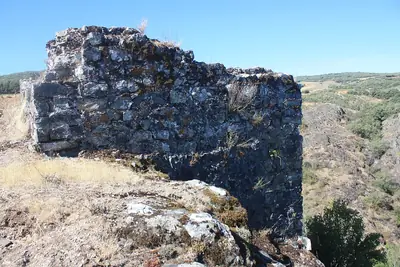
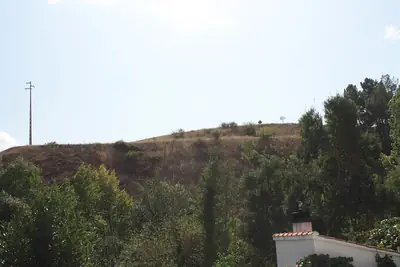
High above the village of Outeiro, the Fortaleza do Outeiro occupies Monte do Castelo, about one kilometre east of the village. Also known as Outeiro Castle or Outeiro de Miranda Castle, the medieval fortress held an important observation position between Bragança and Vimioso.
During the Middle Ages, it helped watch over the frontier of Trás-os-Montes with the Kingdom of León. Its elevated position explains its strategic importance and makes it one of the municipality’s notable fortified sites.
Castle of Rebordãos
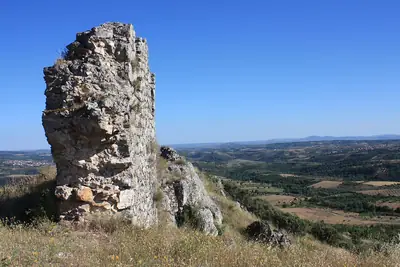
The Castle of Rebordãos, also known as Castelo do Tourão or Castelo de Tourões, stands on a rocky outcrop above the village of Rebordãos. The surrounding terrain protects its western and northern sides, showing why this was a naturally defensible location.
From the top of the walls, the view reaches several neighbouring castles, including those of Bragança, Vimioso, Outeiro de Miranda, Penas Róias and Miranda do Douro. On clear days, it extends beyond the Douro River towards Zamora in Spain. The castle has been classified as a Property of Public Interest since October 20, 1955.
Archaeological sites around Bragança
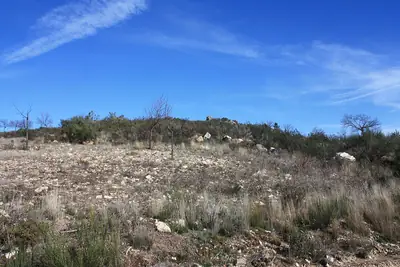
The municipality also preserves evidence of much earlier settlements. Castro de Sacóias, also known as Castro de Saccoias, contains the remains of an Iron Age fortified settlement in the village of Sacóias, in the Baçal parish. It has been classified as a monument since 1910.
Other heritage sites include Castro de Ciragata, also known as Cidadelhe or Cidadelhe de Parada; Castro de Gimonde, also known as Arrabalde de Gimonde; and the Mamoa de Donai, also called Mamoa de Tumbeirinho or Tumbeirinho.
Churches, chapels and local monuments
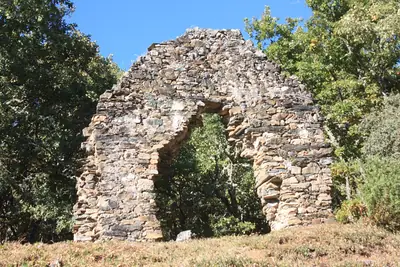
The Ruins of the Chapel of Senhora da Hera are a cultural heritage monument in Bragança and offer a quiet place to pause among the municipality’s historic sites. The Igreja da Aldeia das Veigas, also known as the Igreja de São Vicente das Veigas, is another local religious monument.
Several villages preserve historic pillories, or pelourinhos. The Pelourinho de Faílde e Carocedo, also known as the Pelourinho de Failde, has been classified as a Property of Public Interest since 1933. The Pelourinho de Rebordainhos stands in a small square beside the parish church of Rebordainhos, while the Pelourinho de Gostei, in the parish of Gostei, has held the same classification since 1933.
Bragança’s heritage is part of the wider story of Portugal, where medieval fortresses, religious buildings and historic villages reveal the country’s varied regional identity.
Explore Bragança with Neywo
Download Neywo and explore Bragança with a self-guided audio tour. The app offers one walking tour: “Bragança: From the New Cathedral to the Castle Walls”, a 2.02-kilometre route lasting around 100 minutes, with 11 narrated stops.
The walk includes Our Lady Queen Cathedral, the Old Cathedral of the Holy Name of Jesus, Teatro Municipal de Bragança, Misericórdia Church, Museu do Abade de Baçal, Church of Saint Vincent, Mosteiro de São Bento, Igreja de São Francisco, Domus Municipalis, the Pillory of Bragança and Museu Ibérico da Máscara e do Traje.
Each story plays as you reach the place, at your own pace, with no group and no schedule. Narration is available in 11 languages, making Neywo a practical Bragança audio guide for discovering the city independently.
Places with an audio guide in Bragança
8 places in Bragança with a Neywo audio guide. Each one starts telling its story as you reach it.
Self-guided tours in Bragança
1 tour in Bragança, free in the Neywo app. Each stop tells its story as you reach it.
- Walk
Bragança: From the New Cathedral to the Castle Walls
Begin at Portugal's first 21st-century cathedral, pass the old Jesuit cathedral, the modern municipal theatre and the episcopal palace, then climb into the walled citadel. Churches and convents line the way; the Domus Municipalis, a one-of-a-kind Romanesque civic building, the pillory and the castle keep wait at the top.
Our Lady Queen Cathedral, Bragança · Old Cathedral of the Holy Name of Jesus · Teatro Municipal de Bragança · Misericórdia Church · Museu do Abade de Baçal · Church of Saint Vincent …
Open this tour: Bragança: From the New Cathedral to the Castle Walls
Walk Bragança with Neywo
Neywo turns Bragança into a self-guided audio tour. Stories arrive as you reach the place they belong to, and the route reshapes when you wander off it.

