What to See in Iași, Romania: Free Audio Guide
Things to do in Iași: what to see in Romania’s cultural capital
The best things to do in Iași include exploring the Palace of Culture, historic churches, literary museums, and the city’s Jewish heritage. Spread across seven hills, Iași combines Moldavian history with Romania’s literary, religious, and cultural traditions. Neywo’s free audio guide to Iași brings 88 narrated places to life as you explore.
What to see in Iași
Mihail Kogălniceanu Memorial Museum
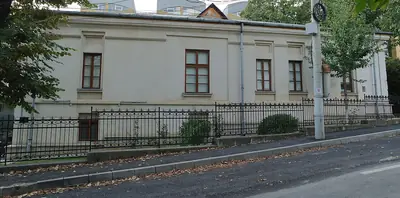
The Mihail Kogălniceanu Memorial Museum presents the life of the historian, journalist, writer, lawyer, and politician Mihail Kogălniceanu, who lived from 1817 to 1891. Its interiors recreate the atmosphere of a mid-nineteenth-century boyar residence, with an entrance hall, reception room, bedroom, ladies’ salon, dining room, and study.
The building is a Neoclassical historic monument constructed in 1936. Decorative highlights include carved wooden furniture, gilded pieces, Sèvres porcelain, paintings, chandeliers, carpets, and other objects associated with an aristocratic home.
The Museum of Romanian Literature and Casa Pogor
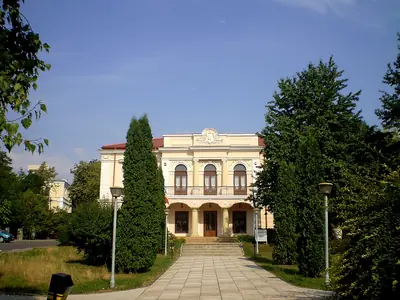
Casa Pogor is the administrative headquarters of the Museum of Romanian Literature in Iași, known since 2015 as the National Museum of Romanian Literature in Iași. The institution traces the development of Romanian literature, with particular attention to Moldavia, from 1800 to the present.
The building is also connected with the Vasile Pogor Memorial House, a municipal museum and one of the institution’s sections. Together, these places introduce Iași’s longstanding literary identity.
The Poni-Cernătescu Memorial Museum
The Poni-Cernătescu Memorial Museum is a national museum in Iași and a distinctive heritage site in the city. Its name preserves the identity of the memorial institution and adds another stop to Iași’s network of museums dedicated to prominent figures and cultural history.
The Palace of Culture
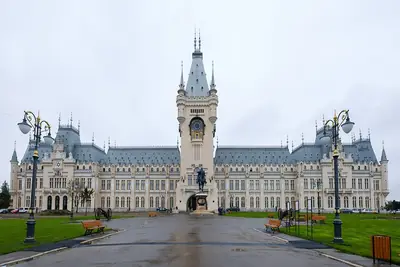
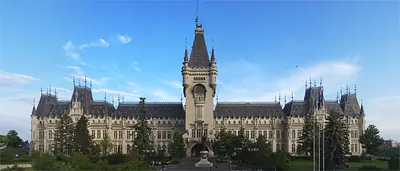
The Palace of Culture, or Palatul Culturii, stands on the site of the former medieval Princely Court of Moldavia. Built between 1906 and 1925, it first served as the Palace of Administration and Justice before becoming a cultural centre in 1955.
Designed by I. D. Berindey in the Neo-Gothic style, the building combines pointed arches, decorative stonework, expansive façades, and a prominent tower. Its 55-metre Clock Tower is especially distinctive: the clock faces feature stained-glass signs of the Zodiac, while the tower contains a carillon that plays Hora Unirii.
The palace houses the Moldova National Museum Complex, bringing together museums of history, ethnography, art, and science and technology, as well as a centre for conserving and restoring cultural heritage.
The museums in Stephen the Great and Holy Square
Stephen the Great and Holy Square brings several of Iași’s major cultural institutions together. The History Museum of Moldavia explores the region’s past, while the Ethnographic Museum of Moldavia focuses on the cultural heritage of Moldavia.
The Art Museum of Iași is also located inside the Palace of Culture, at number 1 on Piața Ștefan cel Mare și Sfânt. The Ștefan Procopiu Museum of Science and Technology completes the museum group housed in the palace.
In front of the building stands the equestrian monument to Stephen the Great, also known as Stephen the Great of Moldavia. The palace itself partly covers the remains of earlier princely courts, first documented in 1434.
The Monastery of the Three Hierarchs
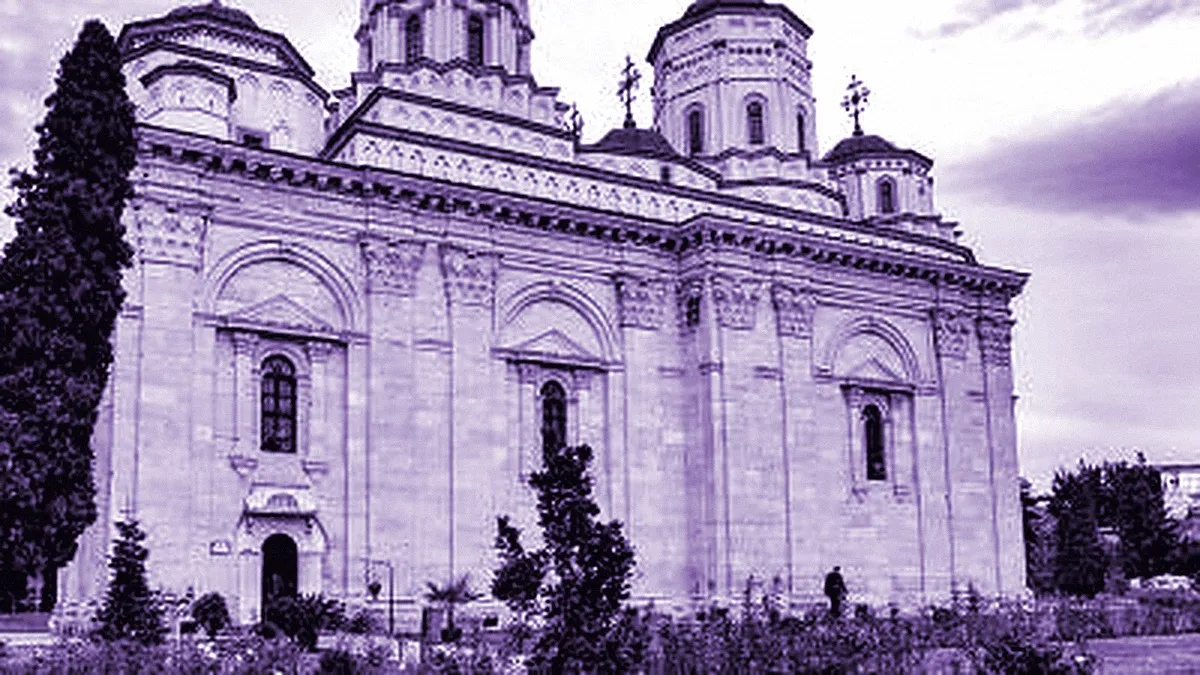
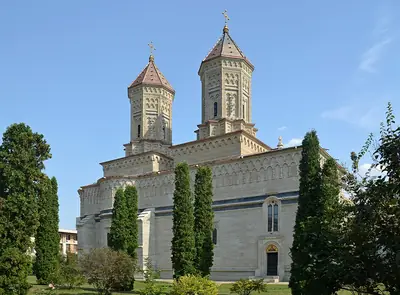
The Monastery of the Three Hierarchs, or Mănăstirea Sfinții Trei Ierarhi, is one of Iași’s most remarkable religious and architectural monuments. Built between 1637 and 1639 by Prince Vasile Lupu, it served as a princely burial church and remains an active place of worship.
Its church is dedicated to Saint Basil the Great, Saint Gregory the Theologian, and Saint John Chrysostom. Almost every part of the exterior is covered with carved stone decoration arranged in more than thirty horizontal bands. Floral, geometric, and religious motifs reflect Byzantine, Armenian, Georgian, Persian, Ottoman, and Renaissance influences.
The Metropolitan Cathedral
The Metropolitan Cathedral is the main Orthodox cathedral of Moldavia and the seat of the Metropolitan of Moldavia and Bukovina. It is also the largest historic Orthodox church in Romania.
Dedicated to Saint Parascheva, the Presentation of Jesus, and Saint George, the cathedral combines late Renaissance and Neoclassical influences. Its balanced façades and four corner spires frame an interior designed for major religious services, with Baroque details, carved iconostases, chandeliers, icons, manuscripts, and liturgical objects.
The cathedral stands on the site of two earlier churches: the fifteenth-century White Church and the seventeenth-century Stratenia Church. The present building was consecrated on April 23, 1887, in a ceremony attended by King Carol the First and Queen Elisabeth.
The Great Synagogue
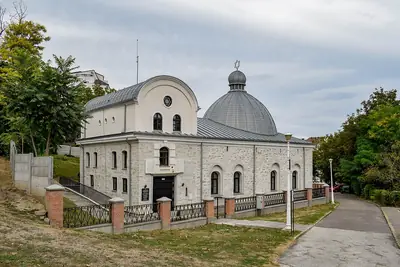
The Great Synagogue, or Sinagoga Mare, is the oldest surviving synagogue in Romania. Located at 1 Sinagogilor Street, it was built between 1657 and 1671 and completed in 1671 under Prince Gheorghe Duca.
The building stands partly below street level and has thick masonry walls with a restrained exterior. Inside, traditional Jewish religious architecture meets local construction methods. The prayer hall includes a central bimah and a decorated Holy Ark for the Torah scrolls, while the large dome was added during later renovations.
Nearby memorial elements recall the victims of the Iași pogrom of June 28 and 29, 1941. Restored after years of deterioration, the synagogue remains both a place of worship and a cultural monument.
The History of Romanian Theatre Museum Collection
Inside Copou Park, on the upper floor of the Mihai Eminescu Museum, the History of Romanian Theatre Museum Collection follows theatrical life from its earliest beginnings to the contemporary period. The collection belongs to the Museum of Romanian Literature in Iași and focuses on theatre as a cultural phenomenon.
Its setting is part of the experience. Copou Park, also called Copou Gardens, is Iași’s oldest public park. Laid out in 1833 and 1834 during the reign of Mihail Sturdza, it is known for tree-shaded paths and its longstanding role in the city’s cultural life.
The Ion Creangă Memorial House
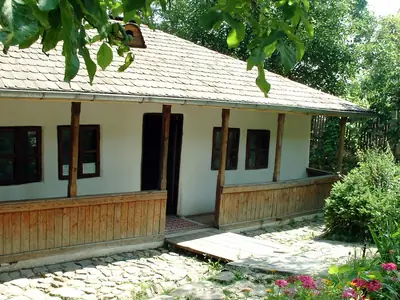
Bojdeuca lui Ion Creangă is the modest two-room cottage where the Romanian storyteller Ion Creangă lived and worked from 1872 until his death in 1889. He jokingly called the house a bojdeucă, a Moldavian word for a tiny, humble dwelling.
The cottage contains writing tools, books, household objects, and details connected with Creangă’s daily life. It became Romania’s first memorial museum on April 15, 1918. The site also includes an annex with a library, documentary collection, and exhibition space, while an amphitheatre hosts performances for children.
A chimney pole with a rope, preserved at the museum, is said to have inspired a scene in Memories of My Childhood.
Explore Iași with a self-guided audio tour
Neywo offers more than a free audio guide to Iași: its 88 narrated places are arranged across six ways to explore the city. There are four walking tours, one bus route, and one bike route.
The walks include:
- Stephen’s Court to the Opera Esplanade: 1.84 km, 83 minutes, and 9 stops, including the Palace of Culture, the Monastery of the Three Hierarchs, and the Metropolitan Cathedral.
- Copou Hill: Poets, Professors and an Ancient Linden: 3.36 km, 113 minutes, and 9 stops, including the Ion Creangă Memorial House, the Mihail Kogălniceanu Memorial Museum, and the Museum of Romanian Literature.
- The Faith Quarter: 2.4 km, 87 minutes, and 10 stops, including the Great Synagogue and several historic churches.
- Union Square and the Merchants’ Palaces: 1.68 km, 84 minutes, and 12 stops, including the Union Museum, Union Square, and the Museum of Natural History.
The bus route, Bus 28 Across Central Iași, covers 4.1 km in 18 minutes and has 5 stops. The bike route, Copou Hill by Bike, covers 1.2 km in 6 minutes and has 4 stops.
Download Neywo and explore Iași at your own pace. The app tells the story of each place as you reach it, with no group and no schedule. Narration is available in 11 languages, making this a flexible Iași self-guided walking tour experience for discovering museums, churches, parks, and historic streets independently.
Iași is also a natural starting point for discovering more of Romania, alongside destinations such as Cluj-Napoca, Sibiu, and Bucharest.
Places with an audio guide in Iași
8 places in Iași with a Neywo audio guide. Each one starts telling its story as you reach it.
Self-guided tours in Iași
6 tours in Iași, free in the Neywo app. Each stop tells its story as you reach it.
- Bike ride
Copou Hill by Bike: Universities, Libraries and Literary Houses
A short ride along the cycle lane through Copou, the academic and literary heart of Iasi. Stop at the university founded in 1860, the Eminescu Central University Library, Casa Pogor and the theatre collection beside Copou Park.
Colecția Muzeală "Istoria Teatrului Românesc" · Alexandru Ioan Cuza University · Muzeul Literaturii Române Iași · ”Mihai Eminescu” Central University Library of Iași
Open this tour: Copou Hill by Bike: Universities, Libraries and Literary Houses - Bus ride
Bus 28 Across Central Iasi: Churches, Museums and Poets
Local bus 28 links Triumf and Rond Dacia through the middle of Iasi, via Independence Square. Ride from the Princely Church of Saint Nicholas past the Natural History Museum and Mitocul Maicilor to the Eminescu statue and the Attacking Cavalryman at the gates of Copou Garden.
Princely Church of Saint Nicholas · Muzeul de Istorie Naturală · Mitocul Maicilor · Mihai Eminescu's statue in Iași · Attacking Cavalryman Statue
Open this tour: Bus 28 Across Central Iasi: Churches, Museums and Poets - Walk
Stephen's Court to the Opera Esplanade: Iasi's Palaces and Sanctuaries
Iasi was the capital of Moldavia and, in wartime, of Romania. Start at the neo-Gothic Palace of Culture on the old Princely Court, pass Stephen the Great's church and the lace-carved Three Hierarchs, then climb the esplanade past the Metropolitan Cathedral, the Roznovanu Palace and Romania's oldest national theatre.
Palace of Culture · Princely Church of Saint Nicholas · Trei Ierarhi Monastery · Our Lady Queen of Iași Cathedral · Metropolitan Cathedral · Roznovanu Palace …
Open this tour: Stephen's Court to the Opera Esplanade: Iasi's Palaces and Sanctuaries - Walk
Copou Hill: Poets, Professors and an Ancient Linden
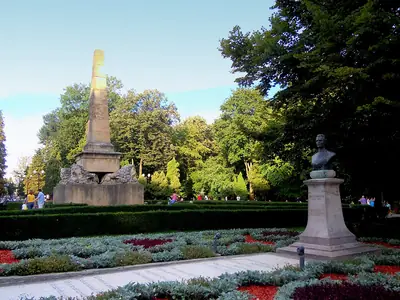
Copou is where Iasi's intellectual life lives. Visit the writers' houses of Creanga and Kogalniceanu, the university, the library and the statue of the national poet Eminescu, then continue into the park to the Lions' Obelisk and the famous linden tree under which Eminescu is said to have written.
Ion Creangă memorial house · Mihail Kogălniceanu Memorial Museum · Grigore Sturdza Palace in Iași · Holy Forty Martyrs Church, Iași · Alexandru Ioan Cuza University · Muzeul Literaturii Române Iași …
Open this tour: Copou Hill: Poets, Professors and an Ancient Linden - Walk
The Faith Quarter: Synagogues, Armenian and White Churches
East of the centre, Iasi's many communities built side by side. Walk from the Armenian church, past Romania's oldest surviving synagogue, to small Orthodox churches and a brick-white church, and see why Iasi was once counted among the most religiously mixed cities of Moldavia.
Armenian Church, Iași · Curelari Church · Great Synagogue · Sinagoga Merarilor din Iași · Bărboi Church · White Church, Iași …
Open this tour: The Faith Quarter: Synagogues, Armenian and White Churches - Walk
Union Square and the Merchants' Palaces
Iasi gave Romania its Union of 1859, and the centre is full of its memory. Cross Union Square and the Unification Monument, then pass the palaces built by Moldavian boyars and bankers, old trade churches and the Natural History Museum, ending where Stephen the Great Boulevard begins.
Banu Church · Union Museum, Iași · Mitocul Maicilor · Union Square · Braunstein Palace in Iași · Neuschotz Palace (Select Restaurant) in Iași …
Open this tour: Union Square and the Merchants' Palaces
Walk Iași with Neywo
Neywo turns Iași into a self-guided audio tour. Stories arrive as you reach the place they belong to, and the route reshapes when you wander off it.

